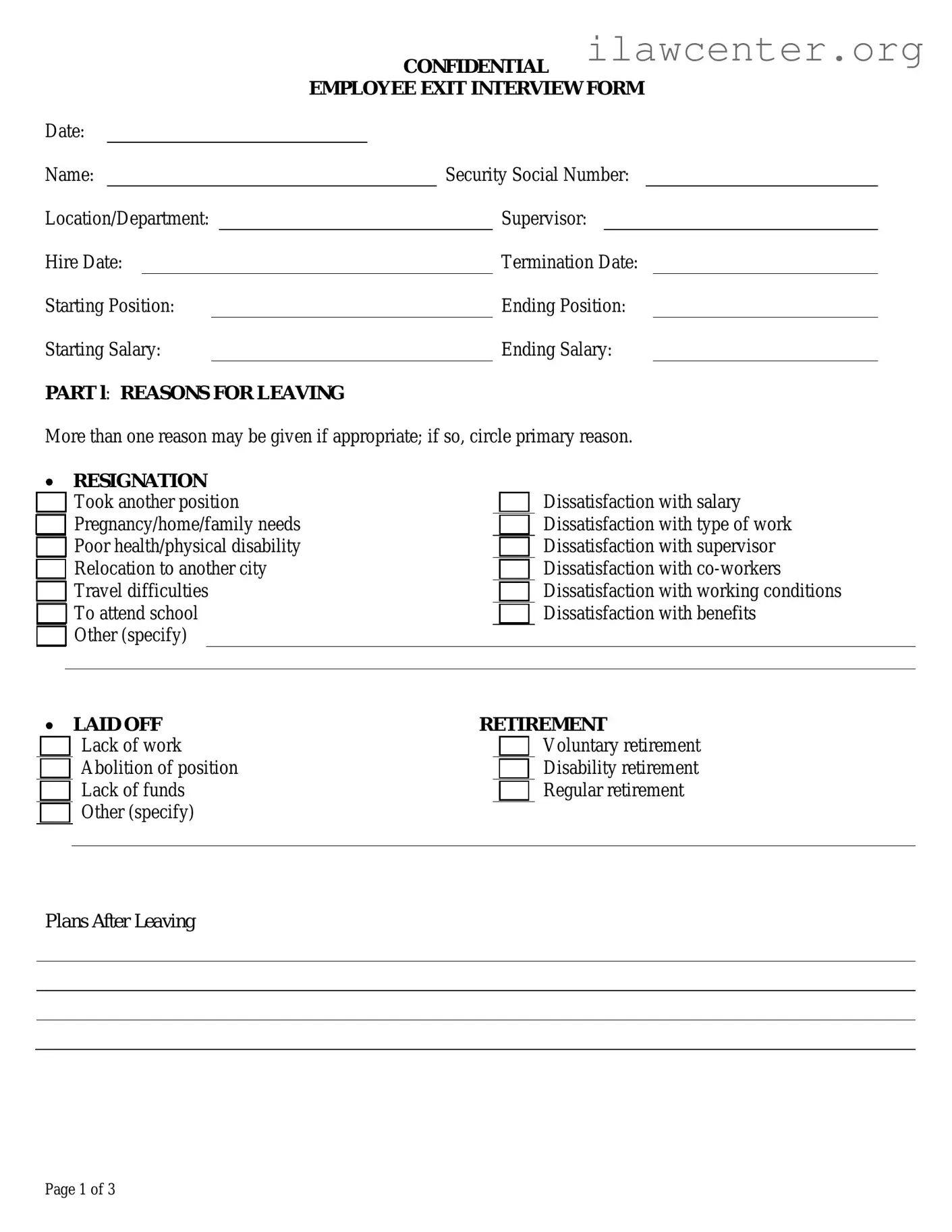
What is the purpose of an Exit Interview form?
The Exit Interview form serves as a tool for gathering feedback from employees who are leaving an organization. It aims to understand their experiences, reasons for departure, and suggestions for improvement. This information can help management identify areas that may need attention and enhance the overall work environment for remaining and future employees.
Who should complete the Exit Interview form?
The form should be completed by employees who have decided to resign or have been terminated from their positions. It is typically administered during the employee's final days at the company, allowing them to share insights and feedback before their departure.
How is the information from the Exit Interview form used?
The information collected from the Exit Interview form is analyzed by human resources and management. It can reveal trends regarding employee satisfaction, retention issues, and organizational culture. The insights gained may lead to changes in policies, procedures, or workplace practices aimed at improving employee retention and satisfaction.
Is the feedback provided in the Exit Interview form confidential?
Yes, the feedback provided in the Exit Interview form is generally treated as confidential. Organizations strive to create an environment where departing employees feel comfortable sharing honest feedback. However, there may be exceptions where information is shared with relevant parties to address specific issues or concerns.
Can an employee refuse to complete the Exit Interview form?
Employees have the right to refuse to complete the Exit Interview form. Participation is typically voluntary, and while it is encouraged, there should be no negative consequences for choosing not to provide feedback. Employees should feel empowered to make their own decision regarding their participation.
What types of questions can be found on the Exit Interview form?
The Exit Interview form may include a variety of questions aimed at assessing the employee's experience within the organization. Common topics include job satisfaction, relationships with coworkers and supervisors, reasons for leaving, and suggestions for improvement. Questions may be open-ended or multiple-choice, allowing for both qualitative and quantitative feedback.