Facial Consent PDF Template

Facial Consent PDF Template

The Facial Consent form is a crucial document that ensures clients understand the procedures and potential risks associated with facial treatments. By signing this form, clients provide their informed consent, allowing practitioners to proceed with the treatment. To ensure a smooth experience, please fill out the form by clicking the button below.

Article Guide

The Facial Consent form serves as an essential document in the realm of aesthetic and dermatological treatments. It outlines the patient's understanding of the procedures they will undergo, ensuring that they are fully informed about the benefits, risks, and potential side effects associated with facial treatments. This form not only protects the medical provider legally but also empowers patients by giving them a clear overview of what to expect. Key components include a detailed description of the treatment, a section for the patient's medical history, and explicit consent for the procedure to proceed. Additionally, it often includes information about post-treatment care and the importance of follow-up appointments. By signing this form, patients acknowledge their right to ask questions and express any concerns, fostering an open dialogue between them and their healthcare provider.

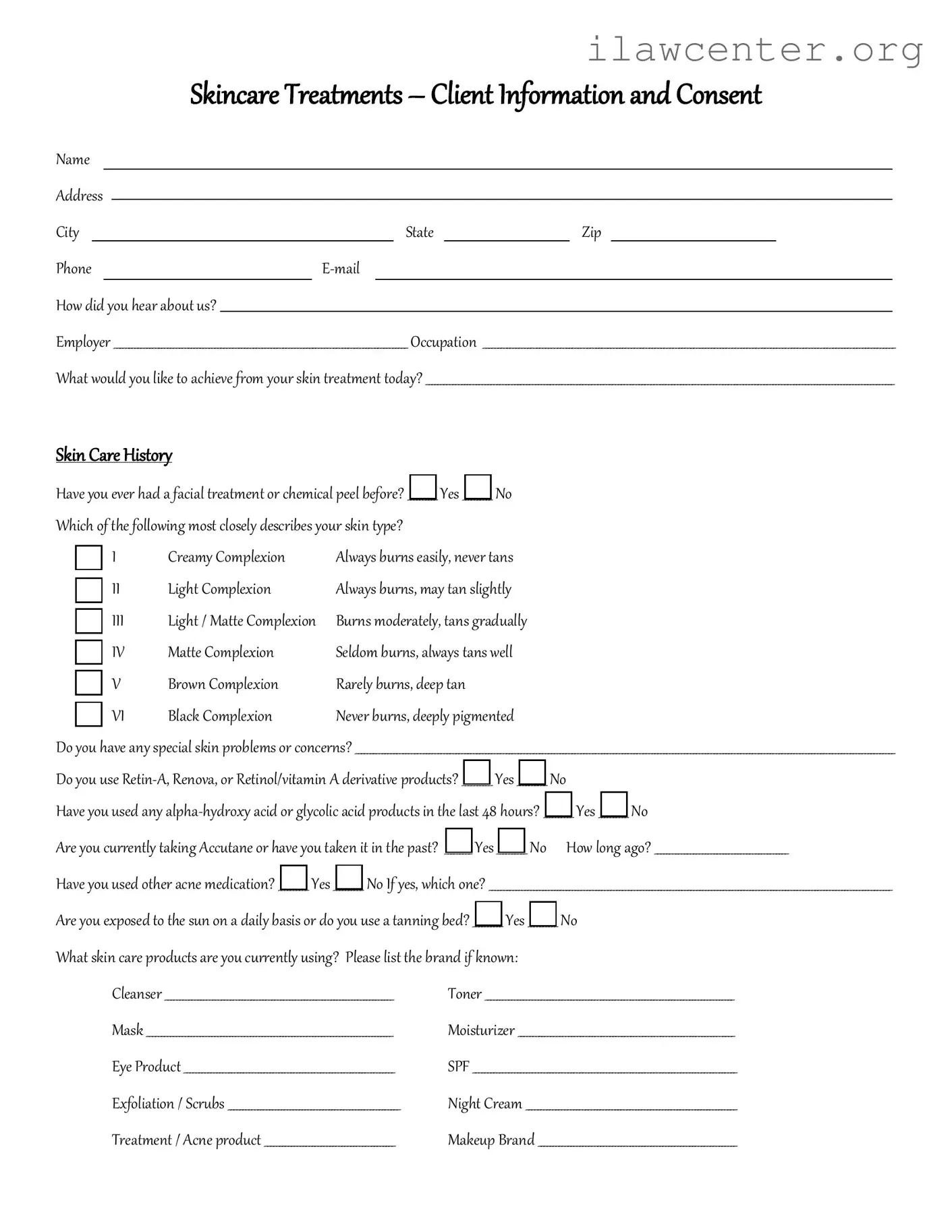
Skincare Treatments – Client Information and Consent

Name

Address

City


State


Zip


Phone


E-mail


How did you hear about us?


Employer ___________________________________________________________________________________________________ Occupation

___________________________________________________________________________________________________________________________________________

What would you like to achieve from your skin treatment today? ______________________________________________________________________________________________________________________________________________________________

Skin Care History

Have you ever had a facial treatment or chemical peel before? __________ Yes __________ No

Which of the following most closely describes your skin type?

I

Creamy Complexion

Always burns easily, never tans

II

Light Complexion

Always burns, may tan slightly

III

Light / Matte Complexion

Burns moderately, tans gradually

IV

Matte Complexion

Seldom burns, always tans well

V

Brown Complexion

Rarely burns, deep tan

VI

Black Complexion

Never burns, deeply pigmented

Do you have any special skin problems or concerns? ______________________________________________________________________________________________________________________________________________________________________________________

Do you use Retin-A, Renova, or Retinol/vitamin A derivative products? __________ Yes __________ No

Have you used any alpha-hydroxy acid or glycolic acid products in the last 48 hours? __________ Yes __________ No

Are you currently taking Accutane or have you taken it in the past? _________ Yes __________ No How long ago? _____________________________________________

Have you used other acne medication? __________ Yes __________ No If yes, which one? ________________________________________________________________________________________________________________________________________

Are you exposed to the sun on a daily basis or do you use a tanning bed? __________ Yes __________ No

What skin care products are you currently using? Please list the brand if known:

Cleanser _____________________________________________________________________________

Toner ____________________________________________________________________________________

Mask ___________________________________________________________________________________

Moisturizer _________________________________________________________________________

Eye Product _______________________________________________________________________

SPF _________________________________________________________________________________________

Exfoliation / Scrubs __________________________________________________________

Night Cream _______________________________________________________________________

Treatment / Acne product ____________________________________________

Makeup Brand ___________________________________________________________________

Please circle any areas of concern you have regarding your skin:


Breakouts / Acne

Blackheads / Whiteheads

Excessive Oil / Shine


Rosacea

Broken Capillaries

Redness / Ruddiness


Sun spot / Brown spots

Uneven Skin Tone

Sun Damage


Wrinkles / Fine Lines

Dull / Dry Skin

Flaky Skin


Dehydrated Skin

Sensitive Skin


Eyes:

Dark Circles

Puffiness

Fine lines

Please circle if you have ever had an allergic reaction to any of the following:


Cosmetics

Medicine

Food


Animals

Sunscreens

Pollen


AHAs

Fragrance

Shellfish


Latex

Collagen

Other: ___________________________________________________________________________________________________

Have you ever had Botox, Restylane, or other injections? ______________________________________________________________________________________________________________________________________________________________________________

Ladies only:

Are you taking hormonal contraceptives? __________ Yes __________ No

Are you pregnant or trying to become pregnant? __________ Yes __________ No Are you nursing? __________ Yes __________ No

Experiencing any menopause problems? ____________________________________________________________________________________________________________________________________________________________________________________________________________

Are you undergoing any hormone replacement therapy or cancer treatments? ____________________________________________________________________________________________________________________________________

I understand this consent form and have answered each question truthfully. I understand that withholding information from my skin care therapist may result in contraindications or skin irritation from treatments received. The skin care treatments I receive at Belle Waxing and Skincare are voluntary and I release Belle Waxing and Skincare from liability and assume full responsibility thereof.

Signature


Date

File Properties

Fact Name Description
Purpose The Facial Consent form is used to obtain permission from clients before performing facial treatments.
Client Rights Clients have the right to understand the procedures and any potential risks involved.
State-Specific Forms Different states may require specific forms based on local regulations.
Governing Laws In California, for example, the form must comply with the California Business and Professions Code.
Record Keeping It is essential to keep signed consent forms on file for legal and professional purposes.
Revocation of Consent Clients can revoke their consent at any time, and this should be clearly communicated.

Filling out the Facial Consent form is an important step in ensuring a smooth and safe experience. Once completed, the form will be reviewed by the practitioner before your appointment. This helps to confirm your understanding and agreement to the procedures involved.

  1. Begin by carefully reading the entire form to understand its contents.
  2. Locate the section for your personal information. Fill in your full name, address, and contact details accurately.
  3. Provide any relevant medical history, including allergies, skin conditions, or previous facial treatments.
  4. Read through the consent statements thoroughly. Make sure you understand what you are consenting to.
  5. Sign and date the form in the designated area. Your signature indicates your agreement to the terms outlined.
  6. If required, ask any questions you may have before submitting the form to ensure clarity.
  7. Submit the completed form to the practitioner or designated staff member.

What is a Facial Consent form?

A Facial Consent form is a document that outlines the procedures and potential risks associated with facial treatments. It ensures that clients are informed about what to expect during the procedure and that they agree to participate. This form is essential for both the service provider and the client, as it establishes clear communication and understanding of the treatment process.

Why do I need to sign a Facial Consent form?

Signing a Facial Consent form is crucial for your safety and well-being. It confirms that you understand the treatment, any potential side effects, and the expected results. By signing, you also acknowledge that you have provided accurate information about your medical history, which helps the practitioner tailor the treatment to your needs.

What information is typically included in the Facial Consent form?

The form usually includes details about the specific facial treatment you will receive, a list of potential risks and side effects, and any contraindications that may affect your eligibility for the treatment. Additionally, it may ask for your medical history, including any allergies or previous skin conditions, to ensure the treatment is safe for you.

Can I refuse to sign the Facial Consent form?

Yes, you have the right to refuse to sign the form. However, if you choose not to sign, the service provider may be unable to perform the facial treatment. This is because the consent form is a legal requirement that protects both you and the practitioner. If you have concerns about the form, it’s important to discuss them with the provider before making a decision.

What if I have questions about the treatment before signing?

It’s completely normal to have questions or concerns before signing a Facial Consent form. You should feel empowered to ask the practitioner anything you need clarification on. They are there to provide you with information and ensure you feel comfortable and informed about the procedure.

Is the Facial Consent form confidential?

Yes, the information you provide in the Facial Consent form is typically kept confidential. Practitioners are required to adhere to privacy laws that protect your personal information. However, it’s always a good idea to confirm the provider’s privacy policy before signing.

What happens if I experience side effects after the treatment?

If you experience any side effects after your facial treatment, it’s important to contact the practitioner immediately. They can provide guidance on how to manage any adverse reactions and determine if further action is necessary. The consent form typically outlines the steps to take in case of complications, so refer to it if needed.

Can I withdraw my consent after signing the form?

Yes, you can withdraw your consent at any time, even after signing the form. If you feel uncomfortable or have second thoughts, communicate your concerns to the practitioner. Your comfort and safety should always come first, and practitioners will respect your decision.

How long is the Facial Consent form valid?

The validity of a Facial Consent form can vary based on the provider’s policies and the nature of the treatment. Generally, it is considered valid for the duration of the treatment plan. If you receive multiple treatments over time, you may be asked to sign a new form for each session to ensure that your information remains current.

Common mistakes

Filling out a Facial Consent form is an important step for anyone seeking skincare treatments. However, many people make common mistakes that can lead to confusion or even complications. Being aware of these pitfalls can help ensure a smooth process.

One frequent mistake is providing incomplete information. Many individuals forget to fill out all required fields, such as contact details or medical history. This can delay the treatment process or result in the practitioner lacking essential information needed to ensure safety and effectiveness.

Another common error is misunderstanding the medical history section. Some people may skip this part or provide inaccurate details about allergies or previous skin conditions. It’s crucial to be honest and thorough in this section, as it helps practitioners tailor treatments to individual needs and avoid potential adverse reactions.

Additionally, failing to read the consent language carefully can lead to misunderstandings. Some individuals may not fully grasp what they are consenting to, including potential risks or side effects. Taking the time to read and ask questions about the consent language can prevent future regrets or unexpected outcomes.

Many people also overlook the importance of signing and dating the form correctly. A missing signature or date can render the consent invalid, causing delays in treatment. Ensuring that all signatures are complete and current is vital for a smooth experience.

Lastly, neglecting to update the form when circumstances change is a significant oversight. If a person experiences new allergies, medications, or skin conditions after filling out the form, it’s essential to communicate these changes to the practitioner. Keeping the information up-to-date helps maintain safety and ensures the best possible care.

Documents used along the form

When providing facial treatments, several forms and documents may accompany the Facial Consent form to ensure a comprehensive understanding and agreement between the practitioner and the client. These documents help protect both parties and clarify the services being offered. Below is a list of commonly used forms.

  • Client Information Form: This document collects essential details about the client, including contact information, medical history, and any allergies that may affect treatment.
  • Medical History Form: Clients provide their medical background, including any past surgeries, current medications, and skin conditions, to inform the practitioner of any potential risks.
  • Waiver of Liability: This form outlines the risks associated with facial treatments and releases the practitioner from liability for any adverse effects that may occur.
  • Aftercare Instructions: Clients receive guidelines on how to care for their skin post-treatment, including recommendations for products and activities to avoid.
  • Payment Agreement: This document details the payment terms, including costs, payment methods, and any cancellation policies that may apply.
  • Photo Release Form: Clients may sign this form to grant permission for the practitioner to use before-and-after photos for marketing purposes.
  • Treatment Plan: This outlines the specific facial treatments recommended for the client, including the frequency and duration of sessions.
  • Informed Consent for Minors: If a minor is receiving treatment, this form must be signed by a parent or guardian, giving consent for the procedure.
  • Feedback Form: After treatment, clients can provide their thoughts on the service received, helping practitioners improve their offerings.

These documents work together to create a clear understanding between the client and practitioner, ensuring a safe and satisfactory experience. Having these forms in place can help prevent misunderstandings and foster a trusting relationship.

Similar forms

The Facial Consent form shares similarities with several other documents that address consent and personal rights. Here are ten such documents:

  • Medical Consent Form: Like the Facial Consent form, this document ensures that patients understand and agree to medical procedures, emphasizing informed consent.
  • Photo Release Form: This form allows individuals to consent to the use of their image for promotional purposes, similar to how the Facial Consent form pertains to facial data usage.
  • Waiver of Liability: Both documents require individuals to acknowledge risks and relinquish certain rights, promoting transparency and understanding.
  • Informed Consent for Research: This document outlines the nature of research participation, much like the Facial Consent form clarifies the use of facial recognition technology.
  • Privacy Policy: A privacy policy informs individuals how their data will be used, paralleling the Facial Consent form's focus on data usage consent.
  • Release of Information Form: This form allows for the sharing of personal information, similar to how the Facial Consent form permits the use of facial data.
  • Employment Agreement: An employment agreement often includes clauses about consent to background checks, reflecting the consent aspect found in the Facial Consent form.
  • Service Agreement: This document may include consent for the use of personal data in service provision, akin to the Facial Consent form's focus on facial data.
  • Telehealth Consent Form: This form ensures patients understand and agree to receive healthcare remotely, similar to how the Facial Consent form addresses the use of technology.
  • Digital Content Release Form: This document allows creators to use an individual's likeness in digital content, mirroring the consent provided in the Facial Consent form.

Dos and Don'ts

When filling out the Facial Consent form, it's important to follow certain guidelines to ensure clarity and compliance. Here’s a list of things you should and shouldn't do:

  • Do read the entire form carefully before signing.
  • Do provide accurate personal information, including your name and contact details.
  • Do disclose any allergies or skin conditions to the practitioner.
  • Do ask questions if any part of the form is unclear.
  • Do keep a copy of the signed consent for your records.
  • Don't rush through the form. Take your time to understand it.
  • Don't omit any relevant medical history that could affect treatment.
  • Don't sign the form if you feel pressured or unsure.
  • Don't forget to update the form if your information changes.
  • Don't ignore any specific instructions provided by the practitioner.

Misconceptions

Understanding the Facial Consent form is crucial for both clients and professionals in the beauty and wellness industry. However, several misconceptions often arise. Below is a list of ten common misunderstandings about this important document.

  1. It is only a formality.

    Many people believe that the Facial Consent form is just a piece of paper to sign without any real importance. In reality, it serves to inform clients about the procedure and any potential risks involved.

  2. Signing means you waive all rights.

    Some think that by signing the consent form, they give up all their rights to seek recourse if something goes wrong. This is not true; the form outlines risks but does not eliminate legal rights.

  3. All consent forms are the same.

    Not all consent forms are created equal. Each may vary based on the specific treatments offered and the policies of the facility. It’s important to read the specific form you are signing.

  4. Only clients need to read the form.

    While clients should absolutely read the form, professionals also have a responsibility to explain its contents and answer any questions. Communication is key.

  5. Consent can be assumed.

    Some may think that consent is implied simply because a client shows up for a treatment. However, explicit consent is necessary to ensure that clients are fully informed and agree to the procedure.

  6. Minor changes don’t require new consent.

    Clients often assume that minor adjustments to a treatment plan don’t need fresh consent. In fact, any significant changes should be discussed and documented to ensure clarity and agreement.

  7. It protects the professional only.

    While the form does provide some protection for the professional, it also serves to empower clients by making them aware of what to expect during the treatment.

  8. Once signed, it cannot be revoked.

    Some individuals believe that signing the form means they cannot change their mind. In reality, clients have the right to withdraw consent at any point before or during the treatment.

  9. It covers all possible outcomes.

    Clients might think that the consent form covers every possible outcome of a procedure. However, it typically outlines common risks and does not account for every individual reaction or unforeseen event.

  10. It is not necessary for every treatment.

    Some people think that consent forms are only required for invasive procedures. In fact, any treatment that involves manipulation of the skin or use of products should have a consent form to ensure informed consent.

By addressing these misconceptions, clients can approach their treatments with a clearer understanding of the Facial Consent form and its significance. Knowledge is empowering, and being informed helps ensure a positive experience.

Key takeaways

Filling out and using the Facial Consent form is an important step for both clients and service providers. Here are some key takeaways to keep in mind:

  • Understand the Purpose: The form is designed to inform clients about the facial treatment and obtain their consent.
  • Read Carefully: Clients should read the entire form before signing. It contains essential information about the procedure.
  • Ask Questions: If anything is unclear, clients should feel comfortable asking the service provider for clarification.
  • Provide Accurate Information: Clients must fill out their medical history accurately. This helps ensure their safety during the treatment.
  • Keep a Copy: Clients should request a copy of the signed consent form for their records.
  • Review Periodically: It’s wise for clients to review the consent form periodically, especially if they have any changes in their health.
  • Understand Revocation: Clients have the right to revoke their consent at any time before the procedure begins.
