Final Walk Through Checklist PDF Template

Final Walk Through Checklist PDF Template

The Final Walk Through Checklist is an essential tool for homebuyers, ensuring that everything is in order before finalizing the purchase of a property. This comprehensive form helps you confirm that all agreed-upon items are present, necessary repairs have been completed, and the home is in satisfactory condition. To make your home-buying experience seamless, fill out the checklist by clicking the button below.

Article Guide

The Final Walk Through Checklist is an essential tool for homebuyers, ensuring that the property meets their expectations before closing the deal. This form includes several key aspects that buyers should verify, such as the presence of purchased items and the removal of any personal property or unwanted items, in accordance with the contract terms. Buyers are encouraged to confirm that all necessary repairs have been completed to their satisfaction and that warranties or bills for these repairs have been received. Cleanliness of the home, potential damage from movers, and any signs of pet damage or water issues are also critical points to assess. The checklist further prompts buyers to examine specific items, including the functionality of appliances, electrical systems, plumbing, HVAC, and the condition of windows and doors. Additionally, it addresses the state of basements, attics, and outdoor spaces, ensuring that landscaping and sprinkler systems are in working order. By methodically reviewing these elements, buyers can make informed decisions and address any concerns before finalizing their purchase.

Final Walk Through Checklist Preview

..........................................................................................................................................................................................
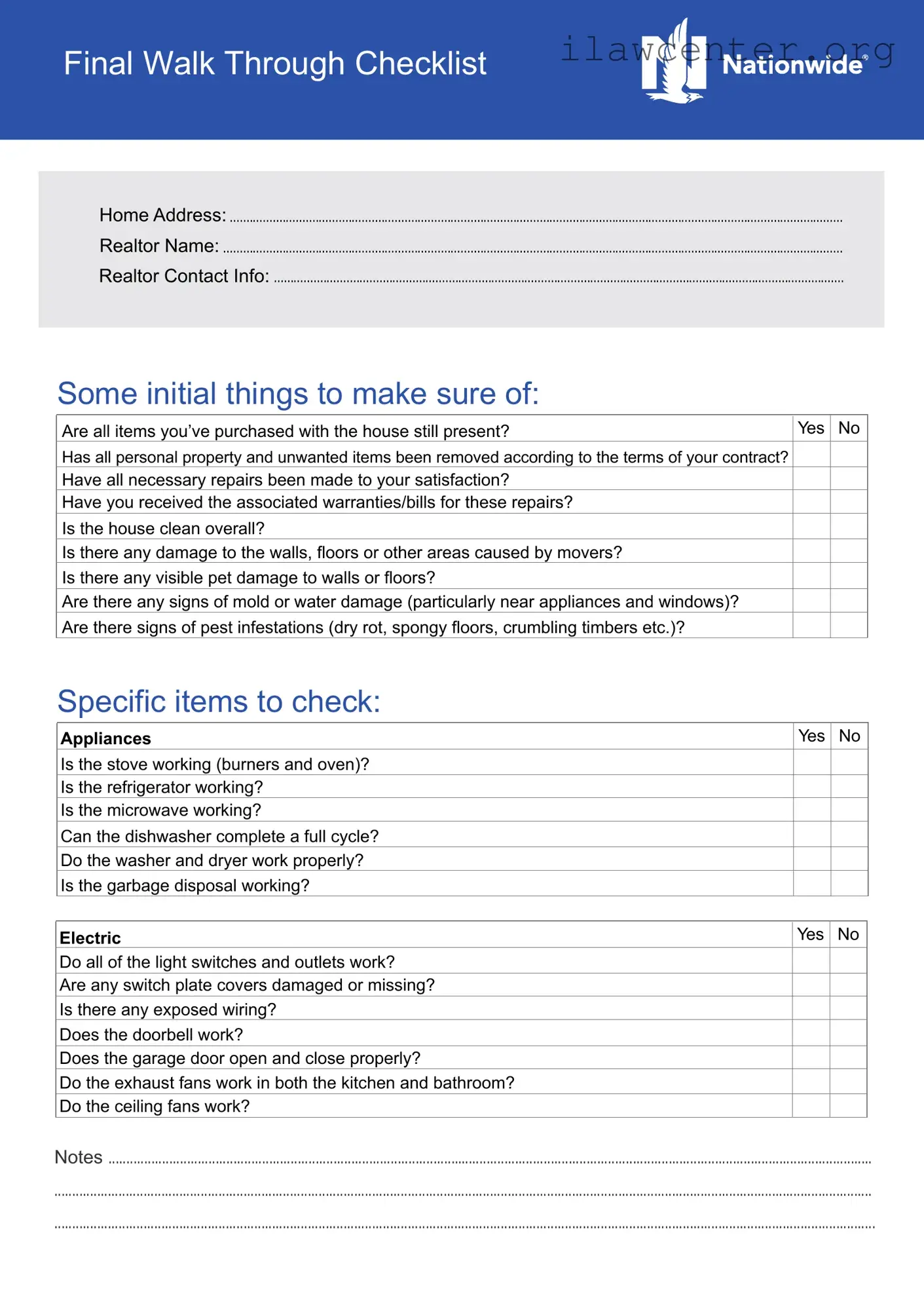
Home Address:
............................................................................................................................................................................................
.............................................................................................................................................................................
Realtor Name:
Realtor Contact Info:
Final Walk Through Checklist
Some initial things to make sure of:
Specific items to check:
Appliances
Is the stove working (burners and oven)?
Is the microwave working?
Can the dishwasher complete a full cycle?
Is the refrigerator working?
Yes No
Do the washer and dryer work properly?
Is the garbage disposal working?
Notes
......................................................................................................................................................................................................................
.....................................................................................................................................................................................................................................
......................................................................................................................................................................................................................................
Yes No
Electric
Do all of the light switches and outlets work?
Is there any exposed wiring?
Are any switch plate covers damaged or missing?
Does the doorbell work?
Does the garage door open and close properly?
Do the exhaust fans work in both the kitchen and bathroom?
Do the ceiling fans work?
Are all items you’ve purchased with the house still present?
Has all personal property and unwanted items been removed according to the terms of your contract?
Have you received the associated warranties/bills for these repairs?
Is the house clean overall?
Have all necessary repairs been made to your satisfaction?
Yes No
Is there any damage to the walls, floors or other areas caused by movers?
Is there any visible pet damage to walls or floors?
Are there any signs of mold or water damage (particularly near appliances and windows)?
Are there signs of pest infestations (dry rot, spongy floors, crumbling timbers etc.)?
Yes No
Notes
......................................................................................................................................................................................................................
.....................................................................................................................................................................................................................................
.....................................................................................................................................................................................................................................
Yes No
Yes No
Yes No
Yes No
Basement/Attic/Crawlspace
Have the spaces been cleared out and emptied?
Are there any signs of exposed plumbing?
Are there any signs of pests?
Windows/Doors
Are there any signs of condensation or fog near double-pane windows?
Are any windows broken or missing screens?
Do the locks and latches work?
Do all windows open and close properly?
Do all doors open and close properly?
Outdoors
Is landscaping as you remembered?
Do the sprinklers work?
HVAC
Does the air conditioning unit work properly?
Does the thermostat work?
Does the heating system work properly?
Plumbing
Do the toilets flush properly (do they run or leak)?
Is the water pressure sufficient?
Are there signs of leaking near faucets?
Do the sinks, bathtubs and showers drain properly?

File Properties

Fact Name Description
Purpose The Final Walk Through Checklist is designed to ensure that the property is in the agreed-upon condition before closing the sale.
Presence of Items Buyers should confirm that all items purchased with the house are present and that personal property has been removed.
Repairs It is essential to verify that all necessary repairs have been completed to the buyer's satisfaction, along with receiving warranties and bills.
Cleanliness The property should be clean overall, with no damage caused by previous occupants or movers.
State-Specific Forms Different states may have specific requirements for the Final Walk Through Checklist governed by local real estate laws.
Appliance Functionality Buyers should test all appliances to ensure they are working correctly, including the stove, refrigerator, and dishwasher.
Electrical Checks It is important to check that all light switches and outlets function properly and that there are no safety hazards like exposed wiring.
Outdoor Condition Landscaping and outdoor features, such as sprinklers, should be evaluated to ensure they meet expectations.

Instructions on Utilizing Final Walk Through Checklist

Completing the Final Walk Through Checklist is an important step before finalizing your home purchase. This process ensures that everything is in order and that you are satisfied with the condition of the property. Follow these steps to fill out the form accurately.

  1. Write the home address in the designated space at the top of the form.
  2. Fill in the realtor's name and contact information.
  3. Check if all items you purchased with the house are present. Mark "Yes" or "No."
  4. Verify if all personal property and unwanted items have been removed according to your contract. Mark "Yes" or "No."
  5. Ensure all necessary repairs have been made to your satisfaction. Mark "Yes" or "No."
  6. Confirm you have received warranties or bills for the repairs. Mark "Yes" or "No."
  7. Assess if the house is clean overall. Mark "Yes" or "No."
  8. Look for any damage to walls, floors, or other areas caused by movers. Mark "Yes" or "No."
  9. Check for visible pet damage to walls or floors. Mark "Yes" or "No."
  10. Inspect for signs of mold or water damage, especially near appliances and windows. Mark "Yes" or "No."
  11. Look for signs of pest infestations. Mark "Yes" or "No."
  12. For appliances, check if the stove, refrigerator, microwave, dishwasher, washer, dryer, and garbage disposal are working. Mark "Yes" or "No" for each item.
  13. For electrical systems, check if all light switches and outlets work, if switch plate covers are intact, and if the doorbell, garage door, and exhaust fans function properly. Mark "Yes" or "No" for each item.
  14. For plumbing, check if toilets flush properly, sinks and showers drain, water pressure is sufficient, and if there are any leaks. Mark "Yes" or "No."
  15. For HVAC, confirm that the heating system, air conditioning unit, and thermostat work properly. Mark "Yes" or "No."
  16. For windows and doors, check for condensation, broken windows, and the functionality of locks and latches. Mark "Yes" or "No."
  17. In the basement, attic, or crawlspace, ensure spaces are cleared and check for exposed plumbing or pests. Mark "Yes" or "No."
  18. Finally, assess the outdoor landscaping and check if the sprinklers work. Mark "Yes" or "No."
  19. Use the notes section to write any additional observations or concerns.

Important Facts about Final Walk Through Checklist

What is the purpose of the Final Walk Through Checklist?

The Final Walk Through Checklist is a tool designed to help homebuyers ensure that the property they are purchasing is in the expected condition before closing. It allows buyers to verify that all agreed-upon items are present, that repairs have been completed, and that the home is clean and free of damage.

What should I check regarding appliances during the walk-through?

During the walk-through, you should check that all appliances included in the sale are functioning properly. This includes testing the stove, refrigerator, microwave, dishwasher, washer, dryer, and garbage disposal. Make sure each appliance operates as expected and that there are no visible issues.

How can I ensure that the home is clean before closing?

To determine if the home is clean, take a thorough look at each room, including kitchens and bathrooms. Check for any leftover personal items or debris. Pay attention to surfaces, floors, and corners to ensure they are tidy and free from dust or dirt. If the home does not meet your cleanliness standards, address this with your realtor.

What should I do if I find damage during the walk-through?

If you discover any damage, such as issues with walls, floors, or signs of pests, document it immediately. Take photos and note the specific areas of concern. Discuss these findings with your realtor to determine the next steps, which may include negotiating repairs or credits before finalizing the sale.

Are there specific plumbing issues I should look for?

Yes, when checking plumbing, ensure that toilets flush properly and that sinks, bathtubs, and showers drain effectively. Look for any leaks around faucets and check the water pressure to ensure it is sufficient. Address any plumbing concerns with your realtor as they may require attention before closing.

What electrical features should I verify during the walk-through?

Check that all light switches and outlets are functioning correctly. Look for any damaged or missing switch plate covers and ensure there are no exposed wires. Additionally, confirm that the doorbell, garage door, and exhaust fans in the kitchen and bathrooms are operational.

How do I assess the condition of windows and doors?

Inspect each window and door for functionality. Ensure that they open and close smoothly and that locks and latches work properly. Look for any signs of condensation or fog in double-pane windows, as well as any broken windows or missing screens. Document any issues you find.

What should I check regarding the HVAC system?

When assessing the HVAC system, confirm that both the heating and air conditioning units are working as expected. Test the thermostat to ensure it functions correctly. If you notice any discrepancies, make a note and discuss them with your realtor for further action.

What if the landscaping and outdoor features are not as expected?

During your final walk-through, evaluate the outdoor areas, including landscaping and sprinkler systems. If the condition is not what you anticipated, document your observations and communicate with your realtor. They can help address any discrepancies with the seller before closing.

Common mistakes

Filling out the Final Walk Through Checklist form is an important step in the home buying process. However, many people make mistakes that can lead to issues down the line. One common error is not checking all purchased items. Buyers often assume that everything included in the sale is present, but it’s crucial to verify that all items listed in the contract are accounted for.

Another mistake is overlooking personal property removal. Sellers are required to remove unwanted items as per the contract. Buyers sometimes forget to confirm that this has been done, which can lead to disputes later. It’s essential to ensure that the property is free of any items that are not part of the sale.

Many buyers also neglect to assess the condition of repairs. After negotiations, it’s vital to check that all agreed-upon repairs have been completed satisfactorily. This includes verifying that warranties and bills for those repairs have been received. Failing to do so can result in unexpected expenses for the buyer.

Cleaning is another area where mistakes occur. Buyers might assume the house is clean without doing a thorough check. Inspecting for cleanliness is important, as a dirty home can indicate neglect and may hide underlying issues. Look for any damage caused by movers, as this can affect the overall condition of the property.

Pet damage is often overlooked during the final walk-through. Buyers should specifically check for any signs of pet-related issues, such as scratches on floors or walls. Identifying these problems early can save time and money in repairs later on.

Water damage is another critical factor that many buyers miss. It’s essential to check for signs of mold or water damage, especially near appliances and windows. These issues can lead to significant health risks and costly repairs if not addressed promptly.

Inspecting appliances is crucial, yet some buyers forget to test them. Ensure that all major appliances, like the stove, refrigerator, and dishwasher, are functioning correctly. A simple check can prevent unpleasant surprises after the sale is finalized.

Electrical issues can also be easily overlooked. Buyers should test all light switches, outlets, and appliances to ensure they work properly. Missing or damaged switch plates should not be ignored, as they can indicate larger electrical problems.

Lastly, many buyers fail to thoroughly inspect the outdoor areas. Landscaping and sprinkler systems should be checked to ensure they are as expected. This step is often neglected, but it can significantly impact the overall enjoyment of the property.

Documents used along the form

The Final Walk Through Checklist is an important tool for ensuring that a property meets your expectations before closing. Alongside this checklist, there are several other forms and documents that can help facilitate a smooth transaction. Here are some commonly used documents:

  • Purchase Agreement: This is the contract between the buyer and seller outlining the terms of the sale, including price, contingencies, and deadlines.
  • Disclosure Statement: Sellers provide this document to disclose known issues with the property, such as past repairs or environmental hazards.
  • Inspection Report: A detailed report from a professional inspector, highlighting the condition of the home and any necessary repairs.
  • Title Report: This document outlines the legal ownership of the property and any liens or encumbrances that may affect the sale.
  • Closing Statement: A financial document that summarizes the final costs and credits for both the buyer and seller at closing.
  • Home Warranty: This document provides coverage for certain repairs and replacements of major systems and appliances for a specified period after purchase.
  • Loan Estimate: Provided by lenders, this form outlines the estimated costs of the mortgage, including interest rates and fees.
  • Deed: The legal document that transfers ownership of the property from the seller to the buyer upon closing.
  • Affidavit of Title: A sworn statement by the seller confirming their ownership of the property and that there are no undisclosed liens or claims.

Having these documents organized and ready can make the closing process more efficient. It is essential to review each document carefully to ensure that everything is in order before finalizing the purchase.

Similar forms

  • Home Inspection Checklist: Similar to the Final Walk Through Checklist, this document outlines essential items to inspect before finalizing a home purchase. It focuses on the overall condition of the property, including structural elements and systems.
  • Move-In Checklist: This checklist helps new homeowners ensure that everything is in order upon moving in. It includes items such as checking appliances, utilities, and the general cleanliness of the home.
  • Condition Report: Often used by landlords and tenants, this document details the condition of a rental property before move-in. It ensures that any pre-existing issues are documented and can be referenced later.
  • Property Disclosure Statement: Sellers provide this document to disclose known issues with the property. It is similar in that it aims to inform buyers about the condition of the home before the final sale.
  • Closing Disclosure: This document outlines the final terms of the mortgage loan, including the loan amount, interest rate, and closing costs. While it focuses more on financial aspects, it is crucial to review before finalizing the purchase.
  • Repair Request Form: Used during the negotiation phase, this form lists repairs that need to be addressed before closing. It shares similarities with the Final Walk Through Checklist in ensuring that all repairs are completed to the buyer's satisfaction.
  • Utilities Transfer Checklist: This document helps homeowners ensure that all utilities are set up and transferred into their name before moving in. It complements the Final Walk Through Checklist by ensuring that essential services are ready.
  • Home Warranty Information: This document outlines the coverage provided by a home warranty. Similar to the Final Walk Through Checklist, it ensures that buyers are aware of any warranties on appliances or systems in the home.
  • Neighborhood Review: While not a physical inspection document, this checklist helps buyers assess the neighborhood and surrounding amenities. It complements the Final Walk Through Checklist by ensuring the location meets the buyer's expectations.

Dos and Don'ts

When filling out the Final Walk Through Checklist form, it is essential to approach the task with care and attention. Here are nine things you should and shouldn't do:

  • Do ensure all items you purchased with the house are present.
  • Do confirm that all personal property and unwanted items have been removed.
  • Do check that all necessary repairs have been made to your satisfaction.
  • Do verify that you have received warranties or bills for any repairs completed.
  • Do assess the overall cleanliness of the house.
  • Don't overlook any damage to walls, floors, or other areas caused by movers.
  • Don't ignore visible pet damage to walls or floors.
  • Don't miss checking for signs of mold or water damage, especially near appliances and windows.
  • Don't forget to look for signs of pest infestations, such as dry rot or crumbling timbers.

Misconceptions

When it comes to the Final Walk Through Checklist form, several misconceptions can lead to confusion for homebuyers and sellers alike. Understanding these misconceptions can help ensure a smoother transaction process. Here are nine common misunderstandings:

  • The checklist is optional. Many believe that the Final Walk Through is not necessary. In reality, it is a crucial step to confirm that the home is in the agreed-upon condition before closing.
  • All repairs must be completed before the walk-through. Some think that any repairs mentioned in the contract must be finished before the walk-through. While it’s ideal, it’s more important to ensure that the repairs are addressed to your satisfaction during the walk-through.
  • The checklist is only for the buyer. A common misconception is that only buyers should complete the checklist. However, sellers can also benefit from reviewing it to ensure they have fulfilled their obligations.
  • It’s just a formality. Many view the Final Walk Through as a mere formality. In truth, it is an opportunity to identify any issues that may need resolution before finalizing the sale.
  • All appliances are included by default. Some buyers assume that all appliances will remain in the home. It’s important to verify what items are included in the sale, as this can vary based on the contract.
  • Cleaning is not a priority. Buyers often overlook the importance of cleanliness. However, the condition of the home, including cleanliness, can significantly impact the buyer’s satisfaction.
  • Visible damage is always the seller's responsibility. Some believe that any visible damage must be repaired by the seller. This may not always be the case, especially if the buyer is aware of the damage before closing.
  • All issues must be resolved before closing. There is a belief that every issue found during the walk-through must be fixed before the closing can proceed. While significant issues should be addressed, minor concerns can often be negotiated post-closing.
  • The walk-through can be done anytime. Lastly, some think the walk-through can occur at their convenience. However, it should typically be scheduled close to the closing date to ensure the home is in the expected condition.

By dispelling these misconceptions, both buyers and sellers can approach the Final Walk Through Checklist with clarity and confidence, ultimately leading to a more successful real estate transaction.

Key takeaways

When preparing to fill out and use the Final Walk Through Checklist form, keep the following key takeaways in mind:

  • Verify Presence of Purchased Items: Ensure that all items included in the sale are still in the home.
  • Check for Personal Property Removal: Confirm that all personal belongings and unwanted items have been removed as per the contract.
  • Assess Repairs: Make sure all agreed-upon repairs have been completed to your satisfaction.
  • Warranties and Bills: Obtain any warranties or bills related to the repairs that were made.
  • Overall Cleanliness: Evaluate the cleanliness of the house to ensure it meets your expectations.
  • Inspect for Damage: Look for any damage caused by movers, such as scratches or dents on walls and floors.
  • Check for Mold or Water Damage: Pay attention to areas around appliances and windows for any signs of mold or water issues.
  • Pest Infestations: Be on the lookout for signs of pests, including dry rot or crumbling timbers.

Utilizing this checklist effectively can help ensure that your new home meets your expectations before finalizing the purchase.