Attorney-Verified  Affidavit of Correction Document for Florida

Attorney-Verified Affidavit of Correction Document for Florida

The Florida Affidavit of Correction is a legal document used to amend or correct errors in previously recorded documents. This form serves to clarify mistakes, ensuring that public records accurately reflect the intended information. To get started on correcting your records, fill out the form by clicking the button below.

Article Guide

The Florida Affidavit of Correction form serves as a vital tool for individuals and entities seeking to rectify errors in public records. When a mistake occurs in documents such as deeds, mortgages, or other official filings, this form provides a straightforward process for making necessary amendments. By submitting an Affidavit of Correction, the filer can clarify inaccuracies that may lead to confusion or legal complications. It is important to note that this form must be executed under oath, ensuring that the corrections are made with integrity and accuracy. The affidavit typically includes details about the original document, the nature of the error, and the corrected information. This ensures transparency and helps maintain the integrity of public records in Florida. Utilizing this form can prevent potential disputes and safeguard the interests of all parties involved.

Florida Affidavit of Correction Preview

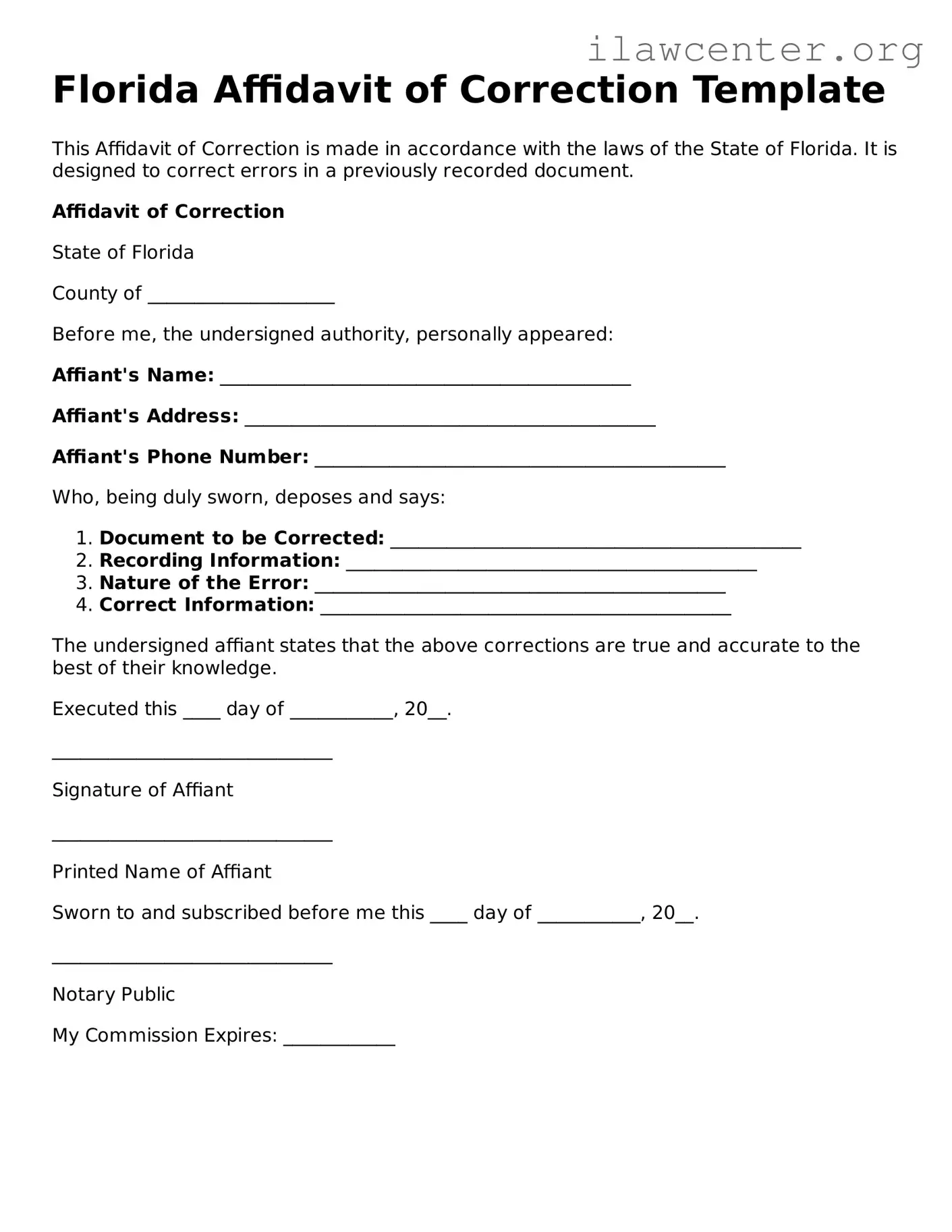
Florida Affidavit of Correction Template

This Affidavit of Correction is made in accordance with the laws of the State of Florida. It is designed to correct errors in a previously recorded document.

Affidavit of Correction

State of Florida

County of ____________________

Before me, the undersigned authority, personally appeared:

Affiant's Name: ____________________________________________

Affiant's Address: ____________________________________________

Affiant's Phone Number: ____________________________________________

Who, being duly sworn, deposes and says:

  1. Document to be Corrected: ____________________________________________
  2. Recording Information: ____________________________________________
  3. Nature of the Error: ____________________________________________
  4. Correct Information: ____________________________________________

The undersigned affiant states that the above corrections are true and accurate to the best of their knowledge.

Executed this ____ day of ___________, 20__.

______________________________

Signature of Affiant

______________________________

Printed Name of Affiant

Sworn to and subscribed before me this ____ day of ___________, 20__.

______________________________

Notary Public

My Commission Expires: ____________

PDF Form Characteristics

Fact Name Description
Purpose The Florida Affidavit of Correction is used to correct clerical errors in recorded documents.
Governing Law It is governed by Florida Statutes Section 695.26.
Eligibility Any party involved in the original document may file an affidavit to correct the error.
Filing Requirements The corrected affidavit must be signed, notarized, and filed with the appropriate county clerk.

Instructions on Utilizing Florida Affidavit of Correction

After obtaining the Florida Affidavit of Correction form, it is essential to complete it accurately to ensure that the necessary corrections are made. This process requires careful attention to detail, as any errors could lead to delays or complications. Follow these steps to fill out the form correctly.

  1. Begin by entering the name of the affiant at the top of the form. This is the person making the affidavit.
  2. Provide the address of the affiant. Include the street address, city, state, and ZIP code.
  3. In the next section, fill in the date when the affidavit is being completed.
  4. Clearly state the incorrect information that needs correction. Be specific about what is wrong.
  5. Next, provide the correct information that should replace the incorrect details.
  6. Sign the affidavit in the designated area. Ensure the signature is dated.
  7. Have the affidavit witnessed or notarized, if required. This adds validity to the document.

Once the form is completed, review it carefully to ensure all information is accurate. After that, submit the affidavit to the appropriate office as instructed, ensuring you keep a copy for your records.

Important Facts about Florida Affidavit of Correction

What is the Florida Affidavit of Correction?

The Florida Affidavit of Correction is a legal document used to correct errors in recorded documents, such as deeds or mortgages. This form allows individuals to formally address mistakes, ensuring that public records accurately reflect the intended information.

When should I use an Affidavit of Correction?

You should use an Affidavit of Correction when you discover an error in a recorded document. Common reasons for using this form include misspelled names, incorrect property descriptions, or other clerical mistakes that need to be rectified to prevent future confusion.

Who can file an Affidavit of Correction?

How do I complete the Affidavit of Correction?

To complete the Affidavit of Correction, provide the necessary information about the original document, including the title, date of recording, and the nature of the error. Clearly state the correct information. It’s important to sign the affidavit in the presence of a notary public.

Is there a fee associated with filing the Affidavit of Correction?

Where do I file the Affidavit of Correction?

Will the Affidavit of Correction be publicly accessible?

Can I use the Affidavit of Correction for any type of document?

Do I need an attorney to file an Affidavit of Correction?

How long does it take for the Affidavit of Correction to be processed?

Common mistakes

Filling out the Florida Affidavit of Correction form can seem straightforward, but many individuals make common mistakes that can lead to delays or complications. One frequent error is neglecting to include all necessary information. Each section of the form must be completed accurately. Missing details can result in the rejection of the affidavit.

Another mistake is failing to sign the affidavit. A signature is crucial for the document to be considered valid. Without it, the form will not hold legal weight. Additionally, individuals sometimes forget to date the affidavit. An undated form can raise questions about its validity and may lead to further issues.

Using incorrect or outdated information is another common pitfall. Ensure that all details, such as names and addresses, are current and match official records. Inaccuracies can cause confusion and delay the correction process.

Some people overlook the importance of providing a clear explanation for the correction. The affidavit should specify what needs to be corrected and why. A vague explanation can lead to misunderstandings and may require additional clarification.

Another mistake involves not following the proper submission process. It is essential to know where and how to file the affidavit. Submitting it to the wrong office can cause significant delays in processing.

Individuals often fail to keep copies of the completed affidavit. Having a copy for personal records is important. It serves as proof of the correction and can be useful for future reference.

Not seeking assistance when needed can also be a misstep. If you are unsure about how to fill out the form, it is wise to consult with someone who has experience in this area. Getting help can prevent mistakes that might complicate the process.

Lastly, some individuals underestimate the time it takes to process the affidavit. Be prepared for potential delays and plan accordingly. Understanding that the process may take longer than expected can help manage expectations and reduce frustration.

Documents used along the form

The Florida Affidavit of Correction is a legal document used to rectify mistakes in previously recorded documents. It is essential to ensure that all legal records are accurate and reflect the true intentions of the parties involved. Several other forms and documents often accompany this affidavit to facilitate corrections and ensure compliance with legal standards.

  • Notice of Intent to Correct: This document serves as a formal notification to interested parties about the intention to correct an error in a recorded document. It helps maintain transparency and allows for any objections to be raised before the correction is made.
  • Corrective Deed: A corrective deed is used to amend a previously executed deed that contains errors. This document ensures that the corrected information is legally recognized and properly recorded.
  • Release of Lien: If a lien was incorrectly recorded, a release of lien document may be necessary to clear the error. This form formally removes the lien from public records, ensuring that the property is free from any claims.
  • Quit Claim Deed: This type of deed transfers interest in a property but does not guarantee that the title is clear. It can be used to correct ownership records when there are discrepancies.
  • Affidavit of Identity: This affidavit can be used to confirm the identity of a person involved in the transaction, especially when there are multiple individuals with similar names or when identity is in question.
  • Power of Attorney: In some cases, a power of attorney may be required to authorize another individual to sign documents on behalf of the person making the correction, ensuring that all legal procedures are followed correctly.
  • Certificate of Correction: This document is typically issued by a governmental authority to officially acknowledge and validate the corrections made to a previously recorded document.
  • Statement of Fact: A statement of fact can provide context or clarification regarding the corrections being made, helping to explain the reasons behind the changes to interested parties.

Understanding these associated documents can help individuals navigate the correction process more effectively. Each document plays a specific role in ensuring that legal records are accurate and up to date, thereby protecting the rights and interests of all parties involved.

Similar forms

  • Declaration of Correction: This document serves a similar purpose in correcting errors in public records. It is often used when a mistake is identified and a formal declaration is needed to clarify the correct information.
  • Correction Deed: A Correction Deed is utilized to amend a previously executed deed that contains errors. This document ensures that the record accurately reflects the intentions of the parties involved in the property transaction.
  • Affidavit of Identity: An Affidavit of Identity may be used when a person needs to confirm their identity for legal purposes. It can help clarify situations where names or identities may have been misstated in official documents.
  • Notice of Correction: This document is filed to notify interested parties of corrections made to a previously recorded document. It serves to inform the public and relevant entities about changes to the original record.
  • Amendment Agreement: An Amendment Agreement modifies the terms of an existing contract. It is similar to an Affidavit of Correction in that it addresses inaccuracies or changes that need to be documented formally.

Dos and Don'ts

Filling out the Florida Affidavit of Correction form can be straightforward if you follow the right guidelines. Here are ten important dos and don'ts to consider:

  • Do read the instructions carefully before starting the form.
  • Do ensure all personal information is accurate and up-to-date.
  • Do sign the affidavit in the presence of a notary public.
  • Do include all necessary attachments or supporting documents.
  • Do keep a copy of the completed affidavit for your records.
  • Don't leave any sections of the form blank unless instructed.
  • Don't use incorrect or outdated forms; always use the latest version.
  • Don't forget to double-check spelling and dates.
  • Don't submit the form without proper notarization.
  • Don't rush through the process; take your time to ensure accuracy.

By adhering to these guidelines, you can help ensure that your affidavit is processed smoothly and effectively.

Misconceptions

The Florida Affidavit of Correction form is a useful tool for correcting errors in public records, but several misconceptions surround its use. Here are five common misunderstandings:

  • Only legal professionals can file an Affidavit of Correction. Many believe that only attorneys are qualified to submit this form. In reality, any individual can file an Affidavit of Correction, as long as they meet the necessary requirements.
  • The Affidavit of Correction can be used for any type of error. Some people think this form is a catch-all for any mistake. However, it is specifically designed for clerical errors or omissions in public records, not for substantive changes or disputes.
  • Filing an Affidavit of Correction guarantees the correction will be accepted. There is a belief that submitting the form automatically rectifies the issue. In truth, the appropriate authorities must review and approve the affidavit, and they may reject it if it does not meet specific criteria.
  • There is no deadline for filing an Affidavit of Correction. Many assume that they can file the affidavit at any time. In fact, there may be time limits depending on the nature of the record and the jurisdiction, so it is essential to act promptly.
  • Once filed, the Affidavit of Correction is permanent and cannot be changed. Some individuals think that the correction is final and unchangeable. However, if further errors arise, it is possible to file additional affidavits to address new issues.

Understanding these misconceptions can empower individuals to use the Florida Affidavit of Correction form effectively and confidently.

Key takeaways

When dealing with the Florida Affidavit of Correction form, understanding its purpose and proper usage is essential. Here are some key takeaways to consider:

  • The Florida Affidavit of Correction is designed to correct clerical errors in official documents.
  • Common errors that can be corrected include misspellings, incorrect dates, and wrong names.
  • It is important to provide accurate information in the affidavit to avoid further complications.
  • The form must be signed in the presence of a notary public to ensure its validity.
  • After completion, the affidavit should be filed with the appropriate county clerk’s office.
  • There may be a filing fee associated with submitting the affidavit, so it’s wise to check local regulations.
  • Once filed, the correction will be made part of the public record, making it official.
  • Always keep a copy of the filed affidavit for your records, as it serves as proof of the correction.