Attorney-Verified  Horse Bill of Sale Document for Florida

Attorney-Verified Horse Bill of Sale Document for Florida

The Florida Horse Bill of Sale form is a crucial document that officially records the transfer of ownership of a horse from one party to another. This form not only protects the interests of both the seller and the buyer but also serves as a legal record of the transaction. To ensure a smooth and transparent transfer, it’s important to fill out this form accurately; click the button below to get started!

Article Guide

When it comes to buying or selling a horse in Florida, having the right documentation is crucial for both parties involved in the transaction. The Florida Horse Bill of Sale form serves as an essential legal record that outlines the details of the sale, ensuring that both the buyer and seller are protected. This form typically includes key information such as the names and addresses of both the buyer and seller, a description of the horse being sold—including its breed, age, and registration details—and the sale price. Additionally, the form often contains important clauses regarding the health and soundness of the horse, as well as any warranties or guarantees provided by the seller. By clearly stating the terms of the sale, this document helps to prevent misunderstandings and disputes down the line. Whether you're a seasoned equestrian or a first-time buyer, understanding the significance of the Florida Horse Bill of Sale form can make the process smoother and more secure.

Florida Horse Bill of Sale Preview

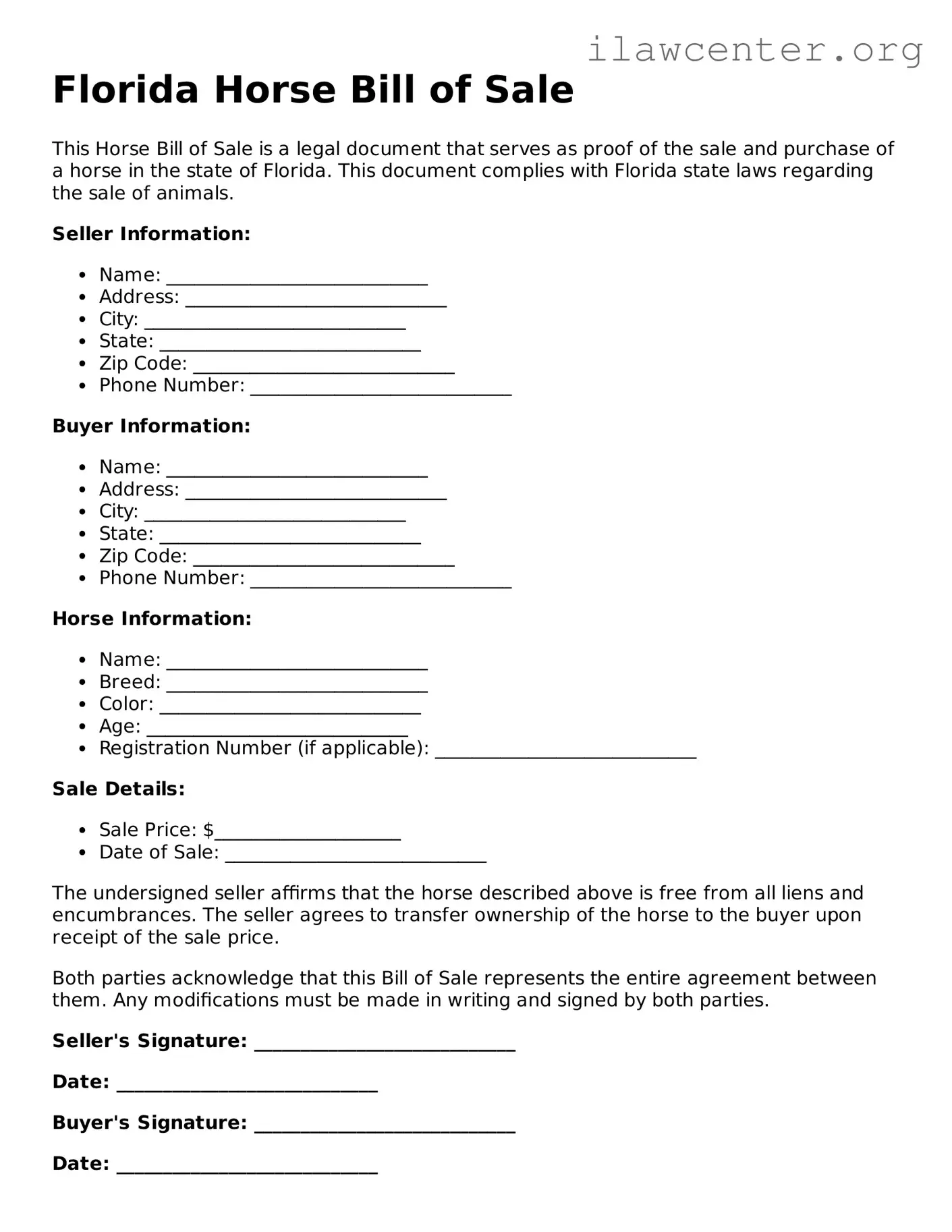
Florida Horse Bill of Sale

This Horse Bill of Sale is a legal document that serves as proof of the sale and purchase of a horse in the state of Florida. This document complies with Florida state laws regarding the sale of animals.

Seller Information:

  • Name: ____________________________
  • Address: ____________________________
  • City: ____________________________
  • State: ____________________________
  • Zip Code: ____________________________
  • Phone Number: ____________________________

Buyer Information:

  • Name: ____________________________
  • Address: ____________________________
  • City: ____________________________
  • State: ____________________________
  • Zip Code: ____________________________
  • Phone Number: ____________________________

Horse Information:

  • Name: ____________________________
  • Breed: ____________________________
  • Color: ____________________________
  • Age: ____________________________
  • Registration Number (if applicable): ____________________________

Sale Details:

  • Sale Price: $____________________
  • Date of Sale: ____________________________

The undersigned seller affirms that the horse described above is free from all liens and encumbrances. The seller agrees to transfer ownership of the horse to the buyer upon receipt of the sale price.

Both parties acknowledge that this Bill of Sale represents the entire agreement between them. Any modifications must be made in writing and signed by both parties.

Seller's Signature: ____________________________

Date: ____________________________

Buyer's Signature: ____________________________

Date: ____________________________

PDF Form Characteristics

Fact Name Details
Purpose The Florida Horse Bill of Sale form is used to document the sale and transfer of ownership of a horse in Florida.
Governing Law This form is governed by Florida Statutes, particularly Chapter 678, which covers the sale of goods.
Required Information It typically includes details such as the seller's and buyer's names, horse description, sale price, and date of sale.
Signatures Both the buyer and seller must sign the form to validate the transaction and confirm the transfer of ownership.
Notarization While notarization is not mandatory, it is highly recommended to add an extra layer of authenticity to the document.

Instructions on Utilizing Florida Horse Bill of Sale

When preparing to fill out the Florida Horse Bill of Sale form, it is important to ensure that all necessary information is accurate and complete. This form serves as a record of the transaction and can be useful for both the buyer and seller in the future. Follow these steps to fill out the form correctly.

  1. Obtain the form: Access the Florida Horse Bill of Sale form from a reliable source, such as a state website or a legal document provider.
  2. Enter the date: Write the date of the sale at the top of the form.
  3. Provide seller information: Fill in the seller's full name, address, and contact information.
  4. Provide buyer information: Fill in the buyer's full name, address, and contact information.
  5. Describe the horse: Include details about the horse being sold, such as breed, age, color, and any identification numbers (like a registration number or microchip number).
  6. State the sale price: Clearly indicate the agreed-upon sale price for the horse.
  7. Include payment details: Specify the method of payment (cash, check, etc.) and any terms related to the payment.
  8. Sign the form: Both the seller and buyer must sign and date the form to validate the transaction.
  9. Make copies: After completing the form, make copies for both the seller and buyer for their records.

Important Facts about Florida Horse Bill of Sale

What is a Florida Horse Bill of Sale form?

A Florida Horse Bill of Sale form is a legal document that records the sale of a horse from one party to another. It provides essential details about the transaction, including the names and addresses of both the buyer and the seller, a description of the horse, the sale price, and the date of the sale. This document serves as proof of ownership transfer and can be useful for future reference, such as when registering the horse or in case of disputes.

Why is a Bill of Sale important for horse transactions?

A Bill of Sale is crucial for several reasons. Firstly, it protects both the buyer and the seller by clearly outlining the terms of the sale. It helps to prevent misunderstandings regarding the horse's condition, ownership, and any warranties or guarantees. Additionally, having a written record can be beneficial if any legal issues arise after the sale, such as disputes over ownership or health claims.

What information should be included in the form?

The form should include the full names and addresses of both the buyer and seller. It should also contain a detailed description of the horse, including its name, breed, age, color, and any identifying marks or registration numbers. The sale price, date of the transaction, and any specific terms or conditions should also be clearly stated. If applicable, it's wise to note any health guarantees or warranties associated with the horse.

Do I need to have the Bill of Sale notarized?

While it is not legally required to have a Bill of Sale notarized in Florida, doing so can add an extra layer of protection. Notarization verifies the identities of the parties involved and confirms that they willingly signed the document. This can be helpful if disputes arise in the future. However, many transactions proceed smoothly without notarization, as long as both parties agree to the terms.

Can I use a generic Bill of Sale form for my horse sale?

Yes, you can use a generic Bill of Sale form, but it’s important to ensure that it includes all the necessary details specific to the horse sale. Generic forms may not cover all aspects relevant to equine transactions, so customizing the document to fit your needs is often a good idea. This ensures clarity and protects both parties involved in the sale.

What should I do after completing the Bill of Sale?

After completing the Bill of Sale, both the buyer and seller should keep a copy for their records. It’s also a good practice to register the horse with any relevant breed associations or organizations, especially if the horse has a pedigree. This helps to establish the new ownership officially. If there are any specific conditions outlined in the sale, both parties should adhere to them to avoid potential disputes.
Common mistakes

When filling out the Florida Horse Bill of Sale form, many individuals overlook critical details that can lead to complications later on. One common mistake is failing to provide accurate information about the horse. This includes not only the horse’s name and breed but also its age and registration number, if applicable. Incomplete or incorrect details can create confusion and disputes regarding ownership.

Another frequent error is neglecting to include the seller's and buyer's contact information. Both parties should provide their full names, addresses, and phone numbers. This information is essential for any future communication or legal matters that may arise. Without it, tracking down either party can become a cumbersome task.

People often forget to specify the purchase price of the horse. While it may seem obvious, leaving this blank can lead to misunderstandings. The price serves as a record of the transaction and can be important for tax purposes. Make sure to state the amount clearly to avoid any potential issues.

Additionally, many individuals do not date the bill of sale. A date is crucial as it establishes when the ownership transfer occurred. Without this information, it can be challenging to resolve disputes about when the sale took place. Always remember to include the date of the transaction.

Another common oversight is not having the document signed by both parties. A bill of sale is only valid when both the seller and buyer have signed it. This signature serves as a confirmation of the agreement and protects the interests of both parties. Without signatures, the document may not hold up in legal situations.

Some people also fail to include any warranties or guarantees regarding the horse’s health or condition. If the seller makes any claims about the horse, these should be documented in the bill of sale. Clearly stating any warranties can protect the buyer from future disputes regarding the horse's health or performance.

In addition, individuals sometimes overlook the importance of having a witness or notary public present during the signing. While not always required, having a witness can add an extra layer of credibility to the document. A notary public can also verify the identities of both parties, which can be beneficial if legal issues arise later.

Finally, many forget to keep a copy of the completed bill of sale for their records. This document serves as proof of the transaction and can be useful for future reference. Both parties should retain a copy to ensure they have access to the agreement should any questions or disputes come up.

Documents used along the form

When engaging in the sale or purchase of a horse in Florida, it is essential to have a comprehensive understanding of the various forms and documents that may accompany the Horse Bill of Sale. Each of these documents serves a specific purpose, ensuring that the transaction is clear, legally binding, and protects the interests of both parties involved.

  • Equine Purchase Agreement: This document outlines the terms of the sale, including the purchase price, payment methods, and any warranties or guarantees regarding the horse's health and performance. It acts as a more detailed contract that complements the Bill of Sale.
  • Health Certificate: A health certificate is issued by a licensed veterinarian and confirms that the horse is in good health at the time of sale. This document is crucial for the buyer, as it provides assurance about the horse's condition and may be required for transportation or registration.
  • Transfer of Ownership Form: This form is used to officially transfer ownership of the horse from the seller to the buyer. It typically includes details such as the horse's identification, the seller's and buyer's information, and signatures from both parties to validate the transfer.
  • Brand Inspection Certificate: In some cases, especially for horses with brands, a brand inspection certificate may be necessary. This document verifies the horse's identity and ownership through its brand, ensuring that the buyer is receiving the horse as described.

Having these documents prepared and understood can facilitate a smoother transaction and provide peace of mind for both the seller and the buyer. Each plays a vital role in ensuring that the sale is conducted fairly and legally, protecting the interests of all parties involved.

Similar forms

The Horse Bill of Sale form serves as an important document in the transaction of horses. Similar documents exist in various contexts, each serving a unique purpose while sharing common features. Here’s a list of ten documents that resemble the Horse Bill of Sale:

  • Vehicle Bill of Sale: Like the Horse Bill of Sale, this document transfers ownership of a vehicle from one party to another, detailing the sale price and vehicle identification information.
  • Boat Bill of Sale: This document functions similarly by providing proof of ownership transfer for a boat, including details such as the hull identification number and sale price.
  • Real Estate Purchase Agreement: This formal agreement outlines the terms of a real estate transaction, including buyer and seller information, similar to how a Horse Bill of Sale details the parties involved in a horse sale.
  • Pet Bill of Sale: This document transfers ownership of a pet, detailing the animal's breed, age, and health status, much like a Horse Bill of Sale does for horses.
  • Equipment Bill of Sale: Used for the sale of machinery or equipment, this document specifies the item’s condition and sale price, paralleling the details found in a Horse Bill of Sale.
  • Livestock Bill of Sale: This form is used to transfer ownership of livestock, including cattle or pigs, and includes similar details about the animals being sold.
  • Art Sale Agreement: This document outlines the sale of artwork, specifying the artist, title, and sale price, akin to how a Horse Bill of Sale describes the horse and its value.
  • Business Asset Bill of Sale: This document transfers ownership of business assets, detailing what is being sold and for how much, similar to the Horse Bill of Sale’s purpose.
  • Motorcycle Bill of Sale: This document serves to transfer ownership of a motorcycle, including details about the bike and the sale, much like the Horse Bill of Sale does for horses.
  • Mobile Home Bill of Sale: This form transfers ownership of a mobile home, including the home’s specifications and sale price, paralleling the Horse Bill of Sale in its function.

Each of these documents plays a crucial role in ensuring clarity and legality in transactions, just as the Horse Bill of Sale does in the equine world.

Dos and Don'ts

When filling out the Florida Horse Bill of Sale form, there are several important considerations to keep in mind. Below is a list of things you should and shouldn't do to ensure that the process goes smoothly.

Things You Should Do:

  • Clearly write the full name and address of both the buyer and the seller.
  • Include a detailed description of the horse, including its breed, age, color, and any unique identifying features.
  • Specify the sale price and any payment terms agreed upon by both parties.
  • Sign and date the form to make it legally binding.
  • Provide a copy of the completed bill of sale to both the buyer and the seller.
  • Check for any local regulations that may require additional information or documentation.
  • Keep a copy of the bill of sale for your records.

Things You Shouldn't Do:

  • Do not leave any fields blank; ensure all required information is filled out.
  • Avoid using vague descriptions of the horse, as this can lead to misunderstandings.
  • Do not forget to include the date of the sale.
  • Refrain from altering the form after it has been signed by both parties.
  • Do not rush the process; take your time to ensure accuracy.
  • Do not ignore any specific state laws regarding the sale of horses.
  • Do not provide false information, as this can lead to legal issues.

Misconceptions

When it comes to the Florida Horse Bill of Sale, there are several misconceptions that can lead to confusion for both buyers and sellers. Understanding these misconceptions can help ensure a smoother transaction. Below is a list of common misunderstandings regarding this important document.

  • It is not necessary to have a Bill of Sale for a horse transaction. Some people believe that a verbal agreement is sufficient. However, a Bill of Sale provides a written record of the transaction, which is crucial for both parties.
  • All horse sales are the same. Different types of sales may require different information or terms. For example, the sale of a racehorse may involve specific clauses that are not necessary for a recreational horse.
  • A Bill of Sale is only for the buyer's protection. This is not true. The Bill of Sale protects both the buyer and the seller by documenting the terms of the sale and the condition of the horse at the time of sale.
  • Once the Bill of Sale is signed, the transaction cannot be reversed. While a Bill of Sale is a binding document, there are circumstances under which a sale can be contested or reversed, such as fraud or misrepresentation.
  • The Bill of Sale must be notarized. Notarization is not a requirement for a Bill of Sale in Florida, although having it notarized can add an extra layer of security and legitimacy to the document.
  • Only registered horses require a Bill of Sale. Regardless of whether a horse is registered or not, a Bill of Sale is advisable to document the transaction and protect both parties involved.
  • There is no specific format required for a Bill of Sale. While there is no strict format mandated by law, including certain key elements such as the horse's description, sale price, and signatures of both parties is essential for the document to be effective.
  • Once the horse is sold, the seller has no further obligations. Sellers may still have responsibilities, such as disclosing any known health issues or defects that could affect the horse's performance or value.

Being aware of these misconceptions can help ensure that both buyers and sellers are better prepared for the transaction. A clear understanding of the Florida Horse Bill of Sale is essential for a successful and legally sound sale.

Key takeaways

When engaging in the sale or purchase of a horse in Florida, utilizing the Horse Bill of Sale form is essential for both parties involved. This document serves as a legal record of the transaction and helps to protect the interests of both the buyer and the seller. Here are key takeaways to consider:

  • Clear Identification: Ensure that the horse is clearly identified in the bill of sale. Include details such as breed, color, age, and any unique markings.
  • Seller Information: The seller's name and contact information must be included. This provides a point of reference for any future inquiries or issues.
  • Buyer Information: Just as with the seller, the buyer’s name and contact details should be clearly stated to establish ownership and accountability.
  • Purchase Price: Clearly state the agreed-upon purchase price. This protects both parties and serves as a reference for any future disputes.
  • Payment Terms: Specify the payment method and any terms associated with it, such as deposits or payment plans, to avoid misunderstandings.
  • Health and Condition: Include a statement regarding the horse's health and condition at the time of sale. This can help mitigate liability for the seller.
  • Signatures Required: Both the buyer and seller must sign the bill of sale. This signifies mutual agreement to the terms outlined in the document.
  • Witness or Notary: While not always required, having a witness or notary public can add an extra layer of credibility to the transaction.
  • Retain Copies: After the sale, both parties should keep a signed copy of the bill of sale for their records. This can be useful for future reference or in case of disputes.

By following these guidelines, both buyers and sellers can ensure a smoother transaction and protect their interests throughout the process.