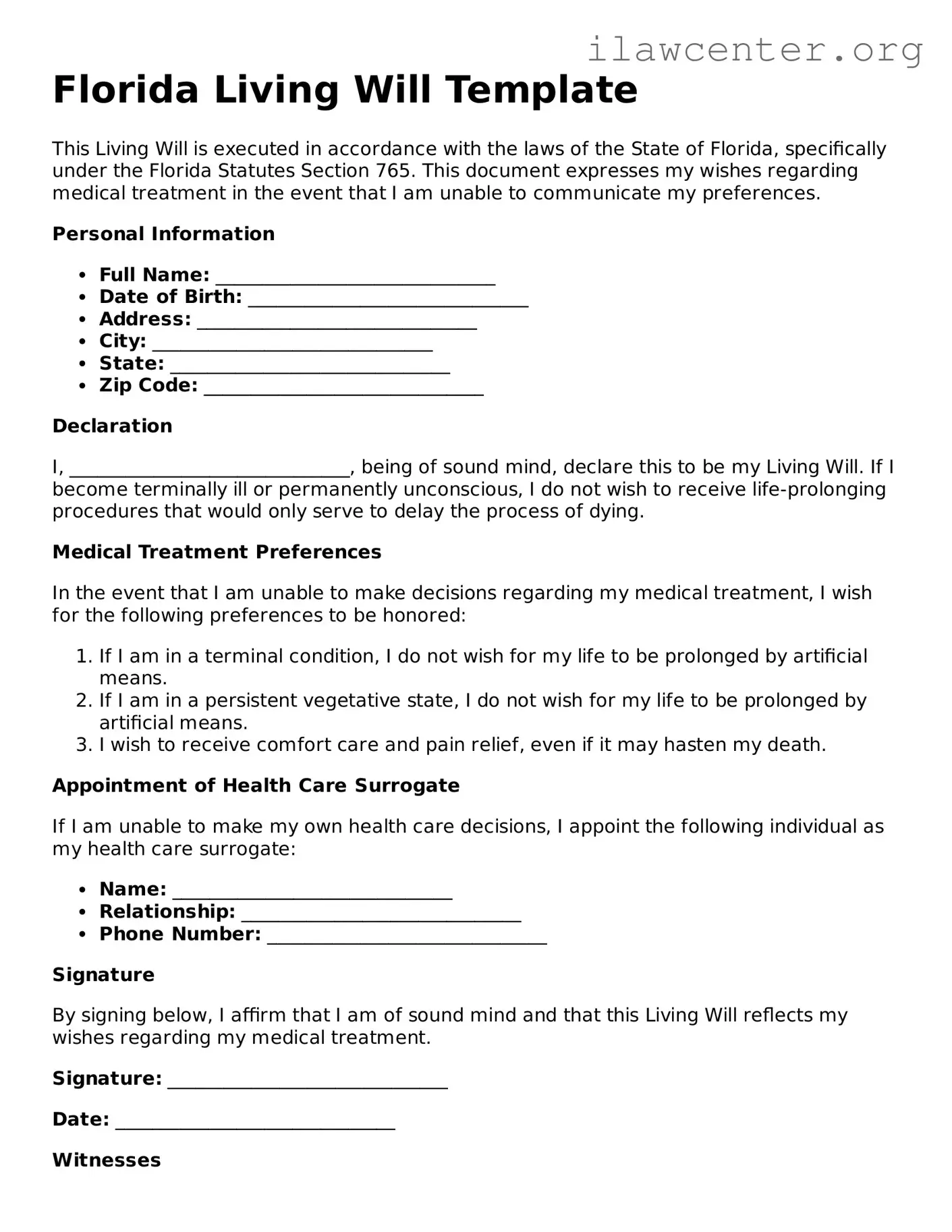
Filling out a Florida Living Will is a critical step in ensuring that your healthcare wishes are respected. However, many individuals make common mistakes that can lead to confusion or even invalidate their intentions. Understanding these pitfalls can help you navigate the process more effectively.
One frequent mistake is failing to specify clear medical preferences. When individuals do not articulate their wishes regarding life-sustaining treatment, it can create ambiguity for healthcare providers. It is essential to be explicit about what types of interventions you do or do not want in different medical scenarios.
Another error involves neglecting to date the document. A Living Will should always include the date it was completed. Without this, there may be questions about the validity of the document, especially if it is presented at a later time when your health status has changed.
Some people forget to sign the form in the presence of witnesses. Florida law requires that a Living Will be signed in front of two witnesses who are not related to you and who will not benefit from your estate. Failing to meet these criteria can render the document ineffective.
Additionally, individuals often overlook the importance of choosing the right witnesses. Witnesses must be adults who can attest to your competency at the time of signing. If a witness has a conflict of interest, such as being a beneficiary in your will, this can invalidate the Living Will.
Another common mistake is not discussing the Living Will with family members. Open communication about your healthcare preferences is vital. Without these discussions, loved ones may be uncertain about your wishes during a critical time, leading to stress and potential conflict.
Some individuals also make the mistake of not updating their Living Will as their circumstances change. Major life events, such as marriage, divorce, or the diagnosis of a serious illness, may necessitate a review and revision of your wishes. Regularly revisiting this document ensures it remains aligned with your current values and preferences.
In addition, many people fail to provide copies of their Living Will to key individuals, such as family members and healthcare providers. Distributing copies ensures that your wishes are known and can be honored when the time comes.
Finally, a significant error is not consulting legal professionals when drafting a Living Will. While it is possible to complete the form on your own, seeking legal advice can help you avoid potential pitfalls and ensure that your document complies with Florida law.
By being aware of these common mistakes, individuals can take proactive steps to ensure their Living Will accurately reflects their healthcare wishes. Taking the time to carefully complete this document is a vital part of planning for the future.