Attorney-Verified  Real Estate Purchase Agreement Document for Florida

Attorney-Verified Real Estate Purchase Agreement Document for Florida

The Florida Real Estate Purchase Agreement form is a legally binding document that outlines the terms and conditions of a real estate transaction in Florida. This agreement serves as a foundation for the buyer and seller, detailing important aspects such as purchase price, property description, and closing date. To get started on your real estate journey, fill out the form by clicking the button below.

Article Guide

The Florida Real Estate Purchase Agreement form serves as a crucial document in the real estate transaction process, outlining the terms and conditions under which a property will be bought and sold. This form typically includes essential elements such as the purchase price, earnest money deposit, and financing details, ensuring both parties have a clear understanding of their obligations. Additionally, it addresses important contingencies, such as inspections and appraisals, which protect the interests of the buyer and seller. The agreement also specifies the closing date, the responsibilities of each party regarding repairs and disclosures, and the consequences of default. By providing a structured framework for the transaction, the Florida Real Estate Purchase Agreement helps facilitate a smooth transfer of property ownership while minimizing potential disputes.

Florida Real Estate Purchase Agreement Preview

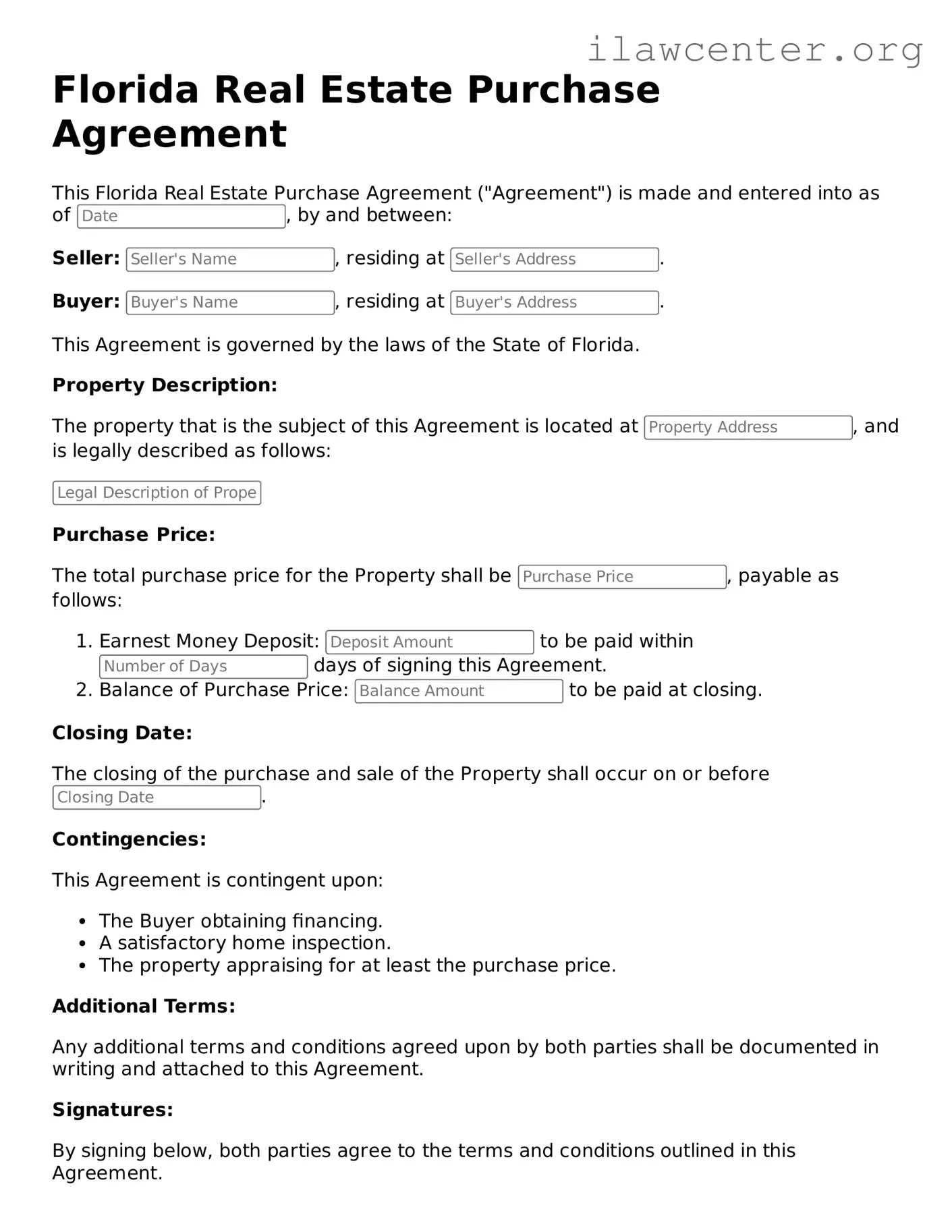
Florida Real Estate Purchase Agreement

This Florida Real Estate Purchase Agreement ("Agreement") is made and entered into as of , by and between:

Seller: , residing at .

Buyer: , residing at .

This Agreement is governed by the laws of the State of Florida.

Property Description:

The property that is the subject of this Agreement is located at , and is legally described as follows:

Purchase Price:

The total purchase price for the Property shall be , payable as follows:

  1. Earnest Money Deposit: to be paid within days of signing this Agreement.
  2. Balance of Purchase Price: to be paid at closing.

Closing Date:

The closing of the purchase and sale of the Property shall occur on or before .

Contingencies:

This Agreement is contingent upon:

  • The Buyer obtaining financing.
  • A satisfactory home inspection.
  • The property appraising for at least the purchase price.

Additional Terms:

Any additional terms and conditions agreed upon by both parties shall be documented in writing and attached to this Agreement.

Signatures:

By signing below, both parties agree to the terms and conditions outlined in this Agreement.

______________________________
Seller's Signature

______________________________
Buyer's Signature

Date:

PDF Form Characteristics

Fact Name Description
Governing Law The Florida Real Estate Purchase Agreement is governed by the laws of the State of Florida.
Standardization This form is a standardized document commonly used in real estate transactions across Florida, ensuring consistency.
Essential Elements The agreement typically includes key elements such as purchase price, property description, and closing date.
Disclosure Requirements Florida law mandates specific disclosures be included in the agreement to protect both buyers and sellers.

Instructions on Utilizing Florida Real Estate Purchase Agreement

Completing the Florida Real Estate Purchase Agreement form is an important step in the process of buying or selling property. After filling out this form, it will be necessary to review the details carefully and ensure that all parties involved are in agreement before proceeding with the transaction.

  1. Begin by entering the date at the top of the form.
  2. Provide the names and contact information of the buyer(s) and seller(s) in the designated sections.
  3. Clearly identify the property being purchased, including the address and legal description.
  4. Specify the purchase price in the appropriate field.
  5. Outline the terms of the deposit, including the amount and due date.
  6. Indicate the closing date or timeframe for the transaction.
  7. Include any contingencies, such as financing or inspection requirements.
  8. Detail any additional terms or conditions that are relevant to the agreement.
  9. Have all parties sign and date the form in the designated areas.
  10. Ensure that copies of the signed agreement are distributed to all parties involved.

Important Facts about Florida Real Estate Purchase Agreement

What is a Florida Real Estate Purchase Agreement?

A Florida Real Estate Purchase Agreement is a legally binding contract between a buyer and a seller for the sale of real property. This document outlines the terms and conditions of the sale, including the purchase price, closing date, and any contingencies that must be met before the sale can proceed. It serves as a foundation for the transaction and protects the interests of both parties involved.

What key elements should be included in the agreement?

Essential elements of a Florida Real Estate Purchase Agreement include the names of the buyer and seller, a detailed description of the property, the purchase price, and any earnest money deposit. Additionally, the agreement should specify the closing date, any contingencies such as financing or inspections, and any disclosures required by law. Clear communication of these details helps prevent misunderstandings later in the process.

Are there any contingencies that can be included in the agreement?

Yes, contingencies are an important part of the agreement. Common contingencies include financing, where the buyer must secure a mortgage; inspection, allowing the buyer to have the property professionally inspected; and appraisal, ensuring the property's value meets or exceeds the purchase price. These contingencies provide buyers with an opportunity to back out of the agreement if certain conditions are not met, offering a layer of protection in the transaction.

What happens if either party wants to back out of the agreement?

If either party wishes to withdraw from the agreement, the terms outlined in the contract will dictate the process. Generally, if a contingency has not been satisfied, the buyer may withdraw without penalty. However, if a party backs out without a valid reason or outside the agreed-upon contingencies, they may face legal consequences or financial penalties, such as losing their earnest money deposit.

Is it necessary to have a lawyer review the agreement?

Common mistakes

When filling out the Florida Real Estate Purchase Agreement form, many people inadvertently make mistakes that can lead to complications down the line. One common error is failing to include all necessary parties in the agreement. If you’re purchasing property with someone else, both names should be listed. Omitting a co-buyer can create confusion and legal issues later.

Another frequent mistake involves not specifying the property address clearly. Ensure that the complete address, including unit numbers or lot numbers, is accurately documented. A vague or incomplete address can result in disputes or delays in the closing process.

Additionally, buyers often overlook the importance of the purchase price. It should be clearly stated in the agreement. If the price is missing or incorrectly noted, it can lead to misunderstandings about the terms of the sale. Always double-check this critical detail.

People also tend to forget about contingencies. These are conditions that must be met for the sale to proceed, such as financing or inspections. Failing to include them can put you at risk if something goes wrong. Make sure to outline any contingencies clearly to protect your interests.

Another mistake is neglecting to review the closing date. This date should be realistic and agreed upon by both parties. If you don’t specify a closing date, it can lead to confusion and delays in the transaction.

Lastly, many individuals forget to sign and date the agreement. An unsigned document is not legally binding. Ensure that all required signatures are present before submitting the agreement to avoid any issues with enforceability.

Documents used along the form

The Florida Real Estate Purchase Agreement is a crucial document in the process of buying or selling property in Florida. Several other forms and documents are commonly used alongside this agreement to ensure a smooth transaction. Below is a list of these essential documents, each serving a specific purpose in the real estate process.

  • Seller's Disclosure Statement: This document provides potential buyers with information about the property's condition, including any known defects or issues. It is designed to protect both parties by ensuring transparency in the transaction.
  • Lead-Based Paint Disclosure: Required for homes built before 1978, this form informs buyers about the potential presence of lead-based paint and the associated risks. Sellers must disclose any known lead hazards.
  • Closing Statement: Also known as a HUD-1 Settlement Statement, this document outlines all financial details of the transaction, including closing costs, fees, and the final amount owed by the buyer. It is typically reviewed and signed at closing.
  • Title Insurance Policy: This policy protects the buyer and lender from potential issues related to the property title, such as liens or ownership disputes. It ensures that the buyer receives clear ownership of the property.
  • Property Appraisal: An appraisal assesses the property's market value, which is often required by lenders before approving a mortgage. It ensures that the buyer does not overpay for the property.
  • Home Inspection Report: This report results from a professional inspection of the property, identifying any structural or mechanical issues. Buyers often use this information to negotiate repairs or price adjustments before finalizing the sale.

These documents are integral to the real estate transaction process in Florida. Each serves to protect the interests of both buyers and sellers, ensuring a clear understanding of the property and its associated risks.

Similar forms

The Real Estate Purchase Agreement (REPA) is a critical document in the real estate transaction process. It shares similarities with several other legal documents in the realm of property transactions. Below are eight documents that are comparable to the REPA, along with explanations of their similarities:

  • Lease Agreement: Like the REPA, a lease agreement outlines the terms and conditions under which one party may occupy property owned by another. Both documents specify key details such as duration, payment terms, and responsibilities of each party.
  • Purchase and Sale Agreement: This document is often used interchangeably with the REPA. It serves the same purpose of detailing the terms of a property sale, including price, closing date, and contingencies.
  • Option to Purchase Agreement: This document grants a potential buyer the right, but not the obligation, to purchase property at a later date. Similar to the REPA, it includes terms regarding price and duration, providing a framework for the transaction.
  • Real Estate Listing Agreement: This agreement establishes the relationship between a seller and a real estate agent. It shares similarities with the REPA in that it outlines the terms of the sale and the responsibilities of the parties involved.
  • Escrow Agreement: An escrow agreement is often used in conjunction with a REPA. It details the conditions under which funds and documents will be held by a neutral third party until the transaction is completed, ensuring both parties meet their obligations.
  • Deed: A deed transfers ownership of property from one party to another. While it serves a different function than the REPA, both documents are essential in the property transfer process and contain important information about the transaction.
  • Title Insurance Policy: This document protects against potential disputes over property ownership. Like the REPA, it plays a vital role in ensuring a smooth transaction and provides assurances regarding the property’s title.
  • Closing Disclosure: This document outlines the final terms and costs of a mortgage. It is similar to the REPA in that it provides detailed information necessary for the completion of a real estate transaction, ensuring transparency for all parties involved.

Understanding these documents can enhance awareness of the real estate transaction process and the legal obligations involved. Each document plays a unique role, yet they all contribute to the overarching goal of facilitating property transfers.

Dos and Don'ts

When filling out the Florida Real Estate Purchase Agreement form, it's important to keep a few key points in mind. Here’s a list of what to do and what to avoid:

  • Do: Read the entire agreement carefully before filling it out.
  • Do: Provide accurate information about the property and parties involved.
  • Do: Include any contingencies that are important to you.
  • Do: Sign and date the form where required.
  • Do: Keep a copy of the completed agreement for your records.
  • Don't: Rush through the form; take your time to ensure accuracy.
  • Don't: Leave any sections blank unless instructed to do so.
  • Don't: Use unclear language; be specific in your terms.
  • Don't: Forget to consult with a real estate professional if you have questions.
  • Don't: Neglect to follow up on any deadlines mentioned in the agreement.

Misconceptions

When it comes to the Florida Real Estate Purchase Agreement form, there are several common misconceptions that can lead to confusion for buyers and sellers alike. Understanding these misconceptions is crucial for anyone involved in a real estate transaction in Florida.

  • It is a legally binding contract from the moment it is signed. Many people believe that once both parties sign the agreement, it is automatically enforceable. However, certain conditions must be met before the contract becomes legally binding, such as the completion of any contingencies outlined in the agreement.
  • All real estate transactions require a Real Estate Purchase Agreement. While it is highly recommended to have a written agreement for clarity and legal protection, not all transactions are legally required to have one. In some cases, verbal agreements may suffice, though they are harder to enforce.
  • Once signed, the terms of the agreement cannot be changed. This is not true. Parties can negotiate and amend the agreement after it has been signed, provided both parties agree to the changes. It’s important to document any modifications in writing.
  • The form is the same for all types of real estate transactions. Many assume that one standard form fits all scenarios. In reality, the Florida Real Estate Purchase Agreement can vary based on the type of property being sold, such as residential, commercial, or vacant land, and may require specific clauses tailored to those situations.

Being aware of these misconceptions can help individuals navigate the complexities of real estate transactions more effectively. Always consider consulting with a professional to ensure a smooth process.

Key takeaways

Filling out and using the Florida Real Estate Purchase Agreement form is an important step in any real estate transaction. Here are key takeaways to consider:

  • Understand the Basics: Familiarize yourself with the purpose of the agreement. It outlines the terms of the sale between the buyer and seller.
  • Complete All Sections: Ensure every section of the form is filled out completely. Missing information can lead to confusion or disputes.
  • Identify the Parties: Clearly state the names and addresses of both the buyer and seller. Accurate identification is crucial.
  • Property Description: Provide a detailed description of the property being sold. Include the address and any relevant legal descriptions.
  • Purchase Price: Clearly state the purchase price and how it will be paid. This should include details about any deposits or financing.
  • Contingencies: Specify any contingencies that must be met for the sale to proceed, such as financing or inspections.
  • Closing Date: Agree on a closing date and include it in the agreement. This is when the ownership will officially transfer.
  • Signatures Required: Both parties must sign the agreement. Without signatures, the document is not legally binding.
  • Review and Revise: Take the time to review the agreement thoroughly. Make any necessary revisions before finalizing.
  • Consult Professionals: Consider seeking legal advice or working with a real estate agent to ensure everything is in order.

These takeaways can help ensure that the Florida Real Estate Purchase Agreement is filled out correctly and used effectively in your real estate transactions.