Attorney-Verified  Rental Application Document for Florida

Attorney-Verified Rental Application Document for Florida

The Florida Rental Application form is a document used by landlords to collect essential information from potential tenants. This form helps landlords assess applicants' backgrounds, financial stability, and rental history. If you're looking to rent a property in Florida, make sure to fill out the form by clicking the button below.

Article Guide

When seeking a rental property in Florida, potential tenants will encounter the Florida Rental Application form, a crucial document that facilitates the leasing process. This form typically requests essential information about the applicant, including personal details, rental history, employment background, and financial information. By providing this information, landlords can assess the suitability of applicants for their properties. Additionally, the form often includes sections for consent to background checks and credit reports, which help landlords evaluate an applicant's reliability. Understanding the nuances of this form is vital for both tenants and landlords, as it sets the stage for a successful rental agreement and can help avoid potential disputes down the line.

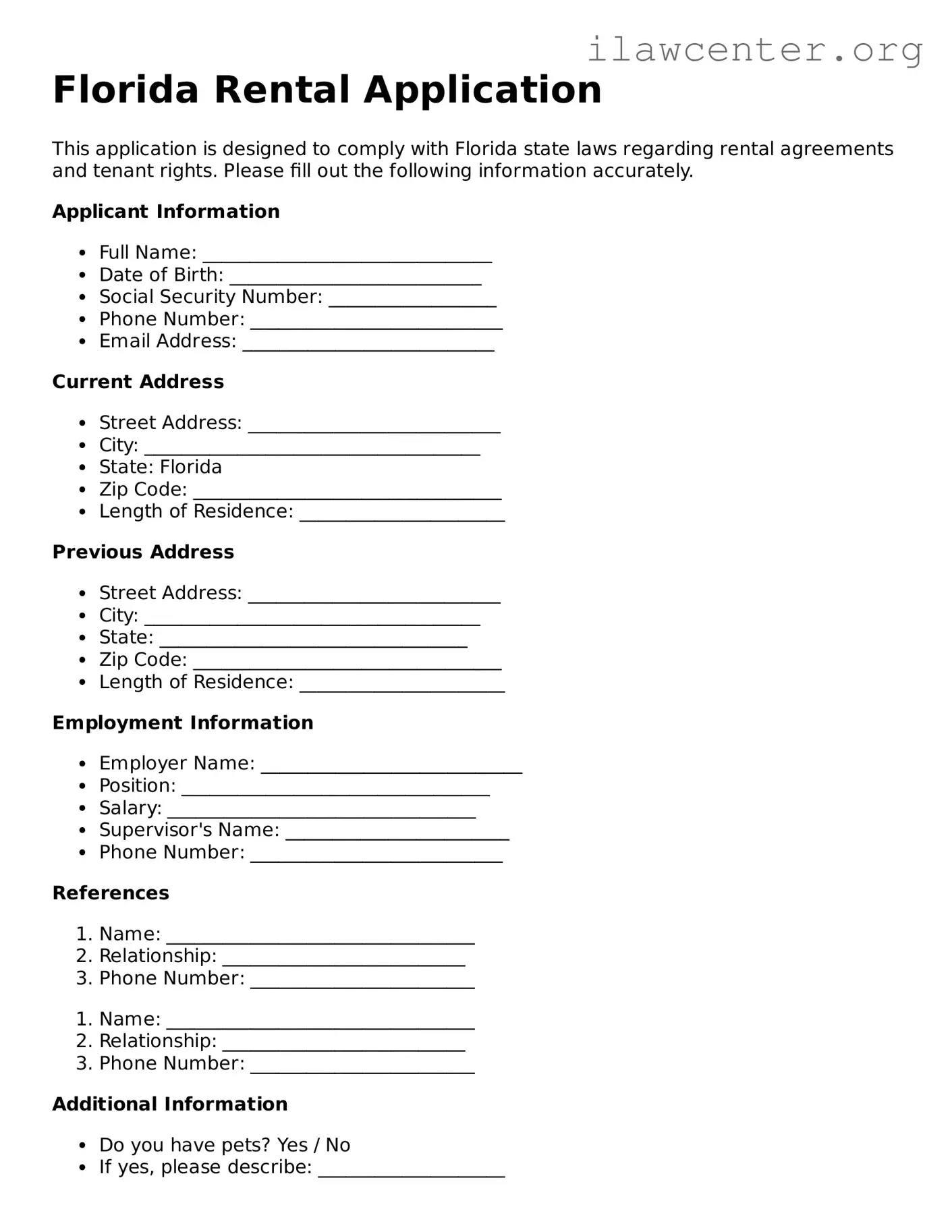
Florida Rental Application Preview

Florida Rental Application

This application is designed to comply with Florida state laws regarding rental agreements and tenant rights. Please fill out the following information accurately.

Applicant Information

  • Full Name: _______________________________
  • Date of Birth: ___________________________
  • Social Security Number: __________________
  • Phone Number: ___________________________
  • Email Address: ___________________________

Current Address

  • Street Address: ___________________________
  • City: ____________________________________
  • State: Florida
  • Zip Code: _________________________________
  • Length of Residence: ______________________

Previous Address

  • Street Address: ___________________________
  • City: ____________________________________
  • State: _________________________________
  • Zip Code: _________________________________
  • Length of Residence: ______________________

Employment Information

  • Employer Name: ____________________________
  • Position: _________________________________
  • Salary: _________________________________
  • Supervisor's Name: ________________________
  • Phone Number: ___________________________

References

  1. Name: _________________________________
  2. Relationship: __________________________
  3. Phone Number: ________________________
  1. Name: _________________________________
  2. Relationship: __________________________
  3. Phone Number: ________________________

Additional Information

  • Do you have pets? Yes / No
  • If yes, please describe: ____________________
  • Do you smoke? Yes / No
  • Are you currently involved in any lawsuits? Yes / No

Signature

I hereby certify that the information provided in this application is true and complete to the best of my knowledge. I understand that any false information may result in the rejection of my application.

Signature: ___________________________

Date: ________________________________

PDF Form Characteristics

Fact Name Description
Purpose The Florida Rental Application form is used by landlords to screen potential tenants.
Information Required Applicants typically provide personal details, rental history, and employment information.
Governing Law Florida Statutes, Chapter 83 governs residential tenancies and rental applications.
Application Fee Landlords may charge a non-refundable application fee to cover screening costs.
Screening Process The application may include background checks, credit checks, and rental history verification.
Discrimination Laws Landlords must comply with the Fair Housing Act to avoid discriminatory practices.
Approval Timeline Landlords generally have a few days to respond to an application after submission.
Security Deposit Upon approval, landlords may require a security deposit before signing the lease.
Right to Privacy Applicants have a right to privacy regarding their personal information on the application.
State-Specific Forms Florida does not have a standardized rental application form; landlords may create their own.

Instructions on Utilizing Florida Rental Application

Once you have the Florida Rental Application form in hand, it’s time to fill it out carefully. Completing the application accurately is crucial for securing a rental property. Follow these steps to ensure you provide all necessary information.

  1. Read the Instructions: Start by reviewing any instructions that accompany the form. This will help you understand what information is required.
  2. Personal Information: Fill in your full name, current address, and contact information. Include your phone number and email address.
  3. Rental History: Provide details about your previous residences. Include the addresses, landlords' names, and dates of residency.
  4. Employment Information: List your current employer, job title, and length of employment. Include your supervisor's name and contact information.
  5. Income Verification: Indicate your monthly income. Attach any necessary documentation, such as pay stubs or bank statements, if required.
  6. References: Include personal and professional references. Provide their names, phone numbers, and relationship to you.
  7. Background Information: Answer any questions regarding criminal history or credit issues honestly.
  8. Signature: Sign and date the application to certify that all information is accurate and complete.

After completing the application, review it for any errors or omissions. Submitting a well-prepared application can significantly improve your chances of being approved for the rental property.

Important Facts about Florida Rental Application

What is a Florida Rental Application form?

The Florida Rental Application form is a document that potential tenants complete to apply for a rental property. It typically includes personal information, rental history, employment details, and references. Landlords use this form to assess the suitability of applicants for their rental units.

What information do I need to provide on the application?

Applicants generally need to provide their full name, contact information, Social Security number, and employment details. You may also need to list previous addresses, rental history, and references. Some applications may require consent for background checks or credit reports.

Is there a fee for submitting a rental application?

Many landlords charge an application fee to cover the costs of processing the application, including background checks. This fee can vary widely, so it’s important to ask the landlord or property manager about any associated costs before submitting your application.

How long does it take to process a rental application?

The processing time can vary depending on the landlord or property management company. Generally, it can take anywhere from a few hours to several days. It is advisable to follow up with the landlord if you have not received a response within a reasonable timeframe.

Can I be denied a rental application?

Yes, landlords can deny rental applications for various reasons, including poor credit history, insufficient income, or negative rental history. If you are denied, landlords are usually required to provide a reason, and you may request a copy of your credit report if that was a factor.

What should I do if I find inaccuracies in my rental application?

If you notice inaccuracies after submitting your application, contact the landlord or property manager immediately. It’s essential to correct any misinformation, as it could affect your chances of being approved. Be prepared to provide documentation to support your claims.

Can I appeal a rental application denial?

While there is no formal appeal process in most cases, you can reach out to the landlord or property manager to discuss the denial. If you believe the denial was based on incorrect information or discrimination, you may want to seek legal advice or contact local housing authorities for assistance.

Common mistakes

Filling out a rental application can be a daunting task, especially in Florida's competitive housing market. Many applicants make common mistakes that can hinder their chances of securing a rental. Understanding these pitfalls can help individuals present themselves more favorably to potential landlords.

One frequent mistake is incomplete information. Applicants often leave sections blank or fail to provide required details. This can create the impression of carelessness or a lack of attention to detail. Landlords seek complete applications to assess potential tenants thoroughly, so ensuring all fields are filled out accurately is crucial.

Another common error is providing inaccurate information. Misrepresenting income, rental history, or personal references can lead to immediate disqualification. It is essential to be honest and precise, as landlords typically conduct background checks and verify the information provided.

Many applicants also overlook the importance of timeliness. Submitting the application late or delaying the response can result in missed opportunities. Given the fast-paced nature of the rental market, promptness in submitting applications can significantly enhance one's chances of securing a lease.

Failure to read the instructions carefully is another mistake. Each rental application may have unique requirements, including specific documentation or fees. Ignoring these details can lead to unnecessary delays or rejection of the application.

Some individuals neglect to prepare necessary documentation ahead of time. Landlords often request pay stubs, identification, or references. Having these documents ready can streamline the process and demonstrate preparedness to the landlord.

Additionally, applicants sometimes forget to check their credit history before applying. A poor credit score can be a red flag for landlords. Being aware of one's credit standing allows applicants to address any issues proactively or explain them during the application process.

Moreover, failing to follow up after submitting an application can be detrimental. A polite inquiry about the status of the application shows interest and can keep the applicant top of mind for the landlord.

Lastly, neglecting to present oneself professionally can impact the application. This includes using appropriate language in written communication and dressing appropriately for in-person meetings. First impressions matter, and presenting oneself well can positively influence a landlord's decision.

Documents used along the form

When renting a property in Florida, the rental application is just one piece of the puzzle. Several other documents are commonly used alongside it to ensure a smooth leasing process. These forms help both landlords and tenants establish expectations and protect their rights. Here’s a list of essential documents you might encounter:

  • Lease Agreement: This is the formal contract between the landlord and tenant outlining the terms of the rental arrangement, including rent amount, duration, and responsibilities of both parties.
  • Background Check Authorization: A document that allows landlords to conduct a background check on prospective tenants, which may include credit history, criminal record, and rental history.
  • Credit Report Consent Form: This form grants permission for landlords to obtain a credit report to assess the financial reliability of the applicant.
  • Pet Agreement: If pets are allowed, this document specifies the rules and regulations regarding pet ownership within the rental property.
  • Move-In Inspection Checklist: A list used to document the condition of the property before the tenant moves in, helping to avoid disputes over damages later on.
  • Rental History Verification: A form that allows landlords to contact previous landlords to confirm the applicant's rental history, including payment habits and property condition.
  • Security Deposit Receipt: A receipt provided by the landlord acknowledging the receipt of the security deposit, which protects both parties regarding the return of the deposit at the end of the lease.

These documents work together to create a transparent and fair rental process. Understanding each one can help tenants and landlords alike navigate their responsibilities and rights, leading to a more positive rental experience.

Similar forms

  • Lease Agreement: This document outlines the terms and conditions of renting a property. Like a rental application, it requires personal information and details about the tenant's rental history.

  • Employment Verification Form: This form confirms a tenant's employment status and income. Similar to a rental application, it helps landlords assess the financial stability of potential renters.

  • Credit Report: A credit report provides insight into an individual's credit history. It is often required alongside a rental application to evaluate a tenant's reliability in making payments.

  • Background Check Authorization: This document allows landlords to conduct a background check on a prospective tenant. It parallels the rental application in that it seeks to ensure the safety and security of the property and other tenants.

  • Rental History Verification: This form gathers information about a tenant's previous rental experiences. It serves a similar purpose to the rental application by providing insight into the applicant's behavior as a tenant.

  • Pet Application: If a property allows pets, a pet application is often required. This document collects information about the pet and its owner, akin to how a rental application collects tenant details.

  • Guarantor Agreement: This document involves a third party agreeing to take responsibility for the lease if the tenant defaults. It is similar to a rental application as it assesses the financial backing of the tenant.

  • Security Deposit Agreement: This outlines the terms regarding the security deposit required for renting. Like a rental application, it includes terms that protect both the landlord and tenant.

  • Move-In Checklist: This document details the condition of the property before the tenant moves in. It shares similarities with the rental application by ensuring both parties agree on the property's state.

  • Tenant Reference Form: This form collects references from previous landlords or personal contacts. It complements the rental application by providing additional context about the applicant's character and reliability.

Dos and Don'ts

When filling out a Florida Rental Application form, it’s essential to approach the process thoughtfully. Here’s a list of ten things you should and shouldn’t do to ensure your application is complete and accurate.

  • Do read the entire application thoroughly before filling it out.
  • Don’t leave any sections blank; incomplete applications may be rejected.
  • Do provide accurate personal information, including your full name and contact details.
  • Don’t use nicknames or abbreviations for your name; landlords need your legal name.
  • Do list all sources of income, including employment and any additional income streams.
  • Don’t exaggerate or misrepresent your income; honesty is crucial.
  • Do include references from previous landlords or personal references if requested.
  • Don’t provide false references; this can lead to disqualification.
  • Do check your application for spelling and grammatical errors before submission.
  • Don’t submit your application without a proper signature; it validates your agreement.

By following these guidelines, you can enhance your chances of securing the rental property you desire. A well-prepared application reflects your seriousness as a prospective tenant.

Misconceptions

When it comes to the Florida Rental Application form, several misconceptions can lead to confusion for both landlords and tenants. Here are eight common misunderstandings:

  1. All rental applications are the same.

    In reality, rental applications can vary significantly by property management companies and landlords. Each may have unique requirements and questions.

  2. A rental application guarantees approval.

    Submitting an application does not ensure that a tenant will be approved. Landlords consider various factors, including credit history and rental references.

  3. Only income matters on the application.

    While income is important, landlords also assess credit history, rental history, and other factors that reflect a tenant's reliability.

  4. There is no fee for submitting an application.

    Many landlords charge a non-refundable application fee to cover the cost of background checks and processing. This fee varies by property.

  5. All information on the application is confidential.

    While personal information is protected, landlords may share details with credit agencies or other necessary parties during the approval process.

  6. Rental applications are only for long-term leases.

    Short-term rentals also require applications. Landlords need to vet potential tenants regardless of the lease duration.

  7. Once submitted, the application cannot be changed.

    Applicants can often update or correct information if they notify the landlord before a decision is made.

  8. Landlords must accept all applications.

    Landlords have the right to deny any application based on their criteria, provided they comply with fair housing laws.

Understanding these misconceptions can help both landlords and tenants navigate the rental process more effectively.

Key takeaways

When considering a rental property in Florida, understanding the rental application process is essential. Here are some key takeaways to keep in mind:

  • Personal Information: Be prepared to provide your full name, contact details, and social security number. This information helps landlords verify your identity.
  • Rental History: Landlords typically want to know about your previous residences. Include addresses, dates of residence, and contact information for past landlords.
  • Employment Information: Document your current employment status. Include your employer's name, your position, and your income to demonstrate financial stability.
  • References: Providing personal or professional references can enhance your application. Choose individuals who can vouch for your character and reliability.
  • Credit Check: Many landlords will conduct a credit check. Ensure that your credit report is accurate and that you are aware of your credit score before applying.
  • Application Fee: Be prepared to pay a non-refundable application fee. This fee covers the cost of processing your application and conducting background checks.
  • Disclosure of Criminal History: If applicable, disclose any criminal history. Being upfront can prevent issues later in the application process.
  • Timeliness: Submit your application promptly. Many desirable properties receive multiple applications, so acting quickly can increase your chances of approval.

Understanding these key aspects can make the rental application process smoother and more successful. Approach it with care, and you’ll be one step closer to securing your new home.