Fourth Step Inventory PDF Template

Fourth Step Inventory PDF Template

The Fourth Step Inventory is a tool used in recovery programs, particularly in Alcoholics Anonymous, to help individuals assess their character. This inventory encourages honest reflection on both strengths and weaknesses, allowing people to identify their moral values and behaviors. By filling out this form, you can take a significant step toward understanding yourself better and improving your life; click the button below to get started.

Article Guide

The Fourth Step Inventory form serves as a crucial tool for individuals seeking personal growth and recovery, particularly within the framework of Alcoholics Anonymous. This form encourages users to reflect on both their strengths and weaknesses, promoting a balanced view of their character. By utilizing worksheets based on the foundational text of Alcoholics Anonymous, specifically from pages 63 to 71 of the Big Book, participants can engage in a structured self-examination. While some sections are marked as optional, many find it beneficial to document their flaws and assets, allowing for a deeper understanding of their moral values and behaviors. The process emphasizes honesty and fairness, urging individuals to assess their current selves rather than dwelling on past actions influenced by substance use. The inventory is not merely a list of defects but a comprehensive assessment that includes positive traits as well, fostering a sense of self-acceptance. Users are guided to prioritize the flaws that significantly impact their lives, ensuring that the focus remains on actionable change rather than self-criticism. Ultimately, this form is designed to aid in the journey of self-discovery and personal accountability, setting the stage for further steps in the recovery process.

Fourth Step Inventory Preview

hR
1/1/2005
FOURTH STEP INVENTORY
These
Fourth Step
worksheets use the wording from
Alcoholics Anonymous
(the Big Book)
pages 63-71. Text in
italics
is quoted from the Big Book. When the word “optional” is used in
the worksheets, it means that the Big Book suggests doing this but does not suggest writing
anything down. However, many people who have used these worksheets found it helpful to
write down their flaws and their specific defects.
Remember, these worksheets are meant to be helpful, but do not feel restricted by them.
You can get the latest version of these worksheets and other AA materials at www.royy.com.
These worksheets are not officially produced or approved by Alcoholics Anonymous. They have been circulating unofficially
among AA members for at least 50 years in various versions. Their origin is unknown to the producer of this version.
- 1 -
H
ELPFUL
H
INTS
P
REPARATION
: before you start this
written Fourth Step, read pages 63-71 in the
Big Book and the Fourth Step in the
Twelve
Steps and Twelve Traditions.
N
OTE
:
1. This inventory is
not
an exercise in
beating yourself up. Be scrupulously honest
but be fair to yourself. Inventory your
strengths as well as your defects.
2. The following checklist merely
suggests
what some people consider flaws. You must
decide how they fit with your own moral
code. Do not be limited by this list--add your
other flaws and assets. It is in this Fourth
Step that you begin to discover
your
values–
what
you
consider right and wrong,
functional and dysfunctional behavior–and
how you live up to
your
standards.
3. This inventory is about who you are
now
,
not who you were when you were drinking
and taking drugs. Be careful, however, not to
blame all past bad behavior on drinking and
drugs if the seed of that bad behavior still
exists in you.
4. Don't be discouraged when your character
defects are not immediately lifted after you
have completed your 5th Step--that is the
work of the 6
th
, 7
th
and 10
th
Steps.
5.
Prioritize!
Spend most of your time on
the 20% of your flaws that cause 80% of the
trouble in your life. You can initially check
off as many flaws as you want on the
checklist but then prioritize to the 12 that
cause the most trouble.
If you list more
than 12 flaws, you are probably beating
yourself up!
You must check at lease
twice
as many assets
as you check flaws or you
really are beating yourself up.
I
NTO
A
CTION
:
On the following list, check
all of your defects
and
all of your assets.
This is an inventory of
both
bad and good
characteristics. Then discuss your defects
(with your best example of each) on the
Review of Flaws
form.
royy@royy.com
Glossary of Words Used in Steps Four and Five
Moral Inventory
..
A list of personality defects, violations of moral
principles, defects in character, maladjustments,
and dysfunctional behavior.
Character ...............Moral vigor or firmness, especially as acquired
through self-discipline.
Defect ....................Lack of something necessary for completeness; flaw;
weakness, fault; same as Shortcoming.
Dishonest...............The act or practice of telling a lie, or of cheating,
deceiving, stealing, etc.
Exact......................Precise, detailed.
Fault.......................Something done wrongly, an error or mistake.
Fear........................Painful emotion marked by alarm, dread, anxiety,
agitation, uneasiness, apprehension, etc.
Frightened .............A temporary or continual state of Fear. Anxious.
Inconsiderate ......... Without thought or consideration of others.
Nature.................... The essential characteristic of a thing.
Self-centered ......... Occupying or concerned only with one’s own affairs
(same as Selfish).
Self-seeker ............A person who seeks only or mainly to further his
own interests.
Selfish ................... Too much concerned with one’s own welfare or
interests and having little or no concern for others
(same as self-centered).
Shortcoming..........Falling short of what is expected or required (same
as Defect).
Wrong ...................Immoral, improper; not suitable or appropriate.
Footnotes to the list on following page:
1
Dr. Bob’s Fourth Step List; in “He Sold Himself Short,” (
Alcoholics Anonymous,
p. 292)
2
Seven Deadly Sins (
Twelve Steps and Twelve Traditions,
p. 48)
3
Clarence Snyder’s Fourth Step List (one of the original 40 members of AA, see “Home Brewmeister,
Alcoholics Anonymous,
pp. 297-303)
4
Boy Scout Law, Robert Binkey's
The Official Boy Scout Handbook
(10th edition, 1990)(so?
. . . what? . . . )
- 2 -
Checklist of Flaws and Assets
4 Character Defect Opposite Asset 4
aggressive, belligerent good-natured, gentle
angry
2
forgiving, calm, generous
apathetic interested, concerned, alert
apprehensive, afraid calm, courageous
argumentative, quarrelsome agreeable
arrogant, insolent unassuming, humble
attacking, critical fair, self-restrained
avoidant faces problems and acts
blocking honest, intuitive
boastful modest, humble
careless
1
careful, painstaking, concerned
cheating honest
competitive (socially) cooperative
compulsive free
conceited
1
,
self-imp ort ant humble, modest
contradictory, oppositional| reasonable, agreeable
contrary, intractable, pigheaded reasonable
controlling lets go, esp. of other's lives
cowardly brave
4
critical
3
non-judgmental, praising, tolerant,
cynical open-minded
deceitful guileless, honest
defensive open to criticism
defiant, contemptuous respectful
denying honest, accepting
dependent accepts help but is self-reliant
depressed, morose| hopeful, optimistic, cheerful
4
dirty, poor hygiene clean
4
dishonest
3
honest
disloyal, treacherous faithful, loyal
4
disobedient obedient
4
disrespectful, insolent respectful, reverent
4
enabling setting boundaries, tough love
envying
2
,
3
empathetic, generous, admiring
evasive, deceitful candid, straightforward
exaggerating honest, realistic
faithless, disloyal reliable, faithful
falsely modest honest, has self-esteem
falsely prideful
2
,
3
modest, humble
fantasizing, unrealistic practical, realistic
fearful
3
confidant, courageous
forgetful responsible
gluttonous
2
, excessive moderate
gossiping
3
closed-mouth, kind, praising
greedy
2
,
3
moderate, generous, sharing
hateful
3
forgiving, loving, concerned for others
hypersensitive tolerant, doesn't personalize
ill-tempered
1
, bit chy good-tempered, calm
impatient
3
patient
impulsive, reckless| consistent, considered actions
inconsiderate thoughtful, considerate
indecisive, timid firm, decisive
indifferent, apathetic, aloof caring
inflexible, stubborn open-minded, flexible
insecure, anxious self-confident, secure
insincere
3
, hypoc ritical sincere, honest
intolerant
1
tolerant, understanding, patient
irresponsible, reckless responsible
isolating, solitary sociable, outgoing
jealous
1
,
3
trusting, generous, admiring
judgmental broadminded, tolerant
justifying (own actions) honest, frank, candid
lack of purpose purposeful
lazy, indolent industrious, conscientious
loud tasteful, quiet
lustful
2
healthy sexuality
lying
3
honest
manipulative candid, honest, non-controlling
masked, closed honest, open, candid
nagging supportive
narrow minded open minded
obscene, crude modest, courteous
over emotional emotionally stable
perfectionistic realistic goals
pessimistic| realistic, hopeful, optimistic, trusting
possessive generous
prejudiced open-minded
procrastinates
3
disciplined, acts promptly
projecting (negative) clear sighted, optimistic
rationalizing candid, honest
resentful
1
,
3
, bitter, hateful forgiving
resisting growing willing to grow
rude, discourteous polite, courteous
4
sarcastic
1
praising, tolerant
self-important
3
humble, modest
self-centered caring of others
self-destructive, self-defeating self-fulfilling
self-hating self-accepting, loving
self-justifying
3
admitting wrongs, humble
self-pitying
3
grateful, realistic, accepting
self-righteous humble, understanding
self-seeking
3
selfless, concerned for others
selfish
1
,
3
altruistic, concerned with others
shy outgoing
slothful (lazy)
2
,
3
industrious, taking action
spiteful, malicious forgiving
stealing honest
stubborn open-minded, willing
sullen cheerful
superior, grandiose, pretentious humble
superstitious realistic, no magical thinking
suspicious trusting
tense calm, serene
thinking
negatively
3
being positive
treacherous trustworthy
undisciplined, self-indulgent disciplined
unfair fair
unfriendly, hostile, bitchy friendly
4
ungrateful thankful, grateful
unkind, mean, malicious, spiteful kind
4
unsupportive of others supportive
untrustworthy, unreliable, dishonest| trustworthy
4
useless, destructive helpful
4
vain modest, humble
vindictive forgiving
violent gentle
vulgar
3
polite
wasteful thrifty
4
willful accepting of the inevitable
withdrawn outgoing
wordy, verbose frank, to the point, succinct
Other dysfunctional ways of acting, feeling or
thinking which cause others or me pain (specify in
the following
Review of Flaws
).
See source footnotes on page 2.
- 3 -
Instructions for Completion
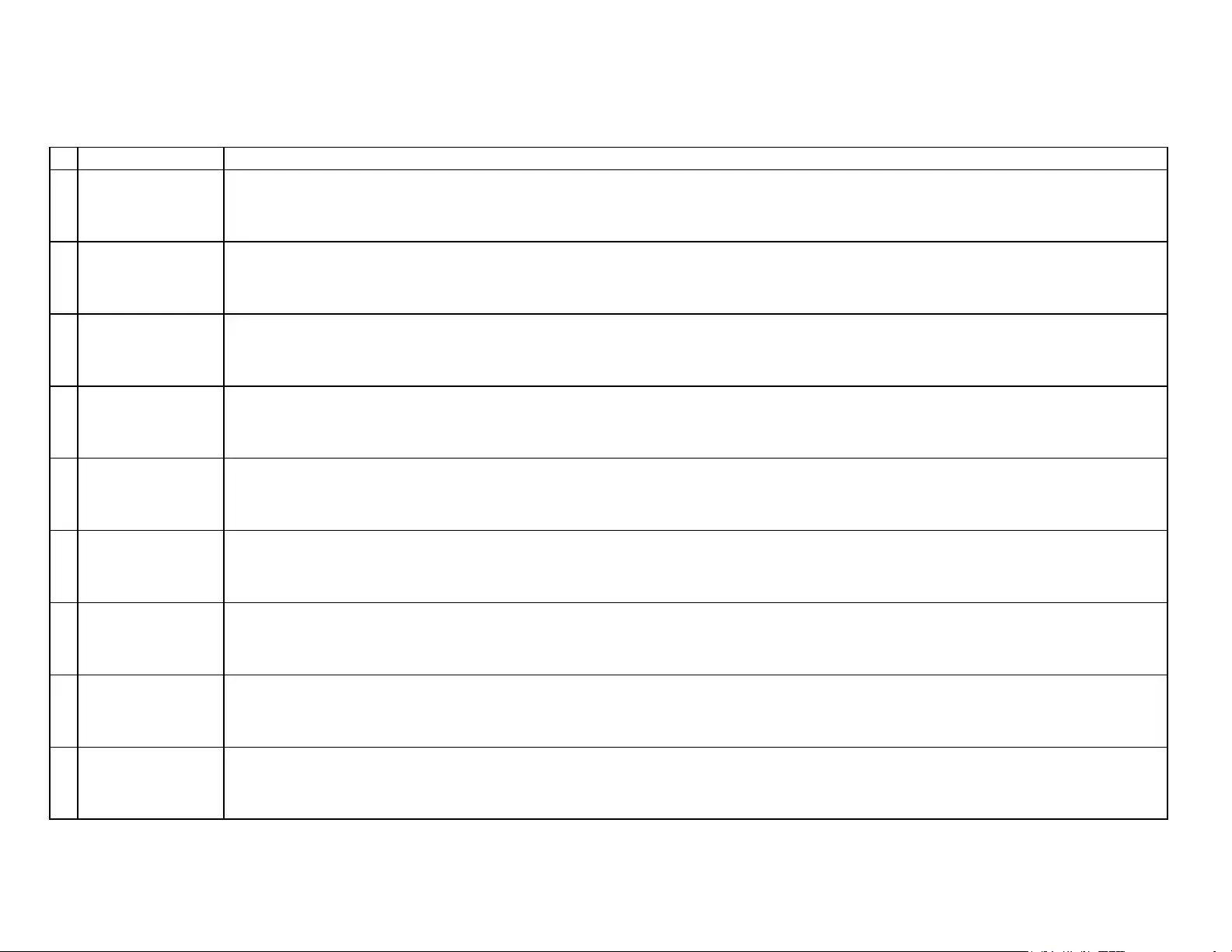
First, we searched out the flaws in our make-up which caused our failure.
REVIEW OF FLAWS
(optional)
F
LAW
Give your best example of this specific flaw in your life.
1
2
3
4
5
6
7
8
9
- 4 -
F
LAW
Give your best example of this specific flaw in your life.
10
11
12
If you must list additional flaws do so below. Do not beat yourself up.
- 5 -
RESENTMENTS
Do not be restricted by this list. It is just to help you get started. List your resentments on the next pages.
PEOPLE
Father
Mother
Boy Friends/Lovers
Brothers
Sisters
Sponsors
Employers
A.A. Friends
Acquaintances
Aunts
Best Friends
C.A. Friends
Childhood Friends
Clergy
Co-Workers
Cousins
Creditors
Doctors
Employees
Girl Friends
Husbands
In-Laws
Judges
Lawyers
Life-long Friends
Parole Officers
Police
Probation Officers
School Friends
Teachers
Uncles
Wives
INSTITUTIONS
Authority
Bible
Child Protection
Church
Correctional System
Education System
Government
Law
Marriage
Health/Mental Health System
Nationality
Philosophy
Races
Religion
Society
PRINCIPLES
Adultery
Death
God-Deity
Golden Rule
Heaven
Hell
Homophobia
Jesus Christ
Life After Death
Original Sin
Retribution
Satan
Seven Deadly Sins
Sin
Ten Commandments
MORE from your experience!
- 6 -
Step Four
Resentments
Checklist
Column 4*
“Putting out of our minds the wrongs others had done, we resolutely looked for our
own mistakes. Where had we been selfish, dishonest, self-seeking and frightened?”
S
ELFISH
Not seeing others point of view,
problems or needs
Wanting things my way
Wanting special treatment
Wanting others to meet my needs–
dependence
Wanting what others have
Wanting to control–dominance
Thinking I'm better–grandiosity
Wanting to be the best
Thinking others are jealous
Wanting others to be like me
Being miserly, possessive
Wanting more than my share
Reacting from self loathing, self
righteousness
Too concerned about me
Not trying to be a friend
Wanting to look good or be liked
Concerned only with my needs
D
ISHONEST
Not seeing or admitting where I was
at fault
Having a superior attitude–thinking
I'm better
Blaming others for my problems
Not admitting I've done the same
thing
Not expressing feelings or ideas
Not being clear about motives
Lying, cheating, stealing
Hiding reality–not facing facts
Stubbornly holding on to inaccurate
beliefs
Breaking rules
Lying to myself
Exaggerating, minimalizing
Setting myself up to be “wronged”
Expecting others to be what they are
not
Being perfectionistic
S
ELF
S
EEKING
Manipulating others to do my will
Putting others down internally or
externally to build me up
Engaging in character assassination
Acting superior
Acting to fill a void
Engaging in gluttony or lusting at the
expense of another person
Ignoring others’ needs
Trying to control others
Getting revenge when I don't get
what I want
Holding a resentment
Acting to make me feel good
F
RIGHTENED
(
OF
)
Peoples' opinions
Rejection, abandonment
Loneliness
Physical injury, abuse
Not being able to control or change
someone
My inferiority, inadequacy
Criticism
Expressing ideas or feelings
Getting trapped
Exposure, embarrassment
_______________
*Thanks to Anonymous in New England.
-7-
Instructions for Completion
Complete each column top to bottom before proceeding to the next column.
Thus, for instance, fill in all the names of those you are resentful at
before filling in the column for the cause of each resentment. List real resentments, not imaginary or
theoretical resentments. Is the resentment a problem for you, does it cause you pain?
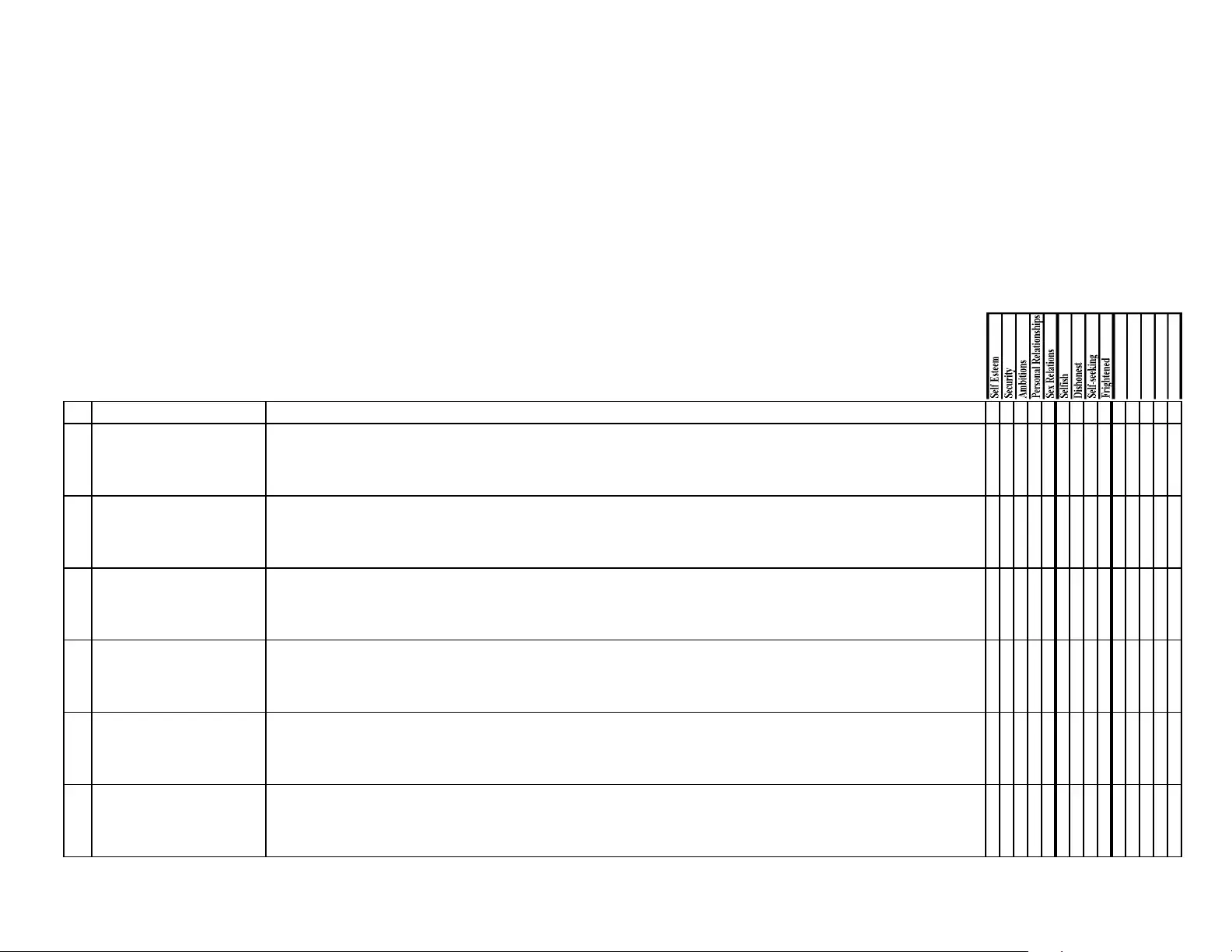
Column 1 In dealing with resentments we set them on paper. We listed people, institutions or principles with whom we were angry.
Column 2 We asked ourselves why we were angry.
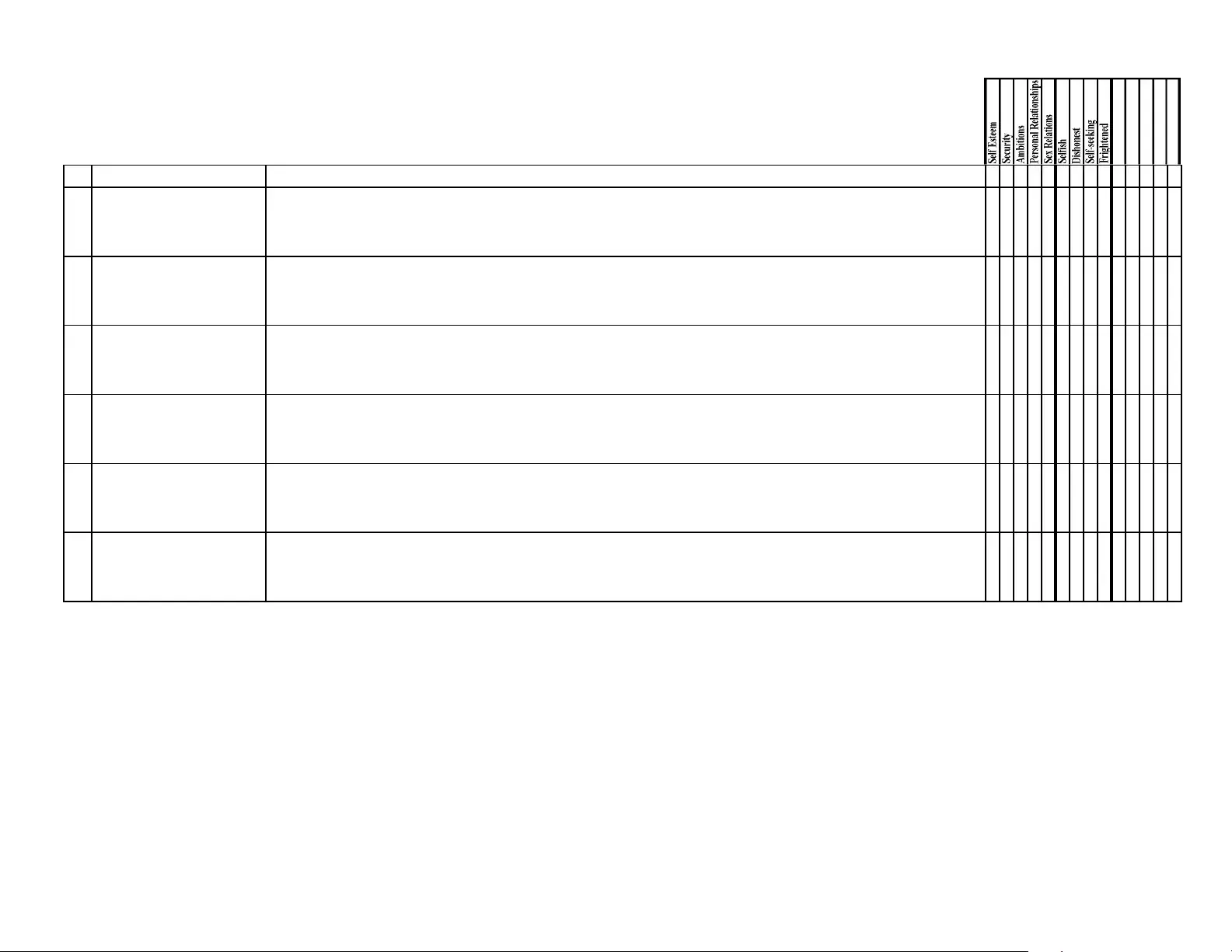
Column 3 On our grudge list we set opposite each name our injuries. Was it our self-esteem, our security, our ambitions, our
personal, or sex relations which had been interfered with?
Column 4 Referring to our list again. Putting out of our minds the wrongs others had done, we resolutely looked for our own
mistakes. Where had we been selfish, dishonest, self-seeking and frightened?
Column 5 This Column is optional. List specific other defects to show your participation in the resentments.
Reading from left to right we now see the resentment (Column 1), the cause (Column 2), the part of self that had been affected
(Column 3), and the exact nature of the defect within us that allowed the resentment to surface and block us off from God’s will
(Columns 4 and 5).
COLUMN 1 COLUMN 2
REVIEW OF
RESENTMENTS
“SELF”
COLUMN 3 COL. 4 COLUMN 5
Affects My My Specific
Own Defects
Mistakes (optional)
I’m
RESENTFUL
at: The Cause:
1
2
3
4
5
6
- 8 -
I’m
RESENTFUL
at: The Cause
7
8
9
10
11
12
If you must list additional resentments do so below.
-9-
FEARS
Do not be restricted by this list. It is just to help you get started. List your fears on the next pages
abandonment
aging
anger
authority figures
being alone
being deceived
being found out
being myself
change
compliments
confrontation
creditors
death
denial, my
disapproval
disease
divorce
embarrassment
employment
facing myself
failure
fear
feelings
financial insecurity
flying
fourth & fifth steps
future, the
getting fat or thin
God
going home
going out on a “whim”
having children
homelessness
homosexuality
honesty
humiliation
hurting others
I’m a fraud and others will find out
incarceration
intimacy
IRS, the
letting go
living
loneliness
losing hope
love
mediocrity
money
needing anyone
not being good enough
not being happy
not being liked
not being perfect
people (specify who)
police, the
poverty
procrastination
rape
rejection
relationships
resentments, my
responsibility
risks
saying that I can’t do something
sex
sponsor, my
success
unemployment
unknown, the
violence
work
Search your own experience for other fears.
.

File Properties

Fact Name Description
Source of Content The Fourth Step Inventory form is based on the wording found in the Alcoholics Anonymous Big Book, specifically pages 63-71.
Optional Elements The form includes optional sections where individuals may choose to write down their flaws and assets, although this is not required.
Historical Context This form has been used unofficially among AA members for over 50 years, though its exact origin remains unknown.
Preparation Guidelines Before completing the inventory, individuals are advised to read the relevant sections in the Big Book and the Twelve Steps and Twelve Traditions.
Governing Law There are no specific state laws governing the use of the Fourth Step Inventory form, as it is a personal recovery tool rather than a legal document.

Instructions on Utilizing Fourth Step Inventory

Completing the Fourth Step Inventory form is a significant part of personal reflection. After you fill out the form, you will move on to discussing your findings, particularly your flaws, using the Review of Flaws section. This step encourages honesty and self-awareness, allowing you to identify patterns and behaviors that may need attention.

  1. Prepare by reading pages 63-71 in the Big Book and the Fourth Step in the Twelve Steps and Twelve Traditions.
  2. Gather your materials, including the Fourth Step Inventory form and a pen or pencil.
  3. Begin by checking off all your defects and assets from the provided list. Be thorough in your assessment.
  4. Ensure that you check at least twice as many assets as flaws to maintain a balanced perspective.
  5. Prioritize the flaws that cause the most trouble in your life, focusing on the 12 most significant ones.
  6. For each flaw, think of your best example that illustrates this defect in your life.
  7. If necessary, list any additional flaws below the main list, but avoid overwhelming yourself.
  8. Once completed, review your inventory and prepare to discuss your findings in the Review of Flaws section.

Important Facts about Fourth Step Inventory

What is the purpose of the Fourth Step Inventory form?

The Fourth Step Inventory form is designed to help individuals reflect on their character traits, both positive and negative. It encourages a balanced assessment of oneself, allowing for the identification of flaws and assets. This process is not meant to induce guilt or shame but rather to promote self-awareness and personal growth. By recognizing both strengths and weaknesses, individuals can better understand their values and how they align with their behaviors.

How should I prepare to complete the Fourth Step Inventory?

Preparation is key for a meaningful experience with the Fourth Step Inventory. It is recommended to read pages 63-71 in the Big Book of Alcoholics Anonymous, as well as the Fourth Step section in the Twelve Steps and Twelve Traditions. This foundational reading provides context and guidance. Approach this inventory with honesty and fairness, ensuring you acknowledge both your strengths and weaknesses. Remember, this is a personal journey, and you should feel free to expand beyond the provided checklist if needed.

What if I struggle to identify my flaws and assets?

It is common to feel uncertain when reflecting on personal flaws and assets. If you find it challenging, consider discussing your thoughts with a trusted friend or a sponsor. They can provide insights that you may overlook. Additionally, take your time. The inventory process is not a race. It is important to be gentle with yourself and allow the reflections to unfold naturally. Focus on the traits that resonate most with you, and remember that this is a personal exploration.

How many flaws and assets should I list on the inventory?

While there is no strict rule, it is suggested that you prioritize your reflections. Initially, you may check off as many flaws and assets as you wish. However, aim to narrow your focus to about 12 flaws that cause the most trouble in your life. It is also important to check at least twice as many assets as flaws to maintain a balanced perspective. This exercise is about understanding yourself, not about self-criticism.

What should I do after completing the Fourth Step Inventory?

After completing the inventory, the next step is to discuss your identified flaws with someone you trust, typically during the Fifth Step. Sharing your insights can be a powerful part of the recovery process. Remember, the goal is not to dwell on past mistakes but to foster growth and understanding. It’s important to be patient with yourself, as change and healing take time. The journey continues with the Sixth, Seventh, and Tenth Steps, which will help you work through the insights gained during this inventory.

Common mistakes

Completing the Fourth Step Inventory form can be a transformative process, yet many individuals encounter common pitfalls that can hinder their progress. One significant mistake is failing to read the relevant sections of the Big Book beforehand. The suggested pages provide essential context and guidance that can shape the inventory process. Without this foundational understanding, individuals may struggle to accurately assess their character.

Another frequent error is focusing solely on flaws while neglecting to acknowledge personal strengths. The inventory is designed to be a balanced assessment of both defects and assets. When individuals only highlight negative traits, they risk reinforcing a negative self-image and missing the opportunity for growth.

Some people mistakenly believe that they must adhere strictly to the provided checklist of flaws. While the checklist serves as a useful guide, it is crucial to remember that personal reflection is key. Individuals should feel empowered to add their unique characteristics, ensuring a more comprehensive inventory that reflects their true selves.

Additionally, there is a tendency to dwell on past behaviors associated with substance use, rather than focusing on present character traits. This can lead to a cycle of blame and self-pity, which is counterproductive. The inventory should center on current behaviors and attitudes, allowing for a more accurate self-assessment.

Another common mistake is underestimating the importance of prioritization. Many individuals check off numerous flaws without considering which ones are most impactful in their lives. By concentrating on the top 12 flaws that cause the most trouble, individuals can create a more focused plan for change.

Moreover, some people fail to balance their flaws with an adequate number of assets. It is advised to check at least twice as many positive traits as negative ones. Neglecting this balance can lead to feelings of inadequacy and defeat.

Another critical error is rushing through the process without taking the time for deep reflection. The Fourth Step requires honesty and self-examination, which may take time. Skipping this crucial step can result in a superficial inventory that lacks depth and insight.

Many individuals also overlook the optional aspects of the inventory. While some prompts may suggest that writing down specific examples is optional, doing so can provide clarity and enhance understanding of one's character. Ignoring this advice may limit the effectiveness of the inventory.

Finally, a frequent mistake is approaching the inventory with a judgmental mindset. It is essential to be fair and compassionate during this process. Individuals should remember that the goal is not self-criticism but rather self-discovery and growth. Acknowledging flaws should come with the understanding that everyone has areas for improvement.

Documents used along the form

The Fourth Step Inventory form is a useful tool for individuals seeking to reflect on their character and behaviors. Alongside this form, several other documents can enhance the process of self-discovery and personal growth. Below is a list of related forms and documents that may be beneficial.

  • Review of Flaws Form: This form allows individuals to elaborate on specific flaws they have identified. Users provide examples from their lives to illustrate these flaws, promoting deeper understanding and accountability.
  • Asset Inventory: This document helps individuals list their positive traits and strengths. By focusing on assets, users can balance their view of themselves and foster self-acceptance.
  • Character Defects List: This list outlines common character defects that people may struggle with. It serves as a reference point for identifying personal issues that may need attention.
  • Personal Reflection Journal: A journal encourages ongoing reflection and writing about thoughts, feelings, and experiences. This practice can complement the inventory process by providing a space for deeper insights.
  • Twelve Steps Worksheet: This worksheet guides individuals through the Twelve Steps of recovery. It connects the inventory process to the broader framework of personal growth and recovery.
  • Gratitude List: Writing down things one is grateful for can shift focus from flaws to positive aspects of life. This document can help cultivate a more positive mindset.
  • Goal Setting Worksheet: This form assists in setting personal goals based on insights gained from the inventory process. It helps individuals create actionable steps toward improvement.
  • Support Network List: This document outlines friends, family, or support groups that individuals can turn to during their recovery journey. It emphasizes the importance of community and support.
  • Daily Affirmations: A list of positive affirmations can help reinforce self-worth and encourage a positive self-image. This practice can be a powerful tool in personal development.
  • Accountability Partner Agreement: This document outlines the responsibilities and expectations between individuals and their accountability partners. It encourages mutual support and honesty throughout the recovery process.

Using these forms and documents in conjunction with the Fourth Step Inventory can provide a comprehensive approach to self-examination and growth. Each document serves a unique purpose, contributing to a well-rounded understanding of oneself and fostering positive change.

Similar forms

  • Personal Reflection Journal: Similar to the Fourth Step Inventory, a personal reflection journal encourages individuals to explore their thoughts, feelings, and behaviors. Both emphasize self-awareness and honesty while allowing for the documentation of both positive traits and areas for improvement.
  • Life Assessment Worksheet: This document helps individuals evaluate different aspects of their lives, such as relationships, career, and personal growth. Like the Fourth Step Inventory, it prompts users to identify strengths and weaknesses, fostering a balanced view of oneself.
  • Character Trait Assessment: This tool focuses specifically on identifying personal traits, both positive and negative. It shares the same goal as the Fourth Step Inventory in helping individuals understand their character and moral values.
  • Goal Setting Template: A goal setting template aids individuals in outlining their aspirations and the steps needed to achieve them. Similar to the Fourth Step Inventory, it encourages self-reflection and prioritization of what truly matters in one’s life.
  • SWOT Analysis: Commonly used in business, this analysis evaluates Strengths, Weaknesses, Opportunities, and Threats. The Fourth Step Inventory mirrors this by prompting users to assess their strengths and flaws, providing a comprehensive view of their personal landscape.
  • Emotional Check-In Form: This form allows individuals to evaluate their emotional states and triggers. Like the Fourth Step Inventory, it encourages honesty and self-exploration, helping users identify patterns in their emotional responses.
  • Values Clarification Exercise: This exercise helps individuals identify and prioritize their core values. It aligns with the Fourth Step Inventory’s emphasis on discovering personal values and how they relate to one’s behavior and character.

Dos and Don'ts

When filling out the Fourth Step Inventory form, consider the following do's and don'ts:

  • Do read pages 63-71 in the Big Book before starting. Understanding the context will help you.
  • Do be honest but fair to yourself. Recognize both your strengths and weaknesses.
  • Do prioritize your flaws. Focus on the 20% that causes 80% of your troubles.
  • Do check off both defects and assets. This is a balanced inventory of who you are.
  • Do remember that this inventory reflects who you are now, not who you were in the past.
  • Don't use this inventory as a way to punish yourself. It’s a tool for growth, not self-criticism.
  • Don't feel limited by the checklist. Add any other flaws or assets that resonate with you.
  • Don't expect immediate change after completing the 5th Step. Growth takes time and effort.
  • Don't check more flaws than assets. Aim for a balance to avoid negative self-talk.

Misconceptions

Here are four common misconceptions about the Fourth Step Inventory form:

  • It’s only about identifying flaws. Many people think the inventory focuses solely on their defects. In reality, it encourages a balanced view by also recognizing personal strengths and assets. This holistic approach is essential for personal growth.
  • You must follow it exactly as written. Some individuals believe they have to adhere strictly to the worksheets. However, the form is designed to be flexible. Feel free to adapt it to fit your personal journey and moral code.
  • It’s a one-time exercise. Another misconception is that the Fourth Step is a one-and-done task. In truth, it’s an ongoing process. Regular reflection on your character can lead to continuous self-improvement.
  • Completing it guarantees immediate change. Many assume that finishing the inventory will instantly resolve their character defects. Change takes time and effort, and subsequent steps are essential for lasting transformation.

Key takeaways

Filling out and utilizing the Fourth Step Inventory form is an important process for personal reflection and growth. Here are ten key takeaways to consider:

  • Preparation is essential. Before starting the inventory, read pages 63-71 in the Big Book and the Fourth Step in the Twelve Steps and Twelve Traditions.
  • Be honest but fair. This inventory should not be an exercise in self-criticism. Acknowledge both strengths and weaknesses.
  • Use the checklist as a guide. The suggested flaws are not exhaustive. Feel free to add your own personal flaws and assets.
  • Focus on the present. This inventory reflects who you are now, rather than who you were during substance use.
  • Do not blame everything on past behaviors. While substance use may have contributed to issues, recognize that some behaviors may still exist independently.
  • Character defects may not disappear immediately. Understand that addressing these flaws is a process that continues through later steps.
  • Prioritize your flaws. Concentrate on the few issues that cause the most trouble, rather than trying to address everything at once.
  • Balance flaws with assets. Aim to identify at least twice as many positive traits as negative ones to avoid excessive self-criticism.
  • Engage in discussion. After completing the inventory, discuss your defects and examples with a trusted individual to gain perspective.
  • Utilize resources. Access the latest version of the worksheets and other Alcoholics Anonymous materials online for additional support.