Fillable Fraternity Recommendation Letter Document

Fillable Fraternity Recommendation Letter Document

The Fraternity Recommendation Letter form is a crucial document that assists potential new members in gaining entry into a fraternity. This form allows current members to endorse candidates, highlighting their qualities and suitability for membership. If you’re ready to take the next step, fill out the form by clicking the button below.

Article Guide

The Fraternity Recommendation Letter form serves as a vital tool for individuals seeking to join a fraternity, providing a structured way for current members to endorse potential new members. This form typically includes essential details such as the candidate's personal information, academic achievements, and involvement in extracurricular activities. It also allows the recommender to share insights into the candidate's character, leadership qualities, and overall suitability for fraternity life. By highlighting both the strengths and unique attributes of the candidate, this letter plays a crucial role in the selection process, helping fraternities maintain their values and standards. Additionally, the form may require signatures from both the recommender and the candidate, ensuring that the endorsement is genuine and supported by the individual’s consent. Overall, the Fraternity Recommendation Letter form is not just a piece of paper; it is a meaningful representation of a candidate's potential contributions to the fraternity community.

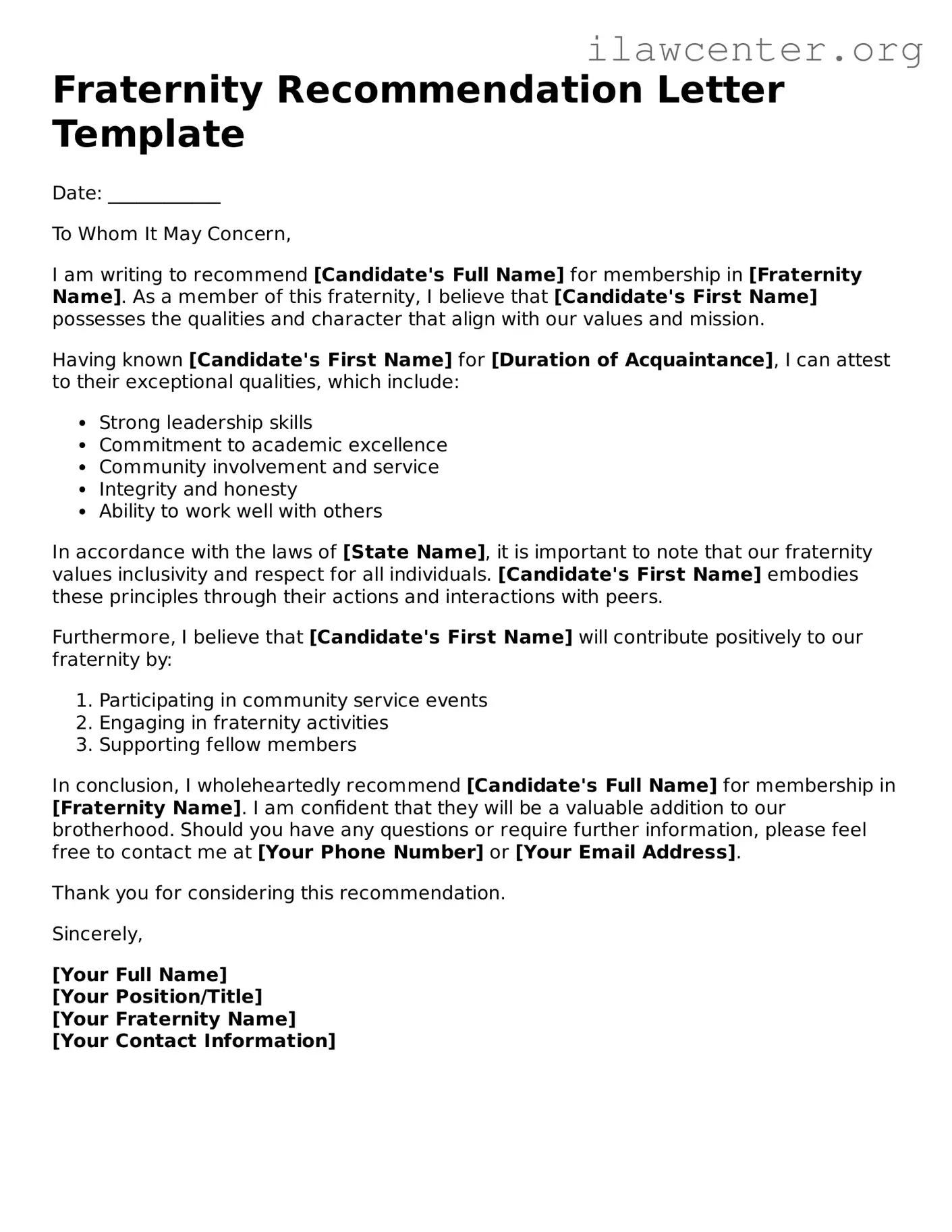
Fraternity Recommendation Letter Preview

Fraternity Recommendation Letter Template

Date: ____________

To Whom It May Concern,

I am writing to recommend [Candidate's Full Name] for membership in [Fraternity Name]. As a member of this fraternity, I believe that [Candidate's First Name] possesses the qualities and character that align with our values and mission.

Having known [Candidate's First Name] for [Duration of Acquaintance], I can attest to their exceptional qualities, which include:

  • Strong leadership skills
  • Commitment to academic excellence
  • Community involvement and service
  • Integrity and honesty
  • Ability to work well with others

In accordance with the laws of [State Name], it is important to note that our fraternity values inclusivity and respect for all individuals. [Candidate's First Name] embodies these principles through their actions and interactions with peers.

Furthermore, I believe that [Candidate's First Name] will contribute positively to our fraternity by:

  1. Participating in community service events
  2. Engaging in fraternity activities
  3. Supporting fellow members

In conclusion, I wholeheartedly recommend [Candidate's Full Name] for membership in [Fraternity Name]. I am confident that they will be a valuable addition to our brotherhood. Should you have any questions or require further information, please feel free to contact me at [Your Phone Number] or [Your Email Address].

Thank you for considering this recommendation.

Sincerely,

[Your Full Name]
[Your Position/Title]
[Your Fraternity Name]
[Your Contact Information]

PDF Form Characteristics

Fact Name Description
Purpose The Fraternity Recommendation Letter form is designed to provide a formal endorsement for a prospective member, outlining their qualifications and character.
Content Requirements Typically, the form requires details such as the applicant's academic achievements, leadership skills, and personal qualities that make them a good fit for the fraternity.
Submission Process Recommendations must be submitted by current fraternity members, often requiring their signature and contact information to validate the endorsement.
State-Specific Forms Some states may have specific forms or guidelines governing the recommendation process, which could include laws related to privacy and personal information.
Deadline Each fraternity may set its own deadlines for submission of recommendation letters, so it is crucial to check with the organization for specific dates.

Instructions on Utilizing Fraternity Recommendation Letter

Filling out the Fraternity Recommendation Letter form is an important step in the fraternity recruitment process. This form helps provide insight into a potential member's character and qualifications. Once completed, it will be submitted to the fraternity for review, assisting them in making informed decisions.

  1. Start by gathering necessary information about the potential member, including their full name, contact details, and academic background.
  2. Fill in the section that asks for your personal information, such as your name, contact number, and relationship to the candidate.
  3. Provide a brief description of the candidate's qualities and experiences that make them a good fit for the fraternity.
  4. Answer any specific questions on the form regarding the candidate's leadership skills, community involvement, and other relevant attributes.
  5. Review the completed form for accuracy and completeness. Ensure that all sections are filled out clearly.
  6. Sign and date the form where indicated to validate your recommendation.
  7. Submit the form as directed, whether that be online, via email, or by mailing a hard copy.

Important Facts about Fraternity Recommendation Letter

What is a Fraternity Recommendation Letter form?

A Fraternity Recommendation Letter form is a document used to provide a formal endorsement for a potential new member of a fraternity. This letter is typically written by someone who knows the candidate well, such as a family member, teacher, or friend. The purpose of the letter is to highlight the candidate's character, achievements, and potential contributions to the fraternity, helping to inform the fraternity members during their selection process.

Who should write a Fraternity Recommendation Letter?

The ideal person to write a Fraternity Recommendation Letter is someone who has a close relationship with the candidate and can provide specific examples of their strengths and qualities. This could be a high school teacher, a coach, a family friend, or a member of the fraternity itself. The writer should be able to speak to the candidate’s leadership abilities, academic performance, and social skills, making a compelling case for why they would be a good fit for the fraternity.

What should be included in the Fraternity Recommendation Letter?

A well-crafted Fraternity Recommendation Letter should include several key elements. First, it should start with a brief introduction of the writer and their relationship to the candidate. Next, the letter should highlight the candidate's strengths, such as leadership qualities, academic achievements, and community involvement. Specific anecdotes or examples can help illustrate these points. Finally, the letter should conclude with a strong endorsement, expressing confidence in the candidate's ability to contribute positively to the fraternity.

Is there a specific format for the Fraternity Recommendation Letter?

Common mistakes

Filling out a Fraternity Recommendation Letter form can be a crucial step for a prospective member. However, many individuals make common mistakes that can hinder the effectiveness of their recommendation. Understanding these pitfalls can help ensure that the letter serves its intended purpose.

One frequent error is providing insufficient information about the candidate. A recommendation letter should highlight the individual's strengths, character traits, and accomplishments. If the writer fails to include specific examples or anecdotes, the letter may come across as generic or insincere. This lack of detail can diminish the impact of the recommendation.

Another mistake is neglecting to follow the guidelines set by the fraternity. Each organization may have specific requirements regarding the format, length, or content of the recommendation letter. Ignoring these guidelines can lead to the letter being dismissed or not taken seriously. It is essential to review the fraternity's instructions carefully before submitting the form.

Additionally, some individuals may forget to proofread their letters. Spelling and grammatical errors can undermine the credibility of the recommendation. A letter filled with mistakes may suggest a lack of effort or attention to detail, which can reflect poorly on both the writer and the candidate. Taking the time to review and edit the letter can make a significant difference.

Another common oversight is failing to personalize the letter. A generic recommendation that could apply to any candidate does not stand out. It is important to tailor the content to the specific fraternity and the individual being recommended. Highlighting how the candidate aligns with the fraternity’s values and culture can strengthen the recommendation.

Lastly, some writers may overlook the importance of including their own contact information. This omission can prevent fraternity members from reaching out for further questions or clarifications. Providing a way for the fraternity to follow up demonstrates openness and willingness to support the candidate further.

Documents used along the form

When seeking membership in a fraternity, candidates often need to submit various forms and documents alongside the Fraternity Recommendation Letter. Each of these documents serves a specific purpose in the recruitment process, providing insights into the candidate's character, achievements, and suitability for membership.

  • Application Form: This form gathers essential information about the candidate, including personal details, academic history, and extracurricular activities. It serves as the foundation for the fraternity's evaluation process.
  • Personal Statement: A personal statement allows candidates to express their motivations for joining the fraternity. This narrative gives insight into their values, goals, and what they hope to contribute to the organization.
  • Resume: A resume outlines the candidate's achievements, work experience, and skills. It provides a comprehensive view of their background and helps the fraternity assess their qualifications.
  • Letters of Recommendation: In addition to the Fraternity Recommendation Letter, candidates may submit additional letters from mentors, professors, or employers. These letters offer third-party perspectives on the candidate's character and abilities.
  • Transcript: An academic transcript provides a record of the candidate's academic performance. It reflects their commitment to education and can be an important factor in the selection process.
  • Interview Form: This document is often used to evaluate candidates during the interview process. It may include questions about the candidate's interests, values, and how they align with the fraternity's mission.
  • Code of Conduct Acknowledgment: Candidates may be required to sign a document acknowledging their understanding of the fraternity's code of conduct. This ensures they are aware of the expectations regarding behavior and responsibilities.
  • Financial Commitment Agreement: This form outlines the financial obligations associated with membership. It is essential for candidates to understand the costs involved and their responsibilities in this regard.

Each of these documents plays a crucial role in the fraternity's decision-making process. Together, they provide a holistic view of the candidate, helping fraternity members make informed choices about potential new members.

Similar forms

  • Sorority Recommendation Letter: Similar to the fraternity recommendation letter, this document is used to support a candidate's application to a sorority. It provides insights into the applicant's character, achievements, and suitability for membership.
  • College Recommendation Letter: This letter is often requested by students applying for college. It highlights the student's academic performance, personal qualities, and potential for success in higher education.
  • Job Recommendation Letter: A job recommendation letter serves a similar purpose in the professional world. It outlines the candidate's skills, work ethic, and accomplishments, helping them secure employment.
  • Internship Recommendation Letter: This document supports a student's application for an internship. It emphasizes relevant skills, academic achievements, and readiness for practical experience in a professional setting.
  • Volunteer Recommendation Letter: When applying for volunteer positions, individuals may provide this letter. It describes the applicant's commitment to community service and their ability to work well with others.
  • Graduate School Recommendation Letter: This letter is crucial for students seeking admission to graduate programs. It focuses on the applicant's academic strengths, research capabilities, and potential contributions to the field.
  • Character Reference Letter: Often used in various applications, this letter speaks to the applicant's personal qualities and integrity, providing a holistic view of their character.
  • Membership Recommendation Letter: Similar to fraternity and sorority letters, this document is used for various organizations, detailing the candidate's qualifications and fit for membership.

Dos and Don'ts

When filling out a Fraternity Recommendation Letter form, there are some important things to keep in mind. Here’s a list of what you should and shouldn’t do:

  • Do provide accurate and honest information about the candidate.
  • Do include specific examples of the candidate’s leadership and character.
  • Do proofread the letter for any spelling or grammatical errors.
  • Do submit the form by the deadline to ensure consideration.
  • Don’t exaggerate or make false claims about the candidate.
  • Don’t use overly complex language that may confuse the reader.
  • Don’t forget to include your contact information for follow-up questions.

Misconceptions

Misconceptions about the Fraternity Recommendation Letter form can lead to confusion and missed opportunities. Here are four common misunderstandings:

  • It is only for current fraternity members. Many believe that only those currently in a fraternity can write a recommendation. In reality, alumni and even friends can provide valuable insights.
  • It guarantees acceptance into the fraternity. A recommendation letter can enhance an applicant's profile, but it does not guarantee membership. Fraternity decisions are based on various factors.
  • It must be a formal letter. Some think the letter needs to follow a strict format. While professionalism is important, a personal touch can make a recommendation more impactful.
  • Only one letter is needed. Many assume that one recommendation is sufficient. However, multiple letters can provide a more comprehensive view of the applicant.

Understanding these misconceptions can help applicants navigate the fraternity recruitment process more effectively. Be proactive in gathering recommendations and ensure they reflect your best qualities.

Key takeaways

Filling out and using the Fraternity Recommendation Letter form is an important process for prospective members. Here are some key takeaways to keep in mind:

  • Ensure all sections of the form are completed accurately. Incomplete forms may delay the recommendation process.
  • Provide detailed information about the candidate. Highlight their strengths, achievements, and character traits.
  • Use clear and concise language. This helps the reader understand the candidate’s qualifications easily.
  • Include personal anecdotes or examples to support your recommendations. These can make the letter more impactful.
  • Be honest and objective in your assessment. Authenticity is crucial for a credible recommendation.
  • Check for spelling and grammatical errors before submitting. A polished letter reflects well on both you and the candidate.
  • Submit the recommendation letter by the specified deadline. Timeliness is important in the fraternity selection process.
  • Follow up with the candidate after submission. This shows your support and keeps communication open.

By keeping these points in mind, you can effectively fill out and utilize the Fraternity Recommendation Letter form.