Fillable Furniture Bill of Sale Document

Fillable Furniture Bill of Sale Document

A Furniture Bill of Sale form is a legal document that outlines the details of a transaction involving the sale of furniture. This form serves as proof of ownership transfer and includes essential information about the buyer, seller, and the items sold. To ensure a smooth transaction, fill out the form by clicking the button below.

Article Guide

The Furniture Bill of Sale form serves as an essential document in the transaction of furniture between a seller and a buyer. This form captures critical details such as the names and addresses of both parties, a comprehensive description of the furniture being sold, and the agreed-upon sale price. Additionally, it may include information regarding the condition of the items, any warranties or guarantees provided by the seller, and the date of the transaction. By documenting these elements, the form helps protect the interests of both parties and provides a clear record of the sale. It can also serve as proof of ownership for the buyer and a receipt for the seller, ensuring that both parties have a mutual understanding of the terms involved in the transaction. Overall, the Furniture Bill of Sale form is a straightforward yet vital tool for anyone looking to buy or sell furniture in a clear and organized manner.

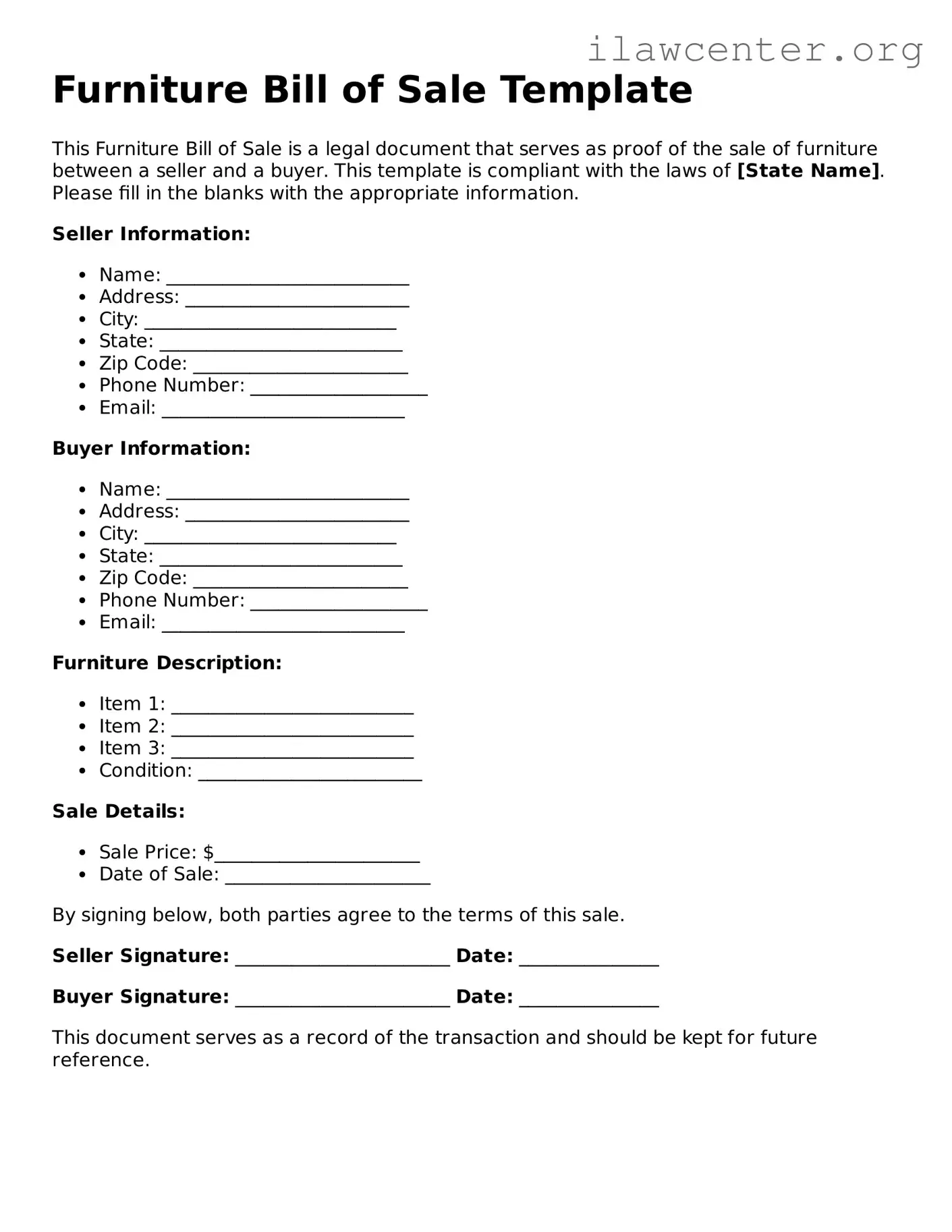
Furniture Bill of Sale Preview

Furniture Bill of Sale Template

This Furniture Bill of Sale is a legal document that serves as proof of the sale of furniture between a seller and a buyer. This template is compliant with the laws of [State Name]. Please fill in the blanks with the appropriate information.

Seller Information:

  • Name: __________________________
  • Address: ________________________
  • City: ___________________________
  • State: __________________________
  • Zip Code: _______________________
  • Phone Number: ___________________
  • Email: __________________________

Buyer Information:

  • Name: __________________________
  • Address: ________________________
  • City: ___________________________
  • State: __________________________
  • Zip Code: _______________________
  • Phone Number: ___________________
  • Email: __________________________

Furniture Description:

  • Item 1: __________________________
  • Item 2: __________________________
  • Item 3: __________________________
  • Condition: ________________________

Sale Details:

  • Sale Price: $______________________
  • Date of Sale: ______________________

By signing below, both parties agree to the terms of this sale.

Seller Signature: _______________________ Date: _______________

Buyer Signature: _______________________ Date: _______________

This document serves as a record of the transaction and should be kept for future reference.

PDF Form Characteristics

Fact Name Description
Purpose A Furniture Bill of Sale form documents the sale of furniture between a buyer and a seller, providing proof of the transaction.
State-Specific Forms Some states may require specific forms or additional information to comply with local laws.
Governing Laws In many states, the Uniform Commercial Code (UCC) governs the sale of goods, including furniture.
Information Included The form typically includes details like the names of the buyer and seller, a description of the furniture, and the sale price.
Signatures Both parties should sign the form to validate the agreement and acknowledge the terms of the sale.

Instructions on Utilizing Furniture Bill of Sale

Filling out a Furniture Bill of Sale form is a straightforward process that helps ensure a smooth transaction between the buyer and the seller. Once you have completed the form, both parties can retain a copy for their records, which can be useful for future reference or in case of any disputes.

  1. Begin by entering the date of the sale at the top of the form.
  2. Provide the name and address of the seller. Make sure to include a contact number for easy communication.
  3. Next, fill in the buyer's name and address, along with their contact number.
  4. Clearly describe the furniture being sold. Include details such as the type of furniture, brand, model, color, and any identifying features.
  5. Specify the purchase price of the furniture. Be clear about the amount in both numerical and written form.
  6. Indicate the method of payment. This could be cash, check, or any other agreed-upon method.
  7. If applicable, note any warranties or guarantees associated with the furniture.
  8. Both the seller and buyer should sign and date the form to confirm the agreement.

Important Facts about Furniture Bill of Sale

What is a Furniture Bill of Sale?

A Furniture Bill of Sale is a legal document that records the sale of furniture from a seller to a buyer. It outlines the details of the transaction, including the description of the furniture, the sale price, and the date of the sale. This document serves as proof of ownership and can be useful for both parties in case of disputes or for warranty purposes.

Why do I need a Furniture Bill of Sale?

This document provides protection for both the buyer and the seller. For the buyer, it confirms ownership and details the condition of the furniture at the time of sale. For the seller, it serves as a record that the item has been sold, which can help avoid future claims of ownership. Additionally, it can be required for insurance or tax purposes.

What information should be included in a Furniture Bill of Sale?

Essential information includes the names and addresses of both the buyer and seller, a detailed description of the furniture being sold (including brand, model, and condition), the sale price, and the date of the transaction. Both parties should sign the document to make it valid.

Is a Furniture Bill of Sale legally binding?

Yes, once both parties sign the Furniture Bill of Sale, it becomes a legally binding contract. This means that both the buyer and seller are obligated to uphold the terms outlined in the document. However, the enforceability may depend on local laws, so it’s wise to check your state’s regulations.

Can I create my own Furniture Bill of Sale?

Absolutely! You can create your own Furniture Bill of Sale using templates available online or by drafting your own document. Just ensure that it includes all necessary information and is signed by both parties. Alternatively, you can also find pre-made forms that you can fill out.

What if the furniture is damaged after the sale?

The Furniture Bill of Sale typically includes a clause about the condition of the furniture at the time of sale. If the buyer accepts the furniture in its current condition, the seller may not be liable for any damages that occur after the transaction is complete. It’s crucial to discuss and document any existing damage before the sale.

Do I need a witness for the Furniture Bill of Sale?

While it’s not always required, having a witness sign the Furniture Bill of Sale can add an extra layer of protection for both parties. A witness can help confirm that the transaction took place and that both parties agreed to the terms. This can be especially useful in case of future disputes.
Common mistakes

When filling out a Furniture Bill of Sale form, it's easy to overlook some important details. One common mistake is failing to include the correct date of the transaction. The date is crucial as it establishes when the sale occurred. Without it, there could be confusion about ownership and liability. Always double-check that the date is accurate and clearly written.

Another frequent error is neglecting to provide a complete description of the furniture being sold. This includes not just the type of furniture, but also its condition, brand, model, and any unique features. A vague description can lead to misunderstandings later on. Buyers want to know exactly what they are purchasing, so be specific and thorough in your descriptions.

In addition, people often forget to include both parties' signatures. A Furniture Bill of Sale is not just a simple receipt; it’s a legal document that requires the agreement of both the seller and the buyer. Without signatures, the document may not hold up in a dispute. Ensure that both parties sign and date the form to validate the sale.

Finally, many individuals overlook the importance of keeping a copy of the completed form. After the sale, having a record of the transaction can be invaluable. It provides proof of the sale and details of the agreement. Always make sure to keep a signed copy for your records, as it can protect you in case of any future issues.

Documents used along the form

When purchasing or selling furniture, several documents can accompany the Furniture Bill of Sale form. These documents help clarify the transaction and provide necessary information for both parties involved. Below is a list of commonly used forms and documents in such transactions.

  • Purchase Agreement: This document outlines the terms and conditions of the sale, including price, payment methods, and delivery details. It serves as a binding contract between the buyer and seller.
  • Receipt: A simple record of the transaction, the receipt confirms that payment has been made. It typically includes the date, amount paid, and a description of the furniture.
  • Condition Report: This report details the condition of the furniture at the time of sale. It can include photographs and notes on any damage or wear, protecting both parties from future disputes.
  • Warranty Information: If the furniture comes with a warranty, this document provides details about coverage, duration, and how to make claims. It is important for the buyer to understand their rights regarding repairs or replacements.
  • Delivery Agreement: This document outlines the terms of delivery, including timeframes, costs, and responsibilities of both the seller and buyer. It ensures clarity on how and when the furniture will be delivered.
  • Inspection Checklist: Used to assess the furniture before finalizing the sale, this checklist helps buyers ensure they are satisfied with their purchase. It typically covers aspects like functionality and aesthetics.
  • Return Policy: This document outlines the seller's policy on returns or exchanges. It details the conditions under which a return is acceptable and any associated fees.
  • Financing Agreement: If the purchase involves financing, this agreement specifies the terms of the loan, including interest rates, payment schedules, and penalties for late payments.

Having these documents on hand can streamline the furniture buying or selling process. They provide clarity and protection for both the buyer and seller, ensuring a smoother transaction overall.

Similar forms

The Furniture Bill of Sale form serves a specific purpose in the sale of furniture, but it shares similarities with several other documents. Here’s a look at eight documents that are comparable and how they relate to the Furniture Bill of Sale:

  • Vehicle Bill of Sale: This document is used to transfer ownership of a vehicle. Like the Furniture Bill of Sale, it includes details about the buyer, seller, and the item being sold, ensuring a clear record of the transaction.
  • Real Estate Purchase Agreement: This agreement outlines the terms of a real estate transaction. Similar to the Furniture Bill of Sale, it specifies the parties involved and the property details, providing legal protection for both buyer and seller.
  • Personal Property Bill of Sale: This document is used for the sale of various personal items. It serves the same purpose as the Furniture Bill of Sale by documenting the transfer of ownership and protecting the interests of both parties.
  • Boat Bill of Sale: When buying or selling a boat, this form is essential. Like the Furniture Bill of Sale, it captures the necessary details of the transaction and ensures that ownership is officially transferred.
  • Motorcycle Bill of Sale: This document is similar in function to the Vehicle Bill of Sale but specifically for motorcycles. It includes buyer and seller information and details about the motorcycle, mirroring the structure of the Furniture Bill of Sale.
  • Equipment Bill of Sale: When selling equipment, this document records the transaction. It resembles the Furniture Bill of Sale by detailing the equipment being sold and the terms of the sale.
  • Gun Bill of Sale: This document is used to record the sale of firearms. Just like the Furniture Bill of Sale, it includes crucial information about the buyer, seller, and the item, ensuring compliance with legal requirements.
  • Art Sales Agreement: When artwork is sold, this agreement outlines the sale terms. It shares similarities with the Furniture Bill of Sale by documenting the transaction and protecting the rights of both parties involved.

Each of these documents plays a vital role in ensuring that transactions are clear and legally binding. Understanding their similarities can help in recognizing the importance of proper documentation in various sales.

Dos and Don'ts

When filling out a Furniture Bill of Sale form, it is important to ensure that all necessary information is accurately provided. Below are some essential dos and don'ts to keep in mind during this process.

  • Do include the full names and addresses of both the buyer and the seller.
  • Do describe the furniture being sold in detail, including brand, model, and condition.
  • Do specify the sale price clearly to avoid any confusion later on.
  • Do date the document to establish when the sale took place.
  • Don't leave any sections of the form blank; incomplete forms can lead to misunderstandings.
  • Don't forget to sign the document; both parties should provide their signatures to validate the sale.

By following these guidelines, you can ensure that the Furniture Bill of Sale form is filled out correctly, protecting both the buyer and the seller in the transaction.

Misconceptions

When it comes to the Furniture Bill of Sale form, several misconceptions can lead to confusion for buyers and sellers alike. Understanding the truth behind these common myths is essential for anyone involved in a furniture transaction. Here are nine misconceptions clarified:

  1. It is not a legally binding document.

    Many believe that a bill of sale is merely a receipt. In reality, it serves as a legal record of the transaction, protecting both parties involved.

  2. Only new furniture requires a bill of sale.

    This is false. A bill of sale is useful for both new and used furniture transactions, providing clarity on the ownership transfer regardless of the item's age.

  3. It is only necessary for high-value items.

    Even for lower-value furniture, having a bill of sale can help resolve disputes and clarify ownership, making it a wise choice for any transaction.

  4. It must be notarized to be valid.

    While notarization can add an extra layer of authenticity, it is not a requirement for a bill of sale to be legally valid in most situations.

  5. It is the same as a receipt.

    A receipt typically confirms payment, whereas a bill of sale documents the transfer of ownership. They serve different purposes.

  6. Only the seller needs to keep a copy.

    Both the buyer and seller should retain a copy of the bill of sale. This ensures that both parties have a record of the transaction for future reference.

  7. It does not need to include specific details.

    In fact, a comprehensive bill of sale should include details such as the names of both parties, a description of the furniture, the sale price, and the date of the transaction.

  8. It is not necessary if the transaction is informal.

    Even informal transactions can benefit from a bill of sale. It helps prevent misunderstandings and provides proof of the agreement.

  9. Once signed, it cannot be changed.

    While the original terms are binding, parties can agree to amend the bill of sale if both agree to the changes. Documentation of any amendments is crucial.

Clearing up these misconceptions can lead to smoother transactions and fewer disputes in the future. Always consider using a Furniture Bill of Sale form to protect your interests in any furniture sale.

Key takeaways

When completing a Furniture Bill of Sale form, it is essential to keep several key points in mind. This document serves as proof of the transaction between the buyer and the seller. Here are some important takeaways:

  • Accurate Information: Ensure all details, such as names, addresses, and item descriptions, are correct to avoid confusion later.
  • Item Condition: Clearly describe the condition of the furniture. This helps set expectations for the buyer.
  • Payment Details: Include the total sale price and payment method. This protects both parties in case of disputes.
  • Signatures Required: Both the buyer and seller should sign the document. This confirms that both parties agree to the terms.
  • Keep Copies: Each party should retain a copy of the signed bill of sale for their records. This serves as proof of the transaction.
  • Legal Considerations: Be aware of any local laws regarding the sale of used furniture. Compliance with these laws is crucial.

By following these guidelines, both buyers and sellers can ensure a smooth transaction and protect their interests.