Attorney-Verified  Deed in Lieu of Foreclosure Document for Georgia

Attorney-Verified Deed in Lieu of Foreclosure Document for Georgia

The Georgia Deed in Lieu of Foreclosure form is a legal document that allows a homeowner to voluntarily transfer their property to the lender to avoid foreclosure. This process can provide a smoother resolution for both parties, helping homeowners escape the burden of an impending foreclosure. To get started, fill out the form by clicking the button below.

Article Guide

In the state of Georgia, homeowners facing the possibility of foreclosure may find a viable alternative through the Deed in Lieu of Foreclosure form. This process allows a property owner to voluntarily transfer the title of their home back to the lender, effectively settling the outstanding mortgage debt without the lengthy and often stressful foreclosure process. By choosing this route, homeowners can avoid the negative impacts that foreclosure can have on their credit score and financial future. The form includes essential details such as the names of the parties involved, a description of the property, and any specific terms agreed upon by both the homeowner and the lender. Additionally, it outlines the rights and responsibilities of each party, ensuring a clear understanding of the transaction. This option can provide a smoother transition for those in financial distress, offering a chance to move forward without the burden of an unpaid mortgage. Understanding the Deed in Lieu of Foreclosure form can empower homeowners to make informed decisions during challenging times.

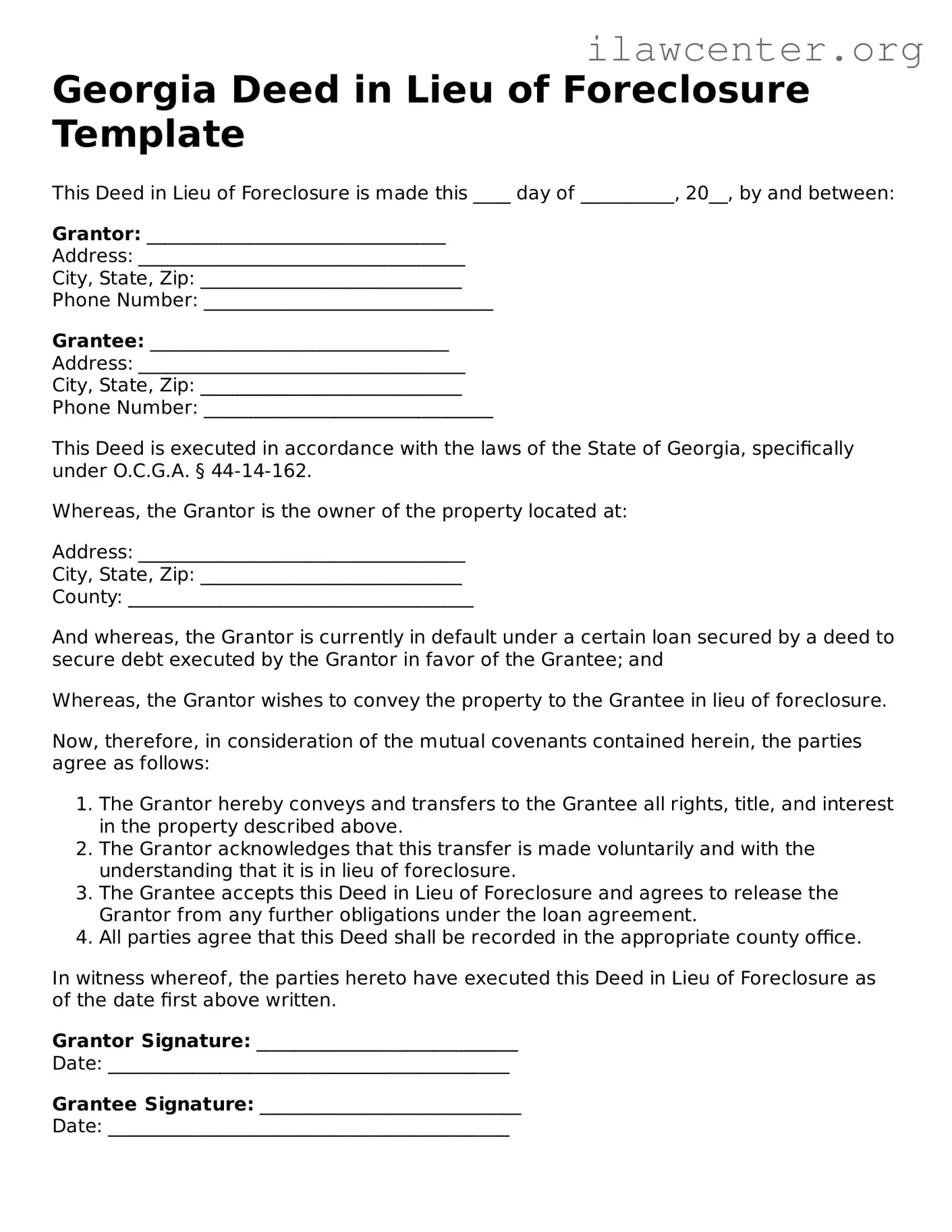
Georgia Deed in Lieu of Foreclosure Preview

Georgia Deed in Lieu of Foreclosure Template

This Deed in Lieu of Foreclosure is made this ____ day of __________, 20__, by and between:

Grantor: ________________________________
Address: ___________________________________
City, State, Zip: ____________________________
Phone Number: _______________________________

Grantee: ________________________________
Address: ___________________________________
City, State, Zip: ____________________________
Phone Number: _______________________________

This Deed is executed in accordance with the laws of the State of Georgia, specifically under O.C.G.A. § 44-14-162.

Whereas, the Grantor is the owner of the property located at:

Address: ___________________________________
City, State, Zip: ____________________________
County: _____________________________________

And whereas, the Grantor is currently in default under a certain loan secured by a deed to secure debt executed by the Grantor in favor of the Grantee; and

Whereas, the Grantor wishes to convey the property to the Grantee in lieu of foreclosure.

Now, therefore, in consideration of the mutual covenants contained herein, the parties agree as follows:

  1. The Grantor hereby conveys and transfers to the Grantee all rights, title, and interest in the property described above.
  2. The Grantor acknowledges that this transfer is made voluntarily and with the understanding that it is in lieu of foreclosure.
  3. The Grantee accepts this Deed in Lieu of Foreclosure and agrees to release the Grantor from any further obligations under the loan agreement.
  4. All parties agree that this Deed shall be recorded in the appropriate county office.

In witness whereof, the parties hereto have executed this Deed in Lieu of Foreclosure as of the date first above written.

Grantor Signature: ____________________________
Date: ___________________________________________

Grantee Signature: ____________________________
Date: ___________________________________________

Witness Signature: _______________________________
Date: ___________________________________________

Notary Public: __________________________________
My Commission Expires: _________________________

PDF Form Characteristics

Fact Name Description
Definition A deed in lieu of foreclosure is an agreement where a borrower voluntarily transfers property ownership to the lender to avoid foreclosure.
Governing Law The deed in lieu of foreclosure in Georgia is governed by state law, particularly under O.C.G.A. § 44-14-162.
Eligibility Homeowners facing financial difficulties may qualify if they can no longer afford their mortgage payments.
Benefits This option can help homeowners avoid the lengthy foreclosure process and potentially lessen the impact on their credit score.
Process The borrower must negotiate the deed in lieu with the lender, ensuring all terms are clear and agreed upon.
Documentation Typically, the lender will require a written agreement, a title search, and possibly a financial statement from the borrower.
Impact on Credit While a deed in lieu is less damaging than a foreclosure, it can still affect the borrower's credit score.
Tax Implications Borrowers may face tax consequences on any forgiven debt, so consulting a tax professional is advisable.
Alternatives Other options include loan modifications or short sales, which may be more suitable depending on individual circumstances.

Instructions on Utilizing Georgia Deed in Lieu of Foreclosure

Once you have decided to proceed with a Deed in Lieu of Foreclosure, it's important to fill out the form accurately. This document transfers ownership of your property back to the lender, allowing you to avoid the foreclosure process. Below are the steps to properly complete the Georgia Deed in Lieu of Foreclosure form.

  1. Obtain the form: Start by downloading the Georgia Deed in Lieu of Foreclosure form from a reliable source or your lender.
  2. Identify the parties: Fill in your name as the grantor (the person giving up the property) and the lender's name as the grantee (the person receiving the property).
  3. Provide property details: Include the full legal description of the property. This can often be found on your mortgage documents or property tax statements.
  4. Include the date: Write the date on which you are signing the deed. This is typically the date you are completing the form.
  5. Sign the document: As the grantor, you must sign the form in the designated area. Ensure your signature matches the name on the document.
  6. Notarize the deed: Take the signed document to a notary public. They will verify your identity and witness your signature, adding their seal to the document.
  7. Submit the deed: Deliver the notarized deed to your lender. Make sure to keep a copy for your records.

After submitting the completed form, the lender will process the deed. This step is crucial in finalizing the transfer of property ownership and resolving your mortgage obligations. Be sure to follow up with your lender to confirm that everything is in order.

Important Facts about Georgia Deed in Lieu of Foreclosure

What is a Deed in Lieu of Foreclosure in Georgia?

A Deed in Lieu of Foreclosure is a legal process that allows a homeowner to voluntarily transfer their property to the lender in exchange for the cancellation of the mortgage debt. This option can help avoid the lengthy and often stressful foreclosure process. In Georgia, this agreement typically occurs when a homeowner is facing financial difficulties and cannot keep up with mortgage payments. It can be a more amicable solution for both parties, allowing the homeowner to walk away from the property without the negative consequences of foreclosure on their credit report.

What are the benefits of choosing a Deed in Lieu of Foreclosure?

Choosing a Deed in Lieu of Foreclosure can offer several benefits. First, it can be a quicker process than foreclosure, allowing homeowners to resolve their situation more efficiently. Second, it may have less of an impact on credit scores compared to a foreclosure, which can be important for future financial opportunities. Additionally, lenders may forgive any remaining debt, giving homeowners a fresh start. It also saves both parties time and money, as the foreclosure process can be costly and drawn out.

Are there any risks involved with a Deed in Lieu of Foreclosure?

While a Deed in Lieu of Foreclosure can be beneficial, there are some risks to consider. Homeowners may still face tax implications if the lender forgives any remaining debt, as this could be considered taxable income. Additionally, not all lenders accept this option, and homeowners may need to negotiate terms. It's also important to ensure that the property is free of other liens, as this could complicate the process. Consulting with a legal or financial advisor can help clarify these risks and determine if this option is right for you.

How do I initiate a Deed in Lieu of Foreclosure?

To initiate a Deed in Lieu of Foreclosure, homeowners should first contact their lender to discuss their financial situation. It's crucial to be transparent about your inability to make mortgage payments. The lender will likely require documentation of your financial hardship. Once both parties agree on the terms, the necessary paperwork will need to be completed. This may include the Deed in Lieu of Foreclosure form and any additional agreements. It's advisable to seek legal counsel to ensure that all documents are properly prepared and that your rights are protected throughout the process.

Will I be able to buy another home after a Deed in Lieu of Foreclosure?

Yes, it is possible to buy another home after a Deed in Lieu of Foreclosure, but there are some factors to consider. Typically, lenders will look at your credit history and financial situation when you apply for a new mortgage. While a Deed in Lieu may have less of an impact on your credit score than a foreclosure, it can still affect your ability to secure financing in the short term. Most lenders will want to see a period of time where you have rebuilt your credit and demonstrated financial stability before approving a new mortgage. This timeline can vary, so it's wise to check with potential lenders about their specific requirements.

Common mistakes

Filling out a Deed in Lieu of Foreclosure form in Georgia can be a complex process. Many individuals make common mistakes that can complicate the transaction or even render the deed invalid. Understanding these pitfalls is crucial for anyone considering this option.

One frequent error is failing to provide accurate property information. It is essential to include the correct legal description of the property. Inaccurate details can lead to confusion and potential disputes. Property owners should double-check the information against their original deed to ensure accuracy.

Another mistake involves neglecting to disclose all liens or encumbrances on the property. When submitting a Deed in Lieu of Foreclosure, it is vital to inform the lender of any existing debts tied to the property. Omitting this information can create legal complications and may jeopardize the acceptance of the deed.

Additionally, individuals often overlook the importance of obtaining the necessary signatures. All parties involved in the property must sign the deed for it to be valid. This includes spouses or co-owners. Failing to secure these signatures can lead to delays or rejection of the deed.

Some people also underestimate the significance of notarization. In Georgia, a Deed in Lieu of Foreclosure must be notarized to be legally binding. Skipping this step can invalidate the document, leaving the homeowner in a precarious position.

Lastly, individuals may not fully understand the implications of the deed. A Deed in Lieu of Foreclosure can affect credit scores and future homeownership opportunities. It is important to consult with a legal or financial expert to comprehend the long-term consequences before proceeding.

Documents used along the form

A Deed in Lieu of Foreclosure is a legal document that allows a borrower to transfer ownership of their property to the lender to avoid foreclosure. This process can streamline the resolution of a mortgage default. However, several other forms and documents are often used in conjunction with this deed to ensure a smooth transaction and to address various legal and financial aspects. Below is a list of these documents, each serving a specific purpose.

  • Loan Modification Agreement: This document outlines the terms under which the lender agrees to change the original loan terms, such as interest rates or payment schedules, to help the borrower avoid foreclosure.
  • Notice of Default: This notice is issued by the lender to inform the borrower that they have defaulted on their mortgage payments. It serves as a formal warning and often precedes foreclosure proceedings.
  • Release of Liability: This document releases the borrower from any further obligation to repay the loan after the property has been transferred to the lender. It is crucial for protecting the borrower from future claims related to the mortgage.
  • Property Condition Disclosure Statement: This statement requires the borrower to disclose any known issues or defects with the property. It protects the lender by ensuring they are aware of the property's condition before accepting the deed.
  • Settlement Statement: This document outlines the financial details of the transaction, including any costs associated with the deed in lieu process. It provides transparency for both parties regarding the financial implications of the transfer.
  • Affidavit of Title: This sworn statement confirms that the borrower has the legal right to transfer the property and that there are no undisclosed liens or claims against it. It is essential for ensuring clear title for the lender.

Each of these documents plays a vital role in the process surrounding a Deed in Lieu of Foreclosure. They help clarify responsibilities, protect the interests of both parties, and facilitate a smoother transition of property ownership. Understanding these documents can significantly impact the outcome for borrowers facing financial difficulties.

Similar forms

The Deed in Lieu of Foreclosure is a specific legal document used in real estate transactions, particularly in situations where a homeowner wants to avoid foreclosure. Several other documents serve similar purposes or relate to the process of transferring property ownership or addressing mortgage defaults. Here’s a list of nine documents that share similarities with the Deed in Lieu of Foreclosure:

  • Short Sale Agreement: This document allows a homeowner to sell their property for less than the amount owed on the mortgage, with the lender's approval. Like a Deed in Lieu, it helps avoid foreclosure.
  • Mortgage Modification Agreement: This document changes the terms of an existing mortgage, potentially lowering payments or extending the loan term. It aims to keep the homeowner in their home, similar to a Deed in Lieu.
  • Quitclaim Deed: This form transfers ownership interest in a property without warranties. It is often used in informal property transfers, similar to how a Deed in Lieu transfers ownership back to the lender.
  • Forebearance Agreement: This document allows a borrower to temporarily pause or reduce mortgage payments. It offers relief, like a Deed in Lieu, by preventing immediate foreclosure.
  • Release of Mortgage: This document indicates that a mortgage has been paid off or forgiven. It relates closely to a Deed in Lieu, as both signify the end of a borrower's obligations to the lender.
  • Power of Attorney: This legal document allows one person to act on behalf of another in financial matters, including property transactions. It can facilitate a Deed in Lieu process if the homeowner cannot act themselves.
  • Deed of Trust: This document secures a loan by transferring the property title to a trustee until the loan is paid off. It is related to the Deed in Lieu as both involve the transfer of property rights.
  • Notice of Default: This document informs a borrower that they are behind on mortgage payments. It is a precursor to foreclosure and can lead to a Deed in Lieu as a solution.
  • Settlement Agreement: This document resolves disputes between parties, including those related to mortgage defaults. It can lead to an agreement similar to a Deed in Lieu, allowing for a smoother transition of property ownership.

Each of these documents plays a role in the broader context of real estate transactions and mortgage management, often providing alternatives to foreclosure and helping homeowners navigate financial difficulties.

Dos and Don'ts

When filling out the Georgia Deed in Lieu of Foreclosure form, it is essential to be thorough and accurate. Here are some guidelines to help you navigate the process effectively.

  • Do ensure all parties involved are clearly identified, including the borrower and lender.
  • Do provide a complete legal description of the property being transferred.
  • Do sign the document in the presence of a notary public to validate the deed.
  • Do keep a copy of the completed form for your records.
  • Don't leave any sections blank; incomplete forms can lead to delays.
  • Don't use incorrect or outdated property information.
  • Don't forget to review the document for accuracy before submission.
  • Don't rush the process; take your time to ensure everything is correct.

Following these guidelines will help facilitate a smoother transaction and reduce the risk of complications.

Misconceptions

Understanding the Georgia Deed in Lieu of Foreclosure can help homeowners make informed decisions about their options. However, several misconceptions exist regarding this process. Here are four common misunderstandings:

  1. It eliminates all debt associated with the mortgage.

    Many people believe that signing a deed in lieu of foreclosure automatically cancels any remaining mortgage debt. In reality, while it may relieve the homeowner of the property, it does not always clear all financial obligations. Depending on the lender's policies and the specific terms of the agreement, there may still be outstanding debts.

  2. It is a quick and easy solution.

    Some homeowners think that a deed in lieu of foreclosure is a fast way to resolve their financial issues. However, the process can be lengthy. Lenders typically require thorough documentation and may take time to review the request. Additionally, homeowners must ensure they understand all terms before proceeding.

  3. It will not affect credit scores.

    Another common belief is that a deed in lieu of foreclosure has no impact on credit scores. Unfortunately, this is not the case. While it may be less damaging than a foreclosure, it can still negatively affect credit ratings and make future borrowing more difficult.

  4. All lenders accept deeds in lieu of foreclosure.

    Many assume that every lender will agree to a deed in lieu of foreclosure. However, this is not universally true. Lenders have different policies, and some may prefer to pursue foreclosure instead. Homeowners should communicate with their lender to understand their specific options.

By addressing these misconceptions, homeowners can better navigate their choices when facing financial difficulties.

Key takeaways

Filling out and using the Georgia Deed in Lieu of Foreclosure form can be a complex process. Here are some key takeaways to consider:

  • Understand the Purpose: A deed in lieu of foreclosure allows a homeowner to voluntarily transfer ownership of their property to the lender to avoid foreclosure proceedings.
  • Eligibility Requirements: Not all homeowners qualify. Typically, the borrower must be in default on their mortgage and unable to make payments.
  • Property Condition: The property should be in good condition. Lenders may require an inspection before accepting the deed.
  • Legal Implications: This process may have tax consequences. Homeowners should consult with a tax advisor to understand potential liabilities.
  • Documentation: Complete all necessary paperwork accurately. This includes the deed itself and any additional documents required by the lender.

By understanding these key points, homeowners can navigate the deed in lieu of foreclosure process more effectively.