Attorney-Verified  Deed Document for Georgia

Attorney-Verified Deed Document for Georgia

A Georgia Deed form is a legal document used to transfer ownership of real property from one party to another within the state of Georgia. This form outlines the details of the transaction, including the parties involved and the property description. For those looking to complete a property transfer, consider filling out the form by clicking the button below.

Article Guide

The Georgia Deed form is a crucial document in real estate transactions, serving as the official record of property transfer. This form outlines the essential details of the transaction, including the names of the grantor and grantee, a legal description of the property, and the consideration amount. It is vital for ensuring that ownership is transferred legally and transparently. The form must be executed with specific formalities, including signatures and notarization, to be valid. Understanding the nuances of the Georgia Deed form can help individuals navigate property transactions more confidently. Whether you are buying, selling, or gifting property, familiarity with this document will aid in safeguarding your interests and ensuring compliance with state laws.

Georgia Deed Preview

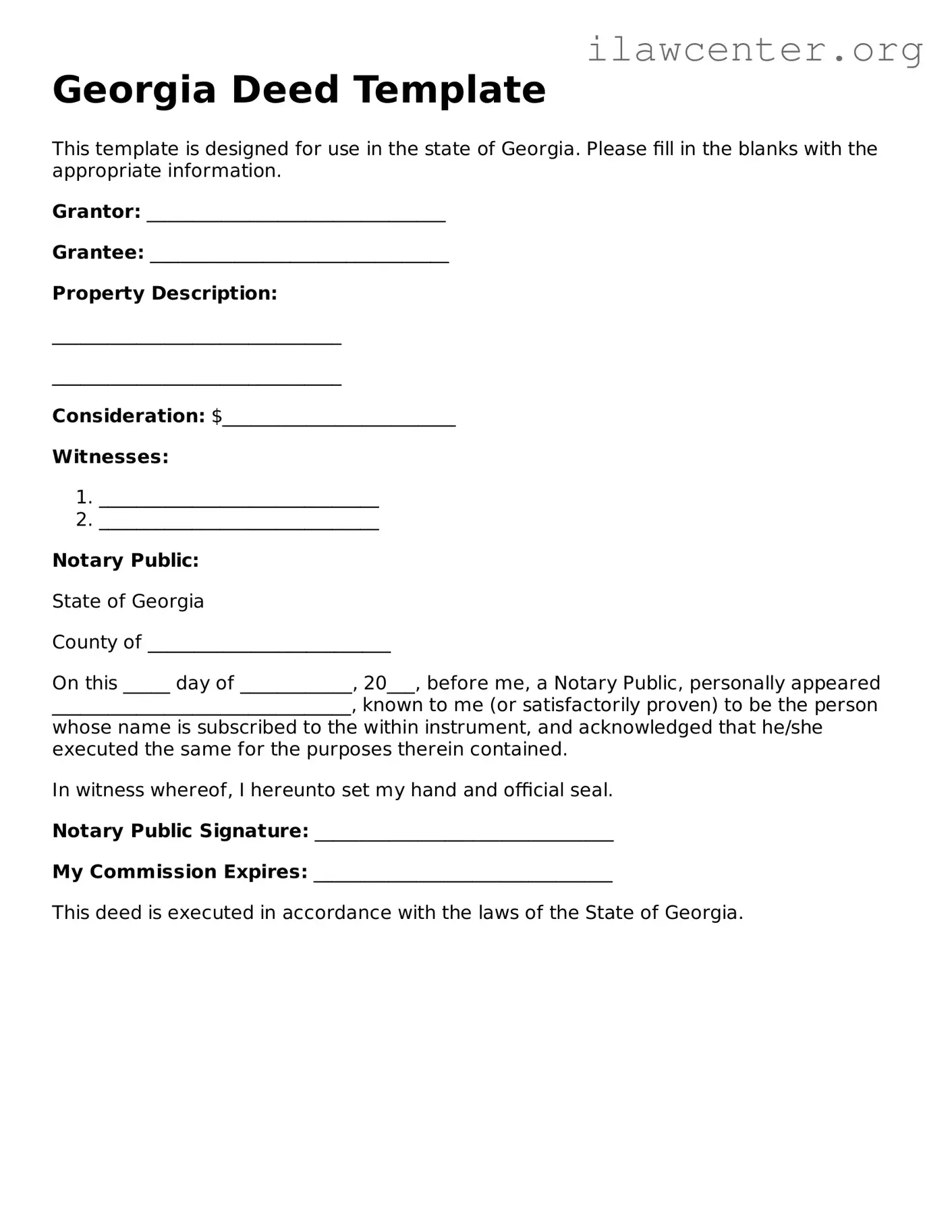
Georgia Deed Template

This template is designed for use in the state of Georgia. Please fill in the blanks with the appropriate information.

Grantor: ________________________________

Grantee: ________________________________

Property Description:

_______________________________

_______________________________

Consideration: $_________________________

Witnesses:

  1. ______________________________
  2. ______________________________

Notary Public:

State of Georgia

County of __________________________

On this _____ day of ____________, 20___, before me, a Notary Public, personally appeared ________________________________, known to me (or satisfactorily proven) to be the person whose name is subscribed to the within instrument, and acknowledged that he/she executed the same for the purposes therein contained.

In witness whereof, I hereunto set my hand and official seal.

Notary Public Signature: ________________________________

My Commission Expires: ________________________________

This deed is executed in accordance with the laws of the State of Georgia.

PDF Form Characteristics

Fact Name Description
Governing Law The Georgia Deed form is governed by the Official Code of Georgia Annotated (O.C.G.A.) Title 44, Chapter 5.
Types of Deeds In Georgia, common types of deeds include warranty deeds, quitclaim deeds, and security deeds.
Signature Requirements All parties involved must sign the deed for it to be valid.
Notarization A notary public must witness the signing of the deed to ensure its authenticity.
Recording The deed must be recorded in the county where the property is located to provide public notice.
Property Description A clear legal description of the property must be included in the deed.
Consideration The deed should state the consideration, or value, exchanged for the property.
Transfer of Title The deed serves as the legal document that transfers ownership of the property from one party to another.
Tax Implications Property transfers may have tax implications, including transfer taxes, that should be considered.
Legal Advice Consulting with a legal professional is recommended to ensure compliance with state laws and regulations.

Instructions on Utilizing Georgia Deed

After you complete the Georgia Deed form, you'll need to submit it to the appropriate county office for recording. This step is crucial to ensure that the transfer of property is officially recognized. Follow these steps to fill out the form correctly.

  1. Start by entering the date at the top of the form. Make sure to use the correct format.
  2. Provide the names of the grantor (the person transferring the property) and the grantee (the person receiving the property). Include their addresses as well.
  3. Clearly describe the property being transferred. Include the street address, city, and county. You may also need to provide the legal description of the property.
  4. Indicate the consideration, which is the amount paid for the property. Write this amount clearly.
  5. Sign the form where indicated. The grantor must sign in the presence of a notary public.
  6. Have the signature notarized. The notary will need to verify the identity of the grantor and will stamp the document.
  7. Make copies of the completed and notarized form for your records.
  8. Submit the original form to the county clerk's office in the county where the property is located.

Important Facts about Georgia Deed

What is a Georgia Deed form?

A Georgia Deed form is a legal document used to transfer ownership of real property in the state of Georgia. This form outlines the details of the property being transferred, including its legal description, the names of the parties involved, and any conditions of the transfer. It serves as a record of the transaction and is essential for establishing clear ownership rights.

Who needs to use a Georgia Deed form?

Anyone involved in the sale, gift, or transfer of real estate in Georgia should use a Georgia Deed form. This includes individuals selling their home, parents transferring property to their children, or even businesses changing ownership of commercial property. Using the correct deed form ensures that the transfer is legally recognized and protects the rights of both the buyer and the seller.

What types of Georgia Deed forms are there?

Georgia offers several types of deed forms, each serving different purposes. The most common include the General Warranty Deed, which provides the highest level of protection for the buyer; the Special Warranty Deed, which limits the seller's liability to the period of their ownership; and the Quitclaim Deed, which transfers whatever interest the seller has without any warranties. Choosing the right type of deed is crucial based on the specifics of your transaction.

How do I complete a Georgia Deed form?

Completing a Georgia Deed form involves filling out the necessary information accurately. You'll need to provide details such as the names of the grantor (seller) and grantee (buyer), the property's legal description, and any special conditions of the transfer. After completing the form, it must be signed in the presence of a notary public. This step is vital, as it adds an extra layer of authenticity to the document.

Do I need to file the Georgia Deed form with the county?

Yes, once the Georgia Deed form is completed and notarized, it should be filed with the county clerk's office in the county where the property is located. Filing the deed is important because it makes the transfer public record, which protects the rights of the new owner and informs others of the change in ownership. There may be a small filing fee, so it's wise to check with your local office for specific requirements.

Common mistakes

Filling out a Georgia Deed form can be straightforward, but many people make common mistakes that can lead to delays or complications. One frequent error is failing to include the correct names of all parties involved. It’s essential to ensure that the names of the grantor and grantee are spelled correctly and match the names on their identification documents. Omitting a middle name or using an incorrect version of a name can cause problems down the line.

Another mistake is neglecting to provide a clear legal description of the property. This description should be precise and match what is recorded in the county’s property records. Using vague terms or general descriptions can lead to confusion and may invalidate the deed.

Many individuals also forget to sign the deed. Both the grantor and any witnesses must sign the document for it to be valid. Without these signatures, the deed may not be recognized legally, which can complicate the transfer of ownership.

In addition, people often overlook the importance of notarization. A deed must be notarized to be legally binding in Georgia. Failing to have a notary public witness the signatures can render the deed ineffective.

Using the wrong type of deed is another common error. There are different types of deeds, such as warranty deeds and quitclaim deeds, each serving a different purpose. Selecting the incorrect type can lead to misunderstandings about the rights being transferred.

Some individuals mistakenly believe that the deed does not need to be recorded. In Georgia, recording the deed with the county is crucial for protecting ownership rights. Not recording the deed can leave the property vulnerable to claims from others.

Another frequent issue is not including the correct tax parcel number. This number helps identify the property and should be included on the deed. An incorrect or missing tax parcel number can lead to administrative errors and delays in processing.

People sometimes fail to provide the proper consideration amount. This amount represents the value exchanged for the property and must be included on the deed. Omitting this information can create complications with property taxes and ownership verification.

Finally, neglecting to check for any outstanding liens or encumbrances on the property can lead to significant problems. It is vital to ensure that the property is free of any legal claims before completing the deed. Failing to address these issues can result in financial loss or legal disputes.

Documents used along the form

When transferring property in Georgia, several documents accompany the Georgia Deed form to ensure a clear and legally binding transaction. Each document serves a specific purpose, contributing to the overall integrity of the property transfer process.

  • Title Search Report: This document outlines the history of ownership for the property, identifying any liens, encumbrances, or claims against it. It ensures the seller has the right to transfer ownership.
  • Closing Statement: This statement details all financial aspects of the property transaction, including purchase price, closing costs, and any adjustments. It provides transparency for both the buyer and seller.
  • Property Survey: A survey maps the property boundaries and identifies any easements or encroachments. This document is crucial for resolving disputes over property lines.
  • Affidavit of Title: This sworn statement from the seller confirms their ownership of the property and asserts that there are no undisclosed liens or claims. It protects the buyer from potential legal issues.
  • Transfer Tax Declaration: This form reports the sale price and calculates any transfer taxes owed to the state. It is often required for the recording of the deed.
  • Loan Documents: If the buyer is financing the purchase, these documents outline the terms of the mortgage, including interest rates and repayment schedules. They are essential for the lender's records.
  • Power of Attorney: In some cases, a seller may designate someone else to sign the deed on their behalf. This document grants that authority and must be executed properly.
  • Homeowners Association (HOA) Documents: If the property is part of an HOA, these documents provide rules, regulations, and financial obligations. Buyers should review them to understand their responsibilities.
  • Disclosure Statements: Sellers may be required to provide disclosures about the property's condition, including any known defects or issues. This protects buyers from unexpected problems.

Understanding these documents is vital for anyone involved in a property transaction in Georgia. Each plays a role in safeguarding the interests of both parties and ensuring a smooth transfer of ownership.

Similar forms

The Deed form is a crucial document in real estate and property transactions. It shares similarities with several other legal documents. Below is a list of nine documents that are similar to the Deed form, along with a brief explanation of how they relate.

  • Title Insurance Policy: Like a Deed, this document provides proof of ownership. It protects the buyer from any claims against the property that might arise after the purchase.
  • Bill of Sale: This document transfers ownership of personal property. Similar to a Deed, it serves as evidence of the transfer and includes details about the items being sold.
  • Lease Agreement: A lease outlines the terms of renting a property. It shares similarities with a Deed in that it establishes rights and responsibilities for both parties involved.
  • Mortgage Agreement: This document secures a loan for purchasing property. It is similar to a Deed as both are essential in the property transaction process and establish legal rights.
  • Power of Attorney: This document allows one person to act on behalf of another. It can be used in property transactions, similar to a Deed, to authorize someone to sign on behalf of the property owner.
  • Quitclaim Deed: This type of Deed transfers ownership without guaranteeing the title's validity. It is similar to a standard Deed but provides less protection for the buyer.
  • Affidavit of Title: This sworn statement confirms the seller's ownership and the absence of liens. It parallels a Deed by providing evidence of ownership and ensuring a clear title.
  • Real Estate Purchase Agreement: This contract outlines the terms of a property sale. It is similar to a Deed in that it formalizes the transaction and includes details about the property.
  • Warranty Deed: This type of Deed guarantees that the seller holds clear title to the property. It offers more protection to the buyer compared to other types of Deeds, similar to the assurances provided in a standard Deed.

Each of these documents plays a significant role in property transactions, ensuring that ownership and rights are clearly defined and legally binding.

Dos and Don'ts

When filling out the Georgia Deed form, it is important to follow specific guidelines to ensure accuracy and compliance with state requirements. Below is a list of things you should and shouldn't do during this process.

  • Do verify the names of all parties involved. Make sure that the names are spelled correctly and match the identification documents.
  • Do include a clear legal description of the property. This should be detailed enough to identify the property without ambiguity.
  • Do check for any outstanding liens or encumbrances on the property before signing the deed.
  • Do have the deed notarized. A notary public must witness the signatures to validate the document.
  • Don't leave any sections of the form blank. Each part must be completed to avoid delays or rejection.
  • Don't use abbreviations or informal language. The form should be filled out in a formal and clear manner.
  • Don't forget to provide the correct tax parcel number, if applicable. This number helps to identify the property in tax records.
  • Don't submit the deed without reviewing it thoroughly. Errors can lead to complications in property ownership.

By adhering to these guidelines, individuals can help ensure that their Georgia Deed form is filled out correctly, leading to a smoother transaction process.

Misconceptions

When dealing with the Georgia Deed form, several misconceptions can lead to confusion for property owners and buyers. Understanding these misconceptions can help clarify the process and ensure that all parties are informed.

  • Misconception 1: The Georgia Deed form is only for transferring ownership.
  • While the primary purpose of the Georgia Deed form is to transfer ownership of property, it also serves to document the terms of the transfer, including any conditions or restrictions. This means that the form can include important details that affect how the property can be used in the future.

  • Misconception 2: A notary public is not necessary for a valid deed.
  • In Georgia, a deed must be signed in front of a notary public to be considered valid. This requirement helps to verify the identities of the parties involved and ensures that the document is executed properly.

  • Misconception 3: All types of deeds are the same.
  • There are different types of deeds in Georgia, such as warranty deeds and quitclaim deeds. Each type serves a different purpose and offers varying levels of protection for the buyer. Understanding the differences is crucial for making informed decisions during a property transaction.

  • Misconception 4: Once a deed is signed, it cannot be changed.
  • While a deed is a legal document that reflects the transfer of property, it can be amended or corrected under certain circumstances. If an error is found or if the parties agree to changes, a new deed can be created to reflect the updated information.

Key takeaways

When filling out and using the Georgia Deed form, it’s essential to keep several key points in mind. Here are some important takeaways:

  1. Identify the parties clearly: Ensure that the names of the grantor (seller) and grantee (buyer) are correctly spelled and accurately reflect their legal names.
  2. Provide a legal description: Include a precise legal description of the property being transferred. This is crucial for clarity and legality.
  3. Consider the type of deed: Understand the different types of deeds available in Georgia, such as warranty deeds and quitclaim deeds, and choose the one that fits your needs.
  4. Signatures are required: Both the grantor and grantee must sign the deed. If there are multiple parties, ensure all necessary signatures are obtained.
  5. Notarization is necessary: The deed must be notarized to be valid. A notary public will verify the identities of the signers.
  6. File with the county: After completing the deed, file it with the appropriate county clerk’s office to officially record the property transfer.
  7. Pay any applicable fees: Be aware of any recording fees that may apply when filing the deed with the county.
  8. Keep copies: Retain copies of the signed and notarized deed for your records. This is important for future reference.

Following these guidelines will help ensure that the deed is completed correctly and legally binding.