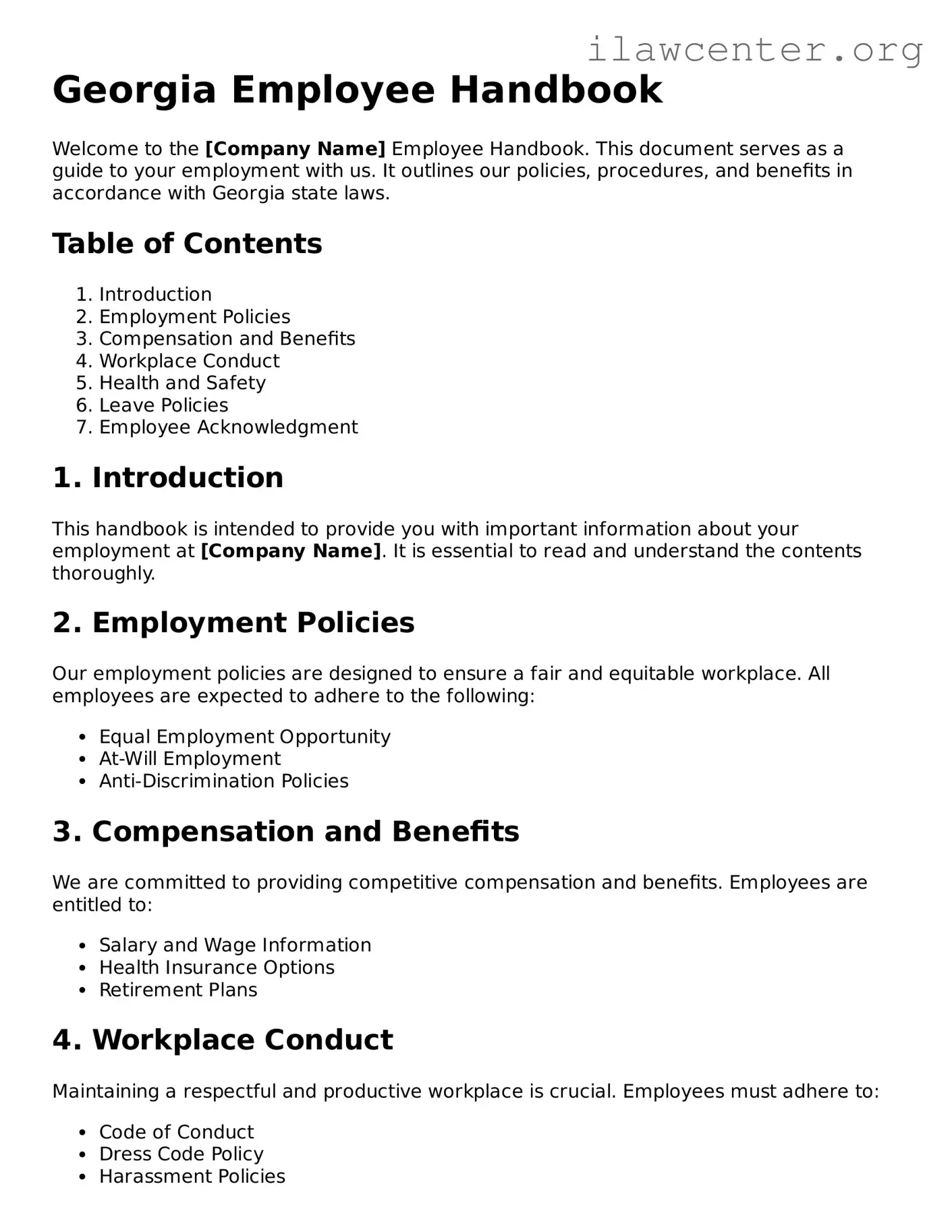
What is the Georgia Employee Handbook form?
The Georgia Employee Handbook form is a document that outlines the policies, procedures, and expectations of an employer in Georgia. It serves as a guide for employees, detailing important information about workplace rules, benefits, and rights. This handbook is essential for fostering a clear understanding between employers and employees regarding their roles and responsibilities within the organization.
Why is it important to have an Employee Handbook?
An Employee Handbook is crucial for several reasons. It helps to ensure that all employees are aware of company policies, which can reduce misunderstandings and conflicts. Additionally, having a written handbook can protect employers from potential legal issues by clearly outlining workplace expectations and procedures. It also serves as a valuable resource for employees, providing them with information about their rights and benefits.
What should be included in a Georgia Employee Handbook?
A comprehensive Georgia Employee Handbook should include sections on company policies, employee rights, workplace conduct, attendance policies, compensation and benefits, anti-discrimination policies, and procedures for reporting grievances. It may also cover safety protocols, leave policies, and any state-specific regulations that apply to the workplace. Each section should be clearly defined to ensure that employees can easily find the information they need.
How often should the Employee Handbook be updated?
It is advisable to review and update the Employee Handbook at least once a year. Changes in state or federal laws, company policies, or workplace practices may necessitate updates. Regular reviews help ensure that the handbook remains relevant and compliant with current regulations. Employers should also consider updating the handbook whenever significant changes occur within the organization.
Is it necessary to have employees sign an acknowledgment of the Employee Handbook?
Yes, having employees sign an acknowledgment form is a best practice. This signed acknowledgment indicates that employees have received, read, and understood the policies outlined in the handbook. It can serve as evidence that the employer has made a reasonable effort to inform employees about their rights and responsibilities, which can be beneficial in case of disputes.
Can an Employee Handbook be used in legal disputes?
An Employee Handbook can play a significant role in legal disputes. If an employee claims that their rights were violated, the handbook can provide evidence of the policies that were in place at the time of the incident. It demonstrates the employer's commitment to fair treatment and can help clarify expectations. However, it is essential that the handbook is accurate and up to date to be effective in such situations.
Are there any legal requirements for Employee Handbooks in Georgia?
While there is no specific law in Georgia requiring employers to create an Employee Handbook, it is highly recommended. Certain federal laws, such as the Family and Medical Leave Act (FMLA) and the Fair Labor Standards Act (FLSA), may require employers to provide specific information to employees. Additionally, having a handbook can help employers comply with various labor laws and regulations, making it a wise investment for any business.
How can I ensure my Employee Handbook is compliant with Georgia laws?
To ensure compliance with Georgia laws, it is advisable to consult with a legal professional who specializes in employment law. They can review your Employee Handbook and provide guidance on necessary updates or changes. Additionally, staying informed about local and federal labor laws will help you maintain compliance and protect both your employees and your organization.