Attorney-Verified  Employment Verification Document for Georgia

Attorney-Verified Employment Verification Document for Georgia

The Georgia Employment Verification form is a crucial document used to confirm an employee's work history and eligibility for employment in the state. This form provides essential information to employers, ensuring compliance with state regulations. To ensure you meet all requirements, fill out the form by clicking the button below.

Article Guide

The Georgia Employment Verification form serves as a vital tool for employers and employees alike, streamlining the process of confirming an individual's employment status. This form is particularly important for various applications, including loans, housing, and government assistance programs. By providing essential details such as the employee's name, position, and duration of employment, the form helps create a clear picture of the individual's work history. Additionally, it may include information about the employer, which adds credibility to the verification process. Understanding how to properly complete and submit this form can make a significant difference in ensuring that employment information is accurately represented. With its straightforward structure, the Georgia Employment Verification form can foster trust between parties, facilitating smoother transactions and interactions in both personal and professional contexts.

Georgia Employment Verification Preview

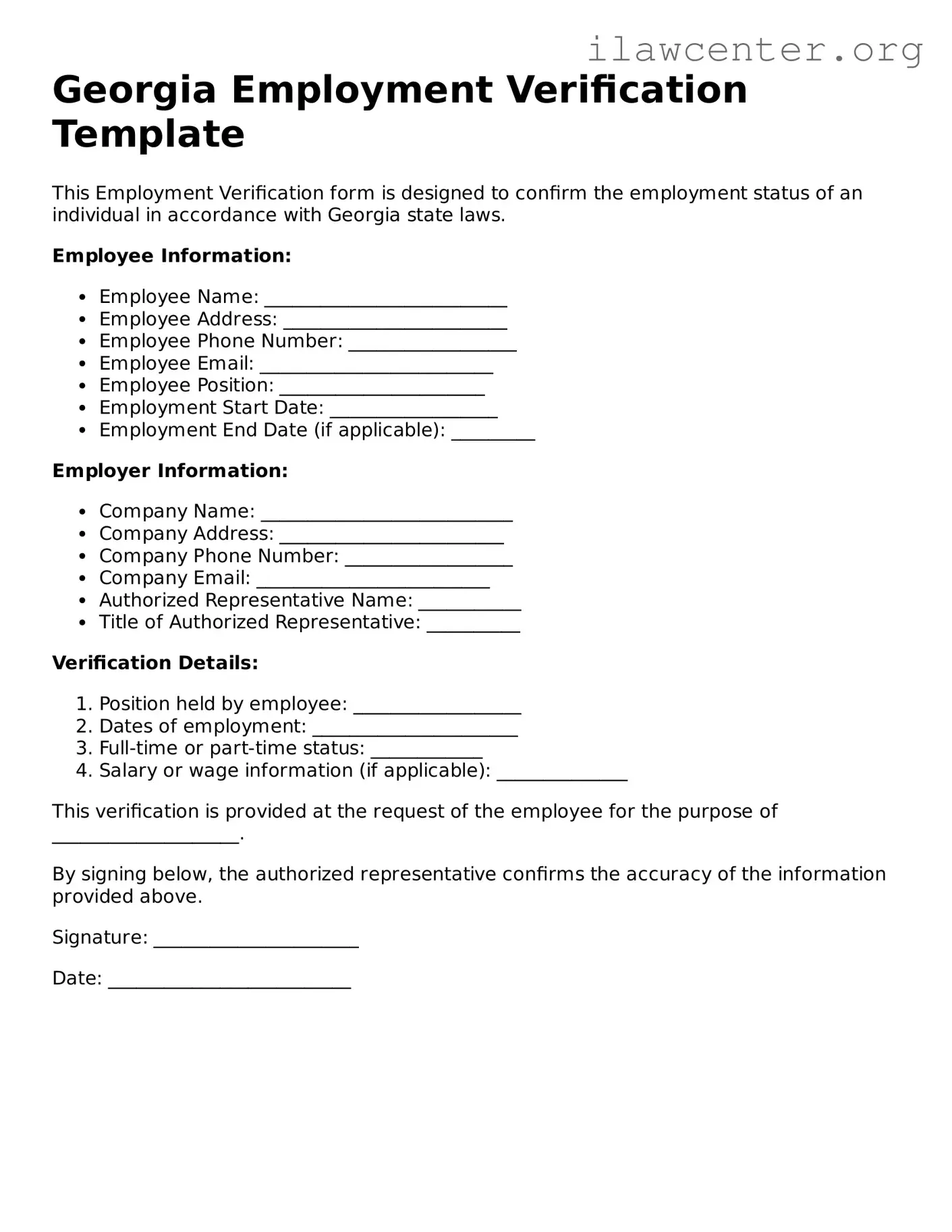
Georgia Employment Verification Template

This Employment Verification form is designed to confirm the employment status of an individual in accordance with Georgia state laws.

Employee Information:

  • Employee Name: __________________________
  • Employee Address: ________________________
  • Employee Phone Number: __________________
  • Employee Email: _________________________
  • Employee Position: ______________________
  • Employment Start Date: __________________
  • Employment End Date (if applicable): _________

Employer Information:

  • Company Name: ___________________________
  • Company Address: ________________________
  • Company Phone Number: __________________
  • Company Email: _________________________
  • Authorized Representative Name: ___________
  • Title of Authorized Representative: __________

Verification Details:

  1. Position held by employee: __________________
  2. Dates of employment: ______________________
  3. Full-time or part-time status: ____________
  4. Salary or wage information (if applicable): ______________

This verification is provided at the request of the employee for the purpose of ____________________.

By signing below, the authorized representative confirms the accuracy of the information provided above.

Signature: ______________________

Date: __________________________

PDF Form Characteristics

Fact Name Description
Purpose The Georgia Employment Verification form is used to confirm the employment status of an individual, often required for loan applications, rental agreements, or government assistance programs.
Governing Law This form is governed by the Georgia Employment Security Law, which outlines the rights and responsibilities of employers and employees regarding employment verification.
Who Uses It? Employers, banks, landlords, and government agencies frequently use the form to verify an employee's job status and income.
Information Required The form typically requires the employee's name, job title, dates of employment, and salary information, ensuring a comprehensive overview of the individual's employment history.
Submission Process Employers usually complete the form and submit it directly to the requesting party, ensuring that all information is accurate and up to date.
Confidentiality Employers must handle the information provided in the form with confidentiality, as it contains sensitive personal data about the employee.

Instructions on Utilizing Georgia Employment Verification

After obtaining the Georgia Employment Verification form, you will need to fill it out accurately. This form is essential for confirming employment details. Follow these steps to ensure you complete it correctly.

  1. Start by entering the employee's full name at the top of the form.
  2. Provide the employee's Social Security number in the designated space.
  3. Fill in the employee's job title and department.
  4. Enter the name of the employer or company.
  5. Include the company's address, including street, city, state, and zip code.
  6. Indicate the employee's start date and, if applicable, the end date of employment.
  7. Specify the employee's current salary or wage.
  8. Sign and date the form to certify that the information provided is accurate.

Once the form is completed, it should be submitted to the appropriate party for processing. Ensure that all information is clear and legible to avoid any delays.

Important Facts about Georgia Employment Verification

What is the Georgia Employment Verification form?

The Georgia Employment Verification form is a document used to confirm an individual's employment status. It is often required by various agencies, including those handling social services, housing, and financial assistance. This form helps to verify that a person is employed and provides essential information about their job, such as the employer's name, the employee's position, and the duration of employment.

Who needs to fill out the Employment Verification form?

Typically, the form is filled out by employers or human resources personnel. It is used when an employee needs to provide proof of employment for purposes such as applying for a loan, renting an apartment, or qualifying for government assistance. Employees may request this verification from their employer to support their applications.

How can I obtain the Georgia Employment Verification form?

What information is required on the form?

The Employment Verification form typically requires basic information such as the employee's name, job title, dates of employment, and the employer's contact information. Some forms may also ask for details about the employee's salary or hours worked. It is important to ensure that all information is accurate to avoid any issues with verification.

Is there a fee for obtaining the Employment Verification?

Generally, there is no fee for obtaining an Employment Verification form from your employer. Employers usually provide this service as part of their human resources functions. However, if you request verification from a third-party service, there may be fees involved. Always check with your employer for their specific policies regarding employment verification.

How long does it take to receive the completed form?

The time it takes to receive the completed Employment Verification form can vary. In many cases, employers can provide the form within a few days. However, if the request is submitted during a busy period or if additional information is needed, it may take longer. It is advisable to make the request as early as possible to ensure you have the form when you need it.

What should I do if my employer refuses to complete the form?

If your employer refuses to complete the Employment Verification form, it is important to understand their reasons. Sometimes, employers may have policies in place that limit the information they can provide. If you believe your request is valid, you can discuss the situation with your HR department or seek guidance from a legal professional. It is essential to know your rights regarding employment verification.
Common mistakes

Filling out the Georgia Employment Verification form can seem straightforward, but many people make common mistakes that can lead to delays or complications. Understanding these pitfalls can help ensure that the form is completed correctly and efficiently.

One frequent mistake is providing incomplete information. It’s essential to fill out every required field. Leaving sections blank can raise questions or cause the verification process to stall. Double-checking the form before submission can help catch any missing details.

Another common error is failing to use accurate dates. When listing employment dates, it’s important to provide both the start and end dates, if applicable. Using approximate dates or vague terms like "recently" can create confusion. Clear and specific dates help verify employment more smoothly.

Additionally, many individuals overlook the importance of signatures. The form typically requires a signature from both the employee and the employer. Not obtaining the necessary signatures can result in the form being rejected or considered invalid. Always ensure that all required parties have signed before submission.

Some people also neglect to include the correct employer information. This includes the company name, address, and contact details. Providing outdated or incorrect information can lead to difficulties in the verification process. It’s wise to confirm that all employer details are current and accurate.

Misunderstanding the purpose of the form can lead to errors as well. This form is designed to verify employment status, so providing irrelevant information or additional documentation can complicate matters. Stick to the necessary details to keep the process straightforward.

Lastly, not keeping a copy of the completed form is a mistake that can create problems later on. Having a record of what was submitted can be helpful if there are questions or if follow-up is needed. Always keep a copy for your own reference.

Documents used along the form

The Georgia Employment Verification form is an essential document used to confirm an individual's employment status. However, several other forms and documents may accompany it to provide additional context or fulfill various requirements. Below is a list of commonly used documents that often complement the Employment Verification form.

  • W-2 Form: This form reports an employee's annual wages and the taxes withheld from their paycheck. It is often used to verify income for loan applications or tax purposes.
  • Pay Stubs: Recent pay stubs can provide proof of income and employment. They typically show the employee's earnings for a specific pay period, including deductions.
  • Employment Offer Letter: This document outlines the terms of employment, including job title, salary, and start date. It serves as proof of the initial employment agreement.
  • Tax Returns: Personal tax returns, especially the most recent ones, can demonstrate income and employment history. They are often requested by lenders or for government assistance programs.
  • Social Security Card: This card verifies an individual's Social Security number, which is often required for employment verification and tax purposes.
  • Driver's License or State ID: A government-issued identification can confirm an individual's identity and residency, which may be necessary for employment verification processes.
  • Resignation Letter: If applicable, this document can confirm the end of employment. It may be required for final paycheck processing or benefits claims.
  • Reference Letters: Letters from previous employers or colleagues can provide insight into an individual's work history and character, supporting the employment verification process.

These documents help create a comprehensive picture of an individual's employment status and history. They can be crucial for various purposes, including applying for loans, securing housing, or verifying eligibility for benefits. Having these documents organized and ready can streamline the verification process significantly.

Similar forms

The Employment Verification form serves a specific purpose in confirming an individual's employment status. However, several other documents fulfill similar roles in different contexts. Here are four documents that share similarities with the Employment Verification form:

  • W-2 Form: This document summarizes an employee's annual wages and the taxes withheld. Like the Employment Verification form, it provides proof of employment and income, often required for loan applications or tax purposes.
  • Pay Stub: A pay stub details an employee's earnings for a specific pay period. It confirms ongoing employment and income, similar to the Employment Verification form, and is often used by employees to verify their earnings to lenders.
  • Offer Letter: An offer letter outlines the terms of employment, including position, salary, and start date. It serves as a confirmation of employment, much like the Employment Verification form, especially for new hires.
  • Tax Return: A tax return provides a comprehensive overview of an individual's income and tax obligations. It can serve as proof of employment and income, akin to the Employment Verification form, particularly when applying for financial assistance or loans.

Dos and Don'ts

When completing the Georgia Employment Verification form, adhering to specific guidelines can facilitate a smoother process. Below is a list of recommended practices and common pitfalls to avoid.

  • Do: Ensure all personal information is accurate and up-to-date.
  • Do: Provide clear and concise responses to all questions.
  • Do: Double-check for any required signatures before submission.
  • Do: Keep a copy of the completed form for your records.
  • Don't: Leave any fields blank unless instructed to do so.
  • Don't: Use abbreviations or informal language in your responses.

By following these guidelines, individuals can help ensure that the verification process is efficient and effective.

Misconceptions

Understanding the Georgia Employment Verification form is essential for both employers and employees. However, several misconceptions can lead to confusion. Below are six common misconceptions about this form:

  • It is only required for new hires. Many believe that the employment verification form is only necessary for new employees. In reality, it can also be required for current employees seeking benefits or loan approvals.
  • It is the same as a W-2 form. Some individuals think the employment verification form serves the same purpose as a W-2. However, the employment verification form focuses on confirming employment status and details, while a W-2 summarizes an employee's annual wages and tax withholdings.
  • Only employers can complete the form. There is a misconception that only employers have the authority to fill out the employment verification form. Employees can also provide necessary information to ensure accuracy.
  • It is not legally binding. Some people assume that the employment verification form holds no legal weight. In fact, it can serve as an official document that verifies employment status, which may be required in legal or financial situations.
  • It can be ignored if the employee has been with the company for a long time. Long-term employees might think that they do not need to submit this form. However, verification may still be necessary for various administrative or legal purposes.
  • All employers must use the same format. There is a belief that a standardized format exists for the employment verification form. In truth, employers can use their own formats, as long as they include the required information.

Clarifying these misconceptions can help ensure that both employers and employees understand the importance and use of the Georgia Employment Verification form.

Key takeaways

Filling out and using the Georgia Employment Verification form is an important process for both employers and employees. Here are some key takeaways to consider:

  • Understand the Purpose: The form is designed to verify an employee's job status, salary, and other employment details, often for purposes such as loan applications or government assistance.
  • Accurate Information: Ensure that all information provided on the form is accurate and up-to-date. Mistakes can lead to delays or complications.
  • Employer Responsibilities: Employers must complete the form thoroughly and sign it. This confirms that the information is verified and correct.
  • Employee Consent: Employees should be aware that their information is being shared. It’s good practice to obtain their consent before submitting the form.
  • Keep Records: Both employers and employees should keep a copy of the completed form for their records. This can be useful for future reference.
  • Submission Process: Understand how and where to submit the form. This may vary depending on the requesting agency or institution.
  • Follow Up: After submission, it’s advisable to follow up to ensure that the verification has been processed and accepted by the requesting party.