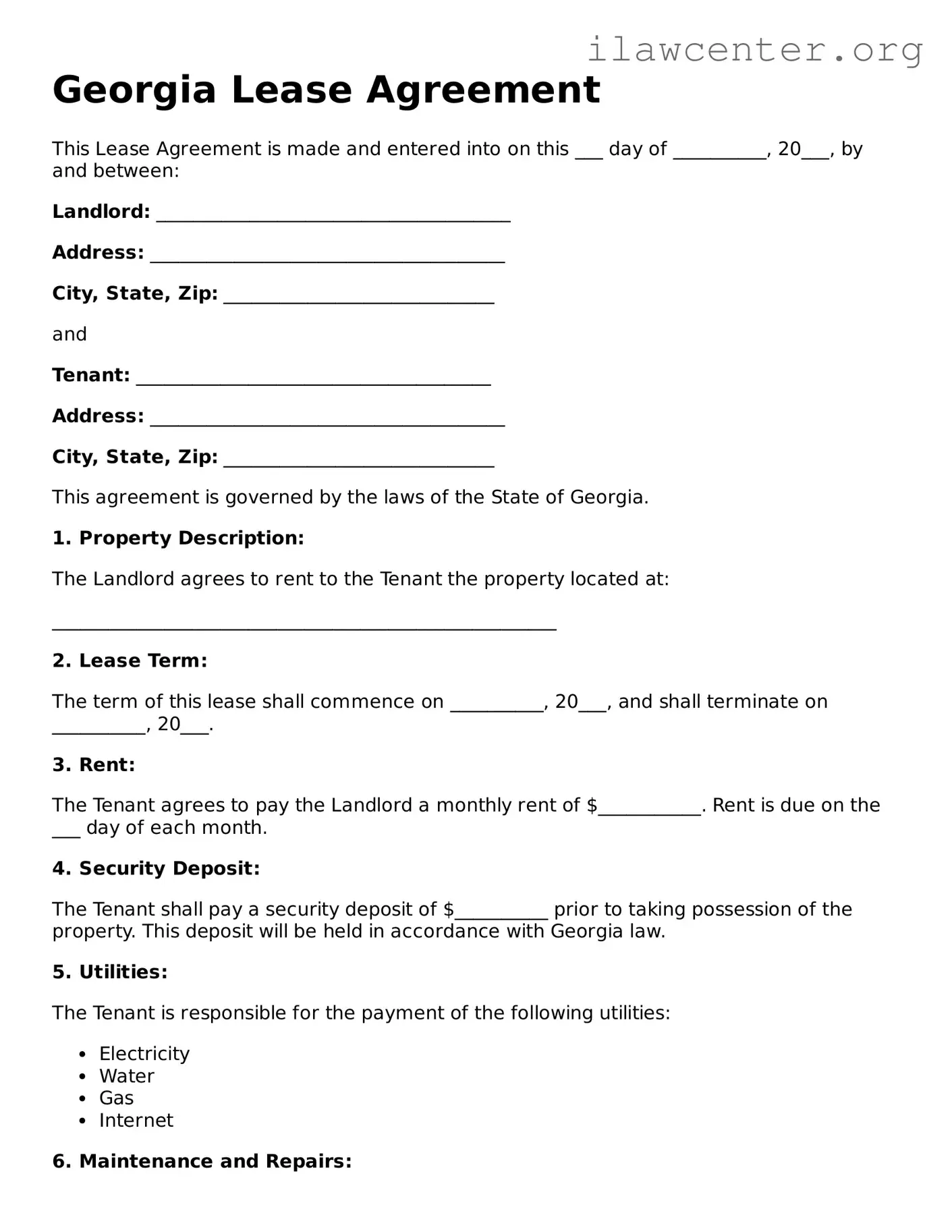
What is a Georgia Lease Agreement?
A Georgia Lease Agreement is a legally binding contract between a landlord and a tenant. It outlines the terms and conditions for renting a residential property in Georgia. This document includes details such as the duration of the lease, rent amount, security deposit, and responsibilities of both parties.
What should be included in a Georgia Lease Agreement?
Key elements include the names of the landlord and tenant, property address, lease term, rent amount, payment due date, security deposit details, maintenance responsibilities, and rules regarding pets and subleasing. Both parties should review these terms carefully before signing.
How long is a typical lease term in Georgia?
Lease terms in Georgia can vary widely. Common durations are 12 months, but you may also find leases for shorter or longer periods. Ensure that the lease term aligns with your needs and that both parties agree on the duration before signing.
Can a landlord increase the rent during the lease term?
Generally, a landlord cannot increase the rent during the lease term unless the lease agreement explicitly allows for it. After the lease expires, the landlord may propose a new rent amount for a renewed lease. Always check your lease for specific terms regarding rent increases.
What happens if a tenant breaks the lease?
If a tenant breaks the lease, they may be responsible for paying rent until a new tenant is found or until the lease term ends. The landlord must make reasonable efforts to re-rent the property. Review the lease agreement for any specific penalties or procedures related to breaking the lease.
Is a written lease agreement required in Georgia?
While a verbal agreement can be legally binding, it is highly recommended to have a written lease agreement. A written document provides clarity and protection for both parties. It serves as a reference point in case of disputes or misunderstandings.
What are the tenant's rights in Georgia?
Tenants in Georgia have rights that include the right to a habitable living space, privacy, and protection against retaliation for exercising their rights. Familiarize yourself with local laws to understand your rights fully and ensure they are respected throughout the lease term.
How can disputes be resolved between landlords and tenants?
Disputes can often be resolved through open communication. If that fails, mediation or arbitration may be options. If necessary, legal action can be pursued, but this should be a last resort. Keeping documentation of all communications and agreements can be beneficial in resolving issues.