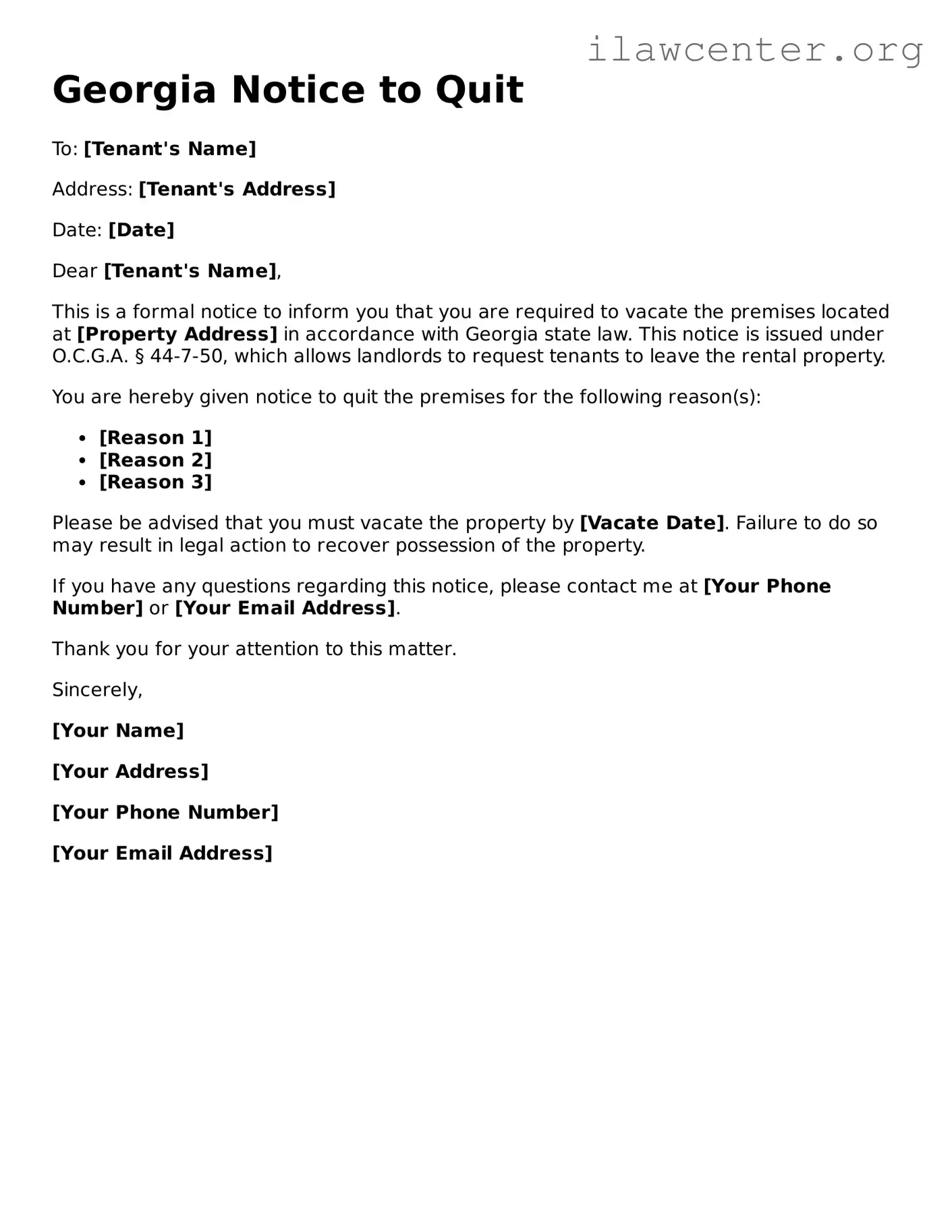
What is a Georgia Notice to Quit form?
The Georgia Notice to Quit form is a legal document that a landlord uses to inform a tenant that they must vacate the rental property. This notice is typically issued when the tenant has violated the terms of their lease agreement, such as failing to pay rent or engaging in illegal activities. The form outlines the reasons for the eviction and provides a timeframe within which the tenant must leave the premises.
How much notice must a landlord give before filing for eviction?
In Georgia, the amount of notice required before filing for eviction depends on the reason for the eviction. For non-payment of rent, a landlord must provide a tenant with a 3-day notice to pay rent or vacate. If the eviction is due to a lease violation, a 30-day notice is typically required. It's important for landlords to follow these timelines to ensure that the eviction process is valid.
Can a tenant contest a Notice to Quit?
Yes, a tenant can contest a Notice to Quit. If a tenant believes that the notice is unjustified, they can respond to the landlord in writing, stating their reasons for contesting the eviction. If the matter escalates, the tenant can present their case in court during the eviction proceedings. It is crucial for tenants to gather any supporting evidence, such as payment records or correspondence with the landlord, to strengthen their position.
What happens if a tenant does not leave after receiving a Notice to Quit?
If a tenant does not vacate the property by the deadline specified in the Notice to Quit, the landlord can proceed with filing an eviction lawsuit in court. The court will then schedule a hearing where both parties can present their arguments. If the court rules in favor of the landlord, a judgment will be issued, allowing the landlord to take further action to remove the tenant from the property, often with the assistance of law enforcement.
Is a Notice to Quit required for all evictions in Georgia?
While a Notice to Quit is a common requirement for many eviction cases, it is not necessary in every situation. For example, in cases of serious lease violations, such as criminal activity, a landlord may be able to skip the notice and file for eviction immediately. However, it is advisable for landlords to issue a Notice to Quit whenever possible, as it provides a clear record of communication and gives the tenant an opportunity to address the issue.