Attorney-Verified  Real Estate Purchase Agreement Document for Georgia

Attorney-Verified Real Estate Purchase Agreement Document for Georgia

The Georgia Real Estate Purchase Agreement is a legal document that outlines the terms and conditions under which a property is bought and sold in Georgia. This form serves as a crucial tool for both buyers and sellers, ensuring that all parties understand their rights and responsibilities throughout the transaction process. To get started on your real estate journey, fill out the form by clicking the button below.

Article Guide

The Georgia Real Estate Purchase Agreement form serves as a critical document in the process of buying or selling real estate in the state. This comprehensive agreement outlines the terms and conditions agreed upon by the buyer and seller, ensuring clarity and mutual understanding throughout the transaction. Key components of the form include the purchase price, property description, and closing date, which are essential for establishing the framework of the sale. Additionally, it addresses contingencies, such as financing and inspections, which protect both parties by allowing them to back out of the deal under certain circumstances. The agreement also specifies earnest money deposits, which demonstrate the buyer's serious intent and commitment to the purchase. By detailing the rights and responsibilities of each party, the Georgia Real Estate Purchase Agreement not only facilitates a smoother transaction but also helps to mitigate potential disputes, making it an indispensable tool in real estate dealings within the state.

Georgia Real Estate Purchase Agreement Preview

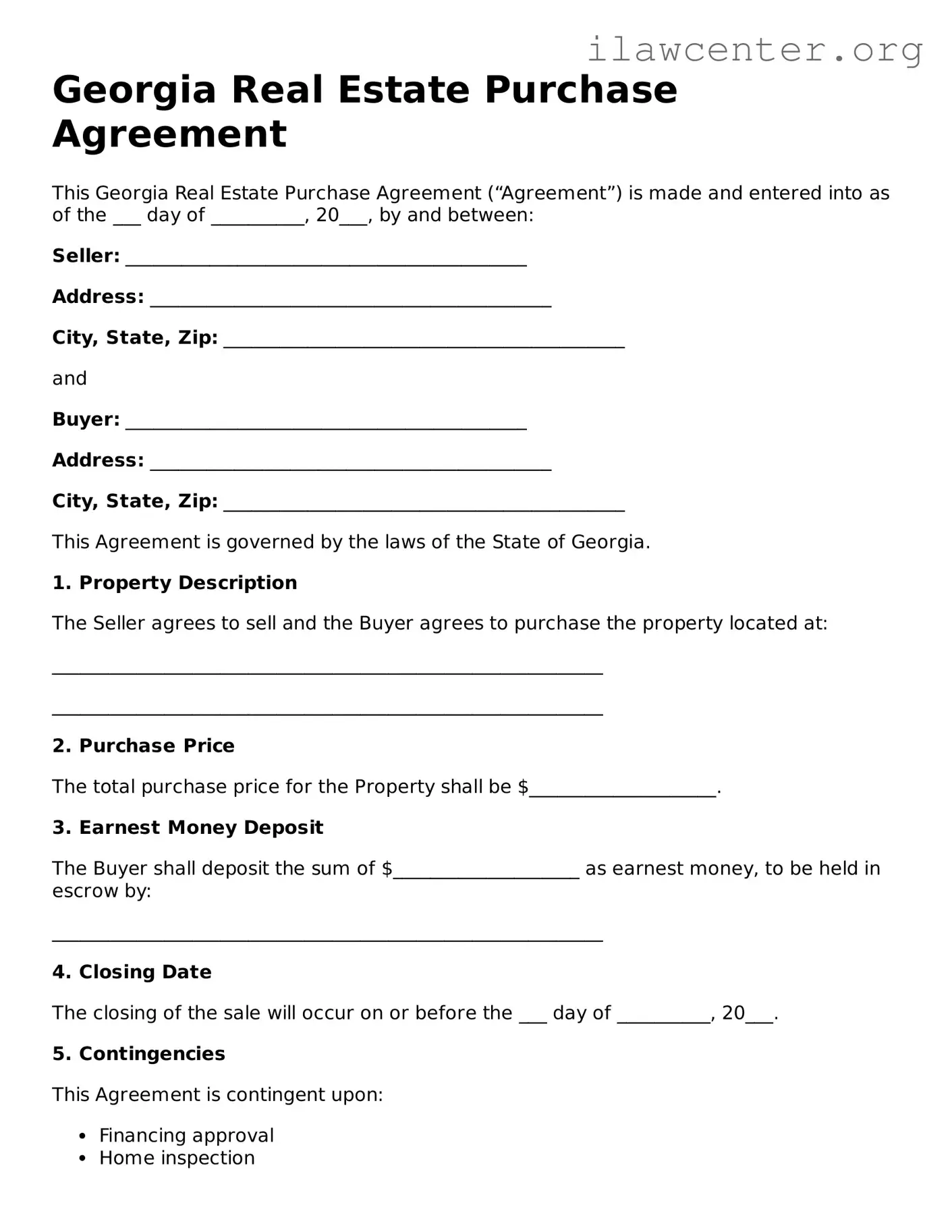
Georgia Real Estate Purchase Agreement

This Georgia Real Estate Purchase Agreement (“Agreement”) is made and entered into as of the ___ day of __________, 20___, by and between:

Seller: ___________________________________________

Address: ___________________________________________

City, State, Zip: ___________________________________________

and

Buyer: ___________________________________________

Address: ___________________________________________

City, State, Zip: ___________________________________________

This Agreement is governed by the laws of the State of Georgia.

1. Property Description

The Seller agrees to sell and the Buyer agrees to purchase the property located at:

___________________________________________________________

___________________________________________________________

2. Purchase Price

The total purchase price for the Property shall be $____________________.

3. Earnest Money Deposit

The Buyer shall deposit the sum of $____________________ as earnest money, to be held in escrow by:

___________________________________________________________

4. Closing Date

The closing of the sale will occur on or before the ___ day of __________, 20___.

5. Contingencies

This Agreement is contingent upon:

  • Financing approval
  • Home inspection
  • Appraisal

6. Possession

Possession of the Property shall be delivered to the Buyer on the closing date.

7. Governing Law

This Agreement shall be governed by and construed in accordance with the laws of the State of Georgia.

8. Signatures

IN WITNESS WHEREOF, the parties have executed this Agreement as of the date first above written.

Seller's Signature: _______________________________ Date: ______________

Buyer's Signature: _______________________________ Date: ______________

PDF Form Characteristics

Fact Name Description
Governing Law The Georgia Real Estate Purchase Agreement is governed by the laws of the State of Georgia.
Purpose This form is used to outline the terms and conditions of a real estate transaction between a buyer and a seller.
Parties Involved The agreement identifies the buyer and seller, ensuring that both parties are clearly named.
Property Description A detailed description of the property being sold is included, which helps avoid any confusion.
Purchase Price The total purchase price is specified, along with any earnest money deposit required from the buyer.
Contingencies The agreement may include contingencies, such as financing or inspection requirements, that must be met for the sale to proceed.
Closing Date A closing date is established, which is the date when the property transfer officially takes place.
Disclosures The seller is required to disclose any known issues with the property, ensuring transparency in the transaction.
Signatures Both parties must sign the agreement for it to be legally binding, indicating their acceptance of the terms.

Instructions on Utilizing Georgia Real Estate Purchase Agreement

After obtaining the Georgia Real Estate Purchase Agreement form, you are ready to begin the process of completing it. This form is essential for formalizing the terms of a property sale. Carefully filling it out ensures that both the buyer and seller understand their rights and obligations.

  1. Begin by entering the date at the top of the form. This date marks when the agreement is initiated.
  2. Next, fill in the names and contact information of both the buyer and the seller. Ensure that all details are accurate to avoid any confusion later.
  3. Identify the property being sold. Include the complete address, legal description, and any specific details that define the property.
  4. Specify the purchase price. Clearly state the total amount the buyer agrees to pay for the property.
  5. Outline the terms of the sale. Include any contingencies, such as financing or inspections, that must be met for the sale to proceed.
  6. Indicate the closing date. This is the date when the property will officially change hands.
  7. Include any additional provisions or agreements that both parties have discussed. This may involve repairs, appliances included in the sale, or other specific requests.
  8. Sign and date the agreement. Both the buyer and seller must sign to validate the document.
  9. Make copies of the completed agreement for both parties. Keeping a record is crucial for future reference.

Once the form is filled out and signed, it will be ready for submission. Ensure that all parties involved have a clear understanding of the terms laid out in the agreement before moving forward.

Important Facts about Georgia Real Estate Purchase Agreement

What is a Georgia Real Estate Purchase Agreement?

The Georgia Real Estate Purchase Agreement is a legal document that outlines the terms and conditions of a real estate transaction in Georgia. It serves as a binding contract between the buyer and the seller, detailing the property being sold, the purchase price, and other important terms.

Who needs to use this agreement?

This agreement is typically used by individuals or entities involved in buying or selling residential real estate in Georgia. Both parties should understand their rights and obligations under the agreement.

What key information is included in the agreement?

The agreement includes essential details such as the names of the buyer and seller, the property address, the sale price, financing terms, contingencies, and the closing date. It may also cover other provisions like repairs, inspections, and disclosures.

Is the Georgia Real Estate Purchase Agreement legally binding?

Yes, once both parties sign the agreement, it becomes a legally binding contract. Each party is obligated to fulfill the terms outlined in the agreement unless they mutually agree to amend or terminate it.

Can the agreement be modified after signing?

Yes, the agreement can be modified if both the buyer and seller agree to the changes. It is advisable to document any modifications in writing and have both parties sign the revised agreement.

What happens if one party breaches the agreement?

If one party fails to meet their obligations, the other party may have the right to seek legal remedies. This could include enforcing the contract, seeking damages, or terminating the agreement, depending on the situation.

Are there contingencies in the agreement?

Yes, contingencies are often included in the agreement. Common contingencies might involve financing, home inspections, or the sale of the buyer’s current home. These conditions must be met for the sale to proceed.

Do I need a real estate agent to use this agreement?

While it is not required to have a real estate agent, many buyers and sellers choose to work with one. An agent can provide guidance on the agreement and help navigate the transaction process.

How can I obtain a Georgia Real Estate Purchase Agreement form?

The form can be obtained from various sources, including real estate agents, legal document providers, or online legal resources. Ensure that the version you use is up-to-date and compliant with Georgia laws.

Is legal advice recommended when using this agreement?

Yes, it is often advisable to seek legal advice when using a Real Estate Purchase Agreement. An attorney can help ensure that the agreement meets legal requirements and protects your interests in the transaction.

Common mistakes

Filling out the Georgia Real Estate Purchase Agreement form can be a straightforward process, but many people make common mistakes that can lead to complications down the line. One frequent error is failing to provide accurate property descriptions. The address may be correct, but without the proper legal description, the agreement could be rendered invalid. Always double-check that the property's details are complete and precise.

Another common mistake is neglecting to specify the purchase price clearly. It’s crucial to write the amount in both numbers and words. This redundancy helps prevent misunderstandings and disputes over the agreed-upon price. A simple typo can lead to confusion, so clarity is key.

Buyers and sellers often overlook the importance of including all necessary contingencies. These contingencies protect both parties in case certain conditions aren't met, such as financing or inspection issues. Failing to outline these terms can result in significant problems if complications arise later in the process.

Additionally, many individuals forget to sign and date the agreement. While it may seem trivial, an unsigned document can be deemed unenforceable. Ensure that all parties involved have signed and dated the agreement to validate the contract.

Another mistake is not providing the correct earnest money deposit. This deposit shows good faith and commitment to the purchase. If the amount is incorrect or not included, it could jeopardize the transaction and lead to delays.

Some people also fail to communicate effectively with their real estate agents or attorneys. Not asking questions or seeking clarification can lead to misunderstandings about the terms and conditions of the agreement. Open communication is essential to ensure that everyone is on the same page.

Moreover, overlooking deadlines can be detrimental. Each step in the purchase process has specific timelines that must be adhered to. Missing a deadline can lead to the loss of the deal or other complications. Keeping a checklist of important dates can help manage this aspect.

People sometimes neglect to review the entire agreement before submission. Skimming through the document can lead to overlooking critical clauses or terms that could affect the transaction. Taking the time to read the agreement thoroughly can save headaches later on.

Finally, failing to keep copies of the signed agreement can be a significant oversight. Both parties should retain a copy for their records. This ensures that everyone has access to the terms agreed upon and can refer back to them if needed.

Documents used along the form

When engaging in a real estate transaction in Georgia, several forms and documents are commonly used alongside the Real Estate Purchase Agreement. These documents help clarify the terms of the sale and protect the interests of both the buyer and the seller. Below is a list of essential documents often associated with the purchase agreement.

  • Seller's Disclosure Statement: This document requires the seller to disclose any known issues or defects with the property. It ensures that buyers are aware of potential problems before finalizing the purchase.
  • Lead-Based Paint Disclosure: For homes built before 1978, this form informs buyers about the potential presence of lead-based paint. It is crucial for protecting the health and safety of residents.
  • Closing Statement: Also known as a HUD-1 Settlement Statement, this document outlines all costs associated with the transaction. It details the financial aspects of the sale, including fees and adjustments.
  • Title Insurance Policy: This document protects the buyer against any claims or disputes regarding the property's title. It ensures that the buyer has clear ownership of the property.
  • Property Inspection Report: Often obtained before closing, this report provides an evaluation of the property's condition. It can reveal necessary repairs or maintenance issues that may need addressing.

These documents play a vital role in the real estate transaction process. They help ensure transparency and protect both parties involved in the sale. Understanding each document's purpose can lead to a smoother transaction and greater peace of mind.

Similar forms

The Real Estate Purchase Agreement (REPA) is a key document in real estate transactions. It shares similarities with several other legal documents in the real estate domain. Here are four documents that are comparable to the REPA:

  • Lease Agreement: This document outlines the terms under which a tenant can occupy a property. Like the REPA, it specifies the parties involved, the property details, and the terms of payment. Both documents require clear communication of obligations and rights.
  • Option to Purchase Agreement: This agreement grants a buyer the right, but not the obligation, to purchase a property at a predetermined price within a specific timeframe. Similar to the REPA, it includes terms regarding the property, price, and duration, ensuring that both parties understand their commitments.
  • Real Estate Listing Agreement: This document is used between a property owner and a real estate agent. It details the agent’s responsibilities and the terms of the property sale. Both the listing agreement and the REPA aim to facilitate a successful transaction, outlining the roles of the parties involved.
  • Sales Contract: A sales contract is used in various types of transactions, including real estate. It outlines the terms of sale, including price and conditions. Much like the REPA, it serves to protect the interests of both buyer and seller, ensuring clarity in the transaction process.

Dos and Don'ts

When filling out the Georgia Real Estate Purchase Agreement form, it is important to approach the process with care and attention to detail. Below are some essential dos and don'ts to guide you through this important step.

  • Do read the entire agreement thoroughly before filling it out.
  • Do provide accurate and complete information about the property.
  • Do include all parties involved in the transaction.
  • Do consult with a real estate professional if you have questions.
  • Do ensure all signatures are present and dated.
  • Don't rush through the form; take your time to avoid mistakes.
  • Don't leave any blanks; fill in all required fields.
  • Don't use vague language; be specific about terms and conditions.
  • Don't ignore deadlines; adhere to timelines for submission.

By following these guidelines, you can help ensure that your Real Estate Purchase Agreement is completed correctly and effectively. This attention to detail can make a significant difference in the success of your real estate transaction.

Misconceptions

When dealing with real estate transactions in Georgia, many people have misunderstandings about the Real Estate Purchase Agreement form. Here are four common misconceptions:

  • It’s a one-size-fits-all document. Many believe that the Real Estate Purchase Agreement can be used without any modifications for every transaction. In reality, each agreement should be tailored to fit the specific circumstances of the sale, including the property type and the needs of both the buyer and seller.
  • Signing means you’re committed to buy. Some think that simply signing the agreement locks them into the purchase. However, the agreement often includes contingencies that allow buyers to back out under certain conditions, such as failing to secure financing or discovering significant issues during inspections.
  • All terms are negotiable. While many terms in the agreement can be negotiated, some are standard and may not be flexible. For example, earnest money amounts and closing dates may be influenced by local customs and market conditions.
  • It doesn’t require legal review. A common belief is that the agreement is straightforward enough to skip legal review. However, having a qualified attorney review the document can help prevent costly mistakes and ensure that all legal requirements are met.

Understanding these misconceptions can help you navigate the real estate process more effectively. Always consider seeking professional guidance to ensure your interests are protected.

Key takeaways

The Georgia Real Estate Purchase Agreement form is an essential document in real estate transactions. Here are ten key takeaways regarding its completion and usage:

  1. Understand the Purpose: This form outlines the terms and conditions of a real estate transaction between a buyer and a seller.
  2. Complete All Sections: Ensure that every section of the agreement is filled out accurately to avoid misunderstandings.
  3. Identify Parties Clearly: Clearly state the names and addresses of both the buyer and seller to prevent any confusion.
  4. Specify the Property: Provide a detailed description of the property, including the address and any relevant parcel numbers.
  5. Include Purchase Price: Clearly indicate the purchase price and any earnest money deposit required.
  6. Contingencies: Specify any contingencies that must be met for the sale to proceed, such as financing or inspection conditions.
  7. Closing Date: Agree on a closing date, which is the date when ownership will be transferred.
  8. Review Terms of Sale: Include any additional terms, such as appliances or fixtures that will be included in the sale.
  9. Signatures Required: Both parties must sign and date the agreement to make it legally binding.
  10. Consult Professionals: It is advisable to have legal or real estate professionals review the agreement before finalizing it.

Using the Georgia Real Estate Purchase Agreement form correctly can facilitate a smooth transaction and protect the interests of both parties involved.