Attorney-Verified  Rental Application Document for Georgia

Attorney-Verified Rental Application Document for Georgia

The Georgia Rental Application form is a document used by landlords to collect essential information from potential tenants. This form helps landlords assess the suitability of applicants based on their financial history, rental history, and personal references. To begin the application process, fill out the form by clicking the button below.

Article Guide

When seeking a new place to live in Georgia, the rental application form serves as a crucial first step in the tenant selection process. This document not only allows landlords to gather essential information about potential tenants but also helps ensure that they make informed decisions. Typically, the form includes sections for personal details, such as the applicant’s name, contact information, and employment history. Additionally, it often requests financial information, including income and credit history, which landlords use to assess the applicant's ability to pay rent. Many forms also include a space for references, allowing landlords to verify the applicant’s rental history and character. Furthermore, applicants may encounter questions regarding their rental preferences and any pets they may have. Understanding the components of the Georgia rental application form is vital for both tenants and landlords, as it lays the groundwork for a successful rental relationship.

Georgia Rental Application Preview

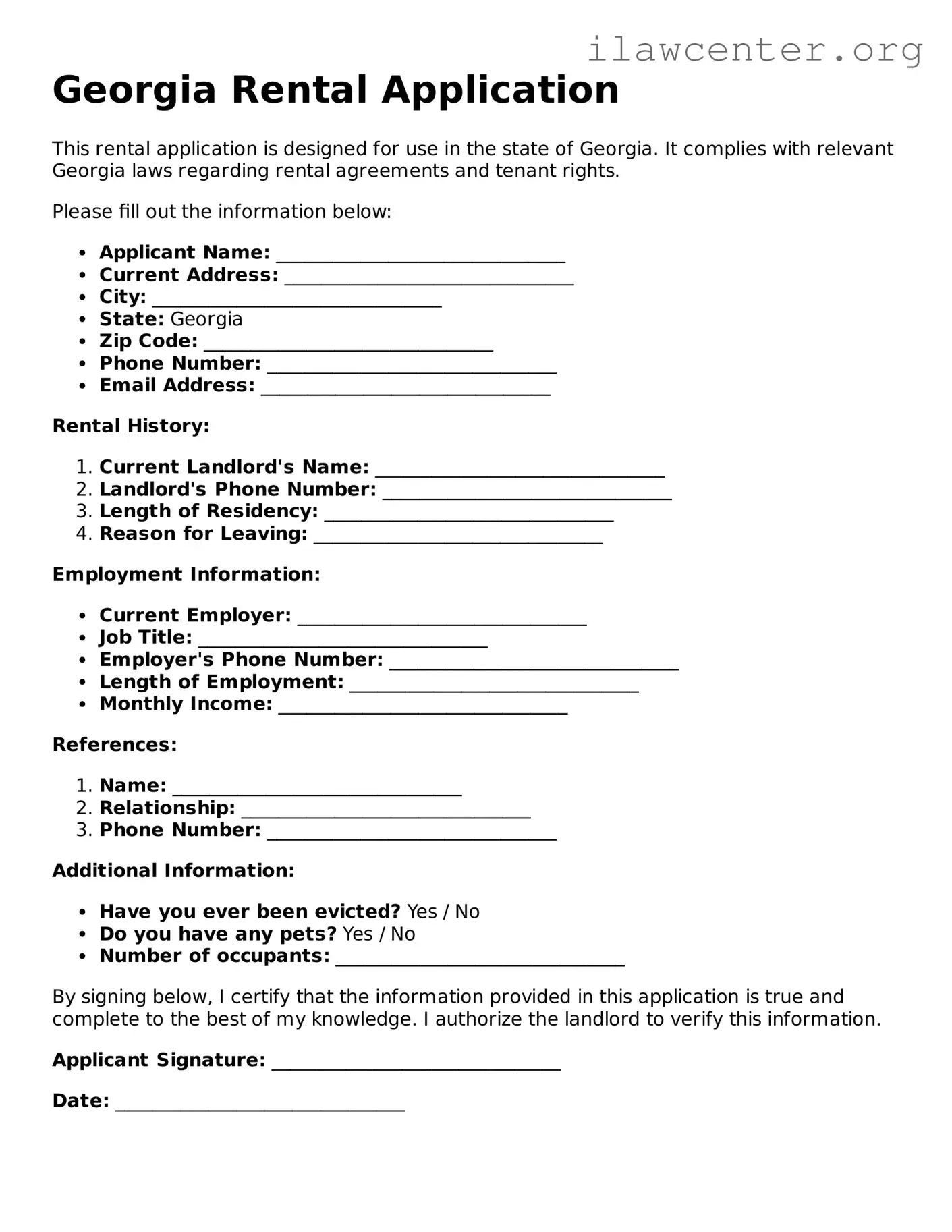
Georgia Rental Application

This rental application is designed for use in the state of Georgia. It complies with relevant Georgia laws regarding rental agreements and tenant rights.

Please fill out the information below:

  • Applicant Name: _______________________________
  • Current Address: _______________________________
  • City: _______________________________
  • State: Georgia
  • Zip Code: _______________________________
  • Phone Number: _______________________________
  • Email Address: _______________________________

Rental History:

  1. Current Landlord's Name: _______________________________
  2. Landlord's Phone Number: _______________________________
  3. Length of Residency: _______________________________
  4. Reason for Leaving: _______________________________

Employment Information:

  • Current Employer: _______________________________
  • Job Title: _______________________________
  • Employer's Phone Number: _______________________________
  • Length of Employment: _______________________________
  • Monthly Income: _______________________________

References:

  1. Name: _______________________________
  2. Relationship: _______________________________
  3. Phone Number: _______________________________

Additional Information:

  • Have you ever been evicted? Yes / No
  • Do you have any pets? Yes / No
  • Number of occupants: _______________________________

By signing below, I certify that the information provided in this application is true and complete to the best of my knowledge. I authorize the landlord to verify this information.

Applicant Signature: _______________________________

Date: _______________________________

PDF Form Characteristics

Fact Name Description
Purpose The Georgia Rental Application form is used by landlords to screen potential tenants.
Information Required Applicants typically provide personal details, employment history, and rental history.
Application Fee Landlords may charge a non-refundable application fee to cover the cost of background checks.
Fair Housing Compliance The application process must comply with the Fair Housing Act, prohibiting discrimination.
Governing Laws The application process is governed by Georgia state laws, including O.C.G.A. § 44-7-30.
Background Checks Landlords often conduct background checks, including credit history and criminal records.
Tenant Rights Applicants have the right to request information on why an application was denied.

Instructions on Utilizing Georgia Rental Application

Completing the Georgia Rental Application form is a straightforward process that requires attention to detail. After filling out the form, you will typically submit it to the landlord or property management company for review. This step is crucial in the rental process, as it allows the property owner to evaluate your suitability as a tenant.

  1. Begin by entering your full name at the top of the application.
  2. Provide your current address, including street, city, state, and zip code.
  3. List your contact information, including your phone number and email address.
  4. Indicate your date of birth and Social Security number for identification purposes.
  5. Detail your employment history, including your current employer's name, address, and phone number.
  6. Include your job title and the length of time you have been employed there.
  7. Provide your monthly income, as this information is essential for the landlord's assessment.
  8. List any previous rental history, including addresses, landlord names, and contact information.
  9. Disclose any criminal history, if applicable, as this may affect your application.
  10. Sign and date the application to certify that the information provided is accurate and complete.

Important Facts about Georgia Rental Application

What is the Georgia Rental Application form?

The Georgia Rental Application form is a document used by landlords and property managers to collect essential information from potential tenants. This form typically includes personal details, rental history, employment information, and references. It helps landlords assess the suitability of applicants for their rental properties.

What information is required on the application?

Applicants are generally required to provide personal information such as their full name, contact details, and Social Security number. Additionally, rental history, current employment details, income verification, and references are usually requested. Some landlords may also ask for consent to conduct background and credit checks.

How is the application submitted?

The application can often be submitted online or in person, depending on the landlord's or property management company's preferences. Many landlords now utilize digital platforms for ease of processing, while others may require a physical copy to be filled out and submitted directly.

Is there a fee associated with the application?

Many landlords charge a non-refundable application fee to cover the costs of background and credit checks. This fee can vary widely, so it is important for applicants to inquire about the amount before submitting their application.

What happens after the application is submitted?

After submission, the landlord will review the application and may contact references or employers for verification. Background and credit checks are typically conducted at this stage. The landlord will then decide whether to approve or deny the application, usually within a few days.

Can an application be denied?

Yes, a rental application can be denied for several reasons. Common factors include poor credit history, insufficient income, negative rental history, or failure to provide accurate information. Landlords must comply with fair housing laws when making these decisions.

What should I do if my application is denied?

If an application is denied, landlords are required to provide a reason for the denial, often through a written notice. Applicants have the right to request a copy of their credit report if that was a factor in the decision. Understanding the reason for denial can help applicants address issues before applying elsewhere.

Common mistakes

Filling out a rental application in Georgia can be a straightforward process, but mistakes can lead to delays or even denial of rental opportunities. One common error is providing incomplete information. Applicants often skip sections or leave questions blank, thinking that some details may not be important. However, landlords typically require complete information to assess the application thoroughly.

Another frequent mistake is failing to provide accurate contact information. When applicants list outdated phone numbers or email addresses, it becomes challenging for landlords to reach them. This can result in missed opportunities, as landlords may move on to other applicants who can be contacted easily.

Some individuals overlook the importance of listing all sources of income. Relying solely on a primary job may not provide a complete picture of financial stability. Including additional income sources, such as side jobs or support from family members, can strengthen the application.

Additionally, many applicants forget to check their credit history before submitting the application. Landlords often perform credit checks, and a poor credit score can negatively impact the application. By reviewing their credit reports beforehand, applicants can address any issues or errors that may arise.

Another mistake is not providing references. Many rental applications ask for personal or professional references. Failing to include these can raise red flags for landlords. Providing reliable references can demonstrate responsibility and reliability as a tenant.

Some applicants also neglect to read the rental agreement thoroughly. They may sign the application without understanding the terms and conditions. This can lead to misunderstandings later, so it is crucial to know what is being agreed upon.

Furthermore, applicants sometimes submit the application without the required fees. Many landlords charge application fees to cover background checks. Not including this payment can delay the process or result in outright rejection.

Finally, rushing through the application can lead to careless mistakes. Typos or incorrect information can create confusion or raise doubts about the applicant's attention to detail. Taking the time to review the application carefully can help avoid these pitfalls.

Documents used along the form

When applying for a rental property in Georgia, several important documents often accompany the rental application form. These documents help landlords assess the suitability of potential tenants and ensure a smooth leasing process. Below are five commonly used forms and documents that are typically submitted alongside the Georgia Rental Application.

  • Credit Report: A credit report provides a detailed account of an applicant's credit history. It helps landlords evaluate the financial reliability of a prospective tenant.
  • Background Check Authorization: This document allows landlords to conduct a background check on the applicant. It may include criminal history, rental history, and employment verification.
  • Proof of Income: Applicants often submit recent pay stubs, bank statements, or tax returns to demonstrate their ability to pay rent. This documentation reassures landlords of the tenant's financial stability.
  • Rental History Verification: A rental history form may be requested to confirm previous rental agreements. This document typically includes contact information for previous landlords and details about the applicant's rental behavior.
  • Pet Policy Agreement: If the property allows pets, a pet policy agreement may be required. This document outlines any restrictions, fees, or deposits associated with having pets in the rental unit.

These documents collectively provide a comprehensive view of an applicant's qualifications and help landlords make informed decisions. Being prepared with these forms can facilitate a smoother application process and improve the chances of securing a desired rental property.

Similar forms

  • Lease Agreement: This document outlines the terms and conditions between a landlord and tenant. Similar to a rental application, it requires personal information and details about the rental property.
  • Background Check Authorization: This form allows landlords to verify a tenant's background. It collects personal information, much like a rental application, to assess suitability for tenancy.
  • Credit Application: A credit application is used to evaluate an individual's creditworthiness. It gathers financial information and personal details, similar to what is found in a rental application.
  • Employment Verification Form: This document confirms a tenant's employment status and income. It parallels the rental application in its need for personal and financial details.
  • Tenant Screening Report: This report compiles information about a potential tenant's rental history and credit. Like the rental application, it helps landlords make informed decisions.
  • Guarantor Application: A guarantor application is submitted by someone who agrees to take responsibility for the lease if the tenant defaults. It requires similar personal and financial information as a rental application.
  • Move-In Checklist: This document is used to assess the condition of the rental unit before a tenant moves in. While it focuses on property condition, it also relates to the tenant's information and responsibilities.
  • Rental History Verification: This form is used to confirm a potential tenant's previous rental experiences. It gathers details about past landlords and addresses, akin to the information collected in a rental application.
  • Pet Application: If a tenant has pets, this document assesses the suitability of the pet for the rental property. It requires personal information and pet details, similar to a rental application.
  • Security Deposit Agreement: This agreement outlines the terms for the security deposit required by the landlord. It shares the need for tenant information and expectations, much like the rental application.

Dos and Don'ts

When filling out the Georgia Rental Application form, it is essential to approach the process thoughtfully. Here are some key dos and don’ts to consider:

  • Do read the entire application carefully before starting. Understanding what is required will help you provide accurate information.
  • Do provide complete and truthful information. Landlords often conduct background checks, and discrepancies can lead to disqualification.
  • Do include all necessary documentation, such as proof of income and identification. This supports your application and shows you are prepared.
  • Do follow the instructions for submission. Ensure you send the application to the correct address or email, as specified.
  • Don't leave any sections blank unless instructed. Incomplete applications may be disregarded.
  • Don't provide false information, even if you think it might improve your chances. Honesty is crucial in maintaining a good rental history.

By adhering to these guidelines, you can improve your chances of securing the rental you desire while maintaining a positive relationship with potential landlords.

Misconceptions

Understanding the Georgia Rental Application form is crucial for both landlords and tenants. However, several misconceptions can lead to confusion. Here’s a list of common misunderstandings:

  1. All rental applications are the same.

    Many people believe that rental applications are standardized across the board. In reality, each landlord or property management company may have their own specific requirements and forms.

  2. A rental application guarantees a lease.

    Submitting a rental application does not ensure that a lease will be granted. Landlords review applications and may deny them based on various criteria.

  3. Only credit history is checked.

    While credit history is a significant factor, landlords often consider income verification, rental history, and background checks as well.

  4. Application fees are illegal.

    Some believe that charging an application fee is against the law. In Georgia, landlords can charge a reasonable fee to cover the cost of processing the application.

  5. All personal information is mandatory.

    Not all sections of a rental application are required. Applicants should focus on providing necessary details but can inquire about optional sections.

  6. Landlords cannot deny applications without reason.

    Landlords are not legally obligated to provide a reason for denying an application, though it is often considered good practice to do so.

  7. Rental applications are only for new tenants.

    Current tenants may also need to fill out a rental application if they are renewing their lease or if the property changes ownership.

  8. Once submitted, the application cannot be changed.

    Applicants can often update their application before a decision is made. It's advisable to communicate any changes to the landlord promptly.

  9. All applications are processed in the same timeframe.

    Processing times can vary significantly. Factors such as the landlord's workload and the thoroughness of background checks can influence how quickly an application is reviewed.

  10. Providing false information is harmless.

    Falsifying information on a rental application can lead to immediate denial or even legal consequences. Honesty is always the best policy.

Being aware of these misconceptions can help tenants navigate the rental application process more effectively. Understanding the true nature of the application can lead to a smoother experience for all parties involved.

Key takeaways

Filling out and using the Georgia Rental Application form is an important step in securing a rental property. Here are key takeaways to consider:

  • Gather necessary information before starting the application. This includes identification, income details, and rental history.
  • Ensure that all sections of the application are completed accurately. Incomplete applications may lead to delays or rejections.
  • Be prepared to provide references. Landlords often contact previous landlords or employers to verify information.
  • Understand the application fee. Many landlords charge a fee to process the application, which is typically non-refundable.
  • Review your credit report. A poor credit history may affect your chances of approval.
  • Be honest about your rental history. Disclosing past evictions or issues can help build trust with the landlord.
  • Submit the application promptly. Properties can be rented quickly, so timely submission is crucial.
  • Keep a copy of your completed application. This can be useful for future applications or if questions arise.