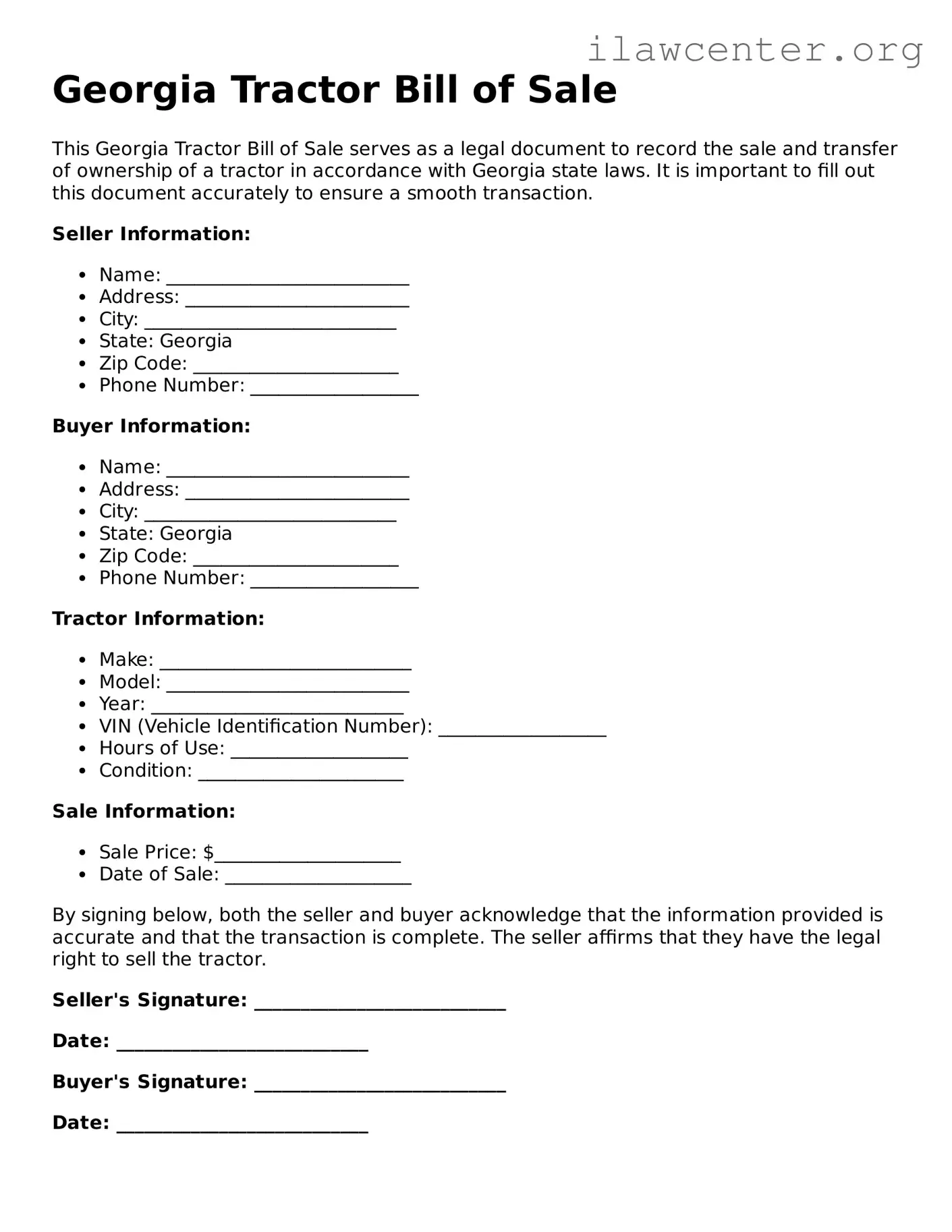
Filling out the Georgia Tractor Bill of Sale form can seem straightforward, but many people make common mistakes that can lead to complications later on. One frequent error is not including all required information. Buyers and sellers must provide details such as names, addresses, and the tractor's identification number. Omitting any of this information can cause delays in the registration process.
Another mistake is incorrect or unclear descriptions of the tractor. A vague description may lead to misunderstandings about the sale. It’s essential to include specifics like the make, model, year, and condition. This clarity helps both parties understand what is being sold.
Some individuals fail to sign the document. A Bill of Sale is not valid without the signatures of both the buyer and the seller. This oversight can create problems if either party needs to prove ownership or the terms of the sale later on.
Not dating the Bill of Sale is another common mistake. The date is crucial as it marks the official transfer of ownership. Without a date, it can be challenging to establish when the sale occurred, which may affect warranties or other legal matters.
People sometimes neglect to keep copies of the completed Bill of Sale. It’s important for both parties to retain a copy for their records. This documentation can be helpful if disputes arise or if proof of ownership is needed in the future.
Another error involves the payment details. Failing to specify the payment method or amount can lead to confusion. Clearly stating how much was paid and how (cash, check, etc.) can prevent misunderstandings later on.
Some individuals do not verify the buyer's or seller's identity. It's wise to check that the names on the form match the identification provided. This step helps ensure that both parties are legitimate and reduces the risk of fraud.
People may also overlook the importance of including any warranties or guarantees. If the seller offers a warranty, this should be clearly stated in the Bill of Sale. This inclusion can protect both parties in case issues arise after the sale.
Additionally, failing to check local laws and regulations can lead to issues. Different counties or cities may have specific requirements regarding the sale of tractors. Being aware of these can save time and trouble.
Lastly, some individuals rush through the process without reviewing the completed form. Taking a moment to double-check all information can prevent errors that might complicate the sale later. A careful review can ensure that everything is accurate and complete.