Fillable Graduate School Recommendation Letter Document

Fillable Graduate School Recommendation Letter Document

The Graduate School Recommendation Letter form is a document used by applicants to request evaluations from individuals who can speak to their academic and professional qualifications. This form plays a crucial role in the admissions process, providing insights into the applicant's abilities and character. To ensure a smooth application experience, consider filling out the form by clicking the button below.

Article Guide

When applying to graduate school, a recommendation letter can play a crucial role in shaping an applicant's chances of acceptance. The Graduate School Recommendation Letter form is designed to facilitate this important aspect of the application process. Typically, it requires the recommender to provide insights into the applicant's academic abilities, work ethic, and character. This form often includes sections for the recommender to rate the applicant on various skills and attributes, such as leadership, teamwork, and critical thinking. Additionally, there may be space for personal anecdotes or specific examples that highlight the applicant's strengths. The form not only helps to standardize the information provided by different recommenders but also ensures that the admissions committee receives a comprehensive view of the candidate's qualifications. Understanding the key components of this form can help both applicants and recommenders prepare more effectively, ultimately contributing to a stronger application package.

Graduate School Recommendation Letter Preview

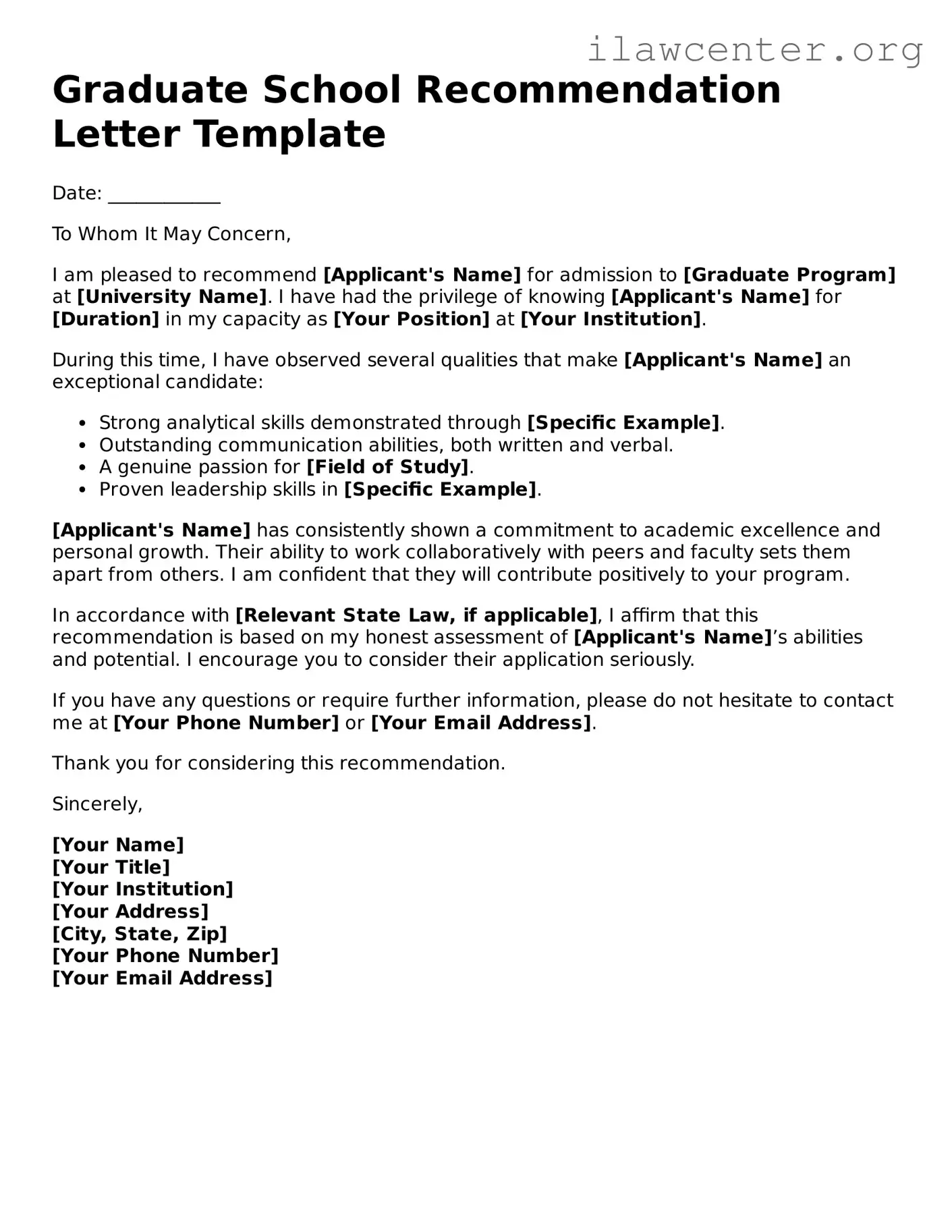
Graduate School Recommendation Letter Template

Date: ____________

To Whom It May Concern,

I am pleased to recommend [Applicant's Name] for admission to [Graduate Program] at [University Name]. I have had the privilege of knowing [Applicant's Name] for [Duration] in my capacity as [Your Position] at [Your Institution].

During this time, I have observed several qualities that make [Applicant's Name] an exceptional candidate:

  • Strong analytical skills demonstrated through [Specific Example].
  • Outstanding communication abilities, both written and verbal.
  • A genuine passion for [Field of Study].
  • Proven leadership skills in [Specific Example].

[Applicant's Name] has consistently shown a commitment to academic excellence and personal growth. Their ability to work collaboratively with peers and faculty sets them apart from others. I am confident that they will contribute positively to your program.

In accordance with [Relevant State Law, if applicable], I affirm that this recommendation is based on my honest assessment of [Applicant's Name]’s abilities and potential. I encourage you to consider their application seriously.

If you have any questions or require further information, please do not hesitate to contact me at [Your Phone Number] or [Your Email Address].

Thank you for considering this recommendation.

Sincerely,

[Your Name]
[Your Title]
[Your Institution]
[Your Address]
[City, State, Zip]
[Your Phone Number]
[Your Email Address]

PDF Form Characteristics

Fact Name Description
Purpose A Graduate School Recommendation Letter form is used to collect evaluations from individuals who can attest to a candidate's qualifications for graduate studies.
Common Recommenders Typically, recommenders include professors, employers, or professionals who know the applicant's academic or work performance.
Content Requirements The letter should include specific examples of the candidate's skills, achievements, and potential for success in graduate school.
Submission Process Recommenders usually submit the letter directly to the graduate program, either electronically or in hard copy, depending on the institution's requirements.
Confidentiality Many programs allow applicants to waive their right to view the recommendation letter, which can enhance its credibility.
State-Specific Forms Some states may have specific guidelines for recommendation letters, particularly in professional programs. Check local regulations for details.
Length Most recommendation letters range from one to two pages, providing enough detail without overwhelming the reader.
Deadline Each graduate program sets its own deadlines for submission of recommendation letters, which applicants must communicate to their recommenders.

Instructions on Utilizing Graduate School Recommendation Letter

Once you have the Graduate School Recommendation Letter form ready, you will need to complete it carefully. Make sure to gather all necessary information beforehand to streamline the process. Follow these steps to ensure that you fill out the form correctly.

  1. Begin by entering the applicant's full name in the designated field.
  2. Provide your name and title as the recommender.
  3. Include your relationship to the applicant, specifying how long you have known them.
  4. Rate the applicant on various skills or attributes, using the provided scale.
  5. Write a detailed recommendation letter in the space provided. Highlight the applicant’s strengths and relevant experiences.
  6. Sign and date the form as required.
  7. Submit the completed form according to the instructions given, either online or via mail.

Important Facts about Graduate School Recommendation Letter

What is the purpose of the Graduate School Recommendation Letter form?

The Graduate School Recommendation Letter form is designed to collect evaluations from individuals who can speak to a candidate's qualifications for graduate study. These recommendations provide insights into the applicant's academic abilities, professional experiences, and personal qualities, which are essential for admission committees to make informed decisions.

Who should I ask to write my recommendation letter?

It is advisable to select individuals who are familiar with your academic or professional work. Ideal recommenders include professors, employers, or supervisors who can provide detailed and relevant insights into your skills and character. Choose individuals who can articulate your strengths and potential for success in graduate studies.

How many recommendation letters are typically required?

Most graduate programs require two to three recommendation letters. However, specific requirements can vary by program. It is important to check the guidelines of the individual graduate school to ensure compliance with their requirements.

What information should my recommender include in the letter?

Your recommender should include specific examples of your skills, accomplishments, and experiences that relate to your potential success in graduate school. They should also address your work ethic, intellectual curiosity, and any relevant personal attributes that would contribute to your performance in a graduate program.

How should the recommendation letter be submitted?

Typically, the recommendation letter can be submitted electronically through an online application system. Some programs may allow for mailed letters. It is essential to provide your recommenders with clear instructions regarding submission methods and deadlines.

What is the deadline for submitting recommendation letters?

Deadlines for recommendation letters usually align with the application deadlines of the graduate program. It is crucial to communicate these deadlines to your recommenders well in advance to ensure timely submission. Allowing extra time can help avoid any last-minute issues.

Can I see my recommendation letters before they are submitted?

Most graduate programs require that recommendation letters be confidential, meaning you will not have access to them before submission. This confidentiality can encourage recommenders to provide honest and candid evaluations. If you have concerns, discuss them with your recommenders beforehand.

What should I do if my recommender is unable to submit the letter on time?

If a recommender is unable to meet the deadline, it is important to address the situation promptly. Consider discussing the issue with them to determine if they need more time or if you should seek an alternative recommender. Always communicate with the graduate program to explain the circumstances and request an extension if necessary.
Common mistakes

When applying to graduate school, recommendation letters play a crucial role in the admissions process. However, many individuals make common mistakes when filling out the recommendation letter forms. Understanding these pitfalls can help ensure that the letters submitted are both impactful and reflective of the applicant's true potential.

One frequent mistake is failing to provide specific examples of the applicant's skills and achievements. Generic statements do not stand out. Instead, recommenders should highlight particular instances where the applicant demonstrated leadership, problem-solving abilities, or academic excellence. This approach lends credibility to the letter and paints a clearer picture of the applicant's capabilities.

Another common error is neglecting to tailor the recommendation to the specific program. Each graduate program has unique qualities and expectations. A one-size-fits-all letter can weaken the application. Recommenders should take the time to understand the program's focus and align their recommendations accordingly, emphasizing relevant experiences and attributes.

Additionally, some individuals overlook the importance of the recommender's qualifications. A strong recommendation from someone who knows the applicant well and has relevant expertise carries more weight than a letter from a well-known figure who has little personal insight. It is essential to choose recommenders who can genuinely speak to the applicant's strengths and potential for success in graduate studies.

Timing can also be a critical factor. Submitting the recommendation letter form too late can jeopardize the application. It is vital to give recommenders ample time to write thoughtful letters. A rushed letter may lack depth and detail, ultimately diminishing its effectiveness.

Lastly, applicants sometimes fail to follow up with their recommenders. While it's important to respect their time, a gentle reminder can help ensure that the letter is submitted on time. This follow-up can also provide an opportunity to express gratitude, reinforcing the relationship and encouraging a more personalized letter.

By avoiding these common mistakes, applicants can enhance their chances of securing strong recommendations. Thoughtful, well-crafted letters can make a significant difference in the competitive landscape of graduate school admissions.

Documents used along the form

When applying to graduate school, a variety of documents accompany the Graduate School Recommendation Letter form. Each of these forms plays a crucial role in presenting a well-rounded view of the applicant, showcasing their qualifications, experiences, and potential for success in advanced studies. Below is a list of commonly used documents that may be required or recommended alongside the recommendation letter.

  • Personal Statement: This document allows the applicant to articulate their motivations for pursuing graduate studies, their academic interests, and how their background aligns with their chosen field.
  • Resume or Curriculum Vitae (CV): A detailed account of the applicant's educational background, work experience, skills, and achievements. This helps the admissions committee understand the applicant's professional journey.
  • Transcripts: Official records from previous educational institutions that provide insight into the applicant's academic performance and coursework. These documents are essential for assessing academic readiness.
  • Standardized Test Scores: Depending on the program, scores from tests like the GRE or GMAT may be required. These scores can help demonstrate the applicant's preparedness for graduate-level work.
  • Portfolio: For programs in fields such as art, design, or architecture, a portfolio showcasing the applicant's work may be necessary. This allows for a visual representation of their skills and creativity.
  • Statement of Purpose: Similar to a personal statement, this document focuses specifically on the applicant's academic and professional goals, detailing how the program fits into their future plans.
  • Application Form: A formal document that collects essential information about the applicant, including personal details, educational history, and program of interest. This is often the foundation of the application process.

Each of these documents contributes to a comprehensive application package. Together, they provide a clearer picture of the applicant's qualifications and aspirations, allowing admissions committees to make informed decisions. Preparing these materials thoughtfully can significantly enhance an applicant's chances of success in gaining admission to their desired graduate program.

Similar forms

The Graduate School Recommendation Letter form shares similarities with several other documents that serve to provide insights into an individual's qualifications, character, and potential. Below is a list of seven documents that are comparable in purpose and structure:

  • Job Reference Letter: Like a recommendation letter for graduate school, a job reference letter highlights a candidate's skills and experiences relevant to a specific position. Both documents aim to support the applicant's case by providing an external perspective on their abilities.
  • Scholarship Recommendation Letter: This type of letter is similar in that it endorses a student's qualifications for a scholarship. It emphasizes academic achievements and personal attributes, much like a graduate school recommendation letter does for advanced studies.
  • Character Reference Letter: A character reference letter focuses on an individual's personal qualities and integrity. While it may not delve into academic or professional achievements, it complements the recommendation letter by providing a holistic view of the person.
  • Professional Endorsement Letter: This document is often used in professional settings to vouch for someone's skills and work ethic. It shares the same goal of affirming an individual's capabilities and potential, similar to a recommendation for graduate studies.
  • College Admission Letter of Recommendation: This letter serves a similar function for undergraduate admissions. It assesses a student's readiness for college, paralleling how a graduate recommendation evaluates readiness for advanced academic work.
  • Mentorship Recommendation Letter: When someone seeks a mentor or advisory role, this letter outlines the individual's qualifications and suitability. It mirrors the graduate recommendation letter by providing a supportive narrative about the applicant's potential.
  • Internship Recommendation Letter: An internship recommendation letter highlights a candidate's qualifications for a specific internship. It focuses on relevant skills and experiences, just as a graduate school recommendation emphasizes academic and research potential.

Dos and Don'ts

When filling out a Graduate School Recommendation Letter form, it is essential to approach the task thoughtfully. Here are some guidelines to consider:

  • Do provide specific examples of the candidate's strengths and accomplishments.
  • Don't use generic phrases or clichés that lack substance.
  • Do be honest about the candidate's abilities and potential.
  • Don't exaggerate or misrepresent the candidate's qualifications.
  • Do tailor your letter to the specific program and institution.
  • Don't submit a letter that is too long or overly verbose.
  • Do proofread your letter for clarity and grammatical accuracy.

Following these guidelines will help create a strong and effective recommendation that supports the candidate's application.

Misconceptions

When it comes to graduate school recommendation letters, several misconceptions can lead to confusion. Here are ten common misunderstandings about the recommendation letter process:

  1. All recommendation letters must come from professors.

    This is not true. While academic references are valuable, employers, mentors, or supervisors can also provide strong letters.

  2. A recommendation letter must be long to be effective.

    Quality matters more than quantity. A concise, well-written letter can be more impactful than a lengthy one.

  3. Recommenders should only write positive letters.

    Recommenders should be honest. If they have concerns, it's better to discuss them openly rather than write a misleading letter.

  4. Students should write their own recommendation letters.

    This is generally frowned upon. It’s best for recommenders to write their own letters based on their experiences with the student.

  5. All graduate programs require the same type of recommendation letter.

    Different programs may have specific requirements. Always check the guidelines for each program.

  6. Recommenders should only discuss academic performance.

    Letters can also address personal qualities, work ethic, and relevant experiences outside the classroom.

  7. Once a letter is submitted, it cannot be changed.

    While it’s best to finalize a letter before submission, some programs allow updates or changes if necessary.

  8. Students should not follow up with recommenders after requesting a letter.

    Following up is acceptable. A polite reminder can help ensure that the letter is submitted on time.

  9. Letters of recommendation are not important.

    These letters can significantly influence admissions decisions. They provide insight into a student’s abilities and character.

  10. Once a recommender agrees, the student has no further responsibilities.

    Students should provide recommenders with necessary information and deadlines to help them write a strong letter.

Key takeaways

When it comes to filling out and using the Graduate School Recommendation Letter form, here are some key takeaways to keep in mind:

  1. Understand the Purpose: The recommendation letter is a crucial part of your graduate school application. It provides insight into your abilities and character.
  2. Choose the Right Recommender: Select someone who knows you well and can speak positively about your skills and experiences.
  3. Provide Context: Share your goals and the specific program you are applying to. This helps the recommender tailor their letter.
  4. Give Sufficient Time: Ask your recommender well in advance. A few weeks is usually a good timeframe to ensure they can write a thoughtful letter.
  5. Follow Instructions: Carefully read the guidelines provided by the graduate school. Each program may have different requirements.
  6. Be Professional: Communicate respectfully and professionally with your recommender. This sets a positive tone for their letter.
  7. Provide Supporting Materials: Consider giving your recommender your resume, personal statement, or other relevant documents to help them write a stronger letter.
  8. Check for Submission Details: Ensure your recommender knows how to submit the letter, whether online or by mail, and confirm deadlines.
  9. Follow Up: A polite reminder a week or two before the deadline can be helpful. It shows your appreciation and keeps the task on their radar.
  10. Express Gratitude: After the letter is submitted, thank your recommender. A simple thank-you note goes a long way in showing your appreciation.

By keeping these points in mind, you can help ensure that your recommendation letters enhance your graduate school application.