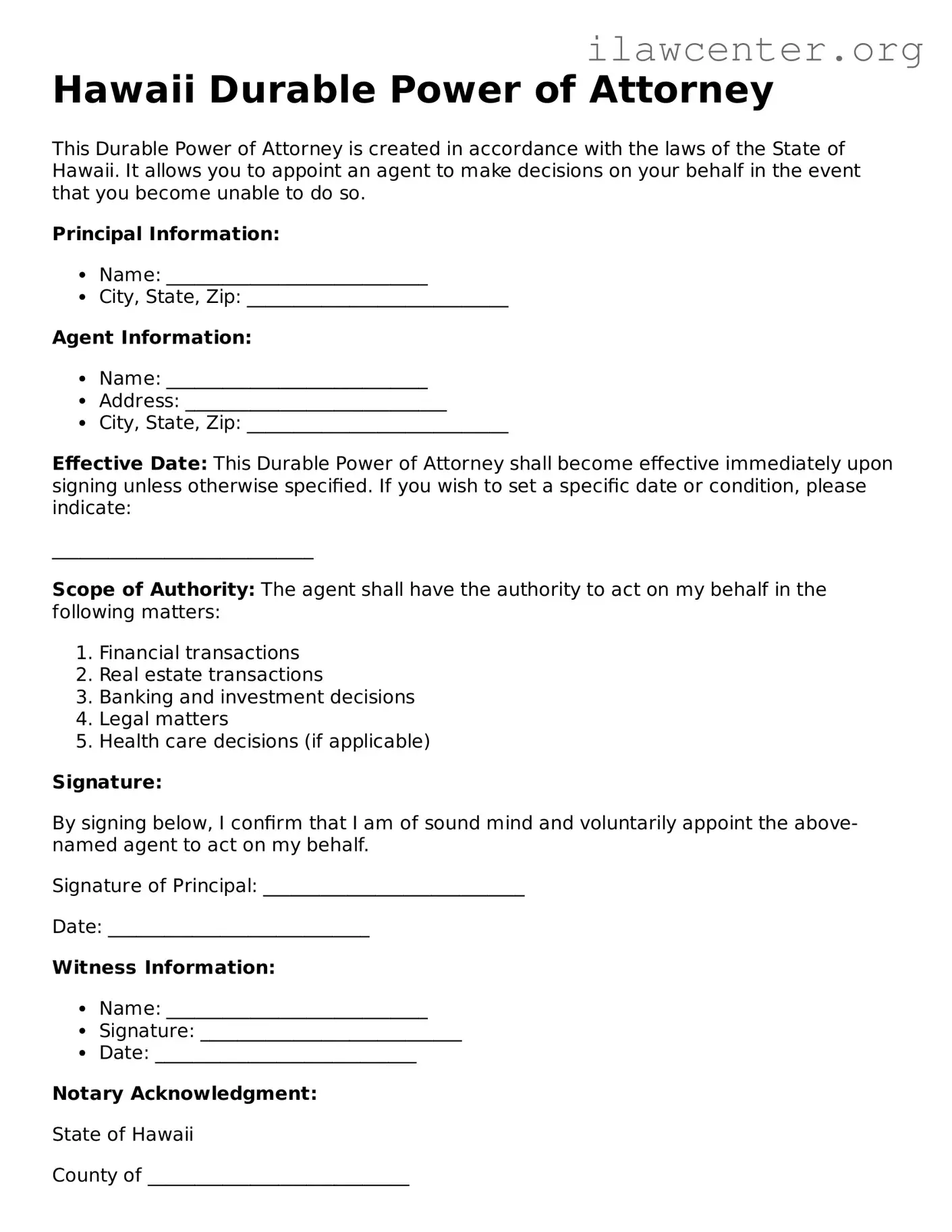
What is a Durable Power of Attorney (DPOA) in Hawaii?
A Durable Power of Attorney is a legal document that allows an individual, known as the principal, to appoint someone else, referred to as the agent or attorney-in-fact, to make decisions on their behalf. This authority remains effective even if the principal becomes incapacitated. It is an important tool for ensuring that personal and financial matters can be managed according to the principal's wishes when they are unable to do so themselves.
Why should I consider creating a Durable Power of Attorney?
Creating a Durable Power of Attorney is essential for anyone who wants to ensure their financial and medical decisions are handled according to their preferences. It provides peace of mind, knowing that a trusted person can step in during times of incapacity. Additionally, it can help avoid potential conflicts among family members and reduce the need for court intervention.
Who can be appointed as an agent in a Durable Power of Attorney?
In Hawaii, you can appoint anyone you trust as your agent, including family members, friends, or professionals. However, it is crucial to choose someone who is responsible and capable of making sound decisions on your behalf. The agent should also be willing to accept this responsibility, as they will be acting in your best interest.
Does a Durable Power of Attorney need to be notarized in Hawaii?
Yes, in Hawaii, a Durable Power of Attorney must be notarized to be legally valid. This means that you will need to sign the document in the presence of a notary public, who will then acknowledge your signature. This step helps ensure that the document is authentic and that you are signing it willingly.
Can I revoke my Durable Power of Attorney once it is created?
Yes, you have the right to revoke your Durable Power of Attorney at any time, as long as you are mentally competent to do so. To revoke the document, you should create a written revocation and notify your agent and any relevant institutions. This will help prevent any confusion about who has the authority to act on your behalf.
What happens if I become incapacitated and do not have a Durable Power of Attorney?
If you become incapacitated without a Durable Power of Attorney in place, your family may need to go through a court process to appoint a guardian or conservator to make decisions for you. This process can be time-consuming, costly, and emotionally challenging for your loved ones. Having a DPOA in advance can help avoid these complications.
Can I specify what powers my agent has in the Durable Power of Attorney?
Yes, you can specify the powers you wish to grant your agent in the Durable Power of Attorney. You can choose to give them broad authority to manage your financial and medical decisions or limit their powers to specific tasks. Clearly outlining these powers will help ensure that your agent acts in accordance with your wishes.
Is there a specific form I need to use for a Durable Power of Attorney in Hawaii?
While there is no specific state-mandated form for a Durable Power of Attorney in Hawaii, it is advisable to use a form that complies with Hawaii's laws. Many legal resources and online services provide templates that can help ensure the document meets all necessary requirements. Consulting with a legal professional can also provide guidance tailored to your individual needs.