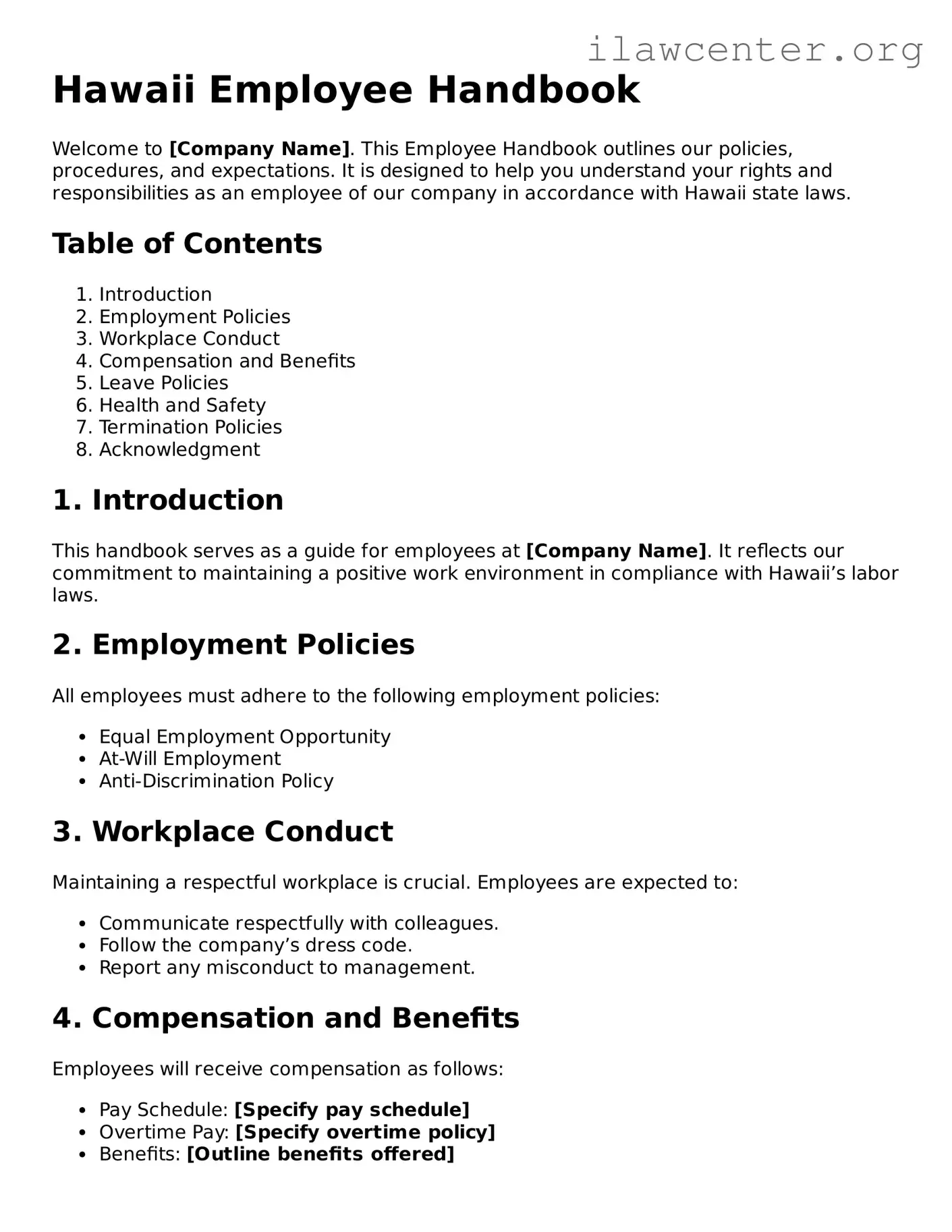
What is the Hawaii Employee Handbook form?
The Hawaii Employee Handbook form is a document that outlines the policies, procedures, and expectations for employees working in Hawaii. It serves as a guide for both employers and employees, detailing important information about workplace rules, employee rights, and company culture. This handbook helps ensure that everyone is on the same page regarding workplace standards and practices.
Why is it important to have an Employee Handbook in Hawaii?
Having an Employee Handbook is crucial for several reasons. First, it helps protect the employer by clearly stating policies that can prevent misunderstandings and potential legal disputes. Second, it informs employees about their rights and responsibilities, fostering a positive work environment. Additionally, it can help ensure compliance with state and federal laws, which is particularly important in Hawaii due to its unique labor regulations.
What should be included in the Hawaii Employee Handbook?
A comprehensive Hawaii Employee Handbook should include sections on company policies, employee benefits, code of conduct, anti-discrimination policies, and procedures for reporting grievances. It may also cover topics like attendance, dress code, and safety protocols. Including information specific to Hawaii, such as state labor laws and cultural considerations, can enhance the handbook's relevance and effectiveness.
How often should the Employee Handbook be updated?
Regular updates to the Employee Handbook are essential to keep it relevant and compliant with changing laws and company policies. It is advisable to review the handbook at least once a year or whenever significant changes occur, such as new legislation or changes in company structure. Keeping the handbook current helps maintain clarity and trust between employers and employees.
Can an Employee Handbook be legally binding?
While an Employee Handbook is not typically a legally binding contract, certain sections may create enforceable obligations. For instance, if the handbook includes specific policies that employees rely on, it may be considered part of the employment agreement. Employers should clearly state that the handbook is not a contract to avoid unintended legal implications. Consulting with a legal professional can provide clarity on this matter.
How can employees use the Employee Handbook?
Employees can use the Employee Handbook as a resource to understand their rights, responsibilities, and the company's policies. It serves as a reference guide for navigating workplace issues and can help employees know what to expect regarding benefits, conduct, and procedures. If questions or concerns arise, employees are encouraged to refer to the handbook or discuss them with their supervisor or HR department.