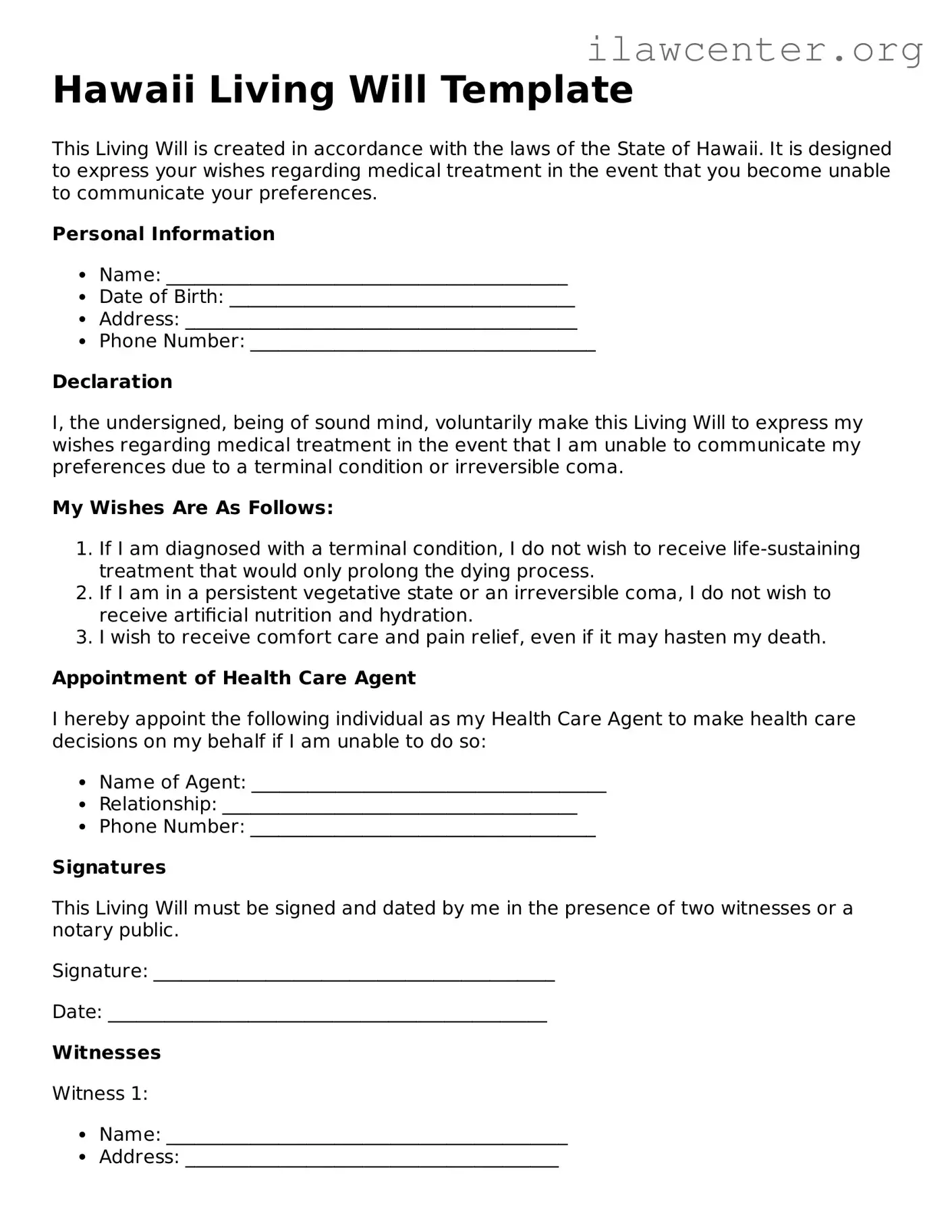
What is a Living Will in Hawaii?
A Living Will is a legal document that allows individuals to express their wishes regarding medical treatment in the event they become unable to communicate their preferences. It specifically addresses end-of-life care and outlines the types of medical interventions a person does or does not want if they are terminally ill or in a persistent vegetative state.
Who can create a Living Will in Hawaii?
Any competent adult, aged 18 or older, can create a Living Will in Hawaii. It is essential that the individual understands the implications of the document and is able to make informed decisions about their healthcare preferences.
How do I create a Living Will in Hawaii?
To create a Living Will in Hawaii, you should follow these steps: First, consider your wishes regarding medical treatment and end-of-life care. Next, complete the Living Will form, which is available through various legal resources and healthcare providers. Finally, sign the document in the presence of two witnesses or a notary public to ensure its validity.
What should I include in my Living Will?
In your Living Will, you should clearly state your preferences for medical treatment, including whether you wish to receive life-sustaining measures such as resuscitation, mechanical ventilation, or tube feeding. Additionally, you may want to address specific scenarios and outline any conditions under which you would or would not want certain treatments.
Can I change or revoke my Living Will?
Yes, you have the right to change or revoke your Living Will at any time, as long as you are competent to do so. To make changes, simply create a new Living Will that reflects your updated wishes and ensure that it is signed and witnessed. To revoke an existing Living Will, you may destroy the document or provide a written notice stating your intent to revoke.
Is a Living Will the same as a Power of Attorney for Health Care?
No, a Living Will and a Power of Attorney for Health Care are distinct documents. A Living Will focuses on your specific medical treatment preferences, while a Power of Attorney for Health Care designates a person to make healthcare decisions on your behalf if you are unable to do so. Both documents can work together to ensure your wishes are honored.
How can I ensure my Living Will is honored?
To ensure your Living Will is honored, share copies of the document with your healthcare providers, family members, and anyone who may be involved in your care. Discuss your wishes with them to promote understanding and support. Additionally, consider placing a copy in your medical records for easy access by healthcare professionals.
What happens if I do not have a Living Will?
If you do not have a Living Will, medical decisions may be made by your family members or legal representatives based on their understanding of your wishes. This can lead to uncertainty and potential disagreements during difficult times. Having a Living Will can provide clarity and ensure that your preferences are respected when it matters most.