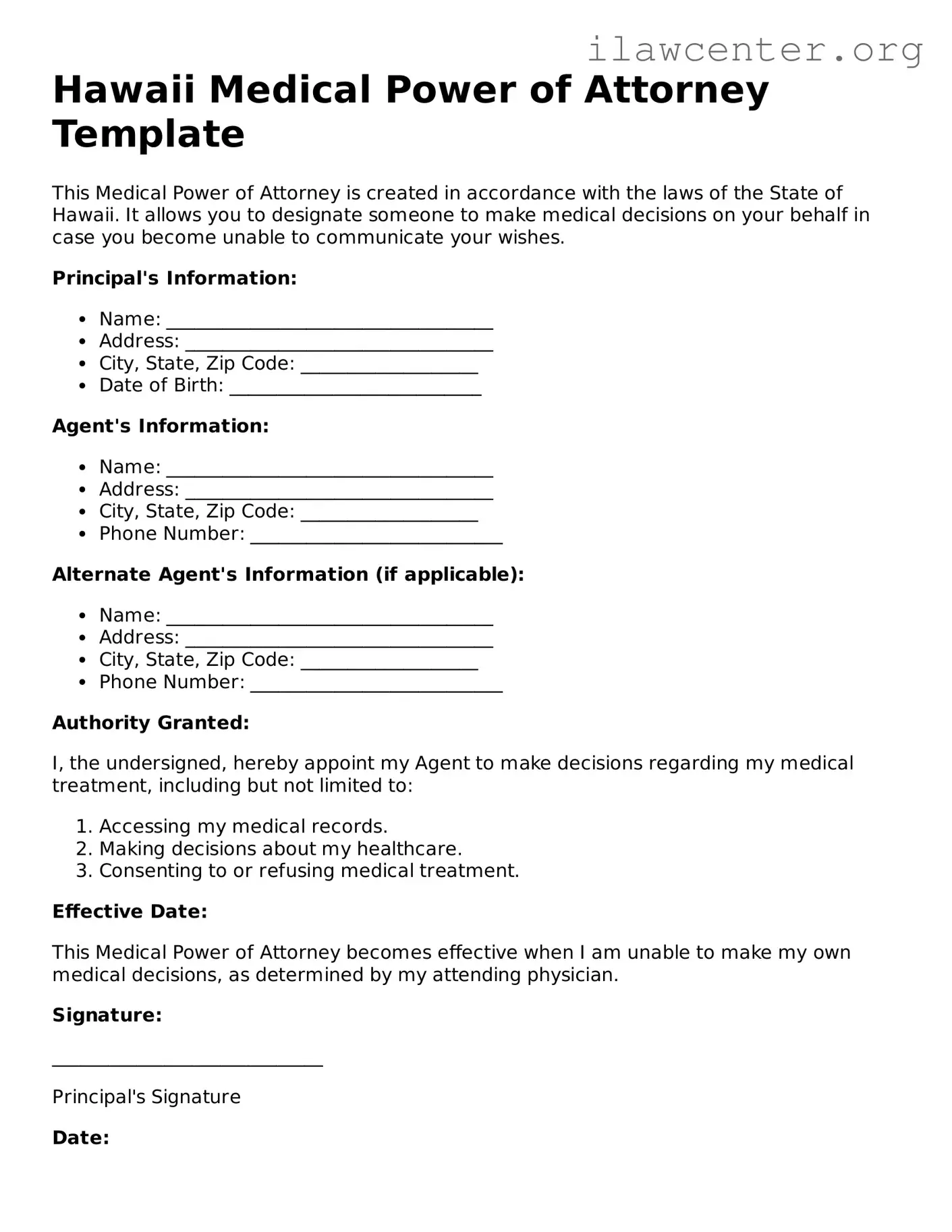
Filling out a Medical Power of Attorney form in Hawaii is a crucial step in ensuring your healthcare wishes are respected. However, many people make mistakes that can lead to complications down the line. Here are ten common errors to avoid.
One frequent mistake is not choosing the right agent. Your agent should be someone you trust completely, as they will make critical healthcare decisions on your behalf. Selecting someone who may not understand your values or preferences can lead to decisions that do not align with your wishes.
Another common error is failing to clearly define the scope of authority. The form allows you to specify what decisions your agent can make. If this section is left vague or incomplete, your agent may not have the power to act when needed. It's essential to be explicit about the types of medical decisions you want them to handle.
People often forget to sign and date the form. In Hawaii, a Medical Power of Attorney must be signed by you, the principal, and dated to be valid. Without your signature, the document is essentially meaningless, and your agent will not have the authority to act on your behalf.
Not having the form witnessed or notarized is another mistake that can invalidate your document. In Hawaii, you need at least one witness who is not related to you or your agent. Alternatively, you can have the form notarized. Omitting this step can lead to challenges in the future.
Some individuals overlook the importance of discussing their wishes with their agent. It is vital to have an open conversation about your healthcare preferences. This discussion ensures that your agent understands your values and can make informed decisions in line with your wishes.
Another error is failing to update the document when circumstances change. Life events such as marriage, divorce, or the death of a designated agent can necessitate updates to your Medical Power of Attorney. Regularly reviewing and revising the document helps ensure it remains relevant to your current situation.
People sometimes make the mistake of not providing copies of the form to relevant parties. After completing the Medical Power of Attorney, you should share copies with your healthcare provider, agent, and family members. This practice ensures that everyone is aware of your wishes and can act accordingly.
Some individuals may also neglect to consider alternative agents. It's wise to designate a backup agent in case your primary choice is unable or unwilling to act. This precaution helps avoid confusion and ensures that someone is always available to make decisions on your behalf.
Another common oversight is not understanding the implications of the document. A Medical Power of Attorney grants significant authority to your agent. It’s important to comprehend what this means for your healthcare decisions and to ensure you are comfortable with the level of control you are giving.
Finally, many people fail to keep their Medical Power of Attorney in a safe yet accessible place. You want to ensure that your agent can easily access the document when needed. Storing it in a secure location that is also known to your agent can help prevent delays in decision-making during critical moments.