Attorney-Verified  Real Estate Purchase Agreement Document for Hawaii

Attorney-Verified Real Estate Purchase Agreement Document for Hawaii

The Hawaii Real Estate Purchase Agreement is a legal document that outlines the terms and conditions for buying or selling real estate in Hawaii. This form serves as a crucial tool for both buyers and sellers, ensuring that all parties are clear on their rights and obligations. To get started on your real estate transaction, fill out the form by clicking the button below.

Article Guide

The Hawaii Real Estate Purchase Agreement is a crucial document for anyone involved in buying or selling property in the beautiful islands of Hawaii. This form serves as the foundation for the transaction, outlining the terms and conditions that both parties must agree upon. Key aspects include the purchase price, the legal description of the property, and the closing date. Additionally, it addresses contingencies, such as financing and inspections, ensuring that buyers have the necessary protections in place. The agreement also specifies the responsibilities of both the buyer and the seller, including disclosures and any potential repairs that may need to be addressed before the sale is finalized. Understanding these elements is essential for a smooth transaction, as they help clarify expectations and reduce the likelihood of disputes. As you navigate the exciting journey of real estate in Hawaii, having a firm grasp of this agreement will empower you to make informed decisions, ultimately leading to a successful purchase or sale.

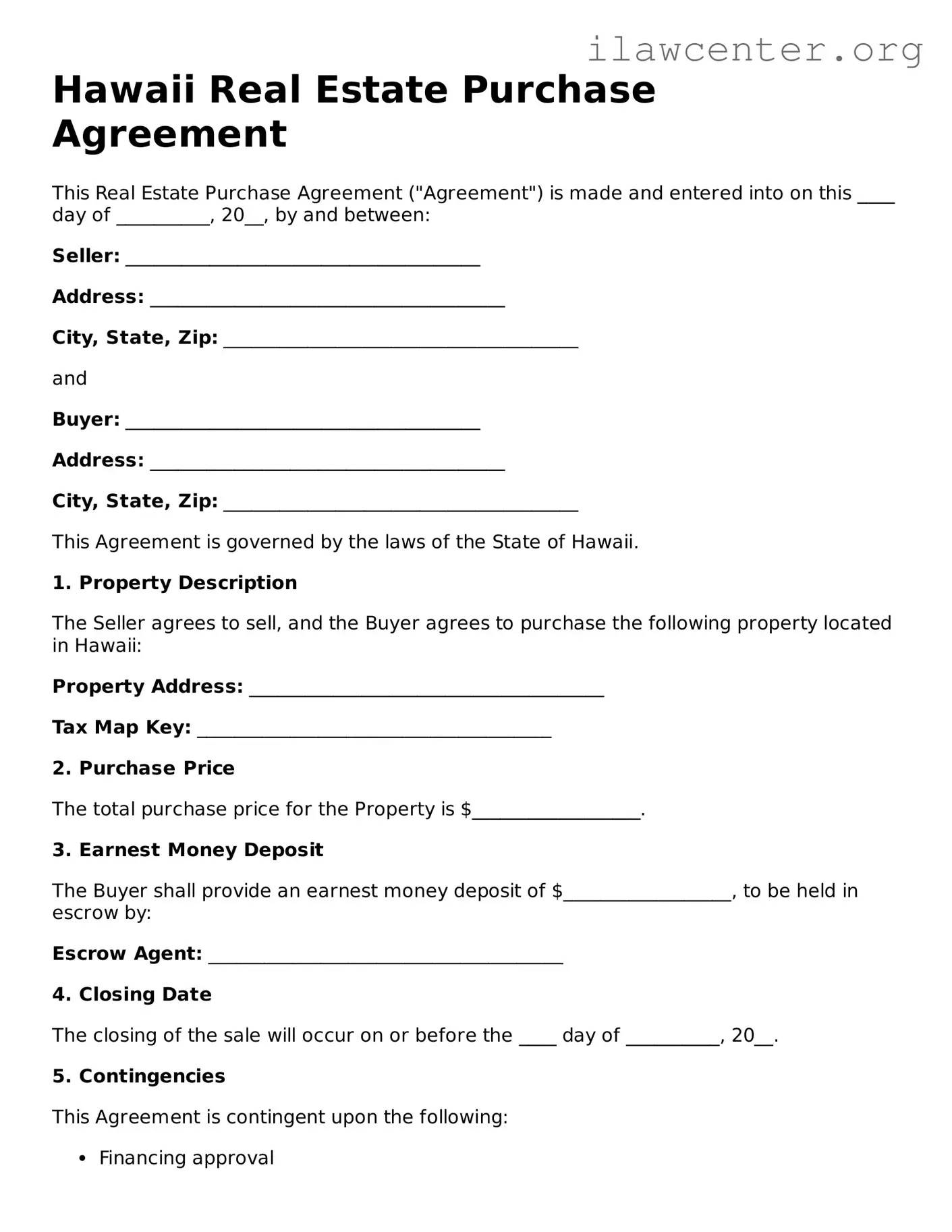
Hawaii Real Estate Purchase Agreement Preview

Hawaii Real Estate Purchase Agreement

This Real Estate Purchase Agreement ("Agreement") is made and entered into on this ____ day of __________, 20__, by and between:

Seller: ______________________________________

Address: ______________________________________

City, State, Zip: ______________________________________

and

Buyer: ______________________________________

Address: ______________________________________

City, State, Zip: ______________________________________

This Agreement is governed by the laws of the State of Hawaii.

1. Property Description

The Seller agrees to sell, and the Buyer agrees to purchase the following property located in Hawaii:

Property Address: ______________________________________

Tax Map Key: ______________________________________

2. Purchase Price

The total purchase price for the Property is $__________________.

3. Earnest Money Deposit

The Buyer shall provide an earnest money deposit of $__________________, to be held in escrow by:

Escrow Agent: ______________________________________

4. Closing Date

The closing of the sale will occur on or before the ____ day of __________, 20__.

5. Contingencies

This Agreement is contingent upon the following:

  • Financing approval
  • Property inspection
  • Clear title

6. Additional Terms

Any additional terms or conditions agreed upon by both parties:

______________________________________________________

7. Signatures

By signing below, both parties agree to the terms outlined in this Agreement:

Seller Signature: ____________________________ Date: ___________

Buyer Signature: ____________________________ Date: ___________

This Agreement constitutes the entire understanding between the parties and supersedes all prior negotiations or agreements.

PDF Form Characteristics

Fact Name Description
Governing Law The Hawaii Real Estate Purchase Agreement is governed by the laws of the State of Hawaii.
Purpose This form serves as a legally binding contract between the buyer and seller for the purchase of real estate in Hawaii.
Disclosure Requirements Hawaii law mandates certain disclosures, including information about the property's condition and any known defects.
Contingencies The agreement often includes contingencies, such as financing or inspection, which must be satisfied for the sale to proceed.
Signatures Both parties must sign the agreement to make it enforceable; electronic signatures are also accepted under Hawaii law.

Instructions on Utilizing Hawaii Real Estate Purchase Agreement

Once you have the Hawaii Real Estate Purchase Agreement form in hand, it's time to get started on filling it out. This document will guide you through the essential details needed to move forward with your real estate transaction. Here’s how to complete the form step by step.

  1. Read the Form Thoroughly: Before you start filling it out, take a moment to read through the entire agreement. Understanding the sections will help you provide accurate information.
  2. Fill in Buyer Information: Enter the full names of all buyers. Make sure to include any middle names or initials, as this will be important for legal purposes.
  3. Provide Seller Information: Just like with the buyers, include the full names of all sellers. Double-check for accuracy.
  4. Property Description: Describe the property being sold. This typically includes the address, tax map key number, and any other relevant details to clearly identify the property.
  5. Purchase Price: Clearly state the agreed-upon purchase price. This is a crucial element of the agreement.
  6. Deposit Amount: Indicate the amount of the earnest money deposit. This shows the seller that the buyer is serious about the purchase.
  7. Closing Date: Specify the desired closing date for the transaction. This is when the ownership will officially transfer.
  8. Contingencies: Note any contingencies that may apply, such as financing or inspection requirements. This is important for protecting both parties.
  9. Signatures: Ensure that all parties involved sign the agreement. Each buyer and seller must provide their signature to validate the document.
  10. Date the Agreement: Finally, include the date when the agreement is signed. This will be important for tracking the timeline of the transaction.

After completing the form, it’s essential to review everything for accuracy. Once confirmed, you can proceed to share the document with all parties involved and begin the next steps in your real estate journey.

Important Facts about Hawaii Real Estate Purchase Agreement

What is a Hawaii Real Estate Purchase Agreement?

The Hawaii Real Estate Purchase Agreement is a legally binding document that outlines the terms and conditions under which a buyer agrees to purchase property from a seller in Hawaii. This agreement serves as a roadmap for the transaction, detailing aspects such as the purchase price, closing date, and any contingencies that must be met before the sale is finalized.

What key elements should I look for in the agreement?

When reviewing a Hawaii Real Estate Purchase Agreement, pay close attention to several key elements. These include the purchase price, earnest money deposit, financing details, property description, and any contingencies like inspections or financing approvals. Additionally, the agreement should specify the closing date and any included fixtures or personal property. Understanding these components is crucial for a smooth transaction.

Are there any contingencies I can include?

Yes, contingencies are an important part of the agreement. Common contingencies include home inspections, financing approval, and appraisal contingencies. These clauses allow buyers to back out of the agreement without penalty if certain conditions are not met. It’s essential to clearly define these contingencies in the agreement to protect your interests throughout the buying process.

What happens if either party wants to back out of the agreement?

If either party wishes to back out of the agreement, the consequences depend on the terms outlined in the contract and the timing of the decision. If a buyer withdraws after the contingency period has passed, they may forfeit their earnest money deposit. Conversely, if the seller backs out without a valid reason, they may face legal repercussions or be required to return the buyer's deposit. Always consult with a legal professional to understand your options in such situations.

How does the closing process work in Hawaii?

The closing process in Hawaii typically involves several steps. Once all contingencies are satisfied, both parties will sign the closing documents. The buyer will provide the remaining funds, and the seller will transfer the property title. A title company or attorney usually facilitates this process. It’s important to review all documents carefully and ensure that all financial obligations are met before the transaction is finalized.

Can I make changes to the agreement after it is signed?

Changes to the Hawaii Real Estate Purchase Agreement after it has been signed are possible, but they require mutual consent from both parties. Any modifications should be documented in writing, often as an addendum to the original agreement. It's advisable to consult with a legal expert to ensure that any changes are properly executed and legally binding.

Common mistakes

When filling out the Hawaii Real Estate Purchase Agreement, many buyers and sellers inadvertently make mistakes that can lead to complications later on. One common error is failing to provide accurate property descriptions. It’s essential to ensure that the legal description of the property is precise. A vague description can lead to disputes or misunderstandings about what is actually being sold.

Another frequent mistake is neglecting to include all necessary parties in the agreement. If there are multiple owners or stakeholders involved, it’s crucial that everyone’s name is included. Omitting a party can create legal issues down the line, especially if that person has a claim to the property.

Many people also overlook the importance of specifying the purchase price clearly. While it may seem straightforward, it’s vital to ensure that the amount is stated correctly and matches what was verbally agreed upon. Any discrepancies can lead to confusion and potential legal challenges.

Additionally, buyers often forget to include contingencies in the agreement. These are conditions that must be met for the sale to proceed, such as securing financing or passing a home inspection. Without these stipulations, buyers may find themselves locked into a contract that doesn’t protect their interests.

Another mistake is not addressing the earnest money deposit. This deposit shows the seller that the buyer is serious about the purchase. It’s important to specify the amount and the terms surrounding this deposit. Failing to do so can lead to misunderstandings and potential loss of the deposit.

Moreover, people sometimes ignore the closing date or fail to specify it clearly. This date is crucial for both parties, as it marks when the transaction is finalized. A vague or missing closing date can lead to delays and frustrations for everyone involved.

Buyers and sellers may also forget to discuss and include any personal property that will be included in the sale. Items like appliances, fixtures, or furniture should be clearly listed to avoid any confusion. If not included in the agreement, these items may not be considered part of the sale.

Lastly, many individuals fail to read the entire agreement before signing. It’s easy to skim through the document, but doing so can result in missing important details or terms. Taking the time to review the entire agreement ensures that all parties understand their rights and obligations.

Documents used along the form

When engaging in a real estate transaction in Hawaii, several forms and documents complement the Real Estate Purchase Agreement. Each serves a specific purpose and helps ensure that the transaction proceeds smoothly.

  • Seller's Disclosure Statement: This document requires the seller to disclose any known issues with the property. It helps buyers make informed decisions by revealing potential problems.
  • Title Report: A title report provides details about the property's ownership history and any liens or encumbrances. It ensures that the buyer receives clear title to the property.
  • Escrow Agreement: This agreement outlines the terms under which an escrow agent will hold funds and documents until all conditions of the sale are met. It protects both parties during the transaction.
  • Financing Addendum: If the buyer is obtaining a loan, this addendum outlines the terms of the financing. It specifies the type of loan and any contingencies related to securing financing.
  • Home Inspection Report: Conducted by a qualified inspector, this report assesses the property's condition. It can uncover issues that may need to be addressed before finalizing the sale.
  • Appraisal Report: An appraisal determines the property's market value. Lenders typically require this report to ensure that the loan amount is justified by the property's worth.
  • Property Survey: A survey provides a detailed map of the property, showing boundaries and any easements. It helps avoid disputes over property lines.
  • Closing Disclosure: This document outlines the final terms of the loan and all closing costs. It must be provided to the buyer at least three days before closing.
  • Deed: The deed is the legal document that transfers ownership of the property from the seller to the buyer. It is recorded with the county to make the transfer official.

Understanding these documents can simplify the buying process and protect your interests. Always consider consulting with a real estate professional to navigate the complexities of real estate transactions in Hawaii.

Similar forms

The Real Estate Purchase Agreement is an essential document in real estate transactions, serving as a formal contract between a buyer and a seller. It outlines the terms and conditions of the sale. Several other documents share similarities with this agreement, each playing a crucial role in the real estate process. Below are four such documents:

  • Lease Agreement: Like the Real Estate Purchase Agreement, a lease agreement outlines the terms between a landlord and tenant. It specifies the duration of the lease, payment terms, and responsibilities of both parties, ensuring that all parties understand their obligations.
  • Sales Contract: This document is similar in that it formalizes the sale of goods or services. In real estate, a sales contract may refer to the sale of property, detailing the price, payment methods, and other essential terms, much like a purchase agreement.
  • Option to Purchase Agreement: This agreement grants a potential buyer the right to purchase a property within a specified time frame. It shares similarities with the Real Estate Purchase Agreement by outlining the terms of the potential sale, including price and conditions, but does not obligate the buyer to complete the purchase.
  • Listing Agreement: This document is used between a property owner and a real estate agent. It details the agent's responsibilities and the terms under which the property will be marketed. Similar to the Real Estate Purchase Agreement, it establishes clear expectations and obligations for all parties involved in the transaction.

Dos and Don'ts

When filling out the Hawaii Real Estate Purchase Agreement form, it is crucial to approach the process with care and attention to detail. Below is a list of ten things to consider, both dos and don'ts, to help ensure a smooth transaction.

  • Do read the entire agreement carefully before signing.
  • Don't rush through the form; take your time to understand each section.
  • Do provide accurate information about the property and parties involved.
  • Don't leave any blank spaces; fill in all required fields.
  • Do consult with a real estate professional or attorney if you have questions.
  • Don't ignore contingencies; they can protect your interests.
  • Do ensure that all terms are clearly defined and agreed upon.
  • Don't forget to include any necessary attachments or disclosures.
  • Do keep a copy of the signed agreement for your records.
  • Don't assume verbal agreements are binding; everything should be in writing.

Following these guidelines can help facilitate a successful real estate transaction in Hawaii. Always prioritize clarity and communication throughout the process.

Misconceptions

Understanding the Hawaii Real Estate Purchase Agreement (REPA) is essential for anyone involved in buying or selling property in Hawaii. However, several misconceptions can lead to confusion. Here are ten common misconceptions about the REPA:

  1. The REPA is a standard form that cannot be modified. Many believe that the REPA is a rigid document. In reality, parties can negotiate terms and modify the agreement to fit their specific needs.
  2. All real estate transactions in Hawaii require a REPA. Some think that every property transaction must use the REPA. While it is commonly used, not all transactions require this form. Alternatives may exist.
  3. The REPA guarantees a successful closing. Some assume that signing the REPA ensures the deal will close. However, the agreement is only a step in the process, and many factors can affect the closing.
  4. Only real estate agents can prepare the REPA. There is a belief that only licensed agents can fill out the REPA. In fact, buyers and sellers can complete the form themselves, although guidance is often beneficial.
  5. The REPA includes all terms of the sale. Many think that the REPA covers every detail of the transaction. While it outlines key terms, additional agreements may be necessary to address specific issues.
  6. The REPA is only for residential properties. Some people assume the REPA is limited to residential real estate. It can also be used for commercial properties, though some differences may apply.
  7. Once signed, the REPA cannot be changed. A common misconception is that the REPA is final once signed. In reality, parties can amend the agreement if both agree to the changes.
  8. Buyers are always responsible for closing costs. Some believe that buyers must cover all closing costs. However, the REPA allows for negotiation regarding who pays these costs, which can vary by transaction.
  9. The REPA does not require legal review. Many think that a legal review is unnecessary for the REPA. While it is not mandatory, having a legal professional review the agreement can help avoid potential issues.
  10. Signing the REPA means you cannot back out. Some believe that signing the REPA locks them into the deal. Buyers and sellers may have contingencies that allow them to exit the agreement under certain conditions.

By addressing these misconceptions, individuals can approach the Hawaii Real Estate Purchase Agreement with a clearer understanding, leading to more informed decisions in their real estate transactions.

Key takeaways

When filling out and using the Hawaii Real Estate Purchase Agreement form, several key points should be considered to ensure clarity and compliance with local laws.

  • Understand the Structure: The agreement typically includes sections for buyer and seller information, property details, purchase price, and terms of sale.
  • Be Specific: Clearly define all terms, including contingencies, inspection periods, and closing dates to avoid misunderstandings.
  • Review Local Regulations: Familiarize yourself with Hawaii's real estate laws, as they may differ from those in other states.
  • Consult Professionals: It is advisable to seek guidance from real estate agents or attorneys who are knowledgeable about Hawaii's market.
  • Signatures are Essential: Ensure that all parties involved in the transaction sign the agreement to make it legally binding.