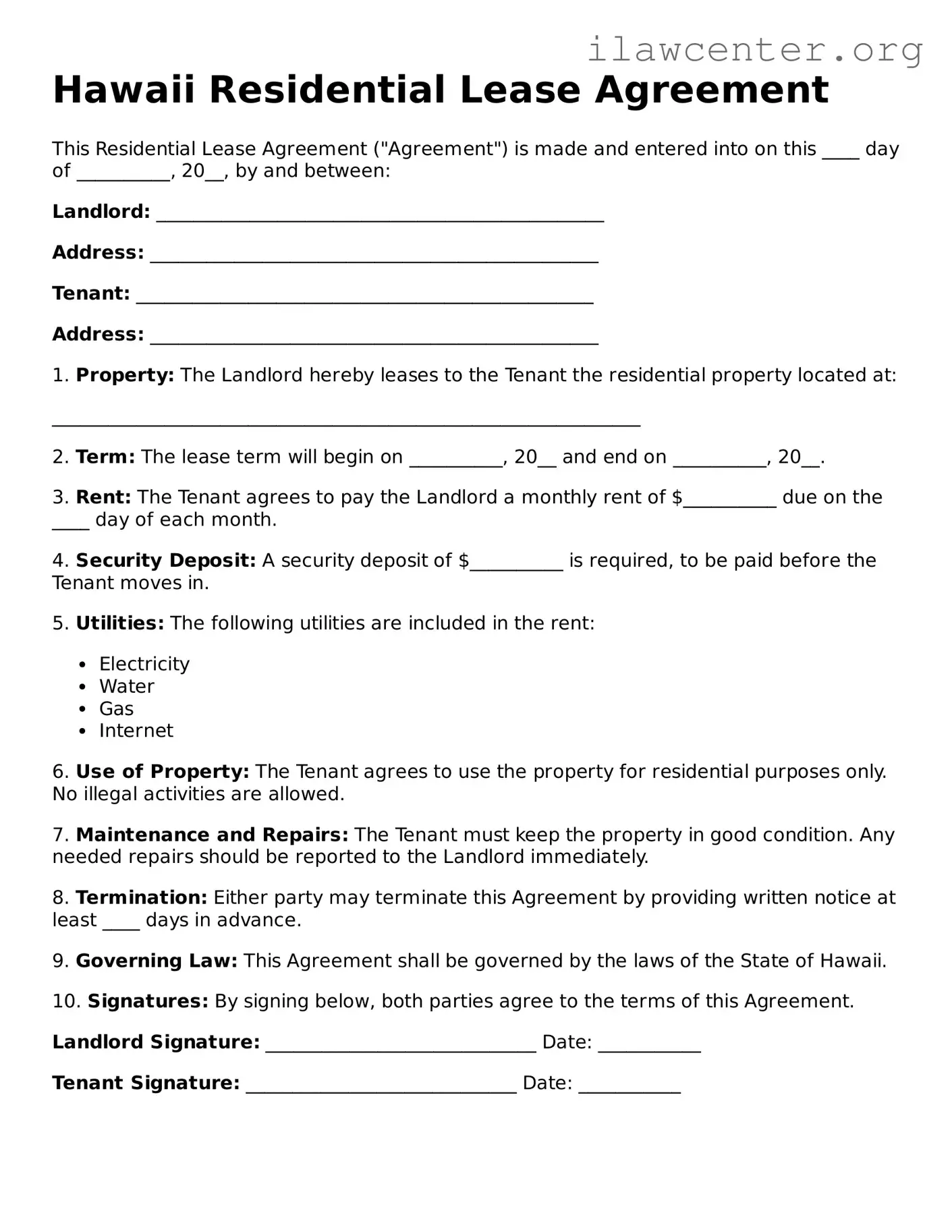
What is a Hawaii Residential Lease Agreement?
A Hawaii Residential Lease Agreement is a legal document that outlines the terms and conditions between a landlord and a tenant for renting a residential property in Hawaii. This agreement typically includes details about the rental amount, duration of the lease, and responsibilities of both parties.
What should be included in the lease agreement?
Key components of the lease agreement include the names of the landlord and tenant, the property address, the lease term, rent amount, payment due dates, security deposit details, maintenance responsibilities, and rules regarding pets or smoking. It’s important that both parties understand and agree to these terms.
How long is a typical lease term in Hawaii?
Lease terms in Hawaii can vary. They often range from six months to one year, but month-to-month agreements are also common. The specific duration should be clearly stated in the lease agreement to avoid confusion.
Can a lease agreement be terminated early?
Yes, a lease agreement can be terminated early, but specific conditions must be met. Most leases include clauses regarding early termination, which may require notice to be given or payment of a penalty. Always check the lease terms for these details.
What happens if the tenant does not pay rent on time?
If a tenant fails to pay rent on time, the landlord may issue a notice to the tenant. This notice typically gives the tenant a certain number of days to pay the overdue rent or face potential eviction proceedings. The specific process is governed by Hawaii law.
Is a security deposit required?
Yes, most landlords in Hawaii require a security deposit. This deposit is usually equivalent to one month's rent, but it can vary. The purpose of the deposit is to cover any damages or unpaid rent when the lease ends. The lease agreement should specify the amount and conditions for its return.
Are there any restrictions on pets in the lease?
Many lease agreements include specific clauses about pets. Some landlords may allow pets with additional deposits or fees, while others may prohibit them entirely. Always check the lease for pet policies to avoid misunderstandings.
Can a tenant make changes to the property?
Generally, tenants should not make changes to the property without the landlord's permission. This includes painting walls, installing shelves, or making any structural changes. Any modifications should be discussed and agreed upon in writing.
What are the landlord's responsibilities?
Landlords are responsible for maintaining the property and ensuring it is safe and habitable. This includes making necessary repairs, addressing plumbing or electrical issues, and complying with health and safety codes. The lease agreement should outline these responsibilities clearly.
What should a tenant do if there is a dispute?
If a dispute arises, tenants should first try to communicate directly with the landlord to resolve the issue. If that doesn’t work, they may consider mediation or legal assistance. It’s essential to document all communications and keep records of the lease agreement and any related correspondence.