History And Physical PDF Template

History And Physical PDF Template

The History and Physical (H&P) form is a crucial document used in healthcare settings to gather comprehensive information about a patient's medical history and current health status. This form plays a vital role in ensuring that healthcare providers have a complete understanding of a patient’s needs, facilitating accurate diagnosis and effective treatment planning. For optimal care, it is essential to fill out the H&P form thoroughly; click the button below to get started.

Article Guide

The History and Physical (H&P) form is a critical document utilized in the healthcare setting, specifically designed to capture comprehensive patient information during initial visits or consultations. This form serves multiple purposes, including the documentation of a patient's chief complaint and the history of present illness, which provides a narrative context for the patient's current health status. Key sections of the form encompass a detailed account of the patient's medical history, including past medical and surgical experiences, as well as social and family histories that may influence health outcomes. Additionally, the H&P form includes a review of systems (ROS), which systematically evaluates various bodily systems to identify any additional symptoms that may not have been initially reported. The physical examination section is equally vital, as it outlines the clinician's observations and findings during the patient assessment, covering vital signs, general appearance, and specific examinations of various body systems. This structured approach not only aids in clinical decision-making but also ensures continuity of care by providing a thorough record for future reference. Ultimately, the H&P form is an essential tool in the healthcare process, facilitating effective communication among healthcare providers and enhancing patient safety and treatment efficacy.

History And Physical Preview

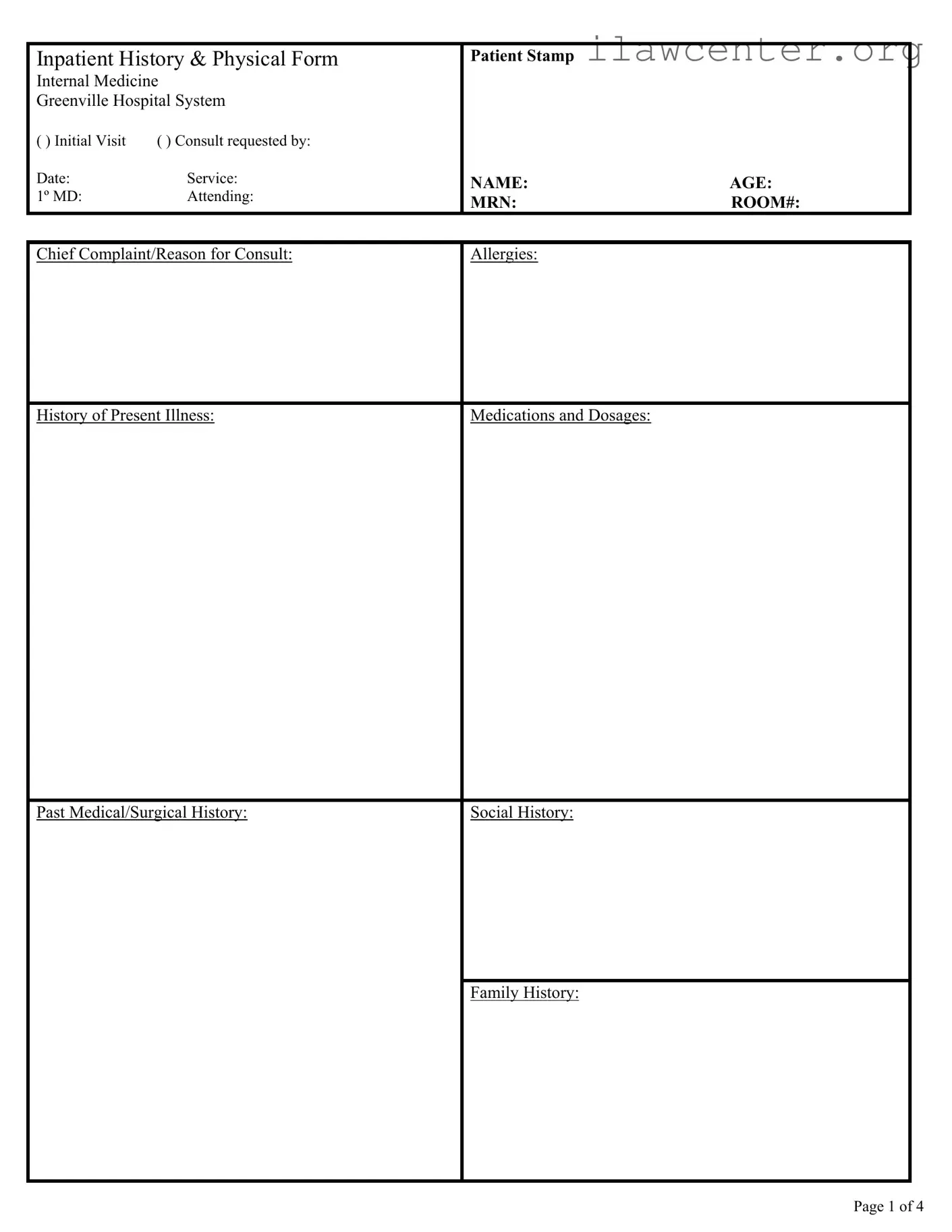
Inpatient History & Physical Form

Patient Stamp


Internal Medicine


Greenville Hospital System


( ) Initial Visit

( ) Consult requested by:


Date:

Service:

NAME:

AGE:

1º MD:

Attending:

MRN:

ROOM#:


Chief Complaint/Reason for Consult:

Allergies:

History of Present Illness:

Medications and Dosages:

Past Medical/Surgical History:

Social History:

Family History:

Page 1 of 4

Comprehensive Review of Systems

ROS NOT OBTAINABLE BECAUSE

Patient Stamp

Constitutional:


Genitourinary:


YES NO

DESCRIBE

YES NO

DESCRIBE

Fever, sweats or chills


Dysuria, frequency or urgency


Menstrual irregularities


Fatigue, anorexia, weight loss or gain


LMP ___________________

Weakness


Frequent UTI’s


Pain/Hematuria


Skin:


Musculoskelatal:

Rashes, no skin breakdown


Muscle aches, arthralgias or arthritis


Neurologic:


Mental status changes

Head:


Headaches

Headache


Dizziness

Visual changes


Weakness or numbness

Earache, sinus problems, sore throat


Seizures

Cough, snoring or mouth ulcers


Ataxia


Hematopoietic:


Lymphadenopathy


Bleeding tendencies


Cardiovascular:


Psychiatric:

Chest pain or palpitations


History of anxiety or depression

Syncope


Hallucinations/Delusions

Edema


Endocrine:


History of diabetes


History of thyroid problems


Other Symptoms:

Respiratory:


Shortness of breath


Cough or sputum production


Dyspnea on exertion orthopnea


Pleuritic chest pain


Gastrointestinal:


Heartburn, dysphagia


Nausea or vomiting


Diarrhea or constipation


Melena or BRBPR


Hematemesis


Abdominal pain


Page 2 of 4

Patient Stamp

Physical Exam


Labs and Studies

Vitals:


CBC:


Wt:

Temp:

BP:

P:


HT:

Resp:

Sat:


Constitutional:

nl general appearance


Head:


Normo-cephalic/atraumatic


BMP:


PERRLA


EOMI


nl sclera


Vision


Ears, Nose, Mouth & Throat:


CXR:


nl inspection of nasal


mucosa, septum, turbinates,


teeth, gums & oropharynx


nl ear canal and T


Neck:


nl neck appearance &


EKG:


jugular veins


Thyroid not palpable, non-tender


Lymph Nodes


nl neck, supraclavicular


or axillary adenopathy


Skin/Extremities:

Rashes, lesions or ulcers


Digits & nails


Edema


Breast Evaluation:

No skin changes


No nipple discharge


No lumps/masses


Fibrocystic changes


Respiratory:


Chest symmetric, nl chest


Expansion & respiratory effort


nl auscultation


nl chest percussion &


palpation


Cardiovascular:

Reg rhythm


No murmur, gallop or rub


Periph vasc no by ovserv &


palpation


Gastrointestinal:

No tenderness or masses


Liver & spleen not felt


nl bowel sounds


Heme negative stool


Musculoskeletal:

nl muscle strength, movement &

Neurologic:

Alert and oriented


tone, no focal atrophy


nl reflexes upper and lower


nl gait & station


extremities


Cranial nerves intact

Genito-urinary:

no pelvic exam


Psychiatric:


nl testes


nl mood/affect

Page 3of 4

Patient Stamp

Assessment:

Plan:

Attending HPI:

Attending PE:

Attending Assessment and Plan:

Resident signature:

MD

PGY1, PGY2, PGY3 Date:

Pager:

/1439

Resident name printed:

Dictated by:

Intern Pager:

/1872

Attending signature:


Date:


.


Attending: Ansari Atkisson Bowers Bruch Call Chang Cochrane Curran Ferraro Fuller Gilroy Hayes Kelly Knight Latham McCraw McFarland Meyer North-Coombes Schrank Sinopoli Smith Surka Von Hofe Wagstaff Watson Weber Weems White

Page 4 of 4

File Properties

Fact Name Description
Purpose of the Form The History and Physical form documents a patient's medical history and physical examination findings. It is essential for guiding treatment decisions.
Components This form includes sections for patient demographics, chief complaint, medical history, medications, review of systems, physical exam findings, and assessment and plan.
State-Specific Forms Different states may have variations of the form. For instance, California mandates specific sections under the California Code of Regulations, Title 22.
Legal Requirements Healthcare providers must ensure that the form complies with HIPAA regulations to protect patient privacy and confidentiality.
Signature Requirement Attending physicians and residents must sign the form to validate the information provided and ensure accountability.
Retention Policy Healthcare facilities are required to retain these forms for a specified period, often ranging from 5 to 10 years, depending on state laws.

Instructions on Utilizing History And Physical

Filling out the History and Physical form is an essential step in documenting a patient's medical information. After completing this form, healthcare providers will use the information to guide diagnosis and treatment. Here’s how to fill it out effectively.

  1. Start with the patient stamp at the top of the form. This includes the patient's name, age, and medical record number (MRN).
  2. Indicate whether this is an initial visit or a consult by checking the appropriate box.
  3. Fill in the date and the service being provided.
  4. Document the chief complaint or reason for the consult in the designated area.
  5. List any known allergies under the allergies section.
  6. Provide a detailed history of the present illness, including any symptoms and their duration.
  7. List all medications the patient is currently taking, including dosages.
  8. Document past medical and surgical history, including any significant conditions or procedures.
  9. Include relevant social history, such as lifestyle habits and occupation.
  10. Fill out the family history section, noting any hereditary conditions.
  11. Complete the comprehensive review of systems (ROS) by checking “YES” or “NO” for each system and providing descriptions where necessary.
  12. Conduct the physical exam and record the findings in the appropriate sections, including vital signs.
  13. Document any labs and studies, such as CBC or BMP, along with their results.
  14. Write the assessment and plan based on the findings from the history and physical exam.
  15. Sign and date the form at the bottom, ensuring all necessary signatures are obtained.

Important Facts about History And Physical

What is the purpose of the History and Physical (H&P) form?

The History and Physical form is a crucial document used in healthcare settings to gather comprehensive information about a patient's medical history and current health status. This form helps healthcare providers understand the patient's chief complaint, medical history, medications, allergies, and social and family backgrounds. By collecting this information, providers can make informed decisions regarding diagnosis and treatment plans, ensuring that patients receive appropriate care tailored to their specific needs.

What information is typically included in the History and Physical form?

The H&P form includes several key sections. It starts with patient identification details, such as name, age, and medical record number. It then outlines the chief complaint or reason for the visit. Following this, the form captures the history of present illness, past medical and surgical history, medications and dosages, allergies, and both social and family histories. A comprehensive review of systems (ROS) is also included, which assesses various bodily systems for symptoms. Finally, a physical examination section documents the findings from the healthcare provider's assessment.

How does the H&P form benefit healthcare providers?

The H&P form serves as a foundational tool for healthcare providers. It allows them to quickly access essential information about a patient’s health, facilitating better communication among medical staff. With a clear understanding of a patient's history and current health status, providers can formulate accurate diagnoses and develop effective treatment plans. This document also helps in tracking the patient’s progress over time, ensuring continuity of care.

Is the information on the H&P form confidential?

Yes, the information contained in the History and Physical form is confidential. Healthcare providers are legally and ethically obligated to protect patient privacy. This means that the details in the H&P form can only be shared with authorized personnel involved in the patient's care. Patients have the right to know how their information is used and to whom it is disclosed.

Who completes the History and Physical form?

The H&P form is typically completed by a healthcare provider, such as a physician, nurse practitioner, or physician assistant. In some cases, residents or interns may also be involved in gathering the initial information. It is important for the provider to ensure that all sections of the form are accurately filled out to create a comprehensive overview of the patient’s health.

What happens after the H&P form is completed?

Once the H&P form is completed, it becomes part of the patient's medical record. The healthcare provider will review the information to assess the patient's condition and develop a treatment plan. This plan may include further tests, referrals to specialists, or immediate interventions. The H&P form also serves as a reference for future visits, allowing providers to monitor changes in the patient's health over time.

Can patients request a copy of their H&P form?

Yes, patients have the right to request a copy of their History and Physical form as part of their medical records. This can be beneficial for patients who wish to keep track of their health information or share it with other healthcare providers. To obtain a copy, patients typically need to submit a formal request to the healthcare facility, following the established procedures for accessing medical records.

Common mistakes

Filling out the History and Physical (H&P) form is a crucial step in ensuring accurate patient care. However, many people make common mistakes that can lead to misunderstandings or incomplete information. Here are eight common errors to avoid.

One frequent mistake is leaving out allergies. This section is vital because knowing a patient’s allergies can prevent serious adverse reactions to medications or treatments. Always ensure this information is complete and accurate.

Another common error is failing to provide a thorough History of Present Illness. This part should detail the patient's current health issues, including when symptoms began and their severity. Incomplete information can hinder proper diagnosis and treatment.

People often neglect to list their medications and dosages. It’s essential to include all current medications, including over-the-counter drugs and supplements. Omitting this information can lead to dangerous drug interactions.

Some individuals mistakenly skip the Past Medical/Surgical History section. This history can reveal important information about pre-existing conditions or previous surgeries that may impact current health. It’s crucial to provide a comprehensive account.

Another error involves the Social History section. This area should include lifestyle factors such as smoking, alcohol use, and exercise habits. These details can significantly influence a patient's health and treatment options.

Many people also overlook the Family History section. This information can help identify hereditary conditions that may affect the patient. Providing this context can assist healthcare providers in making informed decisions.

In the Review of Systems (ROS), some individuals might check "not obtainable" without explanation. This can lead to gaps in understanding the patient's overall health. If certain information is unavailable, it’s better to specify why.

Lastly, a common mistake is not signing or dating the form correctly. This oversight can delay processing and treatment. Always ensure that all required signatures are in place before submitting the form.

By being aware of these common mistakes and taking the time to fill out the History and Physical form accurately, patients can help ensure they receive the best possible care.

Documents used along the form

The History and Physical (H&P) form is a critical document in patient care, providing essential information about a patient's medical history and current condition. Alongside the H&P, several other forms and documents are commonly utilized to enhance patient management and ensure comprehensive care. Below is a list of these documents, each serving a specific purpose in the healthcare process.

  • Admission Order Form: This document outlines the physician's orders upon a patient's admission to a hospital. It includes medication prescriptions, diagnostic tests, and specific instructions for patient care.
  • Medication Administration Record (MAR): The MAR tracks all medications administered to a patient during their hospital stay. It ensures accurate medication management and helps prevent errors.
  • Progress Notes: These notes are regularly updated by healthcare providers to document a patient’s ongoing condition, treatment responses, and any changes in the care plan.
  • Discharge Summary: This document summarizes the patient's hospital stay, including diagnoses, treatments, and follow-up care instructions. It is crucial for continuity of care after discharge.
  • Consent Forms: These forms are required for various procedures and treatments. They ensure that patients are informed about the risks and benefits before agreeing to care.
  • Lab Requisition Forms: These forms are used to order laboratory tests. They specify the tests required and provide essential patient information to the lab.
  • Radiology Request Forms: Similar to lab requisitions, these forms request imaging studies like X-rays or MRIs. They include details about the clinical question being addressed.
  • Patient Education Materials: These documents provide information about the patient's condition, treatment options, and self-care instructions. They are designed to empower patients in their healthcare journey.
  • Referral Forms: When a patient needs to see a specialist, referral forms are used to communicate necessary information about the patient's condition and reason for the referral.
  • Insurance Authorization Forms: These forms are often required by insurance companies to approve coverage for specific treatments or procedures, ensuring that financial aspects of care are addressed.

Each of these documents plays a vital role in patient care, facilitating communication among healthcare providers and ensuring that patients receive the best possible treatment. Together with the History and Physical form, they create a comprehensive framework for managing patient health effectively.

Similar forms

  • Consultation Report: Similar to the History and Physical form, a consultation report provides a detailed account of a patient's medical history and current condition, often requested by another physician for specialized evaluation.
  • Discharge Summary: This document summarizes a patient's hospital stay, including diagnoses, treatments, and follow-up care, paralleling the History and Physical form's focus on comprehensive patient information.
  • Progress Notes: Progress notes track a patient's ongoing treatment and response to care, similar in structure to the History and Physical form but focused on updates rather than initial assessments.
  • Admission Note: An admission note serves as an initial overview of a patient's condition upon entering a facility, sharing similarities with the History and Physical form in documenting essential medical history and presenting issues.
  • Referral Letter: This document outlines the reasons for referring a patient to another specialist, akin to the History and Physical form in that it provides background information necessary for continued care.
  • Preoperative Assessment: A preoperative assessment evaluates a patient's health before surgery, much like the History and Physical form, ensuring all relevant medical history is considered prior to the procedure.
  • Family History Form: This form gathers information about a patient's family medical history, focusing on hereditary conditions, similar to the family history section of the History and Physical form.
  • Medication Reconciliation Form: This document lists all medications a patient is taking, ensuring accuracy and safety, which is also a critical component of the History and Physical form.
  • Emergency Department Note: An emergency department note captures a patient's condition and treatment upon arrival, sharing a similar purpose of documenting vital information quickly and effectively.
  • Referral Summary: This summary provides a concise account of a patient's visit to a specialist, focusing on findings and recommendations, akin to the assessment and plan sections of the History and Physical form.

Dos and Don'ts

When filling out the History and Physical form, it's important to be thorough and accurate. Here are some helpful tips on what to do and what to avoid:

  • Do provide complete and honest information about your medical history.
  • Do list all medications you are currently taking, including dosages.
  • Do mention any allergies, even if they seem minor.
  • Do include details about your chief complaint or reason for the visit.
  • Do update any changes in your health since your last visit.
  • Do ask questions if you are unsure about any part of the form.
  • Don't leave any sections blank; incomplete forms can delay your care.
  • Don't exaggerate or downplay symptoms; accuracy is key.
  • Don't forget to mention past surgeries or significant health issues.
  • Don't assume the doctor knows your history; always provide details.
  • Don't rush through the form; take your time to ensure everything is correct.
  • Don't hesitate to ask for assistance if you need help filling it out.

Misconceptions

Misconceptions about the History and Physical (H&P) form can lead to confusion for both patients and healthcare providers. Here are nine common misunderstandings:

  • The H&P form is only for new patients. Many believe that this form is only necessary during an initial visit. In reality, it can be used for follow-up visits or consultations as well.
  • It’s just a checklist of symptoms. While the H&P does include a review of systems, it also gathers important background information, such as medical history and social factors that could impact health.
  • All sections of the form must be filled out every time. Some think that every section is mandatory for each visit. However, if certain information hasn’t changed, it may not need to be repeated.
  • Only doctors complete the H&P form. This form is often filled out by various healthcare professionals, including nurses and physician assistants, who play a crucial role in patient care.
  • The H&P is not important for treatment. Some patients might underestimate its significance. In fact, a thorough H&P is essential for accurate diagnosis and effective treatment planning.
  • It’s the same for every patient. Each H&P form is tailored to the individual patient. The questions and sections may vary based on the patient's specific health concerns and history.
  • Patients don’t need to review their H&P. Many assume that the form is solely for the provider's use. However, patients should review it to ensure accuracy and provide additional information if necessary.
  • Once completed, the H&P is set in stone. Some believe that the information is permanent. In fact, it can be updated as the patient's condition changes or new information becomes available.
  • The H&P is only relevant during hospital stays. This form is not limited to inpatient settings. It is also utilized in outpatient clinics and during telehealth visits, making it a versatile tool in healthcare.

Understanding these misconceptions can help improve communication between patients and healthcare providers, leading to better care outcomes.

Key takeaways

Filling out the History and Physical (H&P) form is an essential step in the patient care process. Below are key takeaways to consider when completing and using this form:

  • Accurate Patient Information: Ensure that all patient details, including name, age, and medical record number (MRN), are correctly entered at the top of the form.
  • Chief Complaint: Clearly document the chief complaint or reason for the consultation. This sets the focus for the rest of the assessment.
  • Allergies Section: List any known allergies. This information is crucial for safe medication administration.
  • Comprehensive History: Provide a thorough history of present illness, past medical and surgical history, social history, and family history. This context is vital for accurate diagnosis and treatment.
  • Review of Systems (ROS): Complete the ROS section thoroughly. Each system should be evaluated, and any positive findings should be described in detail.
  • Physical Exam Details: Document findings from the physical exam accurately. This includes vital signs and observations from various body systems.
  • Assessment and Plan: Clearly articulate the attending physician's assessment and plan for treatment. This section should guide the next steps in patient care.
  • Signatures: Ensure that all necessary signatures, including those of the attending physician and residents, are obtained before the form is finalized.
  • Documentation Standards: Follow institutional guidelines for documentation. Proper formatting and clarity are essential for effective communication among healthcare providers.

By adhering to these key points, the H&P form can serve as a valuable tool in delivering comprehensive and coordinated patient care.