Hospital Bill PDF Template

Hospital Bill PDF Template

The Hospital Bill form is a document used by healthcare providers to itemize charges for medical services rendered to patients. It includes essential information such as the patient's name, account number, and payment details. Understanding this form is crucial for timely payment and accurate record-keeping; therefore, it is important to fill it out correctly. To proceed with your payment, please click the button below.

Article Guide

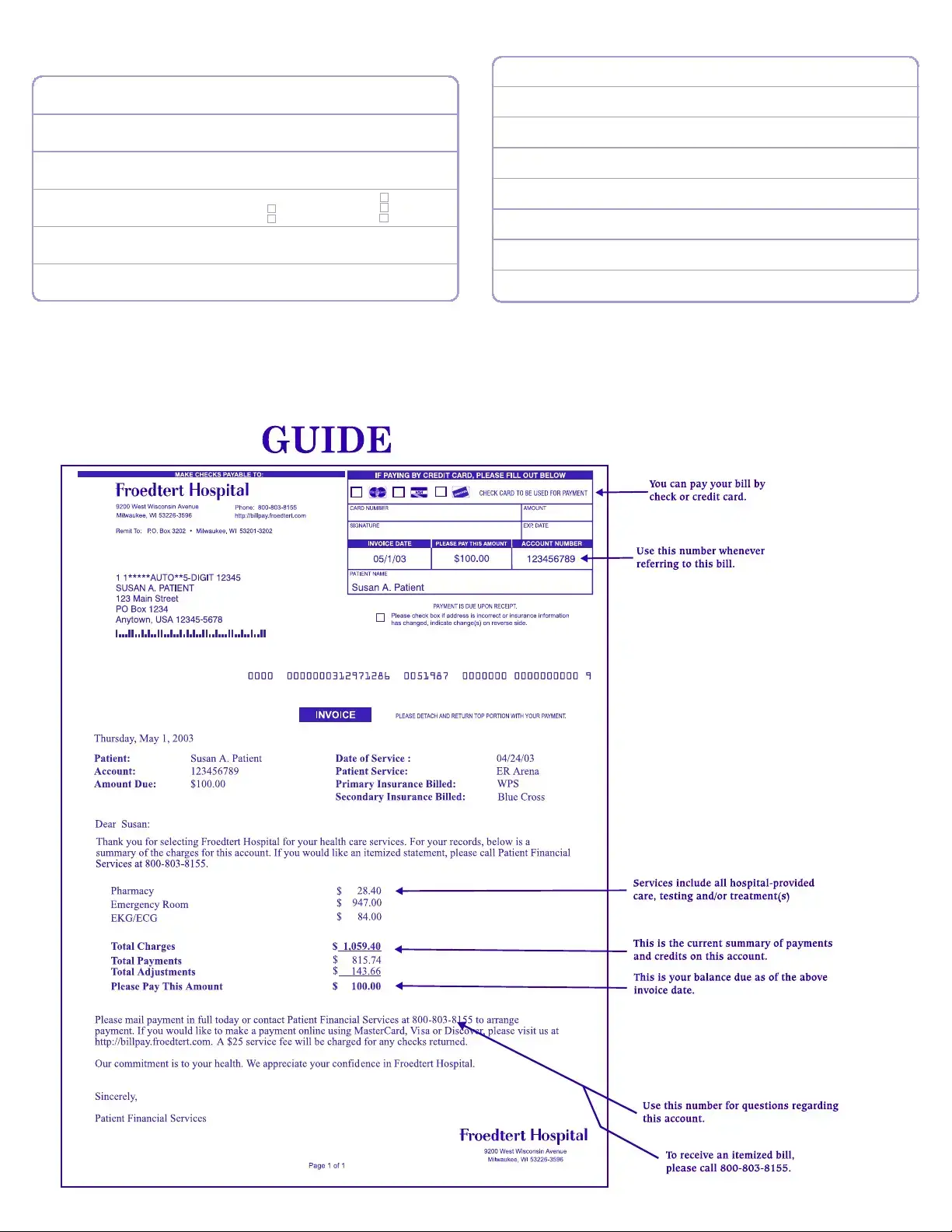
The Hospital Bill form serves as a crucial document for patients managing their healthcare expenses. It provides essential information regarding the services rendered, payment due, and insurance details. Patients will find their name, address, and account number prominently displayed at the top, ensuring that their information is easily identifiable. The form outlines the total charges incurred, including specific services like emergency room visits and pharmacy costs, along with any payments and adjustments made. Notably, it indicates the amount due, which is expected to be paid upon receipt. For those opting to pay by credit card, a section is included to capture payment details. Additionally, the form encourages patients to update any changes in personal or insurance information, which is vital for accurate billing and communication. Contact information for Patient Financial Services is readily available, allowing patients to seek assistance or inquire about their statements. Overall, the Hospital Bill form is designed to facilitate a clear understanding of healthcare costs and streamline the payment process for patients.

Hospital Bill Preview

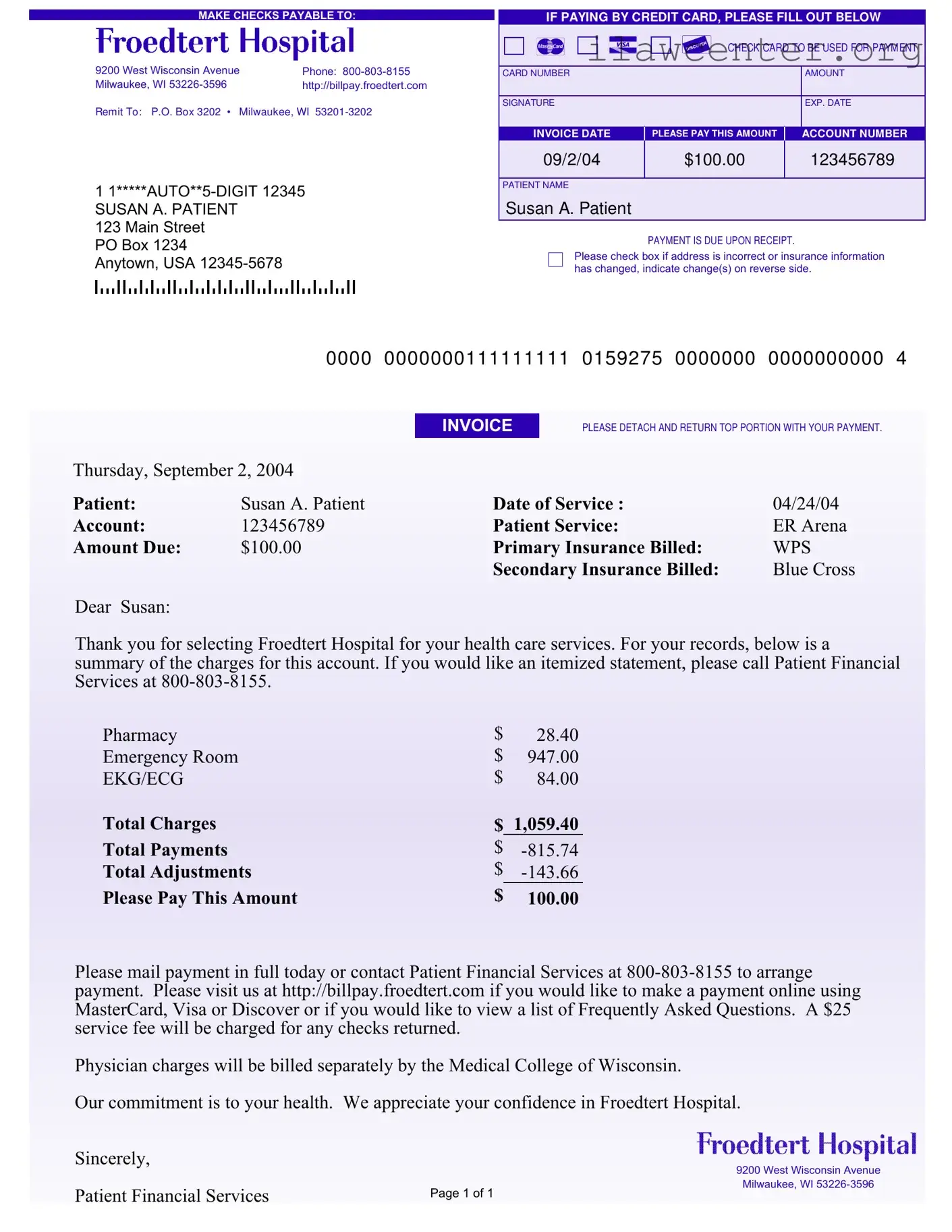
Thursday, September 2, 2004
Dear Susan:
Thank you for selecting Froedtert Hospital for your health care services. For your records, below is a
summary of the charges for this account. If you would like an itemized statement, please call Patient Financial
Services at 800-803-8155.
Patient: Susan A. Patient Date of Service : 04/24/04
Account: 123456789 Patient Service: ER Arena
Amount Due: $100.00 Primary Insurance Billed: WPS
Secondary Insurance Billed: Blue Cross
Page 1 of 1
PLEASE DETACH AND RETURN TOP PORTION WITH YOUR PAYMENT.
1 1*****AUTO**5-DIGIT 12345
SUSAN A. PATIENT
123 Main Street
PO Box 1234
Anytown, USA 12345-5678
Phone: 800-803-8155
http://billpay.froedtert.com
9200 West Wisconsin Avenue
Milwaukee, WI 53226-3596
MAKE CHECKS PAYABLE TO:
PAYMENT IS DUE UPON RECEIPT.
INVOICE
Remit To: P.O. Box 3202 • Milwaukee, WI 53201-3202
Please check box if address is incorrect or insurance information
has changed, indicate change(s) on reverse side.
CARD NUMBER AMOUNT
SIGNATURE EXP. DATE
CHECK CARD TO BE USED FOR PAYMENT
IF PAYING BY CREDIT CARD, PLEASE FILL OUT BELOW
INVOICE DATE ACCOUNT NUMBER
PLEASE PAY THIS AMOUNT
123456789$100.0009/2/04
PATIENT NAME
Susan A. Patient
9200 West Wisconsin Avenue
Milwaukee, WI 53226-3596
0000 0000000111111111 0159275 0000000 0000000000 4
Please mail payment in full today or contact Patient Financial Services at 800-803-8155 to arrange
payment. Please visit us at http://billpay.froedtert.com if you would like to make a payment online using
MasterCard, Visa or Discover or if you would like to view a list of Frequently Asked Questions. A $25
service fee will be charged for any checks returned.
Physician charges will be billed separately by the Medical College of Wisconsin.
Our commitment is to your health. We appreciate your confidence in Froedtert Hospital.
Sincerely,
Patient Financial Services
$
$
$
$
$
$
$
Pharmacy
Emergency Room
EKG/ECG
Total Charges
Total Payments
Total Adjustments
Please Pay This Amount
28.40
947.00
84.00
1,059.40
-815.74
-143.66
100.00
ABOUT YOU:
YOUR NAME (Last, First, Middle Initial)
YOUR PRIMARY INSURANCE COMPANY'S NAME
ADDRESS
PRIMARY INSURANCE COMPANY'S ADDRESS
STATE ZIP
CITY STATE ZIP
TELEPHONE
GROUP PLAN NUMBER
EMPLOYER'S NAME
YOUR SECONDARY INSURANCE COMPANY'S NAME
TELEPHONE
EMPLOYER'S ADDRESS CITY STATE ZIP
CITY STATE ZIP
SECONDARY INSURANCE COMPANY'S ADDRESS
POLICYHOLDER'S ID NUMBER GROUP PLAN NUMBER
Single
Married
Separated
Divorced
Widowed
MARITAL STATUS
ABOUT YOUR INSURANCE:
POLICYHOLDER'S ID NUMBER
PLEASE UPDATE ANY INFORMATION THAT HAS CHANGED SINCE YOUR LAST STATEM ENT
CITY

File Properties

Fact Name Details
Payee Information Checks should be made payable to Froedtert Hospital, located at 9200 West Wisconsin Avenue, Milwaukee, WI 53226-3596.
Contact Number For inquiries, call Patient Financial Services at 800-803-8155.
Payment Address Payments can be mailed to P.O. Box 3202, Milwaukee, WI 53201-3202.
Due Date Payment is due upon receipt of the bill.
Invoice Date This particular invoice was dated September 2, 2004.
Amount Due The total amount due is $100.00.
Insurance Information Primary insurance billed is WPS and secondary insurance billed is Blue Cross.
Payment Methods Payments can be made via credit card or online at http://billpay.froedtert.com.
Service Fee A $25 service fee applies for any returned checks.

Instructions on Utilizing Hospital Bill

Filling out the Hospital Bill form is essential for ensuring that your payment is processed correctly. Follow the steps below to complete the form accurately. Make sure to double-check all entries for accuracy before submitting.

  1. Begin by making checks payable to the specified hospital, which is located at 9200 West Wisconsin Avenue, Milwaukee, WI 53226-3596.
  2. Write your personal information in the designated fields, including your full name, address, and phone number.
  3. Indicate the payment method. If paying by credit card, fill out the card details, including the card number, expiration date, and the amount you are paying.
  4. Review the invoice date and ensure it matches the date provided on the form.
  5. Check the box if your address is incorrect or if there are changes to your insurance information. If changes are necessary, indicate them on the reverse side of the form.
  6. Look at the summary of charges and confirm that the amount due is accurate. This includes checking any total charges, payments, and adjustments listed.
  7. Detach the top portion of the form as instructed and return it with your payment.
  8. If you have any questions or need assistance, contact Patient Financial Services at the provided phone number.

Important Facts about Hospital Bill

What is the purpose of the Hospital Bill form?

The Hospital Bill form serves as a notification to patients regarding the charges incurred for services received at the hospital. It provides essential details such as the amount due, the services rendered, and information about insurance billing. This form is crucial for ensuring that patients understand their financial responsibilities following their healthcare services.

How can I make a payment for my hospital bill?

Patients have multiple options for making payments. Payments can be made by mailing a check to the address provided on the form. For those preferring electronic payment, the hospital offers an online payment option through their website, where payments can be made using MasterCard, Visa, or Discover. Additionally, patients can contact Patient Financial Services at 800-803-8155 to discuss payment arrangements.

What should I do if my address or insurance information has changed?

If there have been any changes to your address or insurance information, you should check the designated box on the form and indicate the changes on the reverse side. Keeping this information updated is vital for accurate billing and communication regarding your account.

What happens if I do not pay my bill upon receipt?

Payment is due upon receipt of the bill. If the payment is not made in a timely manner, additional fees may be incurred, and the account could be sent to collections. It is important to address any outstanding balances promptly to avoid further complications.

Can I request an itemized statement of my charges?

Yes, if you would like a detailed breakdown of the charges associated with your account, you can request an itemized statement by calling Patient Financial Services at 800-803-8155. This can help you understand the specific services billed and any payments or adjustments made.

What if my check is returned?

If a check is returned, a $25 service fee will be charged. It is advisable to ensure that sufficient funds are available in your account before issuing a check to avoid this fee and potential complications with your billing account.

Are physician charges included in this bill?

No, physician charges are billed separately by the Medical College of Wisconsin. The hospital bill only reflects charges for services provided by the hospital itself. Patients should expect to receive separate bills for any physician services rendered during their visit.

What information is included in the summary of charges?

The summary of charges includes the total amount billed for services, any payments made, and adjustments applied. For example, in the provided form, total charges amount to $1,059.40, with payments and adjustments leading to a remaining balance of $100.00 due from the patient.

How can I contact Patient Financial Services?

Patients can contact Patient Financial Services by calling 800-803-8155. This number is available for inquiries regarding billing, payment arrangements, and any other financial questions related to hospital services.
Common mistakes

Filling out a hospital bill form can be a straightforward task, but mistakes can lead to delays in processing payments or complications with insurance claims. Here are seven common errors that people often make when completing this important document.

One of the most frequent mistakes is not providing accurate personal information. Individuals may forget to double-check their name, address, or phone number. An incorrect entry can result in miscommunication or even missed payments. Always ensure that your details match those on your identification documents.

Another common error is overlooking insurance information. Many people neglect to fill out the insurance section completely or inaccurately list their policyholder's ID number. This can lead to billing issues, as the hospital may not be able to process claims with incomplete or incorrect insurance details.

Many individuals also forget to indicate changes in their insurance status. If there has been a change in coverage or if a new insurance provider has been selected, this information must be updated on the form. Failing to do so can create complications in payment processing.

In addition, failing to sign the form is another mistake that can cause delays. A signature is often required to authorize payment and confirm that the information provided is accurate. Without it, the hospital may not be able to proceed with billing.

Another oversight is not including the correct payment amount. People sometimes miscalculate their total due or forget to include any adjustments made by their insurance. It’s essential to carefully review the total amount owed to avoid confusion or further billing issues.

Some individuals may also neglect to detach the payment portion of the bill before mailing it. This can lead to payments being misdirected or not properly credited to the correct account. Always follow the instructions for returning the payment portion to ensure it reaches the right department.

Lastly, ignoring deadlines is a common pitfall. Payments are often due upon receipt, and delays can result in late fees or additional charges. It’s crucial to send payments promptly to avoid any unnecessary complications.

By being mindful of these common mistakes, individuals can help ensure that their hospital bill forms are filled out correctly, leading to a smoother payment process and fewer headaches down the line.

Documents used along the form

The Hospital Bill form is a crucial document in the healthcare billing process, providing a detailed account of services rendered and associated charges. Alongside this form, several other documents are commonly used to facilitate billing, insurance claims, and payment processing. Below is a list of these documents, each serving a specific purpose in the overall billing process.

  • Itemized Bill: This document provides a detailed breakdown of all charges associated with a patient's care, including individual service costs, medications, and any adjustments made. It allows patients to understand exactly what they are being billed for.
  • Insurance Claim Form: Used to submit a request for payment to an insurance company, this form includes patient information, details of services provided, and the costs associated. It is essential for reimbursement from the insurance provider.
  • Patient Registration Form: This form collects essential information about the patient, including personal details, insurance information, and medical history. It is typically filled out at the time of admission to a healthcare facility.
  • Payment Agreement: This document outlines the terms of payment between the patient and the healthcare provider. It may include payment plans, due dates, and any applicable interest or fees for late payments.
  • Authorization for Release of Information: Patients must sign this form to permit healthcare providers to share their medical information with insurance companies or other relevant parties for billing purposes.
  • Financial Assistance Application: For patients who may have difficulty paying their bills, this application allows them to request financial aid or a discount based on their financial situation.
  • Explanation of Benefits (EOB): Issued by insurance companies, this document explains what services were covered, the amount billed, and any patient responsibility for payment. It helps patients understand their insurance coverage.
  • Credit Card Authorization Form: This form is used when patients choose to pay their bills using a credit card. It includes details such as card number, expiration date, and the amount to be charged.

Each of these documents plays a vital role in ensuring a smooth billing process for both patients and healthcare providers. Understanding their purposes can help patients navigate their healthcare financial responsibilities more effectively.

Similar forms

  • Invoice: Like a hospital bill, an invoice provides a detailed account of services rendered and the amount due. Both documents include information about the payer, services provided, and payment instructions.
  • Receipt: A receipt confirms payment has been made for services. While a hospital bill shows what is owed, a receipt serves as proof of payment, often including similar details such as the date and amount.
  • Statement of Account: This document summarizes all transactions over a specific period. Similar to a hospital bill, it details charges, payments, and balances, helping patients understand their financial obligations.
  • Insurance Explanation of Benefits (EOB): An EOB outlines what services were covered by insurance and what the patient owes. It shares similarities with a hospital bill in that both documents communicate amounts due and insurance involvement.
  • Payment Plan Agreement: This document outlines the terms of a payment plan for medical bills. Much like a hospital bill, it specifies amounts owed and payment schedules, helping patients manage their financial responsibilities.
  • Billing Statement: A billing statement provides an overview of what is owed to a provider. Similar to a hospital bill, it includes charges, payments, and any outstanding balance, making it easier for patients to track their financial status.
  • Credit Card Authorization Form: This form allows patients to authorize payments via credit card. While it serves a different purpose, it often accompanies hospital bills, ensuring that payment methods are clear and secure.
  • Patient Registration Form: This form collects personal and insurance information from patients. It shares similarities with a hospital bill in that both require accurate details to process payments and insurance claims efficiently.

Dos and Don'ts

When filling out the Hospital Bill form, it’s important to follow certain guidelines to ensure a smooth process. Here are five things you should and shouldn’t do:

  • Do double-check all personal information for accuracy.
  • Do ensure that your payment method is clearly indicated.
  • Do include your account number on the form for reference.
  • Do contact Patient Financial Services if you have questions about your bill.
  • Do mail your payment promptly to avoid late fees.
  • Don’t forget to sign the form if you are paying by credit card.
  • Don’t leave any sections blank; fill out everything to the best of your ability.
  • Don’t ignore the instructions regarding incorrect address or insurance changes.
  • Don’t delay in sending your payment to avoid additional charges.
  • Don’t hesitate to request an itemized statement if needed.

Misconceptions

Misconceptions about the Hospital Bill form can lead to confusion and delayed payments. Here are ten common misunderstandings, along with clarifications.

  • All charges are final and cannot be disputed. Many patients believe that once they receive a bill, the charges are set in stone. However, you can contact the hospital to discuss any discrepancies or request an itemized statement.
  • Insurance will cover all costs listed on the bill. Patients often assume that their insurance will pay for every charge. In reality, coverage can vary widely based on the plan, and some costs may be the patient’s responsibility.
  • Payment is not required until the insurance processes the claim. Some individuals think they can delay payment until after their insurance has paid. However, many hospitals expect payment upon receipt of the bill.
  • Only the total amount due is important. While the total amount is critical, understanding the breakdown of charges is equally important. This information helps patients know what services they are being billed for.
  • All payments must be made by check. Many believe that checks are the only acceptable payment method. In fact, credit card payments are also accepted, and online payments can be made through the hospital's website.
  • The bill will include all services rendered. Some patients think that the bill reflects all services received during their visit. However, physician charges may be billed separately, which can lead to unexpected costs later.
  • Address changes do not need to be reported. Patients often overlook the importance of updating their address on the bill. Failing to do so can result in missed communications regarding their account.
  • Late payments incur the same fee regardless of the amount. Many assume that a flat late fee applies to all overdue payments. In reality, the fee can vary based on the amount owed and the hospital's policies.
  • Payment plans are not an option. Some individuals believe they must pay the full amount upfront. Many hospitals offer payment plans to assist patients who cannot pay the total amount at once.
  • There is no need to verify insurance information. Patients sometimes think that their insurance details on file are always correct. It is essential to confirm that this information is current to avoid billing issues.

Key takeaways

When filling out and using the Hospital Bill form, it is essential to keep a few key points in mind to ensure a smooth payment process.

  • Payment Methods: You can pay your bill via check or credit card. If paying by credit card, be sure to fill out the designated section on the form completely.
  • Timeliness: Payment is due upon receipt of the bill. To avoid additional fees or complications, mail your payment promptly or contact Patient Financial Services if you need to arrange a different payment plan.
  • Insurance Information: Ensure that your primary and secondary insurance details are accurate. If there have been changes to your insurance or personal information, update the form accordingly, especially on the reverse side.
  • Contact Information: If you require an itemized statement or have questions, reach out to Patient Financial Services at the provided phone number. They can assist you with any billing inquiries.