
Hunter Permission PDF Template

Hunter Permission PDF Template

The Hunter Permission Form serves as a crucial document that allows hunters to gain access to private property for hunting activities. It outlines the responsibilities of both the landowner and the hunter, ensuring that all parties understand the terms and conditions of the agreement. For those looking to hunt responsibly and legally, filling out this form is an essential first step; click the button below to get started.

Article Guide

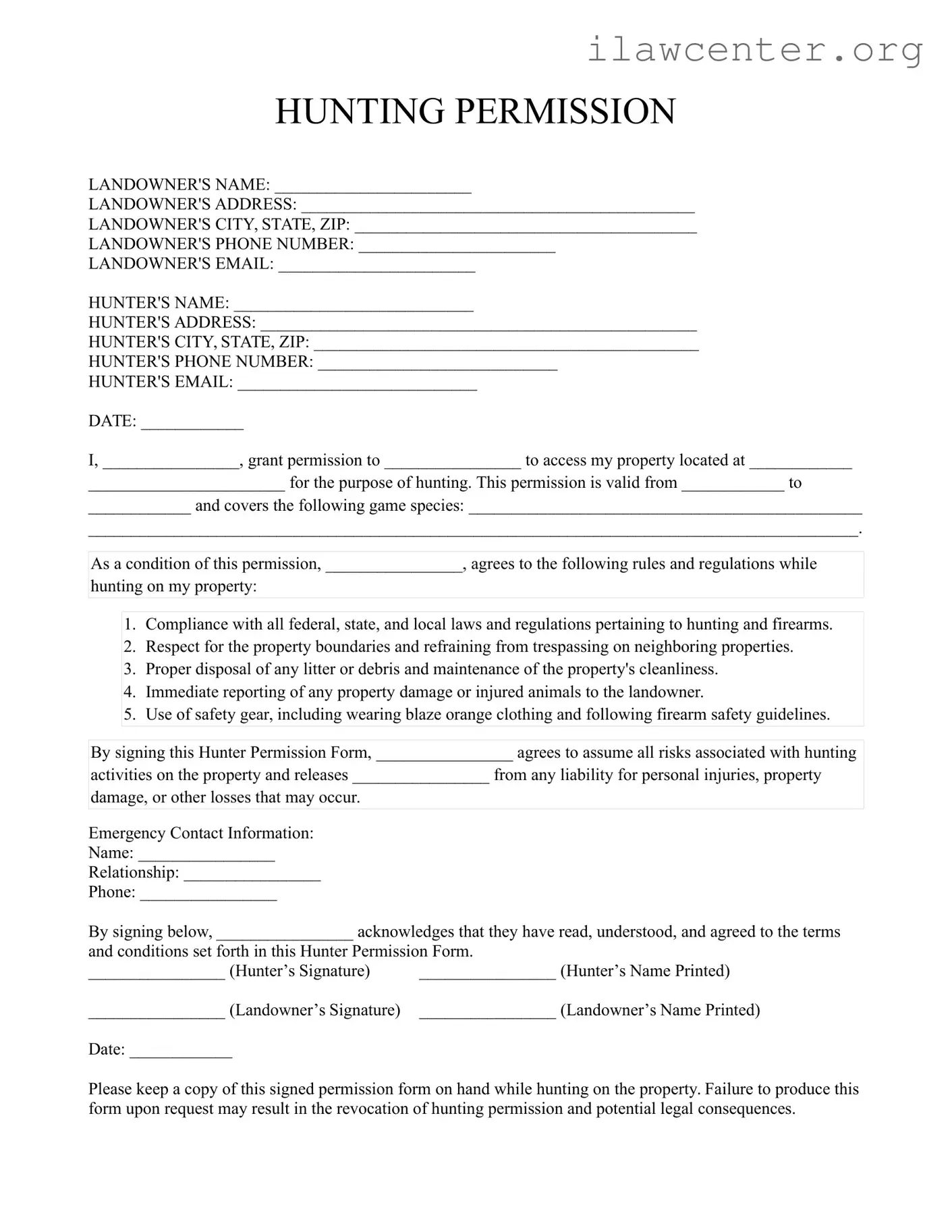
The Hunter Permission Form serves as a crucial document for both landowners and hunters, establishing a clear understanding of the rights and responsibilities involved in accessing private property for hunting purposes. This form requires the landowner to provide essential contact information, including their name, address, and phone number, ensuring that hunters can reach them if necessary. Equally important, the hunter must also fill in their personal details, creating a direct line of communication between the two parties. The form explicitly grants permission for the hunter to access the specified property for a defined period, detailing the types of game species that may be hunted. It also outlines a series of rules and regulations that the hunter must adhere to, emphasizing compliance with all relevant laws, respect for property boundaries, and the importance of maintaining cleanliness. Furthermore, it addresses safety protocols, such as wearing appropriate gear and reporting any incidents promptly. By signing the form, the hunter acknowledges their acceptance of the associated risks and releases the landowner from liability for any potential injuries or damages. This not only protects the landowner but also reinforces the importance of responsible hunting practices. Lastly, the form includes a section for emergency contact information, further ensuring safety while hunting on private land.

Hunter Permission Preview

____________
HUNTING PERMISSION
LANDOWNER'S NAME: _______________________
LANDOWNER'S ADDRESS: ______________________________________________
LANDOWNER'S CITY, STATE, ZIP: ________________________________________
LANDOWNER'S PHONE NUMBER: _______________________
LANDOWNER'S EMAIL: _______________________
HUNTER'S NAME: ____________________________
HUNTER'S ADDRESS: ___________________________________________________
HUNTER'S CITY, STATE, ZIP: _____________________________________________
HUNTER'S PHONE NUMBER: ____________________________
HUNTER'S EMAIL: ____________________________
DATE: ____________
I, ________________, grant permission to ________________ to access my property located at ____________
_______________________ for the purpose of hunting. This permission is valid from ____________ to
____________ and covers the following game species: ______________________________________________
__________________________________________________________________________________________.
As a condition of this permission, ________________, agrees to the following rules and regulations while
hunting on my property:
1. Compliance with all federal, state, and local laws and regulations pertaining to hunting and firearms.
2. Respect for the property boundaries and refraining from trespassing on neighboring properties.
3. Proper disposal of any litter or debris and maintenance of the property's cleanliness.
4. Immediate reporting of any property damage or injured animals to the landowner.
5. Use of safety gear, including wearing blaze orange clothing and following firearm safety guidelines.
By signing this Hunter Permission Form, ________________ agrees to assume all risks associated with hunting
activities on the property and releases ________________ from any liability for personal injuries, property
damage, or other losses that may occur.
Emergency Contact Information:
Name: ________________
Relationship: ________________
Phone: ________________
By signing below, ________________ acknowledges that they have read, understood, and agreed to the terms
and conditions set forth in this Hunter Permission Form.
________________ (Hunter’s Signature) ________________ (Hunter’s Name Printed)
________________ (Landowner’s Signature) ________________ (Landowner’s Name Printed)
Date:
Please keep a copy of this signed permission form on hand while hunting on the property. Failure to produce this
form upon request may result in the revocation of hunting permission and potential legal consequences.

File Properties

Fact Name Fact Description
Landowner Information The form requires the landowner's name, address, city, state, ZIP, phone number, and email.
Hunter Information Hunters must provide their name, address, city, state, ZIP, phone number, and email.
Permission Grant The landowner grants permission for the hunter to access their property for hunting purposes.
Validity Period The permission is valid for a specified time frame, which the landowner must indicate on the form.
Game Species The form requires the landowner to list the game species that the hunter is allowed to pursue.
Rules and Regulations Hunters must comply with federal, state, and local laws, respect property boundaries, and maintain cleanliness.
Liability Release By signing, the hunter assumes all risks and releases the landowner from liability for injuries or damages.
Emergency Contact The form includes a section for emergency contact information, including name, relationship, and phone number.
Legal Consequences Failure to present the signed form while hunting may lead to revocation of permission and potential legal issues.

Instructions on Utilizing Hunter Permission

After completing the Hunter Permission form, it is important to keep a copy on hand while hunting. This ensures compliance with the terms set forth and helps avoid any potential misunderstandings. The following steps outline how to accurately fill out the form.

  1. Enter the landowner's name in the designated space.
  2. Provide the landowner's address, including street address, city, state, and ZIP code.
  3. Fill in the landowner's phone number and email.
  4. Write the hunter's name in the appropriate section.
  5. Complete the hunter's address, including street address, city, state, and ZIP code.
  6. Input the hunter's phone number and email.
  7. Specify the date of the permission grant.
  8. In the statement, write the landowner's name and the hunter's name in the blanks provided.
  9. Indicate the property location where hunting is permitted.
  10. Fill in the validity dates for the permission.
  11. List the game species that the hunter is allowed to pursue.
  12. Review the rules and regulations and ensure they are understood.
  13. Have the hunter's signature and printed name in the designated areas.
  14. Obtain the landowner's signature and printed name as well.
  15. Fill in the emergency contact information, including name, relationship, and phone number.
  16. Ensure the date is completed at the bottom of the form.

Important Facts about Hunter Permission

What is the purpose of the Hunter Permission form?

The Hunter Permission form is designed to grant hunters access to private property for hunting purposes. It outlines the agreement between the landowner and the hunter, ensuring both parties understand the rules and responsibilities involved in the hunting activity.

Who needs to sign the Hunter Permission form?

Both the landowner and the hunter must sign the form. The landowner provides permission for the hunter to access their property, while the hunter agrees to follow the rules set by the landowner during their time on the property.

What information is required on the form?

The form requires detailed information from both the landowner and the hunter. This includes names, addresses, phone numbers, and email addresses. Additionally, the form specifies the property location and the dates during which hunting is permitted.

What rules and regulations must hunters follow?

Hunters must adhere to several important rules. These include complying with all federal, state, and local hunting laws, respecting property boundaries, disposing of litter properly, reporting any damages or injuries, and using safety gear such as blaze orange clothing. Following these rules helps ensure a safe and respectful hunting experience.

What happens if a hunter does not follow the rules?

If a hunter violates the rules outlined in the form, the landowner has the right to revoke permission to hunt on their property. This could lead to legal consequences for the hunter, especially if any laws are broken or if property damage occurs.

Is the permission form valid indefinitely?

No, the permission granted by the form is only valid for the specific dates listed on the document. Once the end date passes, the hunter must seek permission again if they wish to hunt on the property in the future.

What should hunters do with the signed form?

Hunters should keep a copy of the signed permission form with them while hunting. This is important because they may need to present it upon request. Failing to produce the form could lead to the revocation of permission and potential legal issues.

What liability does the landowner assume by signing the form?

By signing the Hunter Permission form, the landowner releases themselves from liability for any personal injuries, property damage, or losses that may occur during the hunting activities. The hunter assumes all risks associated with hunting on the property, which is a crucial aspect of the agreement.

Common mistakes

Filling out the Hunter Permission form can seem straightforward, but several common mistakes can lead to complications. One frequent error is leaving the landowner's name blank. This section is crucial as it identifies who is granting permission. Without a name, the form lacks legitimacy and may not be honored.

Another common mistake is failing to provide complete contact information for both the landowner and the hunter. Omitting the phone number or email can create communication issues. If there’s a need to reach out about safety or property concerns, missing contact details can hinder that process.

People often overlook the dates section as well. Not specifying the start and end dates of the permission can lead to misunderstandings about when hunting is allowed. This oversight can result in unauthorized hunting activities, which may have legal repercussions.

Additionally, failing to list the specific game species covered by the permission is a frequent error. This omission can create confusion about what hunting is permitted. If a dispute arises, having a clear record of the allowed species can help clarify the terms of the agreement.

Another mistake is not adhering to the rules and regulations outlined in the form. If the hunter does not acknowledge these conditions, it may lead to violations that could affect both parties. Ensuring that the hunter understands and agrees to these terms is essential for a smooth hunting experience.

Some individuals neglect to provide emergency contact information. This information is critical for addressing any unforeseen incidents that may occur during the hunting trip. Without it, the landowner may struggle to respond effectively in an emergency situation.

Lastly, many forget to keep a copy of the signed form. This document serves as proof of permission and is vital if any disputes arise. Failure to present this form upon request can result in the revocation of hunting privileges and potential legal consequences.

By avoiding these common mistakes, both landowners and hunters can ensure a more positive and legally sound hunting experience.

Documents used along the form

The Hunter Permission form is an essential document for anyone looking to hunt on private land. However, several other forms and documents often accompany it to ensure that all parties are protected and informed. Below is a list of commonly used documents that complement the Hunter Permission form.

  • Liability Waiver: This document protects the landowner from legal claims in case of accidents or injuries that occur during hunting. It requires hunters to acknowledge the risks involved.
  • Hunting License: A valid hunting license is required by law in most states. This document proves that the hunter has completed the necessary training and is legally allowed to hunt.
  • Game Species Identification Guide: This guide helps hunters identify the species they are allowed to hunt. It ensures compliance with local regulations regarding hunting seasons and protected species.
  • Emergency Contact Form: This form provides essential contact information in case of an emergency. It includes details about who to reach out to if something goes wrong during the hunting trip.
  • Rules and Regulations Document: This outlines the specific rules that hunters must follow while on the property. It may include additional guidelines beyond those mentioned in the Hunter Permission form.
  • Property Map: A detailed map of the property can help hunters understand boundaries and areas where hunting is permitted. It reduces the risk of trespassing on neighboring lands.
  • Firearm Safety Agreement: This document ensures that hunters agree to follow safety practices when using firearms. It emphasizes the importance of safety gear and responsible hunting.
  • Harvest Reporting Form: After hunting, this form allows hunters to report the game they have harvested. It helps landowners keep track of wildlife management and conservation efforts.

These documents work together with the Hunter Permission form to create a safe and responsible hunting environment. By ensuring that all necessary paperwork is in order, both landowners and hunters can enjoy their experience with peace of mind.

Similar forms

  • Lease Agreement: Similar to the Hunter Permission form, a lease agreement grants permission for a tenant to use a property. It outlines the terms, duration, and responsibilities of both the landlord and tenant.
  • Access Agreement: This document allows individuals or companies to access private land for specific purposes, like surveying or construction. It includes conditions and limitations similar to those found in hunting permissions.
  • Waiver of Liability: Like the Hunter Permission form, a waiver releases one party from liability for injuries or damages. It is often used in recreational activities to protect landowners from legal claims.
  • Event Permit: This document is required for hosting events on private property. It specifies the event's purpose, duration, and rules, similar to how the Hunter Permission form details hunting activities.
  • Field Trial Permission: Used in dog training and hunting scenarios, this form grants permission to use land for field trials. It outlines rules and responsibilities, much like the regulations in the Hunter Permission form.
  • Photography Release: This document allows photographers to take pictures on private property. It often includes terms about usage and liability, paralleling the permissions and responsibilities outlined in the Hunter Permission form.

Dos and Don'ts

When filling out the Hunter Permission form, it is essential to follow certain guidelines to ensure clarity and compliance. Here are six things to keep in mind:

  • Do provide complete and accurate information for both the landowner and hunter. This includes names, addresses, and contact details.
  • Do specify the exact dates during which permission is granted. This helps avoid misunderstandings.
  • Do clearly outline the game species that are covered under the permission. This ensures everyone is on the same page regarding what can be hunted.
  • Don't leave any fields blank. Incomplete forms can lead to confusion and may invalidate the permission.
  • Don't forget to read the rules and regulations carefully. Both the landowner and hunter should understand the responsibilities involved.
  • Don't overlook the importance of signatures. Both parties must sign and date the form to make it legally binding.

Following these guidelines will help ensure that the hunting experience is safe and respectful for everyone involved.

Misconceptions

Here are five common misconceptions about the Hunter Permission form that you should be aware of:

  • Misconception 1: The form is optional.
  • Some believe that using the Hunter Permission form is not necessary. However, having this form is crucial. It provides legal protection for both the landowner and the hunter, ensuring that everyone is clear about the terms of access.

  • Misconception 2: The permission is indefinite.
  • Many assume that once permission is granted, it lasts forever. In reality, the form specifies a time frame for hunting. This means that hunters should be aware of the start and end dates of their permission to avoid any misunderstandings.

  • Misconception 3: The landowner has no responsibilities.
  • Some people think that only the hunter has obligations. In fact, the landowner must also ensure their property is safe and accessible. Clear communication about rules and regulations is essential for a successful hunting experience.

  • Misconception 4: The form protects against all liabilities.
  • While the form does release the landowner from certain liabilities, it does not cover everything. Hunters still need to take personal responsibility for their actions and any potential accidents that occur while hunting.

  • Misconception 5: The form is only for large properties.
  • Some think that only large landowners need this form. However, anyone allowing access to their property for hunting—regardless of size—should use the Hunter Permission form to establish clear boundaries and expectations.

Key takeaways

When using the Hunter Permission form, keep these key takeaways in mind:

  • Complete all required fields: Ensure that both the landowner's and hunter's information is filled out completely, including names, addresses, phone numbers, and emails.
  • Specify the hunting period: Clearly indicate the start and end dates for the permission to hunt on the property.
  • List game species: Identify the specific types of game that the hunter is allowed to pursue during the permission period.
  • Understand the rules: The hunter must agree to follow all rules and regulations outlined in the form, including compliance with laws and respect for property boundaries.
  • Assume risks: By signing, the hunter acknowledges the risks involved in hunting and releases the landowner from liability for any injuries or damages.
  • Keep a copy: It is important for the hunter to retain a signed copy of the permission form while on the property, as failure to present it may lead to revocation of permission.