Fillable Hunting Lease Agreement Document

Fillable Hunting Lease Agreement Document

A Hunting Lease Agreement is a legal document that outlines the terms and conditions under which one party can hunt on another party's land. This agreement protects both the landowner and the hunter by clearly defining rights, responsibilities, and liabilities. Ensure your hunting experience is safe and enjoyable by filling out the form below.

Article Guide

A Hunting Lease Agreement is an essential document for anyone looking to lease land for hunting purposes. This agreement outlines the terms and conditions between the landowner and the hunter or hunting group. Key aspects of the form include the duration of the lease, the specific areas designated for hunting, and the types of game that can be pursued. It also addresses the responsibilities of both parties, such as maintenance of the land and adherence to local hunting regulations. Additionally, the agreement often includes details about payment terms, liability issues, and the process for resolving disputes. By clearly defining these elements, the Hunting Lease Agreement helps to protect the interests of both the landowner and the hunter, ensuring a mutually beneficial relationship. Understanding these components is crucial for anyone entering into a hunting lease, as it sets the foundation for a successful and enjoyable hunting experience.

Hunting Lease Agreement Preview

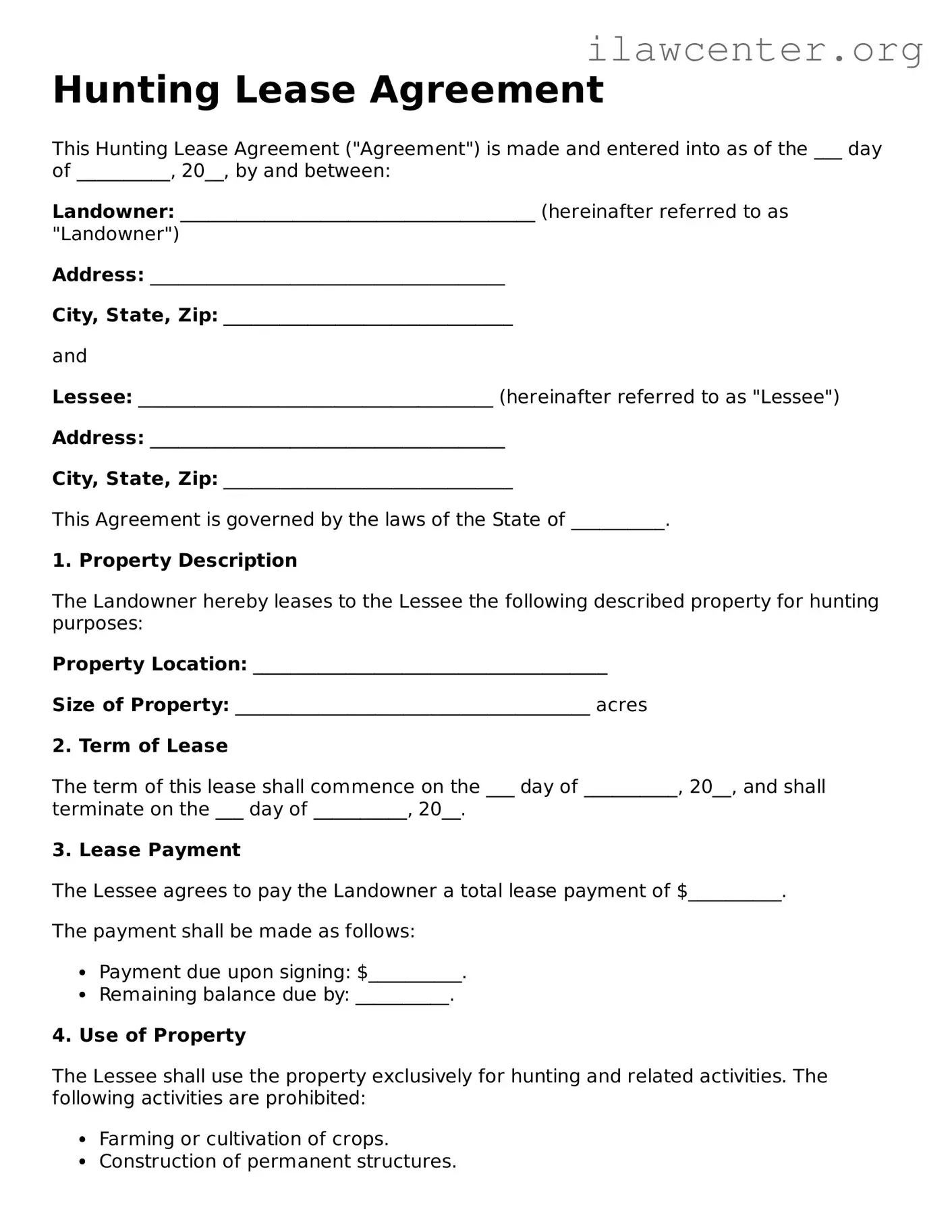
Hunting Lease Agreement

This Hunting Lease Agreement ("Agreement") is made and entered into as of the ___ day of __________, 20__, by and between:

Landowner: ______________________________________ (hereinafter referred to as "Landowner")

Address: ______________________________________

City, State, Zip: _______________________________

and

Lessee: ______________________________________ (hereinafter referred to as "Lessee")

Address: ______________________________________

City, State, Zip: _______________________________

This Agreement is governed by the laws of the State of __________.

1. Property Description

The Landowner hereby leases to the Lessee the following described property for hunting purposes:

Property Location: ______________________________________

Size of Property: ______________________________________ acres

2. Term of Lease

The term of this lease shall commence on the ___ day of __________, 20__, and shall terminate on the ___ day of __________, 20__.

3. Lease Payment

The Lessee agrees to pay the Landowner a total lease payment of $__________.

The payment shall be made as follows:

  • Payment due upon signing: $__________.
  • Remaining balance due by: __________.

4. Use of Property

The Lessee shall use the property exclusively for hunting and related activities. The following activities are prohibited:

  • Farming or cultivation of crops.
  • Construction of permanent structures.
  • Use of motorized vehicles outside designated areas.

5. Liability

The Lessee assumes all risks associated with hunting on the property. The Landowner shall not be liable for any injuries or damages incurred by the Lessee or their guests.

6. Termination

This Agreement may be terminated by either party with written notice of ___ days prior to the intended termination date.

7. Governing Law

This Agreement shall be governed by and construed in accordance with the laws of the State of __________.

IN WITNESS WHEREOF, the parties hereto have executed this Hunting Lease Agreement as of the date first above written.

Landowner Signature: ___________________________

Date: __________

Lessee Signature: ___________________________

Date: __________

PDF Form Characteristics

Fact Name Details
Purpose A Hunting Lease Agreement allows landowners to lease their property for hunting purposes to individuals or groups.
Parties Involved The agreement typically involves two parties: the landowner (lessor) and the hunter or hunting group (lessee).
Duration The lease can specify a set period, which can range from a single day to several years, depending on the agreement.
Governing Law The agreement is subject to state-specific laws. For example, in Texas, it follows the Texas Property Code.
Liability Typically, the agreement outlines liability terms, clarifying responsibilities for injuries or damages that may occur during hunting activities.

Instructions on Utilizing Hunting Lease Agreement

Once you have your Hunting Lease Agreement form ready, it’s time to fill it out carefully. This form is crucial for establishing the terms between the landowner and the hunter. Ensure you have all necessary information at hand, as accuracy is key to avoiding misunderstandings later on.

  1. Begin by entering the date at the top of the form. This establishes when the agreement is made.
  2. Next, fill in the landowner's name and contact information. This identifies who is granting the hunting rights.
  3. Then, provide the hunter's name and contact details. This indicates who will be utilizing the land for hunting.
  4. In the designated section, describe the property being leased. Include the address or specific location to avoid any confusion.
  5. Specify the duration of the lease. Clearly state the start and end dates to define the period of use.
  6. Outline the payment terms. Indicate the amount due, the payment method, and any due dates.
  7. Include any rules and regulations that the hunter must follow while on the property. This can include restrictions on hunting methods, types of game, and safety protocols.
  8. Finally, both parties should sign and date the agreement at the bottom. This signifies that both the landowner and the hunter agree to the terms outlined in the document.

Important Facts about Hunting Lease Agreement

What is a Hunting Lease Agreement?

A Hunting Lease Agreement is a legal document that outlines the terms under which one party (the landowner) allows another party (the hunter or hunting group) to hunt on their property. This agreement typically includes details such as the duration of the lease, the types of game that can be hunted, and any restrictions or rules that the hunter must follow. It serves to protect both the landowner's interests and the rights of the hunters, ensuring that everyone understands their responsibilities and rights while on the property.

What should be included in a Hunting Lease Agreement?

A comprehensive Hunting Lease Agreement should include several key components. First, it should specify the names and contact information of both the landowner and the hunter. Next, the agreement should outline the property boundaries and the specific areas where hunting is permitted. It’s also important to include the lease duration, payment terms, and any additional fees. Furthermore, the agreement should address liability issues, insurance requirements, and any rules regarding the use of vehicles or equipment on the land. Including these elements can help prevent misunderstandings and disputes in the future.

How long is a typical Hunting Lease Agreement valid?

The duration of a Hunting Lease Agreement can vary widely depending on the preferences of the landowner and the hunter. Some leases are structured for a single hunting season, while others may extend for multiple years. It is common for agreements to be renewed annually, allowing both parties to reassess their needs and expectations. When drafting the lease, it’s essential to clearly state the start and end dates to avoid any confusion. This clarity helps ensure that both parties are on the same page regarding their commitments.

Can a Hunting Lease Agreement be modified after it is signed?

Yes, a Hunting Lease Agreement can be modified after it has been signed, but any changes must be agreed upon by both parties. It’s advisable to document any modifications in writing to maintain clarity and avoid potential disputes. This could involve creating an amendment to the original agreement or drafting a new lease altogether. Communication is key; discussing any desired changes openly can lead to a mutually beneficial arrangement that respects the needs of both the landowner and the hunter.

Common mistakes

Filling out a Hunting Lease Agreement form can be a straightforward process, but many individuals make common mistakes that can lead to misunderstandings or legal issues. One frequent error is failing to read the entire document before signing. This can result in overlooking important clauses that outline responsibilities and rights. Understanding the terms of the agreement is crucial for both parties involved.

Another common mistake is not clearly defining the lease area. A vague description can lead to disputes about where hunting is permitted. It is essential to specify boundaries accurately, including any landmarks or GPS coordinates to avoid confusion later on.

Many individuals also neglect to include the duration of the lease. Not specifying a start and end date can create uncertainty about when the agreement is valid. Both parties should agree on a timeline to ensure clarity and prevent any potential conflicts.

In addition, some people forget to outline the payment terms. This includes not only the total amount but also the payment schedule and method. Without clear financial terms, misunderstandings regarding payment can arise, leading to tension between the landlord and the hunter.

Another mistake is not addressing liability issues. Failing to include a clause that outlines who is responsible for injuries or damages can leave both parties exposed to legal claims. It is important to clarify liability to protect everyone involved.

Some individuals may also overlook the importance of including rules and regulations. Without a clear set of guidelines, hunters may engage in activities that the landowner does not permit, leading to disputes. Establishing rules in the agreement can help maintain harmony and respect for the land.

Additionally, people sometimes forget to include provisions for terminating the lease. Outlining the conditions under which either party can end the agreement is crucial. This ensures that both sides understand their rights and obligations should they wish to discontinue the lease.

Another common oversight is not having the agreement reviewed by a legal professional. While it may seem unnecessary, a legal expert can identify potential issues and ensure that the document complies with state laws. This step can save both parties from future complications.

Moreover, some individuals may fail to keep copies of the signed agreement. It is essential for both parties to retain a copy for their records. This documentation can be invaluable in case of any disputes or misunderstandings.

Lastly, many people underestimate the importance of communication. Not discussing the terms and expectations openly can lead to assumptions and conflicts. Clear communication fosters a better understanding and a more successful leasing relationship.

Documents used along the form

When entering into a Hunting Lease Agreement, several other forms and documents can enhance the clarity and security of the arrangement. These documents help outline responsibilities, ensure compliance with local laws, and protect the rights of both parties involved. Below is a list of commonly used forms that accompany a Hunting Lease Agreement.

  • Liability Waiver: This document releases the landowner from liability for injuries or accidents that may occur on the property during hunting activities. It protects the landowner while ensuring that hunters understand the risks involved.
  • Rules and Regulations Agreement: This form outlines specific rules that hunters must follow while on the property. It can cover hunting seasons, allowed game, and safety protocols, ensuring everyone is on the same page.
  • Insurance Certificate: This document verifies that hunters have appropriate insurance coverage. It serves as proof that they are financially protected in case of accidents or damages.
  • Access Agreement: This form details the access rights for hunters, including designated entry and exit points. It helps prevent misunderstandings about where hunters can go on the property.
  • Payment Receipt: This document serves as proof of payment for the lease. It is important for record-keeping and can be used in case of disputes regarding payment terms.
  • Termination Notice: This form is used to formally end the lease agreement. It outlines the notice period required and any conditions for terminating the lease, ensuring both parties are aware of their obligations.
  • Wildlife Management Plan: This document outlines strategies for managing wildlife on the property. It can include information on conservation efforts and hunting practices that promote sustainable use of resources.

Having these forms ready can facilitate a smoother leasing process. They help protect both the landowner and the hunter, ensuring a mutually beneficial relationship built on clear communication and understanding.

Similar forms

  • Fishing Lease Agreement: Similar to a hunting lease, this document allows individuals to lease fishing rights on a specific body of water. Both agreements outline the rights and responsibilities of the lessee and lessor, including duration and payment terms.
  • Agricultural Lease Agreement: This type of lease pertains to the rental of land for farming purposes. Like a hunting lease, it specifies the use of the land, duration, and compensation, ensuring both parties understand their obligations.
  • Commercial Lease Agreement: This document covers the rental of property for business purposes. It shares similarities with a hunting lease in terms of defining the use of the property, lease duration, and financial arrangements.
  • Residential Lease Agreement: A contract between a landlord and tenant for renting a home or apartment. Both this and a hunting lease detail the terms of use, payment schedules, and responsibilities of each party involved.
  • Timber Lease Agreement: This agreement allows a lessee to harvest timber from a property. It parallels a hunting lease by specifying the rights granted, duration, and compensation, focusing on resource use.
  • Mineral Rights Lease Agreement: This document allows the extraction of minerals from a property. Similar to a hunting lease, it delineates the rights of the lessee, the duration of the lease, and payment terms, ensuring clarity in resource management.
  • Event Venue Lease Agreement: This type of lease allows individuals or organizations to rent a space for events. It shares common elements with a hunting lease, such as outlining permitted activities, duration, and costs involved.
  • Recreational Lease Agreement: This document is used for leasing land for recreational purposes, such as camping or hiking. Like a hunting lease, it defines the specific uses allowed, duration, and responsibilities of both parties.

Dos and Don'ts

When filling out a Hunting Lease Agreement form, it's important to follow certain guidelines to ensure clarity and legality. Here are ten things to consider:

  • Do read the entire agreement carefully before signing.
  • Do provide accurate personal information, including your full name and contact details.
  • Do specify the dates of the lease clearly.
  • Do outline the specific area to be leased in detail.
  • Do understand the rules and regulations regarding hunting in the area.
  • Don't leave any sections of the form blank; fill in all required fields.
  • Don't make assumptions about the terms; ask for clarification if needed.
  • Don't ignore the payment terms; ensure you understand how and when to pay.
  • Don't sign the agreement without reviewing it with a trusted advisor.
  • Don't forget to keep a copy of the signed agreement for your records.

Misconceptions

Many people have misunderstandings about the Hunting Lease Agreement form. Here are ten common misconceptions explained.

  1. All hunting lease agreements are the same. Each agreement can vary significantly based on the landowner's terms and the specific needs of the hunters.
  2. A verbal agreement is sufficient. A written agreement is essential for clarity and legal protection. Verbal agreements can lead to disputes.
  3. Only landowners need to sign the agreement. Both the landowner and the hunters must sign the agreement to make it legally binding.
  4. The lease is valid indefinitely. Most hunting leases have a set duration. They need to be renewed after the term expires.
  5. Hunters can do whatever they want on the land. The agreement outlines specific rules and restrictions that hunters must follow.
  6. Insurance is not necessary. Hunters should consider liability insurance. This protects against potential accidents or damages.
  7. Payment terms are flexible. The agreement typically specifies payment terms, including amounts and due dates, which must be adhered to.
  8. Hunting leases are only for deer hunting. Leases can cover various types of hunting, including birds, small game, and more.
  9. There are no legal consequences for breaking the lease. Violating the terms of the agreement can lead to legal action and loss of access to the land.
  10. All hunting leases require a long-term commitment. Many leases offer short-term options, allowing flexibility for hunters.

Understanding these misconceptions can help both landowners and hunters navigate the leasing process more effectively.

Key takeaways

Filling out a Hunting Lease Agreement form is an important step for both landowners and hunters. Here are some key takeaways to keep in mind:

  • Clear Terms: Make sure to clearly outline the terms of the lease. This includes the duration, type of hunting allowed, and any restrictions.
  • Payment Details: Specify the payment amount and schedule. This helps avoid misunderstandings later on.
  • Liability Clauses: Include liability clauses to protect both parties. This is crucial for addressing any accidents that may occur on the property.
  • Access Rights: Clearly define access rights. Specify where hunters can go and any areas that are off-limits.
  • Termination Conditions: Outline the conditions under which the lease can be terminated. This provides clarity and security for both parties.
  • Signatures Required: Ensure that both parties sign the agreement. This makes it legally binding and protects everyone's interests.

By following these guidelines, you can create a Hunting Lease Agreement that works for everyone involved.