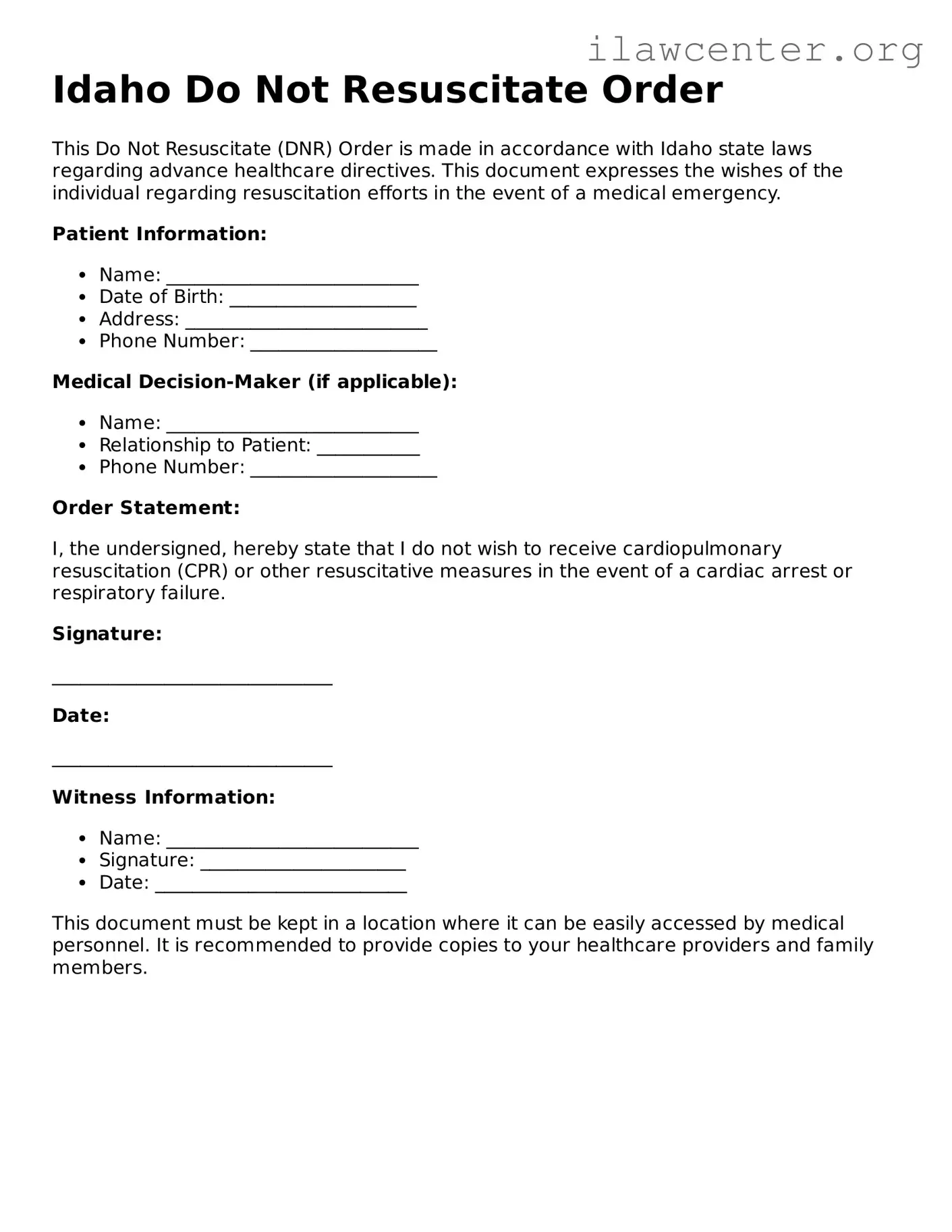
What is a Do Not Resuscitate (DNR) Order in Idaho?
A Do Not Resuscitate Order is a legal document that allows a person to refuse resuscitation efforts in the event of cardiac or respiratory arrest. In Idaho, this order is used to communicate a patient’s wishes regarding end-of-life care, specifically the desire not to receive CPR or other life-saving measures.
Who can request a DNR Order in Idaho?
In Idaho, a DNR Order can be requested by a patient who is at least 18 years old and is capable of making their own medical decisions. If the patient is unable to make decisions, a legal representative, such as a family member or an appointed guardian, can request the order on their behalf.
How do I obtain a DNR Order form in Idaho?
You can obtain a DNR Order form from various sources, including hospitals, healthcare providers, or online through the Idaho Department of Health and Welfare website. It’s important to ensure that the form is the official state version to ensure it is valid.
What information is required on the DNR Order form?
The DNR Order form typically requires the patient's name, date of birth, and a statement indicating their wish to not receive resuscitation. It also needs to be signed by the patient or their legal representative and a physician. The physician’s signature confirms that the patient has made an informed decision.
Is a DNR Order valid in all healthcare settings?
Yes, a DNR Order is generally valid in all healthcare settings in Idaho, including hospitals, nursing homes, and emergency medical services. However, it is crucial to ensure that the order is properly completed and readily available to healthcare providers when needed.
Can a DNR Order be revoked?
Yes, a DNR Order can be revoked at any time by the patient or their legal representative. To revoke the order, simply notify your healthcare provider and remove any copies of the DNR form from your medical records. It’s advisable to communicate the change clearly to avoid confusion during a medical emergency.
What happens if a DNR Order is not followed?
If a DNR Order is not followed, it may lead to unwanted resuscitation efforts, which can cause distress to the patient and their family. Healthcare providers are legally obligated to respect valid DNR Orders. If a violation occurs, it may result in legal consequences for the provider.
Do I need to discuss my DNR Order with my family?
While it is not legally required, discussing your DNR Order with family members is highly recommended. Open communication can help ensure that your wishes are understood and respected. It can also provide emotional support for your loved ones during difficult times.
Can I have a DNR Order and still receive other medical treatments?
Yes, having a DNR Order does not prevent you from receiving other medical treatments. You can still receive care for other health issues, including pain management, comfort care, and any other necessary medical interventions that align with your overall treatment goals.
How often should I review my DNR Order?
It is a good practice to review your DNR Order regularly, especially after any significant changes in your health status or personal circumstances. If your wishes change, make sure to update the order accordingly and inform your healthcare provider and family members.