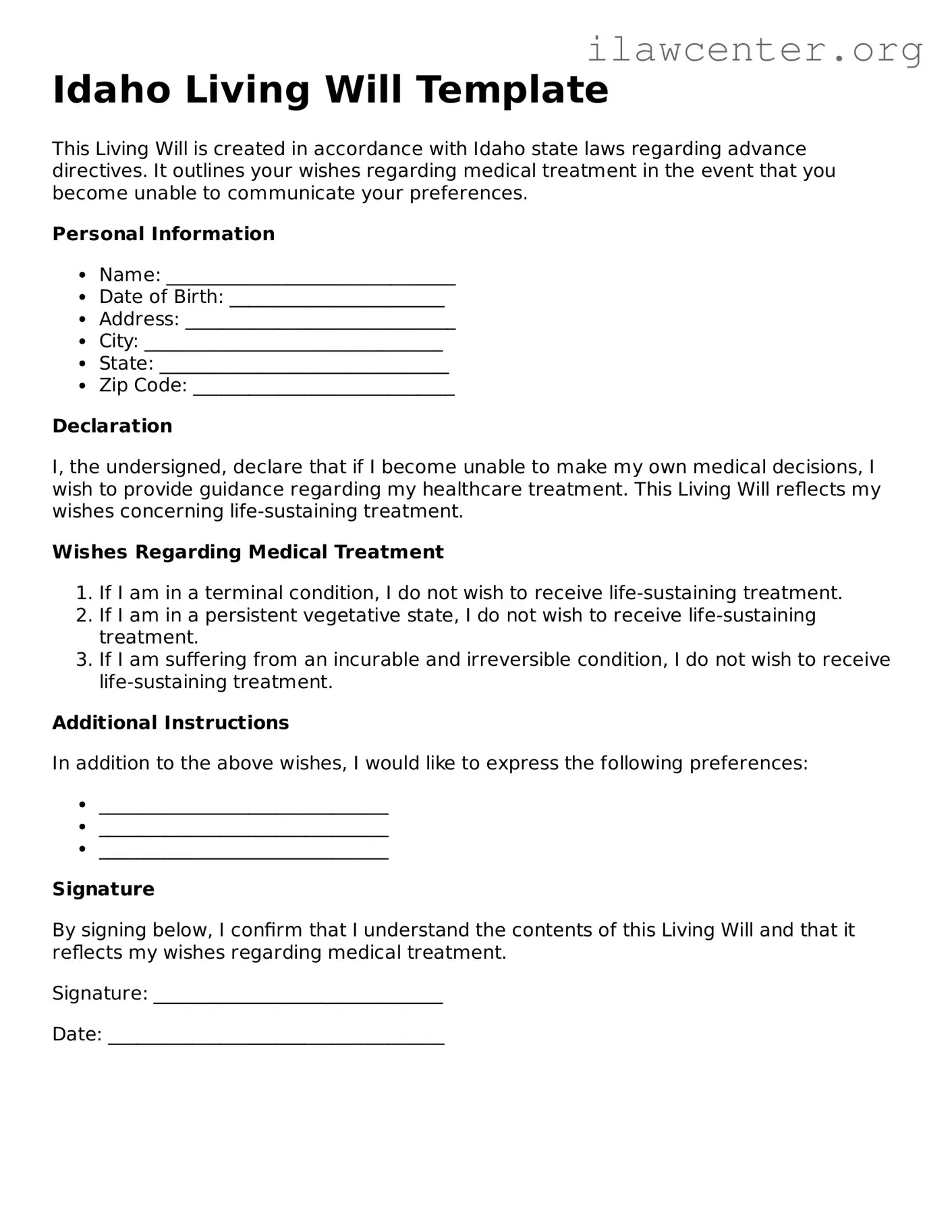
What is a Living Will in Idaho?
A Living Will is a legal document that allows individuals to outline their preferences regarding medical treatment in the event they become unable to communicate their wishes. In Idaho, this document specifically addresses end-of-life care and can provide guidance to healthcare providers and loved ones about the type of medical interventions a person wishes to receive or refuse.
Who should create a Living Will?
Anyone over the age of 18 who is concerned about their medical care preferences should consider creating a Living Will. It is particularly important for individuals with serious medical conditions, those undergoing major surgery, or anyone who wishes to ensure their healthcare wishes are respected in the event of incapacitation.
What should be included in an Idaho Living Will?
An Idaho Living Will should clearly state your wishes regarding life-sustaining treatments, such as resuscitation, mechanical ventilation, and feeding tubes. You may also specify any preferences regarding pain management and comfort care. It's essential to be as clear and specific as possible to avoid any ambiguity about your desires.
How do I create a Living Will in Idaho?
Creating a Living Will in Idaho can be done by filling out a form that complies with state laws. You can find templates online or consult with an attorney for assistance. Once completed, the document must be signed in the presence of two witnesses or a notary public to ensure its validity.
Can I change or revoke my Living Will?
Yes, you can change or revoke your Living Will at any time as long as you are mentally competent. To revoke it, you can simply destroy the document or create a new one that explicitly states your updated wishes. It is advisable to inform your healthcare providers and family members about any changes you make.
Is a Living Will the same as a Durable Power of Attorney for Healthcare?
No, a Living Will and a Durable Power of Attorney for Healthcare are different documents. While a Living Will outlines your specific medical treatment preferences, a Durable Power of Attorney for Healthcare allows you to designate someone to make healthcare decisions on your behalf if you are unable to do so. Many people choose to have both documents to ensure comprehensive planning for their healthcare.
How is a Living Will used in medical situations?
When a person is unable to communicate their healthcare wishes, a Living Will serves as a guide for medical professionals and family members. It helps ensure that the individual's preferences regarding treatment are honored. Healthcare providers will refer to the Living Will to make decisions about care, especially in critical situations where life-sustaining treatment may be required.
Can I have my Living Will stored with my healthcare provider?
Yes, it is advisable to provide a copy of your Living Will to your healthcare provider and any family members or friends who may be involved in your care. This ensures that your wishes are readily accessible when needed. Additionally, keeping a copy in a safe but accessible place at home can also be beneficial.