Attorney-Verified  Real Estate Purchase Agreement Document for Idaho

Attorney-Verified Real Estate Purchase Agreement Document for Idaho

The Idaho Real Estate Purchase Agreement form is a legal document that outlines the terms and conditions of a property sale in Idaho. It serves as a binding contract between the buyer and seller, detailing essential information such as the purchase price, property description, and any contingencies. To get started on your real estate transaction, fill out the form by clicking the button below.

Article Guide

The Idaho Real Estate Purchase Agreement form serves as a critical document in the process of buying or selling property within the state. This legally binding agreement outlines the terms and conditions agreed upon by both the buyer and the seller. Key elements include the purchase price, property description, and financing details. Additionally, it addresses contingencies, which are conditions that must be met for the sale to proceed, such as home inspections and financing approval. The agreement also specifies timelines for closing and other important milestones, ensuring that both parties are aware of their responsibilities. By detailing the rights and obligations of each party, this form helps to minimize misunderstandings and provides a clear framework for the transaction. Understanding its components is essential for anyone involved in real estate transactions in Idaho.

Idaho Real Estate Purchase Agreement Preview

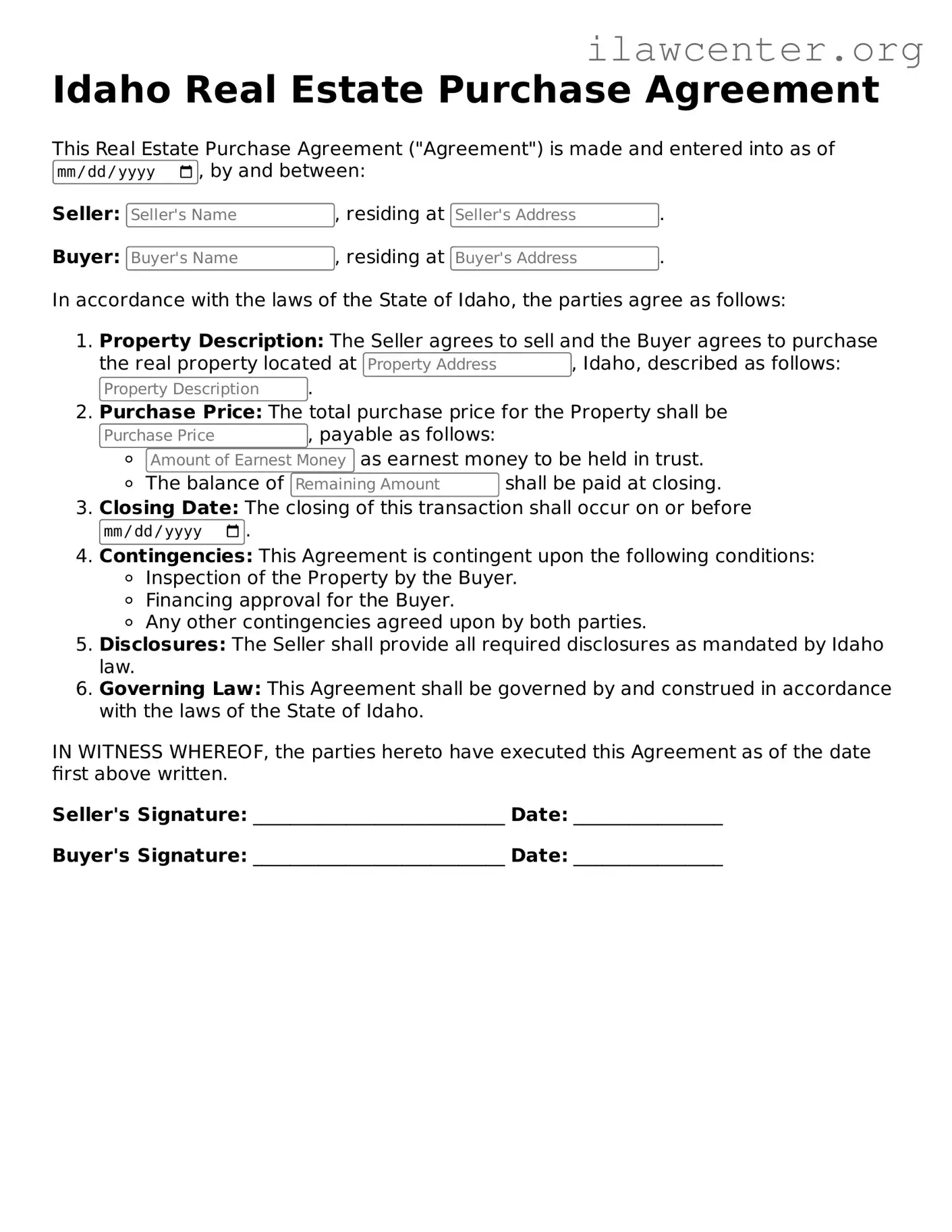
Idaho Real Estate Purchase Agreement

This Real Estate Purchase Agreement ("Agreement") is made and entered into as of , by and between:

Seller: , residing at .

Buyer: , residing at .

In accordance with the laws of the State of Idaho, the parties agree as follows:

  1. Property Description: The Seller agrees to sell and the Buyer agrees to purchase the real property located at , Idaho, described as follows: .
  2. Purchase Price: The total purchase price for the Property shall be , payable as follows:
    • as earnest money to be held in trust.
    • The balance of shall be paid at closing.
  3. Closing Date: The closing of this transaction shall occur on or before .
  4. Contingencies: This Agreement is contingent upon the following conditions:
    • Inspection of the Property by the Buyer.
    • Financing approval for the Buyer.
    • Any other contingencies agreed upon by both parties.
  5. Disclosures: The Seller shall provide all required disclosures as mandated by Idaho law.
  6. Governing Law: This Agreement shall be governed by and construed in accordance with the laws of the State of Idaho.

IN WITNESS WHEREOF, the parties hereto have executed this Agreement as of the date first above written.

Seller's Signature: ___________________________ Date: ________________

Buyer's Signature: ___________________________ Date: ________________

PDF Form Characteristics

Fact Name Description
Governing Law The Idaho Real Estate Purchase Agreement is governed by the laws of the State of Idaho.
Parties Involved The agreement typically involves a buyer and a seller, both of whom must be clearly identified.
Property Description A detailed description of the property being sold is required, including its address and legal description.
Purchase Price The purchase price must be clearly stated in the agreement, along with any earnest money deposits.
Contingencies Buyers may include contingencies, such as financing or inspection, which must be outlined in the agreement.
Closing Date The agreement should specify a closing date, which is the date when the transaction is finalized.
Disclosures Sellers are required to provide certain disclosures about the property's condition and any known issues.
Signatures Both parties must sign the agreement for it to be legally binding, indicating their acceptance of the terms.
Default Provisions The agreement typically includes provisions that outline what happens if either party defaults on the contract.
Amendments Any changes to the agreement must be made in writing and signed by both parties to be enforceable.

Instructions on Utilizing Idaho Real Estate Purchase Agreement

After gathering the necessary information, you are ready to fill out the Idaho Real Estate Purchase Agreement form. This form will require details about the buyer, seller, property, and terms of the sale. Carefully completing each section ensures clarity and helps facilitate the transaction.

  1. Begin with the date at the top of the form. Write the date when the agreement is being filled out.
  2. Provide the names and contact information for both the buyer and seller. Ensure that all names are spelled correctly and include any necessary titles.
  3. Identify the property being sold. Include the complete address and any relevant legal descriptions.
  4. Specify the purchase price. Clearly state the total amount the buyer agrees to pay for the property.
  5. Outline the terms of the sale. Include details such as financing, earnest money deposit, and contingencies, if applicable.
  6. Include any additional provisions or special conditions that may apply to the sale.
  7. Provide space for signatures. Ensure both parties sign and date the agreement to validate it.

Once the form is filled out, both parties should review it carefully before proceeding with the next steps in the transaction process.

Important Facts about Idaho Real Estate Purchase Agreement

What is the Idaho Real Estate Purchase Agreement?

The Idaho Real Estate Purchase Agreement is a legally binding document used when buying or selling real estate in Idaho. This form outlines the terms and conditions of the sale, including the purchase price, closing date, and any contingencies that may apply. It serves as a roadmap for both parties, ensuring that everyone is on the same page regarding the transaction.

Who should use the Idaho Real Estate Purchase Agreement?

This agreement is essential for anyone involved in a real estate transaction in Idaho. Whether you are a buyer looking to purchase a home or a seller ready to list your property, this form provides the necessary framework to facilitate the sale. It is advisable for both parties to consult with a real estate professional or attorney to ensure that their interests are adequately represented.

What are the key components of the agreement?

The Idaho Real Estate Purchase Agreement typically includes several important elements. These include the names of the buyer and seller, a detailed description of the property, the purchase price, and the payment terms. Additionally, it outlines any contingencies, such as financing or inspections, that must be satisfied before the sale can proceed. The agreement also specifies the closing date and any disclosures required by law.

Can the Idaho Real Estate Purchase Agreement be modified?

Yes, the agreement can be modified, but any changes must be made in writing and agreed upon by both parties. This flexibility allows buyers and sellers to negotiate terms that better suit their needs. However, it is crucial to ensure that all modifications are documented properly to avoid any misunderstandings later on.

What happens if one party breaches the agreement?

If one party fails to uphold their end of the agreement, it is considered a breach. The non-breaching party may have several options, including seeking damages or specific performance, which means they can ask the court to enforce the terms of the agreement. It is essential for both parties to understand their rights and obligations under the agreement to navigate any potential disputes effectively.

Is it necessary to have legal representation when using this agreement?

While it is not legally required to have an attorney when using the Idaho Real Estate Purchase Agreement, it is highly recommended. An attorney can help clarify complex terms, ensure compliance with state laws, and protect your interests throughout the transaction. Having legal representation can provide peace of mind and help prevent costly mistakes.
Common mistakes

Filling out the Idaho Real Estate Purchase Agreement form can be a daunting task. Many individuals make critical mistakes that can lead to complications down the line. Understanding these common errors can help ensure a smoother transaction.

One frequent mistake is failing to include all necessary parties. Buyers often overlook the need to list all individuals involved in the transaction. This oversight can create legal complications later, particularly if a co-owner is not acknowledged in the agreement.

Another common error is neglecting to specify the purchase price clearly. Ambiguities in the price can lead to disputes. Ensure that the amount is clearly stated, along with any contingencies that may affect the final price.

People often forget to include contingencies that protect their interests. For instance, a buyer may want to include a financing contingency to ensure they can secure a mortgage. Without this, they risk losing their earnest money if financing falls through.

Misunderstanding the terms of the agreement can also lead to mistakes. Many individuals do not take the time to read the entire document carefully. This can result in signing away rights or obligations they were unaware of. Always read the fine print.

Another critical mistake is not providing accurate property descriptions. A vague or incorrect description can create confusion about what is being sold. Ensure that the property’s legal description is accurate and matches public records.

Lastly, many people fail to include a closing date in the agreement. This date is essential for both parties to plan their next steps. Without it, the transaction can become uncertain and lead to delays.

By being aware of these common mistakes, individuals can navigate the Idaho Real Estate Purchase Agreement form more effectively. Attention to detail is crucial in ensuring a successful real estate transaction.

Documents used along the form

When engaging in real estate transactions in Idaho, several forms and documents accompany the Real Estate Purchase Agreement to ensure a smooth process. Each document serves a specific purpose, providing essential information and protections for both buyers and sellers. Below are four commonly used forms that complement the purchase agreement.

  • Seller's Disclosure Statement: This document requires the seller to disclose any known issues or defects related to the property. It aims to inform the buyer of potential problems that could affect their decision to purchase.
  • Lead-Based Paint Disclosure: For homes built before 1978, this form informs buyers about the potential presence of lead-based paint. It is crucial for protecting the health of residents, especially young children.
  • Real Estate Agency Disclosure: This document clarifies the relationship between the buyer, seller, and real estate agents involved in the transaction. It outlines the duties and responsibilities of each party, ensuring transparency in the agency's role.
  • Closing Statement: Also known as the HUD-1 Settlement Statement, this document details all financial aspects of the transaction. It includes the purchase price, closing costs, and any adjustments, providing a clear summary of the financial exchange.

Understanding these documents is vital for anyone involved in a real estate transaction. They not only protect the interests of all parties but also facilitate a transparent and informed process. Engaging with these forms thoughtfully can lead to a more successful and satisfactory real estate experience.

Similar forms

The Real Estate Purchase Agreement form shares similarities with several other documents commonly used in real estate transactions. Each document serves a specific purpose but often overlaps in content and intent. Below is a list of eight documents that are similar to the Real Estate Purchase Agreement:

  • Lease Agreement: This document outlines the terms under which a tenant rents property from a landlord. Like a purchase agreement, it details the parties involved, property description, and financial obligations.
  • Option to Purchase Agreement: This agreement gives a potential buyer the right to purchase a property at a later date. It specifies the purchase price and terms, similar to a purchase agreement.
  • Sales Contract: Often used interchangeably with a purchase agreement, this document details the terms of sale for a property, including price and contingencies.
  • Listing Agreement: This is a contract between a property owner and a real estate agent. It outlines the terms of the agent's services, including the sale price and commission, similar to how a purchase agreement outlines the sale terms.
  • Disclosure Statement: This document provides information about the condition of the property. While it does not outline the sale terms, it complements the purchase agreement by ensuring transparency between buyer and seller.
  • Title Report: This document details the ownership history of a property and any liens or encumbrances. It is essential for buyers and is often referenced in purchase agreements.
  • Earnest Money Agreement: This document specifies the deposit made by the buyer to demonstrate their commitment to purchasing the property. It is often included as a clause in the purchase agreement.
  • Closing Disclosure: This document provides the final details of the mortgage loan, including loan terms and closing costs. It is related to the purchase agreement as it summarizes the financial aspects of the transaction.

Dos and Don'ts

When filling out the Idaho Real Estate Purchase Agreement form, attention to detail is crucial. Here are five essential dos and don'ts to consider:

  • Do ensure all parties' names are correctly spelled and match their legal identification.
  • Do clearly define the property being purchased, including the address and any included fixtures.
  • Do specify the purchase price and any contingencies, such as financing or inspections.
  • Don't leave any sections blank; incomplete information can lead to disputes.
  • Don't rush through the process; take the time to review each section thoroughly before signing.

By following these guidelines, you can help ensure a smoother transaction and minimize potential issues down the line.

Misconceptions

Understanding the Idaho Real Estate Purchase Agreement form is crucial for anyone involved in a real estate transaction in the state. However, several misconceptions can lead to confusion. Here are ten common misconceptions about this important document:

  1. It is a legally binding contract from the moment it is signed. Many believe that once both parties sign the agreement, it becomes binding immediately. In reality, it may require additional contingencies to be fulfilled before it is enforceable.
  2. All real estate transactions must use this form. Some think that the Idaho Real Estate Purchase Agreement is mandatory for all transactions. However, parties can negotiate and use alternative agreements if they choose.
  3. Verbal agreements are enough. A common misconception is that a verbal agreement suffices. In Idaho, real estate transactions generally require a written agreement to be enforceable.
  4. Only buyers need to sign the agreement. It is often assumed that only the buyer's signature is necessary. Both the buyer and seller must sign the agreement for it to be valid.
  5. It covers all aspects of the transaction. Some believe the agreement includes every detail of the sale. In truth, it may only cover essential terms, and additional documents may be needed for complete clarity.
  6. Once signed, the price cannot be changed. Many think that the purchase price is fixed once the agreement is signed. However, price adjustments can occur if both parties agree to amend the contract.
  7. It is the same as a lease agreement. Some confuse the purchase agreement with a lease. These are distinct documents with different purposes and legal implications.
  8. All contingencies are automatically included. There is a belief that standard contingencies, such as financing or inspection, are automatically part of the agreement. In reality, these must be explicitly stated.
  9. It is only for residential properties. Many think this form applies solely to residential transactions. However, it can be used for commercial properties as well.
  10. Real estate agents are responsible for all terms. Some assume that agents will handle all terms of the agreement. While agents provide guidance, buyers and sellers must understand and agree to the terms themselves.

By addressing these misconceptions, individuals can approach the Idaho Real Estate Purchase Agreement with greater confidence and understanding. Always consider consulting a professional for personalized advice.

Key takeaways

When filling out and using the Idaho Real Estate Purchase Agreement form, keep the following key takeaways in mind:

  • Complete all sections: Ensure that every part of the agreement is filled out accurately. Missing information can lead to delays or complications in the transaction.
  • Understand the terms: Familiarize yourself with the terms and conditions outlined in the agreement. This includes understanding contingencies, closing dates, and any special provisions.
  • Consult with professionals: It’s advisable to work with a real estate agent or attorney. They can provide guidance and help you navigate any complex issues that may arise.
  • Keep copies: After signing, retain copies of the agreement for your records. This will be important for future reference and in case any disputes arise.