Attorney-Verified  Rental Application Document for Idaho

Attorney-Verified Rental Application Document for Idaho

The Idaho Rental Application form is a crucial document used by landlords to assess potential tenants before entering into a lease agreement. This form collects essential information about the applicant's background, rental history, and financial stability, ensuring that landlords make informed decisions. To begin your rental journey, fill out the application form by clicking the button below.

Article Guide

When seeking a rental property in Idaho, the rental application form plays a crucial role in the process. This document serves as a gateway for prospective tenants to provide essential information to landlords or property managers. Typically, it includes personal details such as the applicant's name, contact information, and social security number. Additionally, the form often requires employment history and income verification to ensure that applicants can meet their rental obligations. Background checks, including credit history and rental history, are commonly requested to assess the applicant's reliability. Furthermore, references from previous landlords or employers may be included to give a more comprehensive view of the applicant's character and responsibility. Understanding the components of this form can help both landlords and tenants navigate the rental process more smoothly, ensuring that all parties are well-informed and prepared for the agreement ahead.

Idaho Rental Application Preview

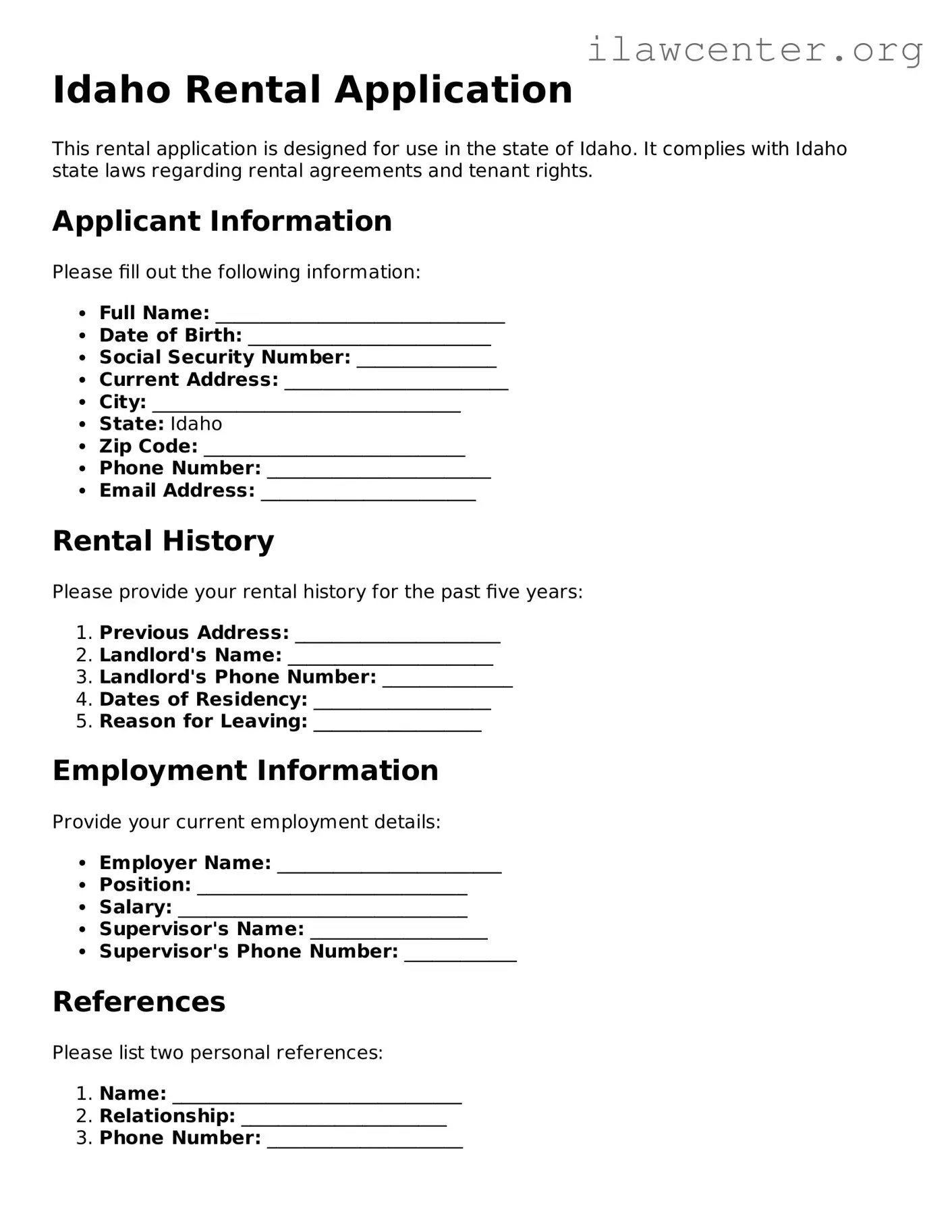
Idaho Rental Application

This rental application is designed for use in the state of Idaho. It complies with Idaho state laws regarding rental agreements and tenant rights.

Applicant Information

Please fill out the following information:

  • Full Name: _______________________________
  • Date of Birth: __________________________
  • Social Security Number: _______________
  • Current Address: ________________________
  • City: _________________________________
  • State: Idaho
  • Zip Code: ____________________________
  • Phone Number: ________________________
  • Email Address: _______________________

Rental History

Please provide your rental history for the past five years:

  1. Previous Address: ______________________
  2. Landlord's Name: ______________________
  3. Landlord's Phone Number: ______________
  4. Dates of Residency: ___________________
  5. Reason for Leaving: __________________

Employment Information

Provide your current employment details:

  • Employer Name: ________________________
  • Position: _____________________________
  • Salary: _______________________________
  • Supervisor's Name: ___________________
  • Supervisor's Phone Number: ____________

References

Please list two personal references:

  1. Name: _______________________________
  2. Relationship: ______________________
  3. Phone Number: _____________________
  1. Name: _______________________________
  2. Relationship: ______________________
  3. Phone Number: _____________________

Consent

By signing below, you consent to the verification of the information provided in this application. This includes background and credit checks as permitted by Idaho law.

Applicant's Signature: ______________________

Date: _______________________________

PDF Form Characteristics

Fact Name Details
Purpose The Idaho Rental Application form is used by landlords to screen potential tenants.
Required Information Applicants must provide personal details, rental history, and employment information.
Application Fee Landlords may charge an application fee to cover the cost of background checks.
Governing Law The form is governed by Idaho Code § 55-2501 et seq., which outlines tenant rights and landlord responsibilities.
Signature Requirement Applicants must sign the form to authorize the landlord to conduct background checks.

Instructions on Utilizing Idaho Rental Application

After obtaining the Idaho Rental Application form, you will need to provide accurate information about yourself and your rental history. This information helps landlords assess your suitability as a tenant. Follow the steps below to complete the form correctly.

  1. Begin by filling in your personal information. This includes your full name, date of birth, and Social Security number.
  2. Provide your current address. Include the street address, city, state, and zip code.
  3. List your contact information. Write down your phone number and email address for communication purposes.
  4. Detail your employment history. Include your current employer’s name, your job title, and how long you have worked there.
  5. Fill in your income information. State your monthly income and any additional sources of income you may have.
  6. Provide rental history. List your previous addresses, the names of landlords, and the duration of your stay at each location.
  7. Complete the references section. Include names and contact information for personal or professional references.
  8. Sign and date the application at the bottom of the form.

Once you have filled out the application, review it for any errors. Ensure all information is accurate before submitting it to the landlord or property manager.

Important Facts about Idaho Rental Application

What is the Idaho Rental Application form?

The Idaho Rental Application form is a document used by landlords to collect information from prospective tenants. This form typically includes personal details, rental history, employment information, and references. It helps landlords assess the suitability of applicants for their rental properties.

Why do I need to fill out a rental application?

Filling out a rental application is crucial for both tenants and landlords. For tenants, it is an opportunity to present their qualifications for renting a property. For landlords, it provides essential information to make informed decisions about potential tenants, helping to ensure a good fit for their rental property.

What information is typically required on the application?

Commonly required information on the Idaho Rental Application includes your full name, contact information, social security number, employment details, income, rental history, and personal references. Some landlords may also ask for additional details, such as a background check consent or pet ownership information.

How does the landlord use the information provided?

Landlords use the information from rental applications to evaluate applicants. They may check credit scores, verify employment, and contact previous landlords to assess rental history. This process helps landlords determine if an applicant is financially responsible and likely to pay rent on time.

Is there a fee associated with the rental application?

Many landlords charge an application fee to cover the costs of processing the application, including background checks and credit reports. This fee can vary widely, so it’s important to ask the landlord about any associated costs before submitting your application.

What should I do if I have a poor credit history?

If you have a poor credit history, consider being upfront with the landlord. You can explain your situation and provide references or proof of steady income. Some landlords may be willing to work with you if you can demonstrate reliability in other areas, such as a strong rental history or stable employment.

Can I apply for multiple rental properties using the same application?

Generally, rental applications are property-specific. You will likely need to fill out a separate application for each property you are interested in. However, some landlords may allow you to submit one application for multiple properties they manage, so it's best to check with them directly.

How long does it take to process a rental application?

The processing time for a rental application can vary. It typically takes anywhere from a few hours to several days, depending on the landlord’s policies and the thoroughness of the background checks. If you haven’t heard back within a week, it’s reasonable to follow up with the landlord for an update.

What happens if my application is denied?

If your application is denied, the landlord is usually required to provide you with a reason. Common reasons for denial include poor credit history, insufficient income, or negative rental history. You can ask for clarification and, in some cases, may have the opportunity to appeal the decision or provide additional information.

Are there any protections for applicants during the rental application process?

Yes, applicants have certain protections under fair housing laws. Landlords cannot discriminate based on race, color, national origin, sex, disability, or familial status. If you believe you have faced discrimination during the application process, you can file a complaint with the appropriate authorities.
Common mistakes

Filling out a rental application can be a daunting task, especially in Idaho where the housing market can be competitive. Many applicants inadvertently make mistakes that could jeopardize their chances of securing a rental property. Understanding these common pitfalls can help you present a stronger application.

One frequent mistake is providing incomplete information. Landlords often look for specific details about your employment history, rental history, and financial status. Leaving out key information can raise red flags. For instance, if you skip over a previous rental address or fail to include your current employer, it may give the impression that you have something to hide.

Another common error is not being truthful. It might seem tempting to embellish your income or rental history to appear more appealing to landlords. However, discrepancies can be easily uncovered during background checks. If a landlord discovers that you've misrepresented yourself, it could lead to immediate disqualification from the application process.

Applicants often overlook the importance of providing references. Including personal or professional references can bolster your application. However, forgetting to ask these individuals for permission before listing them can backfire. If a potential landlord contacts a reference who is unaware they are being listed, it may create an unfavorable impression.

Additionally, neglecting to proofread the application can lead to mistakes that could have been easily avoided. Typos or unclear handwriting can make it difficult for landlords to read your information. A well-presented application reflects your attention to detail and seriousness about the rental opportunity.

Some applicants fail to disclose all sources of income. If you have a side job or receive benefits, it’s crucial to include these on your application. Landlords want a comprehensive view of your financial situation. Omitting income can lead to a lower perceived financial stability, which may deter landlords from considering your application.

Another mistake is not following the application instructions. Each landlord or property management company may have specific requirements for their application. Ignoring these guidelines can result in delays or outright rejection. Always read the instructions carefully and provide all requested documentation.

Some people also forget to include a cover letter or personal statement. While not always required, a brief letter can help you stand out. It allows you to express your enthusiasm for the property and explain any potential concerns, such as a less-than-perfect rental history.

Moreover, missing deadlines is a common issue. In a competitive rental market, timing is everything. If you delay submitting your application, you risk losing out to other prospective tenants. Make sure to complete and submit your application as soon as possible.

Lastly, failing to ask questions can lead to misunderstandings. If anything about the application or the rental process is unclear, don’t hesitate to reach out to the landlord or property manager. Open communication can clarify expectations and demonstrate your interest in the property.

Documents used along the form

When applying for a rental property in Idaho, several documents often accompany the rental application form. These documents help landlords assess potential tenants and ensure a smooth rental process. Here’s a list of commonly used forms and documents that you might encounter:

  • Credit Report Authorization: This form allows landlords to obtain a credit report to evaluate the applicant's financial history and creditworthiness.
  • Background Check Consent: A document granting permission for landlords to conduct a background check, which may include criminal history and eviction records.
  • Income Verification: Applicants may need to provide proof of income, such as pay stubs, tax returns, or bank statements, to demonstrate their ability to pay rent.
  • Rental History Verification: This form collects information about previous rental experiences, including contact details for past landlords, to confirm the applicant's rental history.
  • Pet Agreement: If pets are allowed, this document outlines the rules and responsibilities regarding pet ownership in the rental property.
  • Lease Agreement: The formal contract between the landlord and tenant that outlines the terms of the rental, including rent amount, duration, and responsibilities.
  • Move-In Inspection Checklist: A document used to record the condition of the property at the time of move-in, helping to avoid disputes over damages later.
  • Emergency Contact Form: This form provides the landlord with contact information for someone to reach in case of emergencies involving the tenant.
  • Tenant Insurance Proof: Some landlords require tenants to obtain renter's insurance and provide proof of coverage to protect personal belongings.
  • Application Fee Receipt: A receipt confirming that the applicant has paid any required application fees, which are often non-refundable.

Having these documents ready can streamline the application process and demonstrate your preparedness as a tenant. Each document plays a crucial role in ensuring that both landlords and tenants have a clear understanding of their rights and responsibilities.

Similar forms

The Rental Application form is an important document used when applying for a rental property. It collects essential information from potential tenants. There are several other documents that share similarities with the Rental Application form. Each serves a specific purpose in the rental process. Below is a list of eight documents that are similar to the Rental Application form, along with explanations of how they relate.

  • Lease Agreement: This document outlines the terms and conditions of renting a property. Like the Rental Application, it requires personal information and details about the tenant's background.
  • Credit Report: A credit report provides insight into a tenant's financial history. It is often used alongside the Rental Application to assess the applicant's creditworthiness.
  • Background Check Authorization: This document gives permission to landlords to conduct background checks. It is similar to the Rental Application as it gathers information about the tenant’s history.
  • Employment Verification Form: This form confirms a tenant's employment status and income. It complements the Rental Application by providing proof of financial stability.
  • Rental History Report: This report details a tenant's previous rental experiences. It is often requested alongside the Rental Application to evaluate the applicant’s reliability.
  • Guarantor Agreement: If a tenant needs a guarantor, this document outlines the responsibilities of the guarantor. It relates to the Rental Application by ensuring that financial backing is available.
  • Pet Application: For tenants with pets, this application provides details about the pet. It is similar to the Rental Application as it requires personal information and may affect rental approval.
  • Move-In Checklist: This document is completed upon moving in and outlines the condition of the property. While it serves a different purpose, it is related to the rental process initiated by the Rental Application.

Dos and Don'ts

When filling out the Idaho Rental Application form, it's essential to approach the process thoughtfully. Here’s a list of things you should and shouldn't do to ensure your application stands out positively.

  • Do provide accurate and complete information.
  • Do include references from previous landlords or personal contacts.
  • Do review your application for any spelling or grammatical errors.
  • Do submit your application promptly to avoid missing out on the rental.
  • Don't leave any sections blank unless specified.
  • Don't provide misleading or false information.

Following these guidelines can help you create a strong application that landlords will appreciate. Good luck with your rental search!

Misconceptions

Here are six common misconceptions about the Idaho Rental Application form, along with clarifications for each:

  1. All rental applications are the same.

    This is not true. Each rental application can differ based on the landlord's requirements, property type, and local laws. It’s important to read the specific application carefully.

  2. You must pay a fee for every application.

    While many landlords do charge an application fee, some may not. Always check with the landlord to understand their specific policies regarding fees.

  3. Your credit score is the only factor considered.

    Landlords often look at multiple factors including rental history, income, and references. A strong application can still be successful even with a less-than-perfect credit score.

  4. Once submitted, you cannot change your application.

    In many cases, you can update or amend your application if you provide the landlord with the new information. Communication is key.

  5. All applications are approved or denied within a few hours.

    Processing times can vary significantly. Factors such as background checks and reference verification can take several days, so patience is essential.

  6. You don’t need to provide references.

    Most landlords request references as part of the application process. Providing reliable references can strengthen your application and improve your chances of approval.

Key takeaways

When it comes to filling out and utilizing the Idaho Rental Application form, several key points can help streamline the process and ensure a successful application. Here are some essential takeaways:

  1. Understand the Purpose: The rental application is designed to gather important information about potential tenants, allowing landlords to assess their suitability.
  2. Complete Accuracy: Providing accurate and truthful information is crucial. Misrepresentations can lead to application denial or future legal issues.
  3. Gather Required Documents: Be prepared to submit supporting documents such as proof of income, identification, and rental history.
  4. Review the Application Fee: Many landlords charge a non-refundable application fee. Know the amount and what it covers before applying.
  5. Check Rental History: Landlords often look for a solid rental history. If you have past evictions or issues, be ready to explain them.
  6. Credit Check Awareness: Understand that landlords may conduct a credit check. Be honest about your credit history and address any concerns upfront.
  7. Provide References: Having personal or professional references can strengthen your application. Choose individuals who can vouch for your reliability.
  8. Be Prompt: Submit your application as soon as possible. Rental properties can be in high demand, and delays might cost you the opportunity.
  9. Follow Up: After submitting your application, it’s a good idea to follow up with the landlord or property manager to express continued interest.
  10. Read the Lease Carefully: If approved, thoroughly review the lease agreement before signing. Ensure that all terms align with what was discussed during the application process.

By keeping these points in mind, you can navigate the rental application process in Idaho with greater confidence and clarity.