Attorney-Verified  Commercial Lease Agreement Document for Illinois

Attorney-Verified Commercial Lease Agreement Document for Illinois

The Illinois Commercial Lease Agreement form is a legal document that outlines the terms and conditions under which a commercial property is leased. This agreement serves as a binding contract between the landlord and tenant, detailing responsibilities, payment terms, and other essential provisions. To get started on your lease, fill out the form by clicking the button below.

Article Guide

The Illinois Commercial Lease Agreement form serves as a critical document for landlords and tenants engaging in commercial property rental. This legally binding contract outlines essential terms and conditions governing the lease arrangement. Key aspects include the duration of the lease, rental payment details, and security deposit requirements. Additionally, the form specifies the permitted use of the property, maintenance responsibilities, and provisions for property alterations. It also addresses renewal options and termination procedures, ensuring both parties understand their rights and obligations. By clearly defining these elements, the Illinois Commercial Lease Agreement helps prevent disputes and fosters a transparent relationship between landlords and tenants.

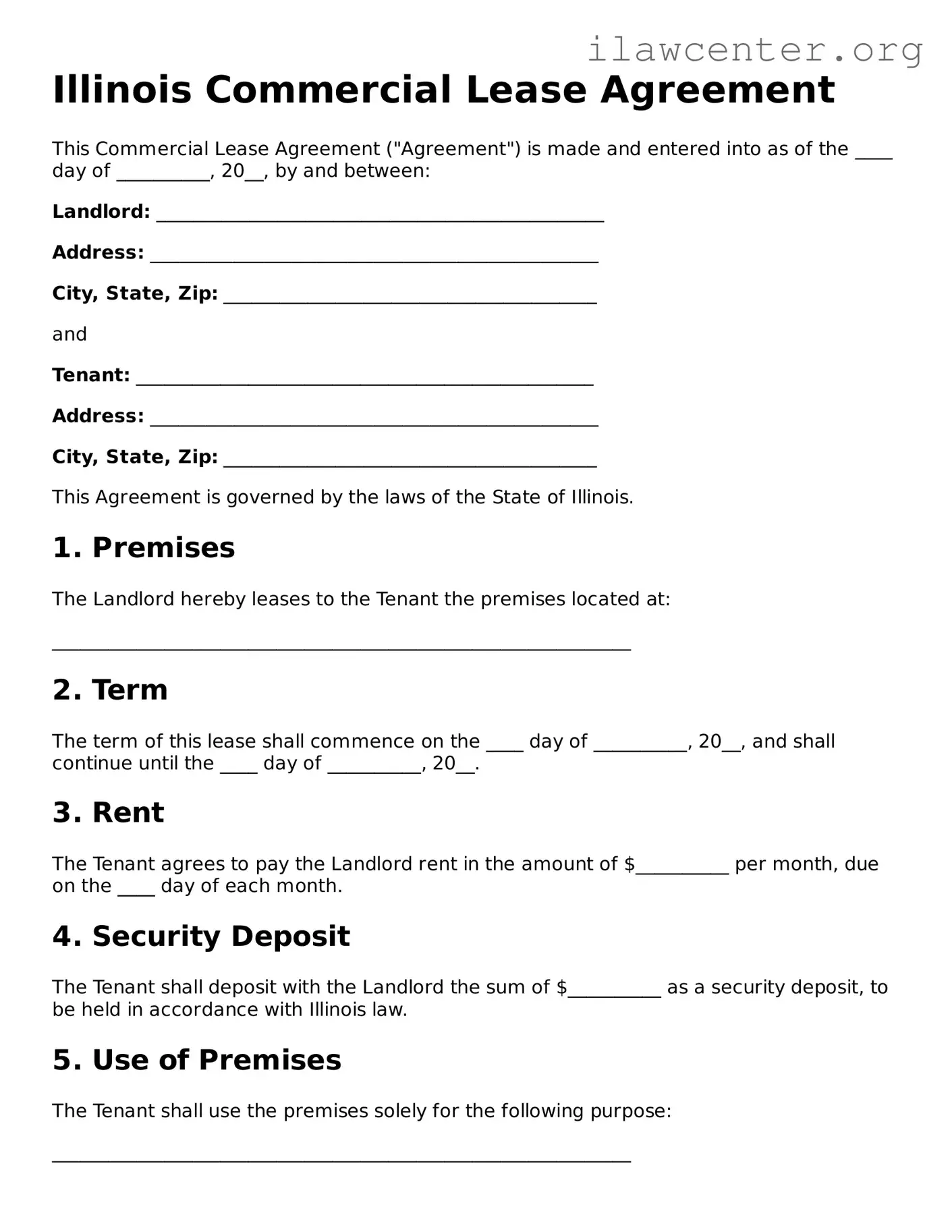
Illinois Commercial Lease Agreement Preview

Illinois Commercial Lease Agreement

This Commercial Lease Agreement ("Agreement") is made and entered into as of the ____ day of __________, 20__, by and between:

Landlord: ________________________________________________

Address: ________________________________________________

City, State, Zip: ________________________________________

and

Tenant: _________________________________________________

Address: ________________________________________________

City, State, Zip: ________________________________________

This Agreement is governed by the laws of the State of Illinois.

1. Premises

The Landlord hereby leases to the Tenant the premises located at:

______________________________________________________________

2. Term

The term of this lease shall commence on the ____ day of __________, 20__, and shall continue until the ____ day of __________, 20__.

3. Rent

The Tenant agrees to pay the Landlord rent in the amount of $__________ per month, due on the ____ day of each month.

4. Security Deposit

The Tenant shall deposit with the Landlord the sum of $__________ as a security deposit, to be held in accordance with Illinois law.

5. Use of Premises

The Tenant shall use the premises solely for the following purpose:

______________________________________________________________

6. Maintenance and Repairs

The Tenant is responsible for maintaining the premises in good condition. The Landlord shall be responsible for major repairs unless caused by the Tenant's negligence.

7. Alterations

The Tenant shall not make any alterations to the premises without the Landlord's prior written consent.

8. Insurance

The Tenant shall maintain liability insurance covering the premises in an amount not less than $____________.

9. Default

If the Tenant fails to pay rent or breaches any term of this Agreement, the Landlord may terminate this lease after giving written notice.

10. Governing Law

This Agreement shall be governed by and construed in accordance with the laws of the State of Illinois.

11. Signatures

IN WITNESS WHEREOF, the parties hereto have executed this Agreement as of the date first above written.

Landlord Signature: _______________________________

Date: _______________________________

Tenant Signature: _______________________________

Date: _______________________________

PDF Form Characteristics

Fact Name Description
Governing Law The Illinois Commercial Lease Agreement is governed by the laws of the State of Illinois.
Parties Involved The agreement typically involves a landlord and a tenant, both of whom must be clearly identified.
Property Description A detailed description of the commercial property being leased is required, including the address and type of property.
Lease Term The duration of the lease must be specified, including start and end dates.
Rent Payment Terms Terms regarding rent amount, payment schedule, and acceptable payment methods should be outlined.
Maintenance Responsibilities The agreement should clarify the responsibilities of both parties regarding property maintenance and repairs.

Instructions on Utilizing Illinois Commercial Lease Agreement

Filling out the Illinois Commercial Lease Agreement form is an important step in securing a rental space for your business. This process involves providing specific information about the lease terms, the parties involved, and the property itself. Follow these steps to ensure that you complete the form accurately and thoroughly.

  1. Obtain the Form: Download the Illinois Commercial Lease Agreement form from a reliable source or request a copy from a legal professional.
  2. Identify the Parties: Fill in the names and addresses of the landlord and tenant at the top of the form. Ensure that all details are correct.
  3. Describe the Property: Provide the address and a detailed description of the commercial property being leased.
  4. Specify Lease Term: Indicate the start and end dates of the lease. Be clear about the duration of the agreement.
  5. Outline Rent Details: State the amount of rent due, the payment schedule, and any late fees that may apply.
  6. Include Security Deposit: Specify the amount of the security deposit and the conditions under which it will be returned.
  7. List Maintenance Responsibilities: Clearly define who is responsible for maintenance and repairs during the lease term.
  8. Detail Use of Property: Describe how the tenant may use the property, including any restrictions or permitted activities.
  9. Sign and Date: Both parties should sign and date the form at the bottom to make it legally binding.

After completing the form, review all entries for accuracy. It’s advisable to keep a copy for your records and provide one to the other party. This ensures that both sides have a clear understanding of the lease terms moving forward.

Important Facts about Illinois Commercial Lease Agreement

What is an Illinois Commercial Lease Agreement?

An Illinois Commercial Lease Agreement is a legally binding contract between a landlord and a tenant for the rental of commercial property. This document outlines the terms and conditions under which the tenant can occupy and use the property for business purposes. It typically includes details such as rental rates, lease duration, and responsibilities of both parties.

What are the key components of a Commercial Lease Agreement?

Key components of a Commercial Lease Agreement include the names of the parties involved, a description of the leased property, the lease term, payment terms, maintenance responsibilities, and provisions for renewal or termination. Additionally, it may address specific uses of the property and any restrictions on alterations or improvements.

How long is a typical commercial lease in Illinois?

The duration of a commercial lease in Illinois can vary widely, ranging from a few months to several years. Common lease terms are typically one to five years, but longer terms may be negotiated depending on the needs of the tenant and the landlord's preferences.

What should I consider before signing a Commercial Lease Agreement?

Before signing a Commercial Lease Agreement, it is essential to consider factors such as the location of the property, the suitability of the space for your business, and the overall costs involved. Review the terms carefully, paying attention to clauses regarding rent increases, maintenance obligations, and any penalties for early termination.

Can a Commercial Lease Agreement be modified after signing?

Yes, a Commercial Lease Agreement can be modified after signing, but any changes must be agreed upon by both the landlord and the tenant. It is advisable to document any amendments in writing and have both parties sign the revised agreement to avoid future disputes.

What happens if a tenant fails to pay rent?

If a tenant fails to pay rent, the landlord may have the right to initiate eviction proceedings after providing proper notice. The specific steps and requirements for eviction are governed by Illinois law and should be outlined in the lease agreement. Tenants facing financial difficulties should communicate with their landlord to explore potential solutions.

Is it advisable to have a lawyer review the lease?

Yes, it is highly advisable to have a lawyer review the Commercial Lease Agreement before signing. An attorney can help identify any unfavorable terms, ensure compliance with local laws, and provide guidance on your rights and responsibilities. This step can prevent misunderstandings and protect your interests in the long run.

Common mistakes

Filling out the Illinois Commercial Lease Agreement form can be a straightforward process, but many individuals make common mistakes that can lead to complications later on. One frequent error is failing to provide accurate property details. This includes the address, suite number, and any specific identifiers that distinguish the property. Inaccurate information can create confusion and may lead to disputes between the landlord and tenant.

Another mistake often seen is neglecting to specify the lease term. The start and end dates of the lease should be clearly outlined. Omitting this information can result in misunderstandings about the duration of the lease and the obligations of both parties. It is essential to ensure that the lease term is explicitly stated to avoid potential legal issues.

Many individuals also overlook the importance of defining the rent amount and payment schedule. It is crucial to detail not only the monthly rent but also any additional fees, such as maintenance costs or property taxes. Without this clarity, tenants may face unexpected charges, and landlords may struggle to collect the correct amount.

Additionally, failing to include provisions for renewal or termination can create problems down the line. A well-drafted lease should address what happens at the end of the lease term. Clear language regarding renewal options and the process for terminating the lease can prevent disputes and ensure that both parties are aware of their rights and responsibilities.

Finally, individuals often forget to review the entire document before signing. This oversight can lead to agreeing to terms that may be unfavorable or unclear. It is advisable to read through the entire lease agreement carefully and consider seeking legal advice if any provisions seem ambiguous or problematic. Taking this step can help protect the interests of both landlords and tenants.

Documents used along the form

When entering into a commercial lease agreement in Illinois, several additional documents may be necessary to ensure a smooth transaction and clear understanding between the parties involved. These documents help outline responsibilities, rights, and specific terms that may not be fully covered in the lease agreement itself. Here are some commonly used forms and documents:

  • Letter of Intent (LOI): This document outlines the preliminary agreement between the landlord and tenant. It typically includes key terms such as rental rates, lease duration, and any special conditions before the formal lease is drafted.
  • Personal Guarantee: Often required by landlords, this document holds an individual personally responsible for the lease obligations if the business fails to meet its commitments.
  • Estoppel Certificate: This form is used to confirm the terms of the lease and the tenant's status. It provides assurance to lenders or buyers that the lease is valid and binding.
  • Sublease Agreement: If the tenant wishes to rent out part or all of the leased space to another party, a sublease agreement is necessary to outline the terms of that arrangement.
  • Commercial Lease Addendum: This document serves to modify or add specific terms to the original lease agreement, addressing unique circumstances or additional clauses that were not included initially.
  • Maintenance and Repair Agreement: This outlines the responsibilities of both the landlord and tenant regarding property maintenance and repairs, clarifying who is responsible for what.
  • Insurance Certificate: Tenants may need to provide proof of insurance coverage to protect against potential liabilities, ensuring that both parties are protected in case of accidents or damages.
  • Disclosure Statement: This document informs tenants of any known issues with the property, such as environmental hazards or zoning restrictions, ensuring transparency between the landlord and tenant.

These documents play a vital role in the leasing process, providing clarity and protection for both landlords and tenants. It is essential to review each document carefully and seek legal advice when necessary to ensure that all parties are adequately protected and informed throughout the leasing period.

Similar forms

  • Residential Lease Agreement: This document outlines the terms and conditions for renting a residential property. Similar to a commercial lease, it specifies the duration of the lease, rent amount, and responsibilities of both the landlord and tenant.

  • Sublease Agreement: A sublease agreement allows a tenant to rent out their leased space to another party. It includes terms similar to those found in a commercial lease, such as rent, duration, and obligations.

  • Rental Agreement: This document is often used for short-term rentals. It shares similarities with a commercial lease in detailing the rental period, payment terms, and property usage guidelines.

  • Purchase Agreement: A purchase agreement outlines the terms for buying a property. Like a commercial lease, it includes details about price, payment terms, and conditions of the sale.

  • Property Management Agreement: This document establishes the relationship between a property owner and a management company. It covers responsibilities and obligations, similar to how a commercial lease defines roles between landlord and tenant.

  • Joint Venture Agreement: This agreement is used when two or more parties collaborate on a project. It includes terms about profit sharing and responsibilities, akin to the terms outlined in a commercial lease.

  • License Agreement: A license agreement permits one party to use another's property under specific conditions. It resembles a commercial lease in that it defines usage terms and duration.

  • Development Agreement: This document outlines the terms for developing a property. Similar to a commercial lease, it includes timelines, responsibilities, and financial obligations.

Dos and Don'ts

When filling out the Illinois Commercial Lease Agreement form, it is essential to approach the process with care. The following list outlines important actions to take and avoid:

  • Do read the entire lease agreement thoroughly before filling it out.
  • Do ensure all information is accurate and complete.
  • Do clarify any terms or conditions that are unclear with the landlord or property manager.
  • Do keep a copy of the completed lease for your records.
  • Don't rush through the form; take your time to avoid mistakes.
  • Don't leave any sections blank unless instructed to do so.
  • Don't sign the lease until you fully understand all obligations and rights.

By following these guidelines, individuals can help ensure a smoother leasing process and avoid potential misunderstandings in the future.

Misconceptions

When it comes to the Illinois Commercial Lease Agreement form, many people hold misconceptions that can lead to confusion or misinterpretation. Understanding the truth behind these misconceptions is essential for anyone entering into a commercial lease. Here are four common misunderstandings:

  • All commercial leases are the same. Many believe that commercial leases are standardized and interchangeable. In reality, each lease can vary significantly based on the property type, location, and specific terms negotiated between the landlord and tenant.
  • Long-term leases are always better. Some individuals assume that signing a long-term lease guarantees stability and financial security. However, a long-term commitment can also lead to challenges if business needs change or if the market shifts unexpectedly.
  • Security deposits are non-refundable. It is a common belief that once a security deposit is paid, it cannot be recovered. In Illinois, landlords must return the security deposit within a specific timeframe after the lease ends, minus any legitimate deductions for damages or unpaid rent.
  • Verbal agreements are sufficient. Many people think that a verbal agreement is as binding as a written contract. However, in commercial leasing, having a written lease is crucial. It provides clear terms and protects both parties in case of disputes.

By clarifying these misconceptions, tenants and landlords can approach commercial leases with a better understanding, ensuring a smoother and more successful leasing experience.

Key takeaways

Filling out and using the Illinois Commercial Lease Agreement form requires attention to detail and an understanding of key components. Here are some essential takeaways:

  • Understand the Parties Involved: Clearly identify the landlord and tenant, including their legal names and contact information.
  • Define the Premises: Specify the exact location and description of the leased property to avoid any ambiguity.
  • Lease Term: Clearly state the duration of the lease, including start and end dates, and any options for renewal.
  • Rent Payment Details: Outline the amount of rent, payment due dates, and acceptable payment methods.
  • Security Deposit: Include information about the security deposit, such as the amount and conditions for its return.
  • Maintenance Responsibilities: Specify which party is responsible for maintenance and repairs to the property.
  • Termination Clauses: Include conditions under which either party can terminate the lease early, along with any required notice periods.

By focusing on these key areas, both landlords and tenants can ensure a smoother leasing process and minimize potential disputes.