Attorney-Verified  Deed in Lieu of Foreclosure Document for Illinois

Attorney-Verified Deed in Lieu of Foreclosure Document for Illinois

A Deed in Lieu of Foreclosure is a legal document that allows a homeowner to voluntarily transfer ownership of their property to the lender in order to avoid foreclosure. This process can provide a smoother transition for both parties, potentially alleviating some financial burdens for the homeowner. To learn more and fill out the form, click the button below.

Article Guide

The Illinois Deed in Lieu of Foreclosure form serves as a critical tool for homeowners facing financial distress and potential foreclosure. This form allows a borrower to voluntarily transfer their property to the lender in exchange for the cancellation of the mortgage debt. By executing this deed, the homeowner can avoid the lengthy and often painful foreclosure process. The form typically requires specific information, including the names of the parties involved, a legal description of the property, and the signatures of both the borrower and the lender. Additionally, it may outline any agreements regarding the condition of the property and the handling of any remaining debts. This process not only helps the borrower mitigate the impact of foreclosure on their credit score but also provides the lender with a straightforward method to reclaim the property without resorting to court proceedings. Understanding the nuances of this form is essential for both parties, as it can lead to a more amicable resolution of a challenging financial situation.

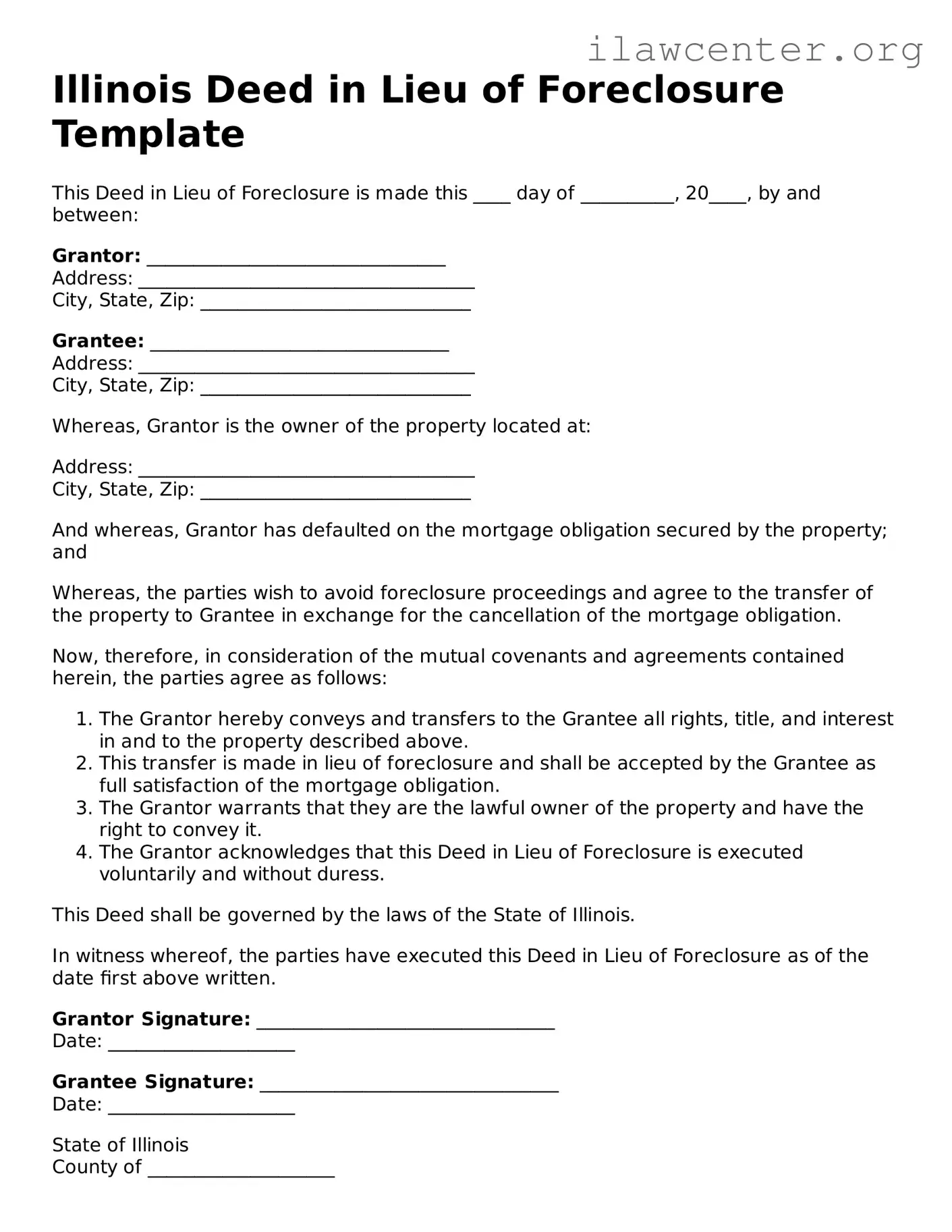
Illinois Deed in Lieu of Foreclosure Preview

Illinois Deed in Lieu of Foreclosure Template

This Deed in Lieu of Foreclosure is made this ____ day of __________, 20____, by and between:

Grantor: ________________________________
Address: ____________________________________
City, State, Zip: _____________________________

Grantee: ________________________________
Address: ____________________________________
City, State, Zip: _____________________________

Whereas, Grantor is the owner of the property located at:

Address: ____________________________________
City, State, Zip: _____________________________

And whereas, Grantor has defaulted on the mortgage obligation secured by the property; and

Whereas, the parties wish to avoid foreclosure proceedings and agree to the transfer of the property to Grantee in exchange for the cancellation of the mortgage obligation.

Now, therefore, in consideration of the mutual covenants and agreements contained herein, the parties agree as follows:

  1. The Grantor hereby conveys and transfers to the Grantee all rights, title, and interest in and to the property described above.
  2. This transfer is made in lieu of foreclosure and shall be accepted by the Grantee as full satisfaction of the mortgage obligation.
  3. The Grantor warrants that they are the lawful owner of the property and have the right to convey it.
  4. The Grantor acknowledges that this Deed in Lieu of Foreclosure is executed voluntarily and without duress.

This Deed shall be governed by the laws of the State of Illinois.

In witness whereof, the parties have executed this Deed in Lieu of Foreclosure as of the date first above written.

Grantor Signature: ________________________________
Date: ____________________

Grantee Signature: ________________________________
Date: ____________________

State of Illinois
County of ____________________

Subscribed and sworn to before me this ____ day of __________, 20____.

Notary Public Signature: ________________________________
My commission expires: ____________________

PDF Form Characteristics

Fact Name Description
Definition A deed in lieu of foreclosure is a legal document where a borrower voluntarily transfers ownership of their property to the lender to avoid foreclosure.
Governing Laws The Illinois Deed in Lieu of Foreclosure is governed by the Illinois Compiled Statutes, specifically 735 ILCS 5/15-1401.
Eligibility Homeowners facing financial difficulties may qualify for this option if they have no other liens on the property and the lender agrees.
Benefits This process can help borrowers avoid the lengthy and damaging foreclosure process, allowing for a quicker resolution.
Impact on Credit A deed in lieu of foreclosure can still negatively affect a borrower's credit score, but it may be less severe than a foreclosure.
Legal Assistance It is advisable for homeowners to seek legal advice before proceeding with a deed in lieu of foreclosure to understand all implications.

Instructions on Utilizing Illinois Deed in Lieu of Foreclosure

After completing the Illinois Deed in Lieu of Foreclosure form, you will need to submit it to the appropriate parties. This usually includes your lender and possibly the county recorder's office. Ensure you have all necessary documentation ready to accompany the form, as this will facilitate a smoother process.

  1. Obtain the Illinois Deed in Lieu of Foreclosure form from a reliable source, such as your lender or an official state website.
  2. Begin by filling in the grantor's name. This is typically the homeowner or the individual who holds the title to the property.
  3. Next, provide the grantee's name. This is usually the lender or financial institution receiving the property.
  4. Clearly state the property address. Include the street address, city, state, and zip code to avoid any confusion.
  5. Include the legal description of the property. This can often be found on your current deed or property tax documents.
  6. Indicate the date of execution. This is the date when you are signing the document.
  7. Sign the document in the presence of a notary public. Ensure your signature matches the name on the form.
  8. Have the notary public complete their section, which may include their signature and seal.
  9. Make copies of the completed form for your records before submission.
  10. Submit the form to your lender and, if necessary, file it with your local county recorder’s office.

Important Facts about Illinois Deed in Lieu of Foreclosure

What is a Deed in Lieu of Foreclosure?

A Deed in Lieu of Foreclosure is a legal document that allows a homeowner to transfer ownership of their property to the lender in order to avoid foreclosure. This process is typically initiated when a borrower is unable to keep up with mortgage payments and wants to prevent the negative consequences of foreclosure on their credit score.

How does a Deed in Lieu of Foreclosure work?

The homeowner voluntarily signs over the property to the lender. In exchange, the lender may agree to forgive the remaining mortgage debt. This arrangement can be beneficial for both parties, as it allows the lender to avoid the lengthy and costly foreclosure process while the homeowner can avoid further financial hardship.

What are the eligibility requirements for a Deed in Lieu of Foreclosure in Illinois?

Eligibility can vary by lender, but common requirements include proof of financial hardship, a completed application, and the absence of other liens on the property. The homeowner must also be current on property taxes. It is advisable to consult with the lender to understand specific criteria.

What are the benefits of a Deed in Lieu of Foreclosure?

Some benefits include a potentially less damaging impact on the homeowner's credit score compared to foreclosure. Additionally, it may allow for a smoother transition out of the property. The process can also be quicker and less expensive than a foreclosure, benefiting the lender as well.

Are there any drawbacks to a Deed in Lieu of Foreclosure?

Yes, there can be drawbacks. The homeowner may still face tax implications, as forgiven debt can be considered taxable income. Additionally, not all lenders may offer this option, and homeowners may lose any equity they have built in the property.

How do I initiate a Deed in Lieu of Foreclosure?

The process typically begins with contacting the lender to express interest in a Deed in Lieu of Foreclosure. The homeowner will need to provide documentation of their financial situation. The lender will then review the request and may require additional information before proceeding.

What documents are needed for a Deed in Lieu of Foreclosure?

Common documents include the mortgage agreement, proof of income, tax returns, and a hardship letter explaining the financial difficulties. The lender may also request additional information depending on their specific requirements.

Will I need a lawyer for a Deed in Lieu of Foreclosure?

While it is not legally required to have a lawyer, it is highly recommended. A lawyer can help navigate the process, ensure that all documents are completed correctly, and protect the homeowner's interests throughout the transaction.

How long does the Deed in Lieu of Foreclosure process take?

The timeline can vary based on the lender and the complexity of the case. Generally, the process may take several weeks to a few months. Homeowners should stay in communication with their lender for updates and to ensure all requirements are met promptly.

What happens after the Deed in Lieu of Foreclosure is completed?

Once the deed is executed, the lender takes ownership of the property. The homeowner will typically receive a confirmation of the debt forgiveness, but it is important to verify this in writing. The homeowner should also check for any potential tax implications that may arise from the transaction.
Common mistakes

Filling out the Illinois Deed in Lieu of Foreclosure form can be a daunting task. Many individuals make common mistakes that can lead to delays or complications in the process. Awareness of these pitfalls is crucial for a smoother experience.

One frequent error is incomplete information. When individuals fail to provide all necessary details, it can create confusion and lead to rejection of the form. Ensure that every section is filled out completely, including the names of all parties involved and property details.

Another mistake often seen is incorrect property descriptions. The property must be accurately described, including the legal description. Omitting this detail or using vague language can result in legal challenges later on. Always double-check that the description matches what is recorded in public records.

Many people also overlook the importance of signatures. All parties involved must sign the document. Failing to obtain the necessary signatures can render the deed invalid. It’s essential to ensure that everyone who has an interest in the property is on board and has signed the form.

Additionally, some individuals forget to notarize the document. In Illinois, notarization is often required for the deed to be legally binding. Without this step, the document may not hold up in court. Make sure to have a notary present when signing the form.

Misunderstanding the implications of the deed is another common mistake. Some individuals think that signing a deed in lieu of foreclosure will erase all their debts related to the property. This is not always the case. It’s important to understand the potential tax implications and how it affects credit scores.

People sometimes fail to communicate with their lender before submitting the deed. Lenders often have specific requirements or procedures for accepting a deed in lieu of foreclosure. Not reaching out can lead to misalignment and confusion, potentially complicating the process further.

Another issue arises when individuals do not retain copies of the documents. After submitting the deed, it’s crucial to keep copies for personal records. These documents may be needed in the future for reference or legal purposes.

Lastly, some individuals underestimate the importance of seeking legal advice. The process can be complex, and having a legal expert review the deed can help identify potential issues before they become significant problems. Consulting with a professional can provide peace of mind and ensure compliance with all legal requirements.

Documents used along the form

A Deed in Lieu of Foreclosure is a legal document that allows a homeowner to transfer ownership of their property to the lender to avoid foreclosure. This process often involves several other forms and documents that facilitate the transaction and protect the interests of both parties. Below is a list of common documents used alongside the Illinois Deed in Lieu of Foreclosure.

  • Loan Modification Agreement: This document outlines any changes made to the original loan terms. It is often used when a borrower seeks to adjust their mortgage payments or interest rate to make them more manageable.
  • Release of Liability: This form releases the borrower from personal liability for the mortgage debt. It ensures that once the deed is transferred, the borrower is no longer responsible for any remaining balance on the loan.
  • Affidavit of Title: This sworn statement confirms the seller's ownership of the property and discloses any liens or encumbrances. It helps protect the lender by ensuring they are aware of any potential claims against the property.
  • Property Condition Disclosure Statement: This document requires the seller to disclose any known issues with the property. It provides transparency about the property's condition to the lender before the transfer takes place.
  • Settlement Statement: Also known as a HUD-1, this document itemizes all the costs associated with the transaction. It helps both parties understand the financial aspects of the deed transfer.
  • Power of Attorney: This legal document allows one person to act on behalf of another in legal matters. It may be used if the borrower cannot be present to sign the deed and other related documents.

These documents collectively help ensure a smoother transition during the deed in lieu process. They protect the rights and interests of both the borrower and the lender, facilitating a more efficient resolution to the mortgage default situation.

Similar forms

The Deed in Lieu of Foreclosure is a document that can be compared to several other legal documents related to property and mortgage issues. Each of these documents serves a unique purpose but shares similarities in terms of intent or outcome. Below is a list of seven documents that are similar to the Deed in Lieu of Foreclosure:

  • Short Sale Agreement: This document allows a homeowner to sell their property for less than the amount owed on the mortgage. Like a Deed in Lieu of Foreclosure, it helps the homeowner avoid foreclosure and mitigates losses for the lender.
  • Loan Modification Agreement: This document changes the terms of an existing mortgage to make payments more manageable for the borrower. Both documents aim to prevent foreclosure by providing the homeowner with a solution to their financial difficulties.
  • Forebearance Agreement: This is an arrangement between a lender and a borrower that temporarily suspends mortgage payments. Similar to a Deed in Lieu of Foreclosure, it seeks to help the borrower avoid foreclosure by providing temporary relief.
  • Mortgage Release: This document formally releases the borrower from their mortgage obligations after the property has been sold or transferred. Like a Deed in Lieu of Foreclosure, it signifies the end of the borrower's responsibility for the mortgage.
  • Quitclaim Deed: This document transfers ownership of property without any warranties. It can be used in situations where a borrower hands over the property to the lender, similar to the Deed in Lieu of Foreclosure.
  • Property Settlement Agreement: Often used in divorce proceedings, this document outlines how property will be divided. It can be similar to a Deed in Lieu of Foreclosure in that it involves the transfer of property rights to settle debts.
  • Deed of Trust: This document secures a loan by transferring the title of the property to a trustee until the loan is paid off. While it primarily serves as security for the lender, it shares the common goal of protecting the lender’s interests, much like a Deed in Lieu of Foreclosure.

Dos and Don'ts

When filling out the Illinois Deed in Lieu of Foreclosure form, it's important to follow certain guidelines to ensure everything goes smoothly. Here are four things to keep in mind:

  • Do double-check all information for accuracy before submitting.
  • Don't rush through the form; take your time to avoid mistakes.
  • Do ensure that all required signatures are included.
  • Don't forget to keep a copy of the completed form for your records.

Misconceptions

Understanding the Illinois Deed in Lieu of Foreclosure form can be challenging. Many people hold misconceptions about its purpose and implications. Here are six common misconceptions:

  1. It eliminates all debt obligations.

    Many believe that signing a deed in lieu of foreclosure cancels all outstanding debts. However, this is not always true. The lender may still pursue a deficiency judgment for any remaining balance after the property is sold.

  2. It guarantees a quick resolution.

    While a deed in lieu can expedite the process compared to foreclosure, it does not guarantee immediate resolution. The lender must still review the request and approve the deed, which can take time.

  3. It is the same as a short sale.

    Some confuse a deed in lieu of foreclosure with a short sale. In a short sale, the property is sold for less than the amount owed, with lender approval. A deed in lieu transfers ownership directly to the lender without a sale.

  4. It has no impact on credit scores.

    Another misconception is that a deed in lieu of foreclosure does not affect credit scores. In reality, it can still negatively impact credit ratings, although it may be less severe than a foreclosure.

  5. It is only for homeowners in financial distress.

    While many who pursue this option are facing financial difficulties, it is not exclusively for those in distress. Homeowners may choose this route for various reasons, including a desire to avoid the lengthy foreclosure process.

  6. Legal assistance is unnecessary.

    Some people think they can complete the process without legal guidance. However, consulting with a legal professional can provide crucial insights and help navigate potential pitfalls.

Key takeaways

Filling out and using the Illinois Deed in Lieu of Foreclosure form can be straightforward if you keep a few key points in mind. Here are some important takeaways to consider:

  • Understand the Purpose: A Deed in Lieu of Foreclosure allows a borrower to voluntarily transfer property ownership to the lender to avoid foreclosure.
  • Eligibility Requirements: Ensure you meet the lender's eligibility criteria. This may include being behind on mortgage payments or unable to continue making them.
  • Clear Title: Before proceeding, confirm that the property title is clear of any liens or encumbrances that could complicate the transfer.
  • Consult Professionals: It’s wise to seek advice from a real estate attorney or financial advisor to fully understand the implications of this decision.
  • Complete the Form Accurately: Fill out the form carefully. Any errors could delay the process or lead to complications.
  • Seek Lender Approval: After completing the form, submit it to your lender for approval. They must accept the deed for it to be valid.

Taking these steps can help ensure a smoother process when dealing with a Deed in Lieu of Foreclosure in Illinois.