Attorney-Verified  Employee Handbook Document for Illinois

Attorney-Verified Employee Handbook Document for Illinois

The Illinois Employee Handbook form serves as a vital document that outlines the rights and responsibilities of employees and employers within the state. This form helps ensure that both parties understand workplace policies and procedures, fostering a positive work environment. To get started on filling out the form, click the button below.

Article Guide

In Illinois, an employee handbook serves as a vital resource for both employers and employees, outlining essential workplace policies, procedures, and expectations. This document typically includes information on company culture, employee rights, and responsibilities, as well as guidelines for conduct, attendance, and performance evaluations. Additionally, it often covers topics such as anti-discrimination policies, harassment prevention, and benefits. By providing clear communication of workplace rules and regulations, the employee handbook helps to foster a positive work environment and can serve as a reference point for resolving disputes. Employers are encouraged to ensure that their handbooks comply with state and federal laws, making it crucial to stay updated on any changes in legislation that may affect workplace policies. Ultimately, a well-crafted employee handbook not only protects the organization legally but also promotes transparency and trust within the workforce.

Illinois Employee Handbook Preview

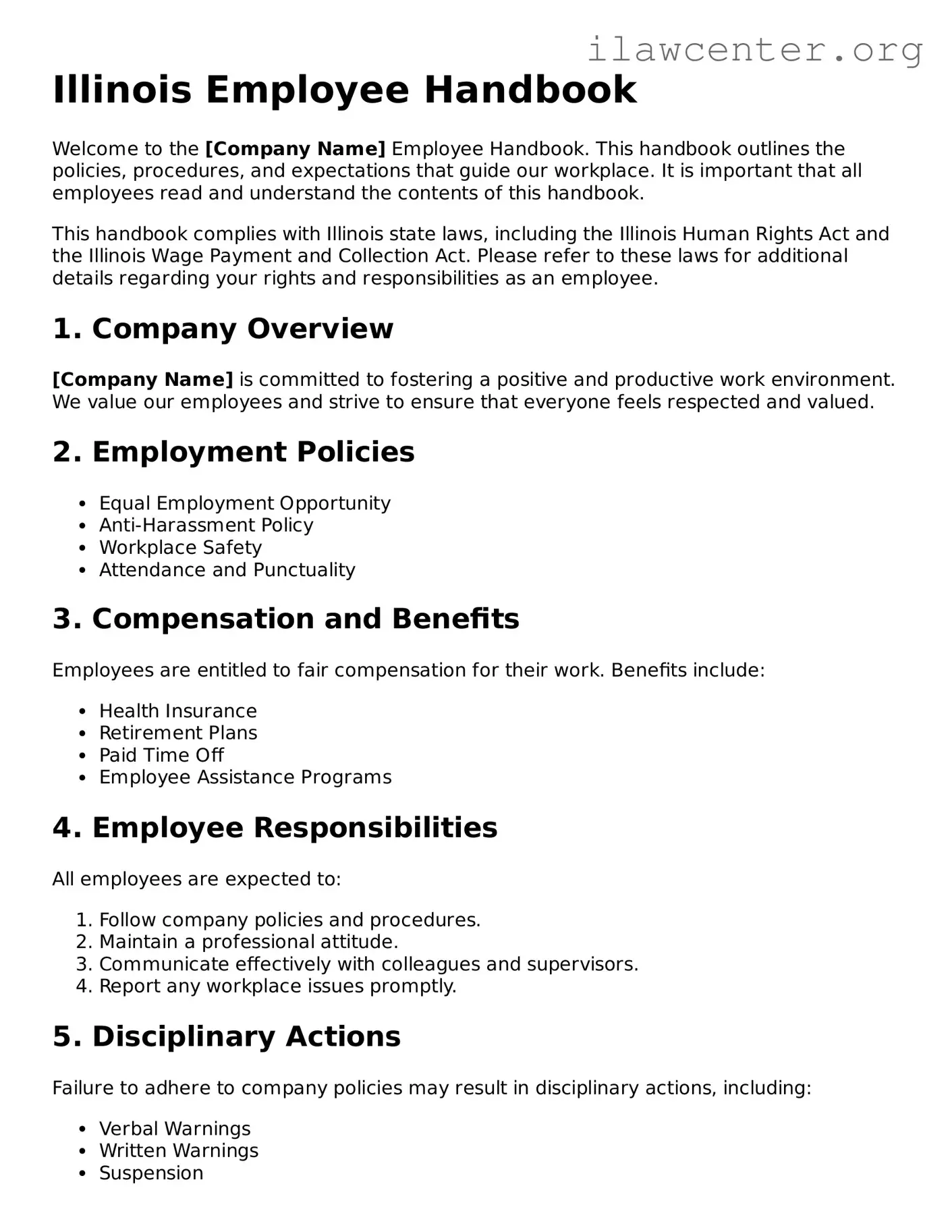
Illinois Employee Handbook

Welcome to the [Company Name] Employee Handbook. This handbook outlines the policies, procedures, and expectations that guide our workplace. It is important that all employees read and understand the contents of this handbook.

This handbook complies with Illinois state laws, including the Illinois Human Rights Act and the Illinois Wage Payment and Collection Act. Please refer to these laws for additional details regarding your rights and responsibilities as an employee.

1. Company Overview

[Company Name] is committed to fostering a positive and productive work environment. We value our employees and strive to ensure that everyone feels respected and valued.

2. Employment Policies

  • Equal Employment Opportunity
  • Anti-Harassment Policy
  • Workplace Safety
  • Attendance and Punctuality

3. Compensation and Benefits

Employees are entitled to fair compensation for their work. Benefits include:

  • Health Insurance
  • Retirement Plans
  • Paid Time Off
  • Employee Assistance Programs

4. Employee Responsibilities

All employees are expected to:

  1. Follow company policies and procedures.
  2. Maintain a professional attitude.
  3. Communicate effectively with colleagues and supervisors.
  4. Report any workplace issues promptly.

5. Disciplinary Actions

Failure to adhere to company policies may result in disciplinary actions, including:

  • Verbal Warnings
  • Written Warnings
  • Suspension
  • Termination

6. Acknowledgment

By signing below, you acknowledge that you have received and read the [Company Name] Employee Handbook. You agree to adhere to the policies and procedures outlined herein.

Employee Name: [Employee Name]

Signature: [Signature]

Date: [Date]

PDF Form Characteristics

Fact Name Description
Purpose The Illinois Employee Handbook form serves as a guide for employees, outlining company policies, procedures, and expectations.
Governing Law This form is governed by Illinois state employment laws, including the Illinois Wage Payment and Collection Act.
Mandatory Inclusion Employers are encouraged to include specific topics such as anti-discrimination policies and workplace safety guidelines.
Employee Acknowledgment Employees should sign an acknowledgment form to confirm they have received and understood the handbook.
Updates Employers must regularly update the handbook to reflect changes in laws or company policies.
Accessibility The handbook should be easily accessible to all employees, whether in print or digital format.
Legal Protection A well-crafted employee handbook can provide legal protection for employers by clearly communicating policies and procedures.

Instructions on Utilizing Illinois Employee Handbook

Once you have the Illinois Employee Handbook form in front of you, it's time to begin the process of filling it out. This form is essential for ensuring that you understand your rights and responsibilities as an employee. Completing it accurately will help you stay informed about workplace policies and procedures.

  1. Begin by writing your full name in the designated space at the top of the form.
  2. Next, enter your job title. This helps clarify your role within the organization.
  3. Provide the date you started your employment. This information is important for record-keeping.
  4. Fill in your department or team name. This helps to categorize your position within the company structure.
  5. Review the handbook thoroughly. Familiarize yourself with the policies and procedures outlined.
  6. Sign and date the form at the bottom. Your signature indicates that you have read and understood the handbook.
  7. Submit the completed form to your HR department or the designated representative. Ensure you keep a copy for your records.

After submitting the form, you will receive confirmation from your HR department. They may provide additional information or resources to help you navigate your new workplace. Stay engaged and don’t hesitate to ask questions if anything is unclear.

Important Facts about Illinois Employee Handbook

What is the Illinois Employee Handbook form?

The Illinois Employee Handbook form is a document that outlines the policies, procedures, and expectations for employees within a company. It serves as a guide for both employers and employees, detailing important information such as workplace rules, benefits, and employee rights. Having a clear handbook helps ensure that everyone understands their responsibilities and the company’s standards.

Is it mandatory for employers in Illinois to provide an employee handbook?

While it is not legally required for employers in Illinois to provide an employee handbook, doing so is highly recommended. A well-crafted handbook can help protect the company from legal disputes by clearly communicating policies and expectations. It also fosters a positive work environment by ensuring employees know their rights and responsibilities.

What should be included in the Illinois Employee Handbook?

An effective employee handbook should cover a variety of topics. Key sections typically include company history and mission, workplace policies (such as attendance and dress code), employee benefits, procedures for reporting issues, and information about disciplinary actions. Additionally, it may address state-specific laws and regulations that affect employees.

How often should the employee handbook be updated?

Employers should review and update the employee handbook regularly, ideally at least once a year. Changes in laws, company policies, or industry standards may necessitate updates. Keeping the handbook current ensures that employees are informed about their rights and the company’s expectations, reducing the risk of misunderstandings.

Can employees suggest changes to the employee handbook?

Yes, employees can and should be encouraged to provide feedback on the employee handbook. Their insights can help identify areas that may need clarification or improvement. A collaborative approach not only enhances the handbook’s effectiveness but also fosters a culture of open communication within the workplace.

What should an employee do if they have questions about the handbook?

If an employee has questions about the employee handbook, they should first discuss their concerns with their supervisor or human resources representative. These individuals can provide clarification on policies and procedures. If further assistance is needed, employees may also consider seeking legal advice to understand their rights and obligations better.

Common mistakes

Filling out the Illinois Employee Handbook form can seem straightforward, but many individuals make common mistakes that can lead to confusion or complications down the line. Understanding these pitfalls can help ensure that the form is completed accurately and effectively.

One frequent error is neglecting to read the instructions thoroughly. Many people skim over the guidelines, which can result in missing crucial details. Taking the time to understand what is required can prevent unnecessary mistakes.

Another common mistake is providing incomplete information. Omitting essential details such as contact information or job titles can create problems later, especially if the employer needs to reach out for clarification or follow-up.

People often fail to update their information when circumstances change. Whether it’s a new address, a change in marital status, or a new emergency contact, not reflecting these updates can lead to issues in communication or benefits.

Additionally, some individuals overlook the importance of signatures. Failing to sign the form or missing the date can render the document invalid. It’s vital to ensure that all required signatures are included before submitting.

Another mistake is misunderstanding company policies outlined in the handbook. Some individuals may not take the time to familiarize themselves with these policies, leading to potential conflicts or misunderstandings in the workplace.

People also sometimes rush through the form, leading to careless errors. Taking a moment to review the information before submission can catch simple mistakes that might otherwise go unnoticed.

In some cases, individuals may not consult with HR or management when they have questions. Seeking clarification can prevent misunderstandings and ensure that the form is filled out correctly.

Failing to keep a copy of the completed form is another oversight. Keeping a personal record can be helpful for future reference, especially if there are any discrepancies or questions about the information provided.

Lastly, some individuals may ignore the deadline for submitting the form. Missing the deadline can result in delays or complications in the onboarding process. Staying aware of timelines is crucial for a smooth transition into the workplace.

Avoiding these mistakes can lead to a more efficient and clear process when filling out the Illinois Employee Handbook form. Taking the time to be thorough and attentive can ultimately benefit both the employee and the employer.

Documents used along the form

In addition to the Illinois Employee Handbook, various forms and documents are essential for establishing clear policies and procedures within a workplace. These documents help ensure that both employers and employees understand their rights and responsibilities. Below is a list of commonly used forms that complement the Employee Handbook.

  • Job Description Form: This document outlines the specific duties, responsibilities, and qualifications required for a particular position. It helps set clear expectations for employees and aids in the hiring process.
  • Employee Application Form: This form collects essential information from job applicants, including personal details, work history, and references. It serves as the first step in the hiring process.
  • W-4 Form: Employees complete this form to indicate their tax withholding preferences. It is crucial for employers to ensure accurate tax deductions from employee paychecks.
  • Performance Evaluation Form: This document is used to assess an employee's job performance. Regular evaluations help guide employee development and identify areas for improvement.
  • Incident Report Form: When accidents or unusual occurrences happen at work, this form captures details about the event. It is important for documenting incidents and can help prevent future occurrences.
  • Leave of Absence Request Form: Employees use this form to formally request time off for various reasons, such as medical leave or personal matters. It helps employers manage staffing and comply with legal requirements.
  • Confidentiality Agreement: This document protects sensitive company information by requiring employees to maintain confidentiality regarding proprietary data and trade secrets.
  • Employee Acknowledgment Form: After reviewing the Employee Handbook, employees sign this form to confirm their understanding and acceptance of the policies outlined within.

These documents work together to create a structured and informed workplace environment. By utilizing them alongside the Employee Handbook, employers can foster clarity and compliance in their operations.

Similar forms

The Employee Handbook is a crucial document that outlines the policies, procedures, and expectations within a workplace. However, several other documents serve similar purposes, providing guidance and structure in various contexts. Here are nine documents that share similarities with the Employee Handbook:

  • Onboarding Manual: This document provides new employees with essential information about the company, including its culture, values, and initial training procedures. Like the Employee Handbook, it aims to integrate employees into the workplace smoothly.
  • Company Policies Document: This outlines specific policies regarding behavior, dress code, and workplace conduct. It often complements the Employee Handbook by detailing rules that employees are expected to follow.
  • Job Descriptions: These documents clarify the responsibilities and expectations for each role within the organization. They align with the Employee Handbook by ensuring that employees understand their duties and how they fit into the larger company structure.
  • Performance Evaluation Guidelines: These guidelines explain how employee performance will be assessed. They are similar to the Employee Handbook in that they set clear expectations for employee performance and growth.
  • Safety Manual: This document provides information on workplace safety protocols and procedures. Like the Employee Handbook, it is essential for creating a safe work environment and ensuring compliance with regulations.
  • Code of Conduct: This document outlines acceptable behaviors and ethical standards within the workplace. It mirrors the Employee Handbook by emphasizing the importance of maintaining a respectful and professional environment.
  • Employee Benefits Guide: This guide details the benefits available to employees, such as health insurance, retirement plans, and leave policies. It complements the Employee Handbook by providing specific information on employee entitlements.
  • Training Manual: This document outlines training programs and resources available to employees. It shares similarities with the Employee Handbook by fostering employee development and ensuring everyone has access to necessary training.
  • Exit Interview Guidelines: This document provides a framework for conducting exit interviews when employees leave the company. It is similar to the Employee Handbook in that it seeks to gather feedback and improve the workplace experience for current and future employees.

Dos and Don'ts

When filling out the Illinois Employee Handbook form, it is essential to approach the task thoughtfully. The following list outlines key actions to take and avoid to ensure accuracy and compliance.

  • Do read the entire form carefully before starting to fill it out.
  • Do provide accurate and up-to-date information.
  • Do ask questions if any section is unclear.
  • Do keep a copy of the completed form for your records.
  • Do sign and date the form where required.
  • Don't rush through the form; take your time to ensure accuracy.
  • Don't leave any required fields blank.
  • Don't use abbreviations or shorthand that may be confusing.
  • Don't ignore any instructions provided with the form.
  • Don't submit the form without reviewing it for errors.

Misconceptions

Employee handbooks are essential tools for organizations, but several misconceptions can lead to confusion. Below are nine common misconceptions about the Illinois Employee Handbook form, along with clarifications for each.

  1. All employee handbooks must be the same.

    This is not true. Each handbook should reflect the specific policies and culture of the organization. While some elements may be standard, customization is key.

  2. Employee handbooks are optional.

    In Illinois, while not legally required, having an employee handbook is highly recommended. It helps set clear expectations and can protect the employer in disputes.

  3. Once created, the handbook does not need updates.

    Policies and laws change frequently. Regular updates ensure that the handbook remains relevant and compliant with current regulations.

  4. Handbooks are only for larger companies.

    Small businesses can benefit just as much from an employee handbook. It provides guidance for employees and helps establish a professional work environment.

  5. Every policy must be included in the handbook.

    While it’s important to cover key policies, not every detail needs to be included. Focus on essential policies that impact daily operations and employee behavior.

  6. Handbooks are legally binding contracts.

    Generally, employee handbooks are not considered contracts. However, they can create expectations, so it’s important to clarify that the handbook is not a contract.

  7. All employees read the handbook.

    Assuming that employees will read the handbook is a misconception. Employers should encourage employees to review it and provide opportunities for questions.

  8. Handbooks are only for new employees.

    While new hires should receive the handbook, existing employees should also have access to it. Regular reminders about policies can help reinforce expectations.

  9. Handbooks eliminate all workplace issues.

    No handbook can prevent all problems. However, a well-structured handbook can reduce misunderstandings and provide a framework for resolving issues.

Understanding these misconceptions can help employers create effective employee handbooks that serve their workforce well.

Key takeaways

When filling out and using the Illinois Employee Handbook form, consider the following key takeaways:

  • Ensure that the handbook reflects current company policies and procedures.
  • Include a section on employee rights and responsibilities to promote understanding.
  • Review the handbook regularly to keep it up to date with state and federal laws.
  • Make the handbook accessible to all employees, both in print and digital formats.
  • Incorporate a clear process for employees to ask questions or seek clarification.
  • Provide training for management on how to enforce the policies outlined in the handbook.
  • Obtain employee acknowledgment of receipt and understanding of the handbook.
  • Consider including a disclaimer stating that the handbook is not a contract of employment.