Illinois Notice Lien PDF Template

Illinois Notice Lien PDF Template

The Illinois Notice Lien form is a legal document used to inform property owners that a claim for payment is being made by a contractor or subcontractor for services rendered. This notice serves as a warning that, if payment is not made within ten days, a mechanics lien may be filed against the property. Understanding how to properly fill out this form is crucial for both contractors seeking payment and property owners wanting to protect their interests.

To ensure compliance and protect your rights, fill out the form by clicking the button below.

Article Guide

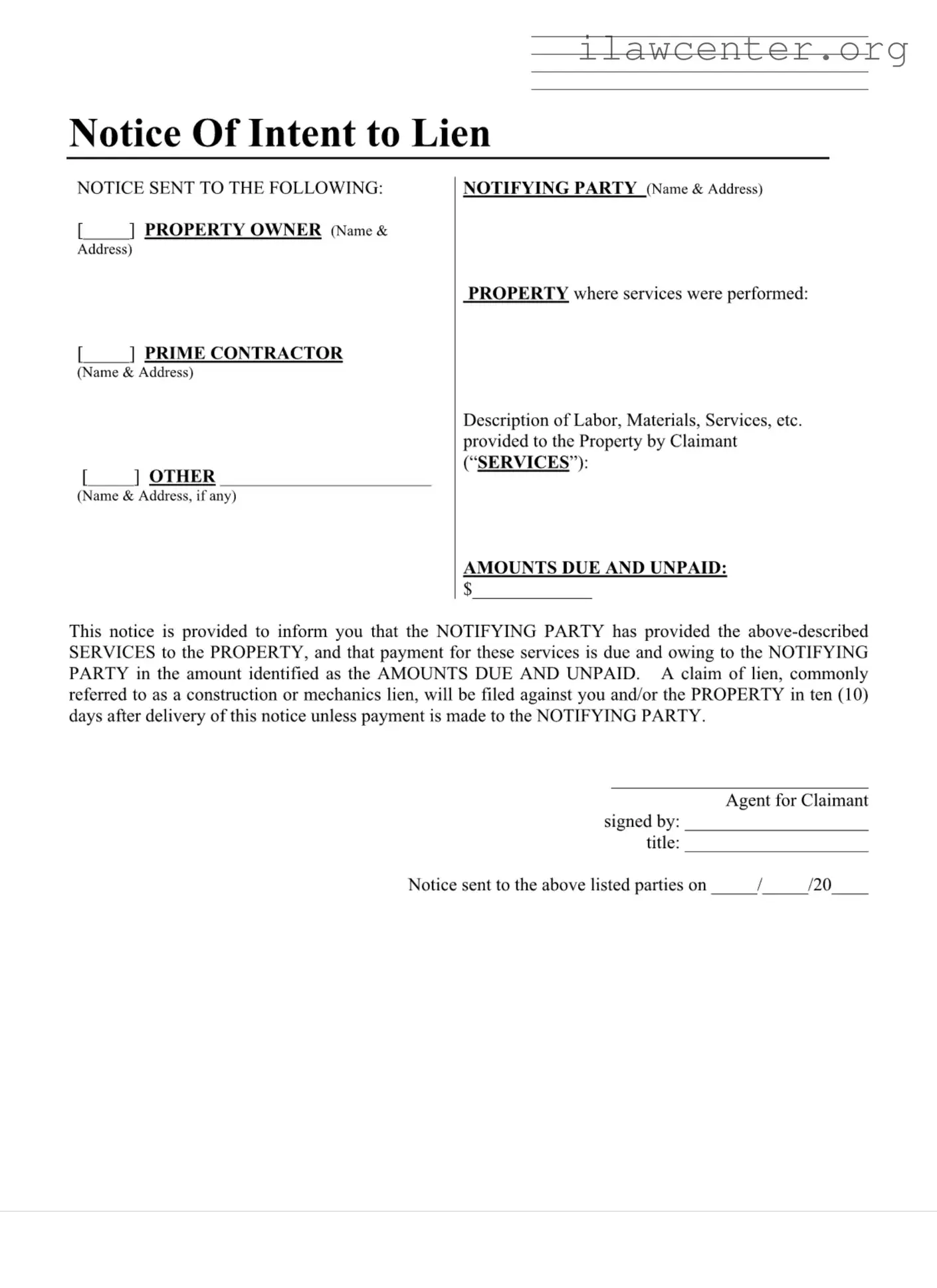
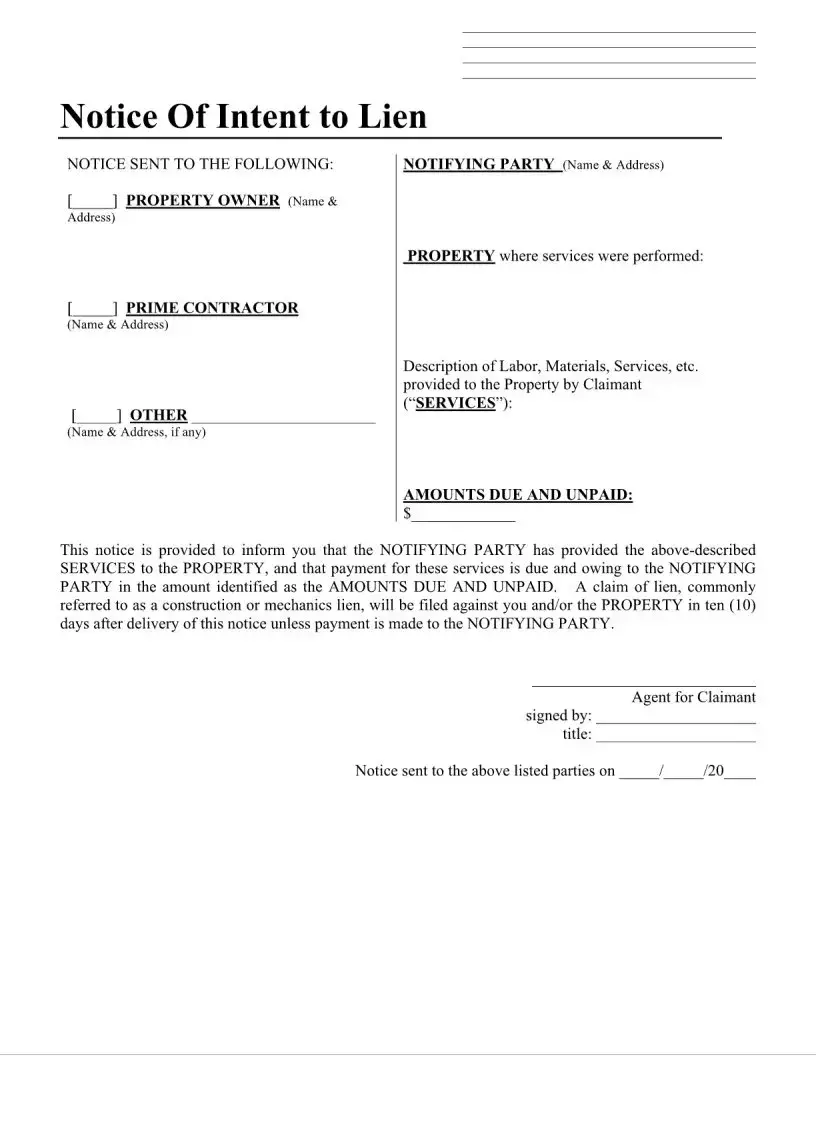
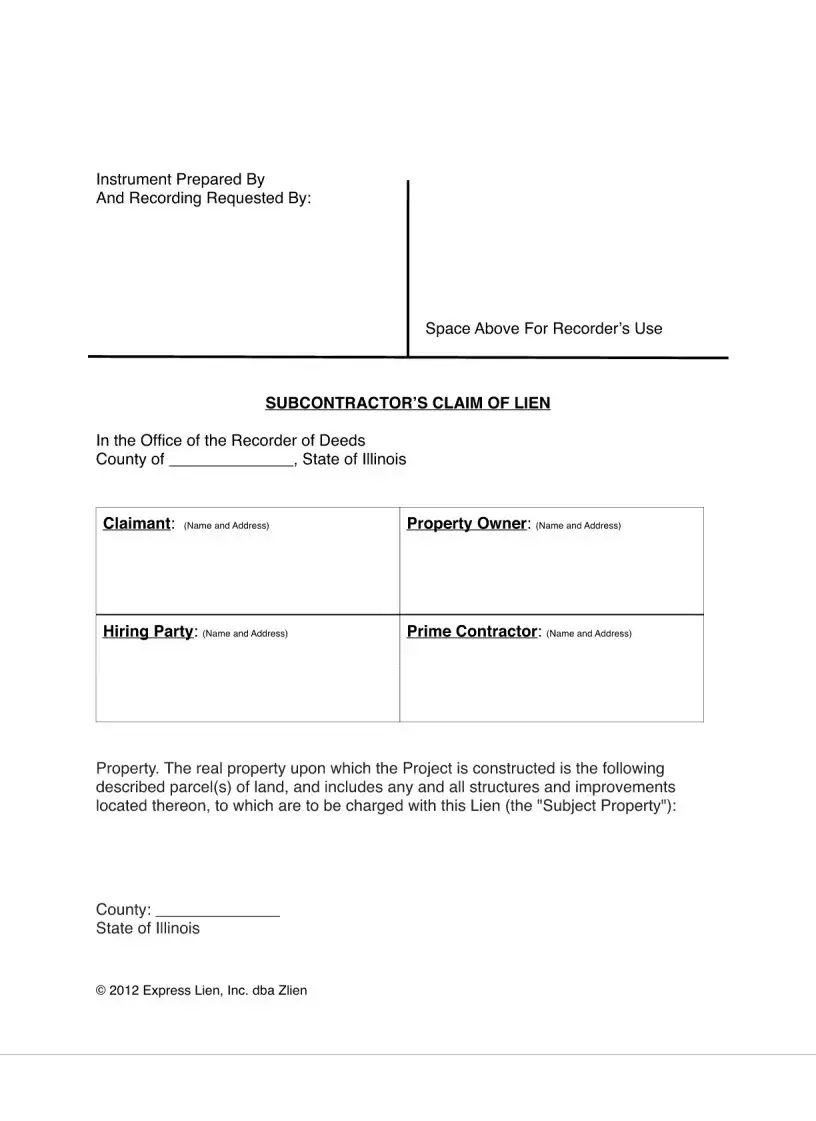
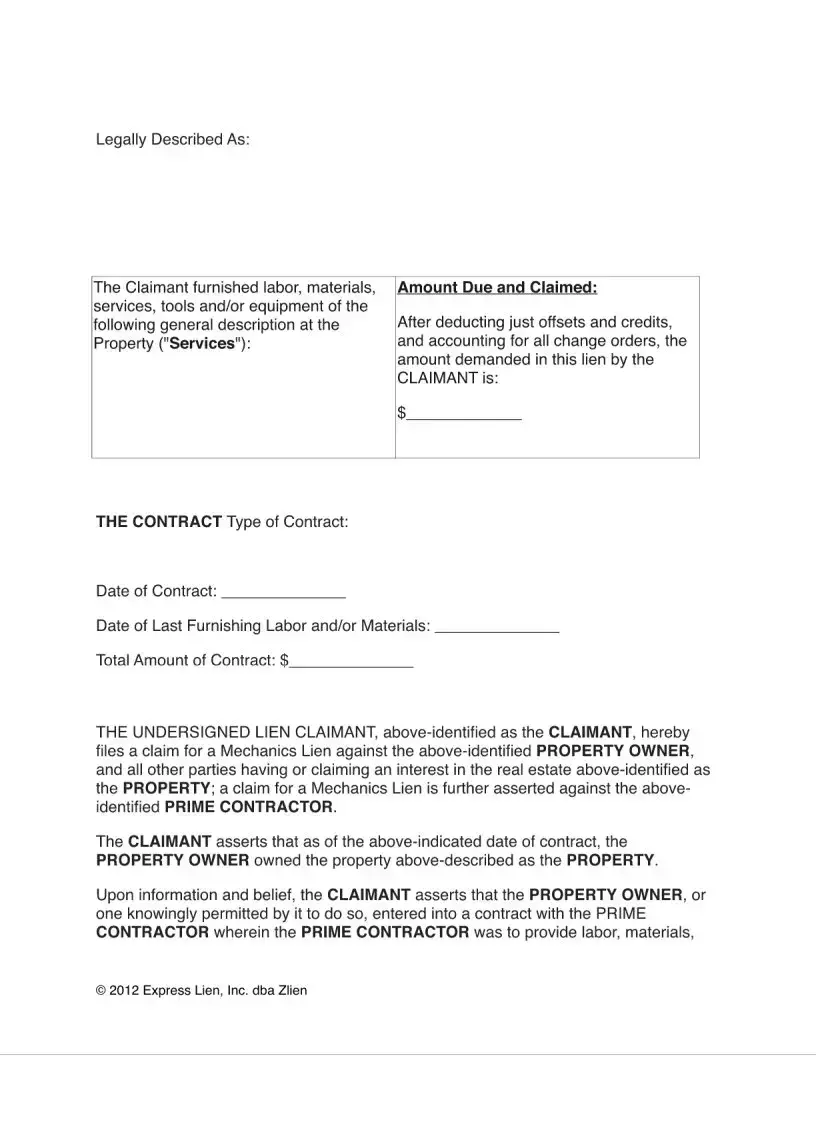
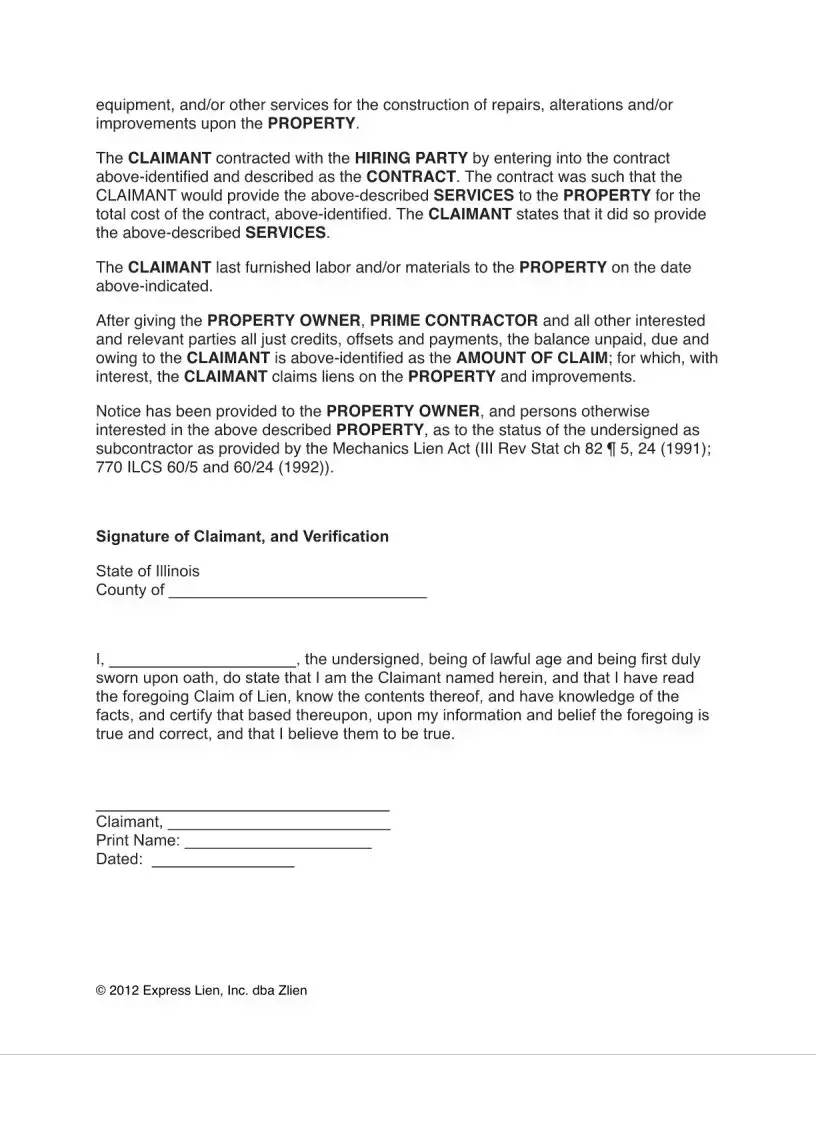
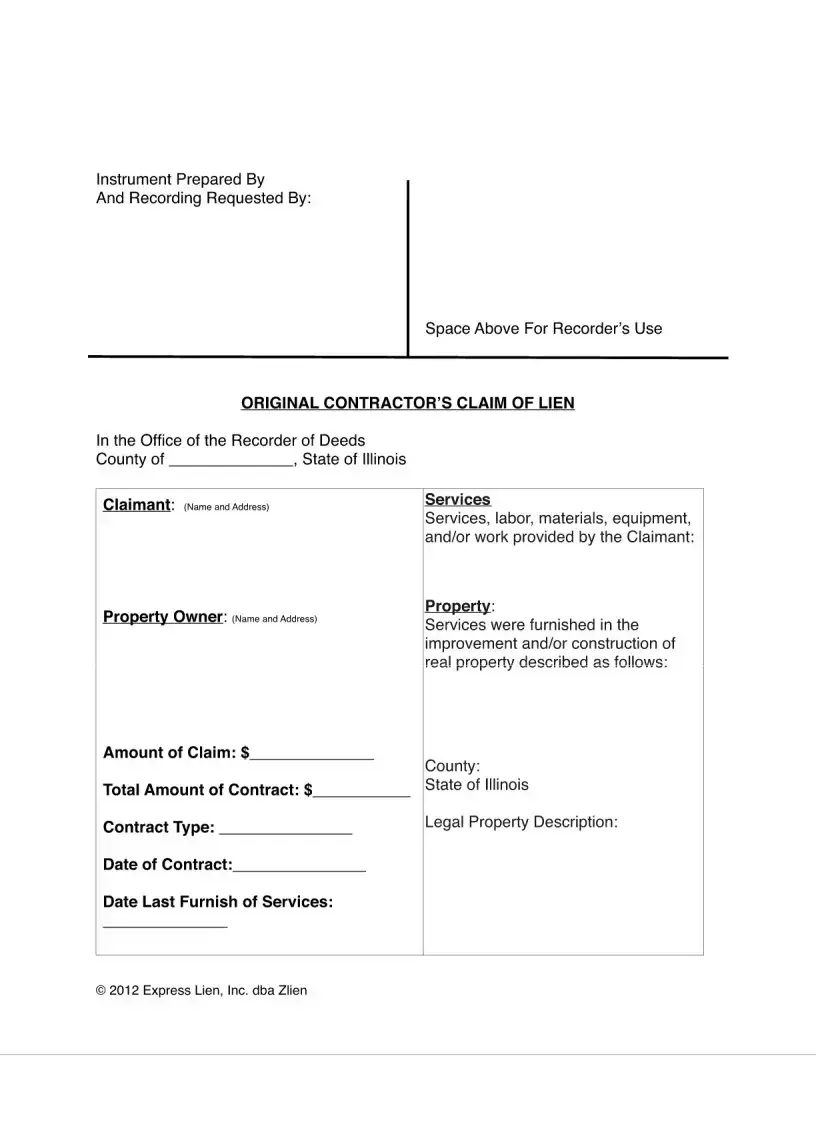
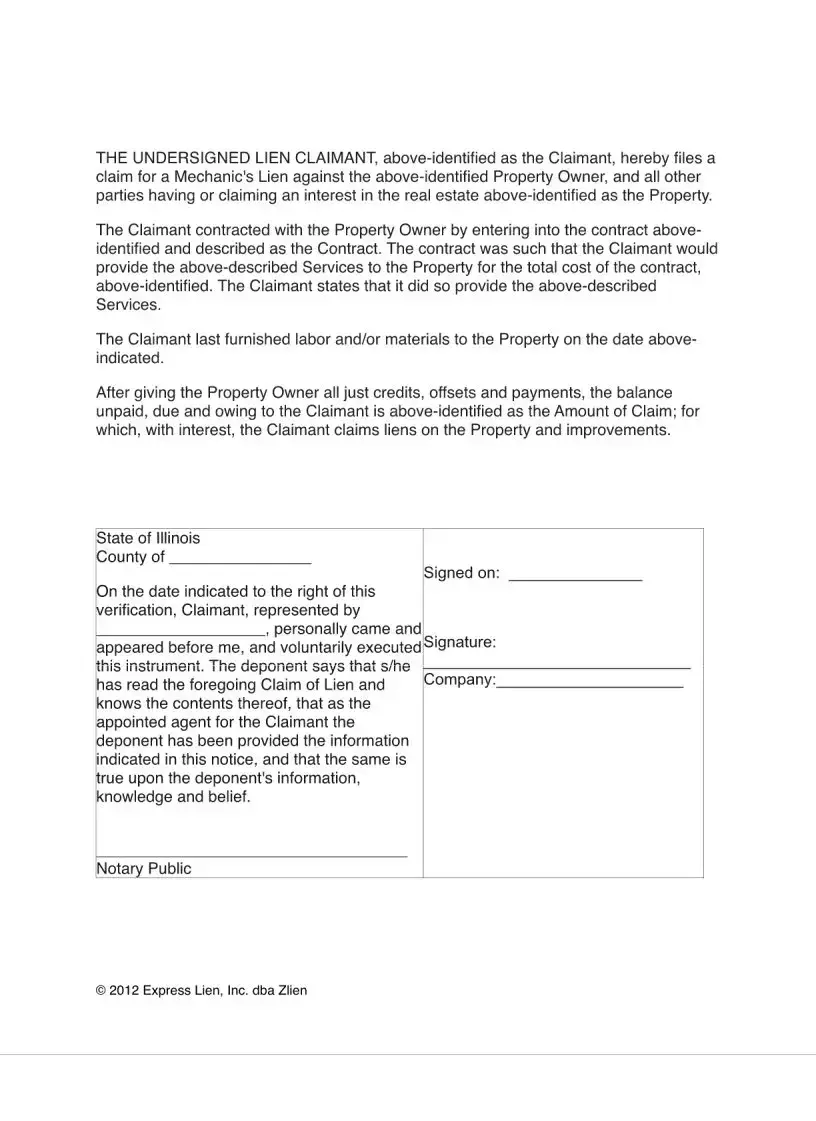
The Illinois Notice Lien form serves as a crucial document in the construction industry, specifically designed to protect the rights of subcontractors and suppliers who have not received payment for their services. This form outlines essential details, including the names and addresses of the property owner, prime contractor, and notifying party. It specifies the property where the work was performed and provides a description of the labor, materials, or services rendered. Importantly, the form states the amount due and unpaid, which serves as a formal notice to the property owner that payment is expected. If payment is not received within ten days, a claim of lien may be filed against the property. This document also includes sections for the claimant to detail the type of contract, dates of service, and the total amount of the contract. By filing this notice, the claimant asserts their right to a mechanics lien, ensuring that their financial interests are safeguarded in the event of non-payment. The form concludes with a signature and verification section, where the claimant affirms the accuracy of the information provided.

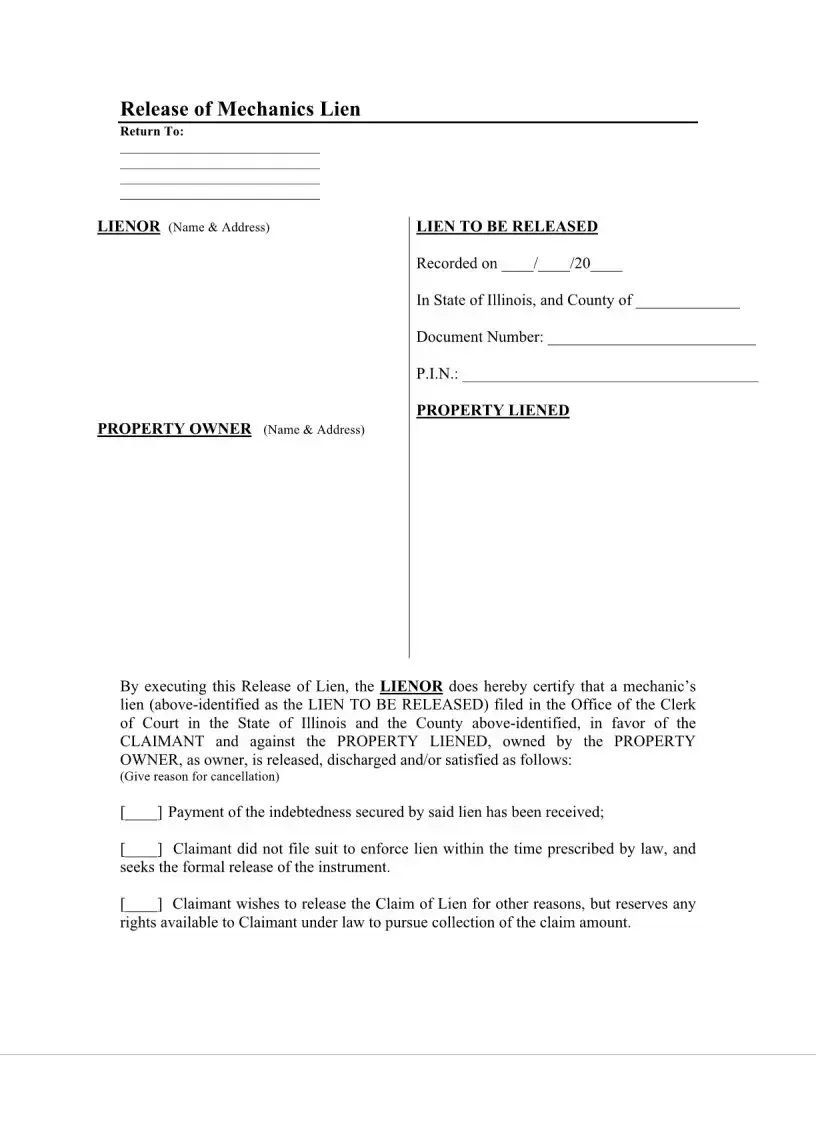
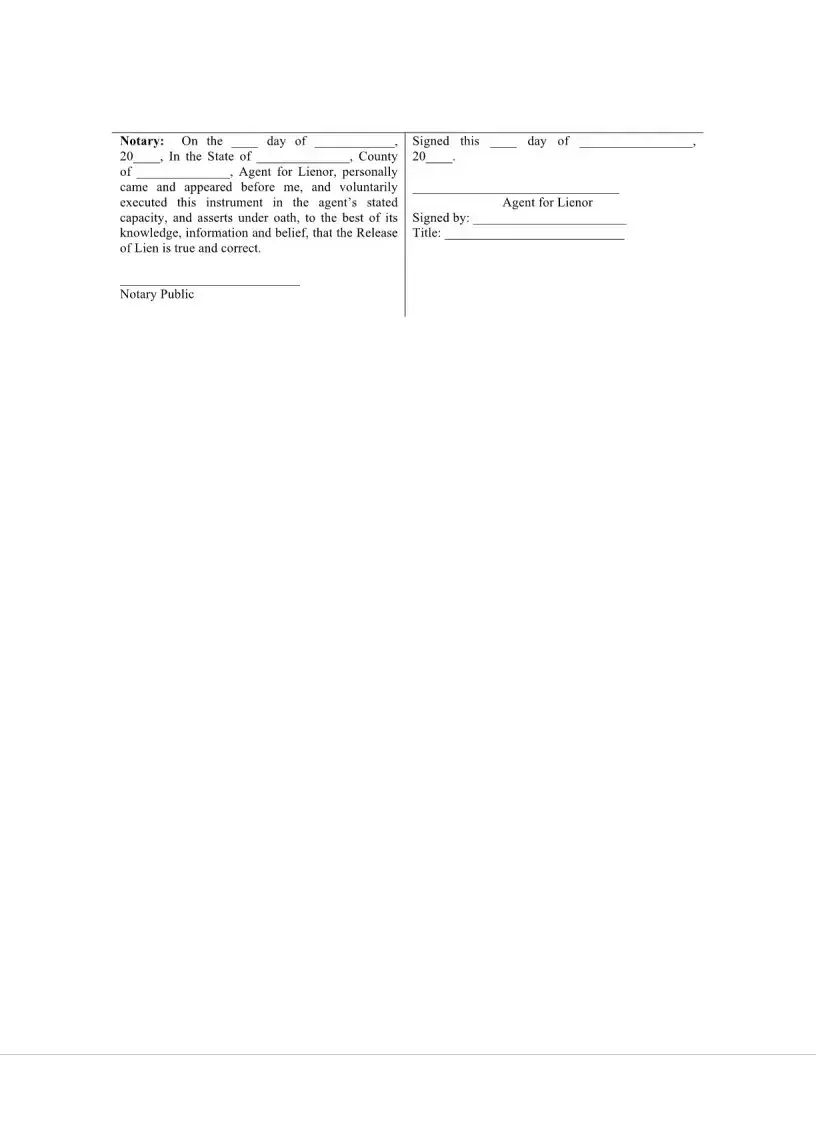
Illinois Notice Lien Preview

File Properties

Fact Name Details
Purpose of the Form The Illinois Notice Lien form is used to inform property owners and contractors about unpaid services related to a property.
Governing Law This form is governed by the Illinois Mechanics Lien Act, specifically 770 ILCS 60/5 and 60/24.
Notice Period A lien can be filed against the property if payment is not received within ten days of delivering this notice.
Required Information Essential details include the property owner's name, address, description of services, and amounts due.
Claimant's Role The claimant is the party providing services or materials, and they must sign and verify the form.
Delivery Method The notice must be sent to all relevant parties, including the property owner and prime contractor, to ensure proper notification.
Consequences of Non-Payment If payment is not made, the claimant can file a mechanics lien against the property to secure their claim for payment.
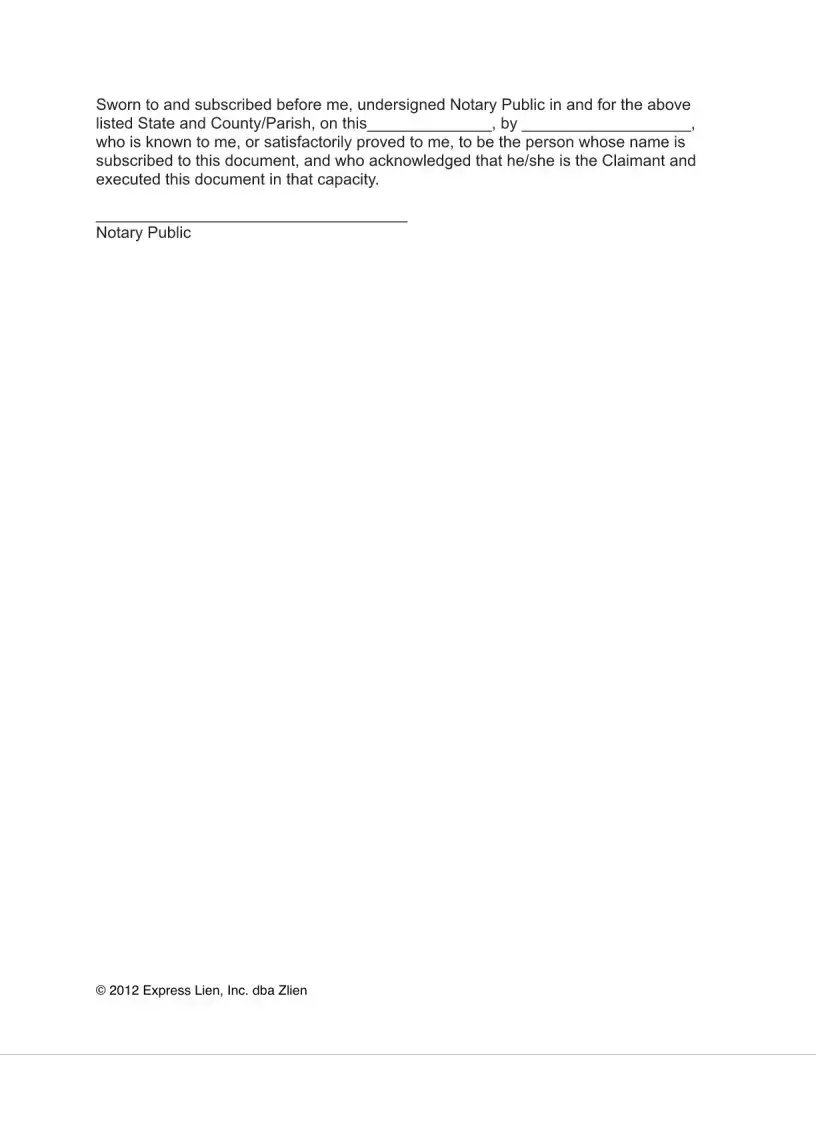
Notary Requirement The form must be notarized to confirm the identity of the claimant and the authenticity of the document.

Instructions on Utilizing Illinois Notice Lien

Completing the Illinois Notice Lien form is a straightforward process that requires careful attention to detail. After filling out the form, it is essential to send it to the appropriate parties to ensure they are informed of the lien claim. This step is crucial for protecting your rights and interests regarding the unpaid amounts owed for services rendered.

  1. Obtain the Form: Start by downloading or printing the Illinois Notice Lien form from a reliable source.
  2. Property Owner Information: Fill in the name and address of the property owner in the designated section.
  3. Prime Contractor Details: Enter the name and address of the prime contractor responsible for the project.
  4. Notify Parties: List the name and address of the notifying party, who is sending the notice.
  5. Property Description: Clearly describe the property where the services were performed, including any relevant details.
  6. Services Provided: Provide a description of the labor, materials, or services rendered to the property.
  7. Amounts Due: Specify the total amount due and unpaid for the services provided.
  8. Signature of Claimant: The claimant must sign the form, indicating their title if applicable.
  9. Date of Notice: Write the date on which the notice is sent to the listed parties.
  10. Prepare for Recording: Include any necessary information for recording the lien, such as the county and state.
  11. Notary Public: Sign the document in the presence of a notary public, who will also sign and stamp the document.

Important Facts about Illinois Notice Lien

What is the Illinois Notice Lien form?

The Illinois Notice Lien form is a document used to notify property owners and other parties that a contractor or subcontractor has provided services, materials, or labor on a property. If payment is not received, the form warns that a mechanics lien may be filed against the property within ten days of sending the notice.

Who should use the Illinois Notice Lien form?

This form is typically used by contractors, subcontractors, or suppliers who have not been paid for their work or materials provided on a construction project. It serves as a formal notice to the property owner and other involved parties about the outstanding payment.

What information is required on the form?

The form requires several pieces of information, including the names and addresses of the property owner, prime contractor, and notifying party. It also needs a description of the services provided, the amount due and unpaid, and details about the contract, such as the type and date.

How does the Notice Lien process work?

Once the Notice Lien is completed and sent to the relevant parties, the notifying party must wait ten days. If payment is not made during this period, the notifying party can then file a mechanics lien against the property. This legal action secures their right to payment through the property itself.

What happens if I receive a Notice Lien?

If you receive a Notice Lien, it is essential to take it seriously. Review the details to understand the claim and consider contacting the notifying party to resolve the payment issue. Ignoring the notice may lead to a mechanics lien being filed against your property.

Can I dispute a Notice Lien?

Yes, if you believe the claim is invalid or the amount owed is incorrect, you can dispute it. It is advisable to communicate with the notifying party to resolve the matter. If necessary, legal action may be taken to contest the lien in court.

What is a mechanics lien?

A mechanics lien is a legal claim against a property for unpaid work or materials. It allows contractors and subcontractors to secure their right to payment by placing a lien on the property. This means that if the property is sold, the lien must be settled before the sale can proceed.

How long is a Notice Lien valid?

The Notice Lien itself does not have a specific expiration date. However, if a mechanics lien is filed following the notice, it generally remains valid for a certain period, often up to two years, depending on state laws. It is important to address any outstanding payments promptly to avoid complications.

What should I do if I need help with the Notice Lien process?

If you need assistance with the Notice Lien process, consider consulting a legal professional who specializes in construction law. They can provide guidance on how to properly complete the form, send it, and what steps to take if disputes arise.

Common mistakes

Filling out the Illinois Notice Lien form can be a straightforward process, but many people make common mistakes that can jeopardize their claims. One frequent error is failing to provide complete and accurate information about the property owner. It's essential to include the correct name and address, as any discrepancies can lead to delays or even the dismissal of the lien.

Another mistake is neglecting to specify the property where services were performed. This section must clearly identify the location, as vague descriptions can create confusion. Without a precise address, the lien may not be enforceable. Additionally, many individuals overlook the importance of detailing the labor, materials, or services provided. A clear description is crucial for establishing the basis of the claim.

People often forget to include the total amount due and unpaid. This amount should be accurate and reflect any deductions or credits. Inaccuracies in this figure can undermine the claim’s validity. Furthermore, the date of last furnishing labor or materials is sometimes omitted or incorrectly stated. This date is significant, as it helps establish the timeline of the claim.

Another common oversight is not signing the form. The signature of the claimant is vital for the document to be considered valid. Similarly, many fail to provide the title of the signer, which can raise questions about the authority of the person submitting the lien. It's also important to ensure that the notice is sent to all relevant parties, including the prime contractor and any other involved entities.

Some individuals neglect to keep copies of the notice sent. This documentation is essential for future reference and can be critical if disputes arise. Additionally, not verifying the information before submission can lead to mistakes that could have been easily avoided. Double-checking all entries helps ensure accuracy.

Lastly, individuals sometimes fail to understand the implications of the lien process. A claim of lien is a serious matter that can affect property ownership and sales. It is crucial to approach this process with care and attention to detail to protect one’s rights effectively.

Documents used along the form

When dealing with construction projects in Illinois, several forms and documents complement the Illinois Notice Lien form. Each of these documents serves a specific purpose, ensuring that all parties are informed and protected throughout the process. Here’s a brief overview of these essential forms.

  • Notice of Intent to Lien: This document notifies the property owner and other parties that a lien may be filed if payment is not received. It outlines the services provided and the amount owed.
  • Subcontractor’s Claim of Lien: This form allows subcontractors to formally claim a lien against the property when they have not been paid for their services. It details the work performed and the amount due.
  • Release of Lien: After payment is made, this document releases the lien on the property, indicating that the claimant has been compensated for their services.
  • Notice of Non-Payment: This notice is sent to inform relevant parties that payment has not been received, serving as a reminder of the outstanding balance.
  • Contractor’s Affidavit: This affidavit confirms that the contractor has fulfilled their obligations under the contract and provides details about payments made and due.
  • Change Order: This document outlines any changes to the original contract, including adjustments to the scope of work or costs, ensuring all parties agree to the modifications.
  • Payment Application: This form is used by contractors to request payment for work completed. It typically includes a summary of the work done and the amount requested.
  • Final Waiver of Lien: This document is signed at the end of a project, indicating that all payments have been received and waiving any future lien rights on the property.
  • Notice of Completion: This notice informs all parties that the work on the property has been completed, which can affect the timeline for filing liens.

Understanding these forms and documents is crucial for anyone involved in construction projects in Illinois. They help protect the rights of all parties and ensure that the process runs smoothly. By utilizing these documents appropriately, stakeholders can minimize disputes and facilitate timely payments.

Similar forms

The Illinois Notice Lien form shares similarities with several other documents commonly used in construction and property transactions. Below is a list of six such documents, detailing their similarities:

  • Notice of Intent to Lien: Like the Illinois Notice Lien form, this document serves to inform property owners that a lien may be filed if payment is not received for services rendered. It outlines the amounts due and provides a deadline for payment.
  • Mechanics Lien: This document is filed after the Notice of Intent and formally claims a lien against the property. It details the services provided, amounts due, and the parties involved, similar to the Illinois Notice Lien form.
  • Subcontractor's Claim of Lien: This document is specifically used by subcontractors to claim payment for work performed. It includes similar information regarding the property, services, and amounts due, mirroring the structure of the Illinois Notice Lien form.
  • Preliminary Notice: This document is often sent at the beginning of a project to inform property owners and general contractors of the subcontractor's involvement. It shares the same purpose of notifying parties about potential claims for unpaid work.
  • Construction Contract: While primarily an agreement, this document outlines the scope of work and payment terms. It is related to the Illinois Notice Lien form as it establishes the basis for any claims made later regarding unpaid amounts.
  • Waiver of Lien: This document is used to relinquish a claim to a lien once payment has been received. It is similar in that it deals with the resolution of payment disputes, often following the filing of a lien or notice.

Dos and Don'ts

When filling out the Illinois Notice Lien form, it’s essential to follow certain guidelines to ensure the process goes smoothly. Here are five things you should do and five things you should avoid.

  • Do ensure all information is accurate. Double-check names, addresses, and amounts to prevent any delays.
  • Do provide a clear description of services. Specify what labor or materials were provided to the property to support your claim.
  • Do send the notice to all relevant parties. This includes the property owner, prime contractor, and any other interested parties.
  • Do keep a copy of the completed form. This is important for your records and may be needed for future reference.
  • Do file the notice in a timely manner. Ensure that you submit the notice within the required timeframe to maintain your rights.
  • Don't leave sections blank. Each part of the form must be filled out completely to avoid complications.
  • Don't use vague language. Be specific in your descriptions to avoid misunderstandings.
  • Don't forget to sign the form. An unsigned form may be considered invalid.
  • Don't overlook the notary requirement. Make sure to have the document notarized as required by Illinois law.
  • Don't assume all parties have been notified. Confirm that everyone who needs to receive the notice has done so.

By following these guidelines, you can help ensure that your Illinois Notice Lien form is completed correctly and effectively. This can protect your rights and streamline the process of securing payment for your services.

Misconceptions

Understanding the Illinois Notice Lien form is essential for property owners and contractors alike. However, several misconceptions can lead to confusion. Below is a list of common misconceptions about this form:

  • Misconception 1: The Notice Lien form is only for contractors.
  • This form can be used by subcontractors and suppliers as well. Any party providing labor or materials may file a lien.

  • Misconception 2: A Notice Lien guarantees payment.
  • Filing a Notice Lien does not guarantee payment. It serves as a formal notification of unpaid services and can prompt payment.

  • Misconception 3: The form must be filed immediately after work is completed.
  • The form must be sent within a specific timeframe, typically before filing a lien. Waiting too long can jeopardize the claim.

  • Misconception 4: Only the property owner receives the notice.
  • All relevant parties, including the prime contractor and any hiring parties, should receive a copy of the notice.

  • Misconception 5: The Notice Lien is the same as a mechanics lien.
  • The Notice Lien is a preliminary step that informs parties of an impending mechanics lien if payment is not made.

  • Misconception 6: You do not need to provide proof of services.
  • The form requires a description of services provided. This documentation is crucial for validating the claim.

  • Misconception 7: The form can be filled out by anyone.
  • Only authorized individuals, such as the claimant or their agent, should complete and sign the form.

  • Misconception 8: There is no deadline for sending the notice.
  • Timeliness is critical. The notice must be sent within a certain period after the last furnishing of services to be effective.

  • Misconception 9: Filing a lien is a simple process that requires no legal knowledge.
  • While the process can be straightforward, understanding the legal implications and requirements is essential to avoid mistakes.

Key takeaways

  • Understand the purpose of the Illinois Notice Lien form. This document serves to notify property owners and contractors of unpaid services related to construction or improvements on a property.

  • Accurately fill in the property owner’s name and address. This ensures that the notice reaches the correct individual responsible for payment.

  • Clearly describe the services provided. Include details about the labor, materials, or equipment supplied to the property to substantiate the claim.

  • Specify the amount due and unpaid. Clearly state the total owed to avoid confusion and to facilitate prompt payment.

  • Send the notice to all relevant parties. This includes the property owner, prime contractor, and any other parties involved in the project.

  • Be mindful of the ten-day notice period. If payment is not received within ten days of sending the notice, a lien may be filed against the property.

  • Ensure that the document is signed and dated. This adds legitimacy to the claim and confirms that the claimant is acting in good faith.

  • Consider having the document notarized. Notarization can provide additional legal weight and verify the identity of the claimant.