Attorney-Verified  Quitclaim Deed Document for Illinois

Attorney-Verified Quitclaim Deed Document for Illinois

A Quitclaim Deed is a legal document used in Illinois to transfer ownership of real estate from one person to another without guaranteeing that the title is clear. This form is often used among family members or in situations where the parties know each other well. If you need to fill out a Quitclaim Deed, click the button below to get started.

Article Guide

The Illinois Quitclaim Deed form serves as a vital tool for property transactions, allowing individuals to transfer ownership of real estate without guaranteeing the title's validity. This straightforward document is often used in situations where the parties involved have a clear understanding of the property’s condition, such as transfers between family members or in divorce settlements. By utilizing a quitclaim deed, the granter relinquishes any claim they may have to the property, effectively conveying whatever interest they hold to the grantee. Unlike warranty deeds, quitclaim deeds do not offer assurances regarding the property's title, making them a quicker and simpler option for those who trust the integrity of the transaction. In Illinois, specific requirements govern the execution of this form, including the necessity for the document to be signed by the granter and notarized, ensuring that the transfer is legally recognized. Understanding these key aspects is essential for anyone looking to navigate the complexities of property ownership and transfer in the state.

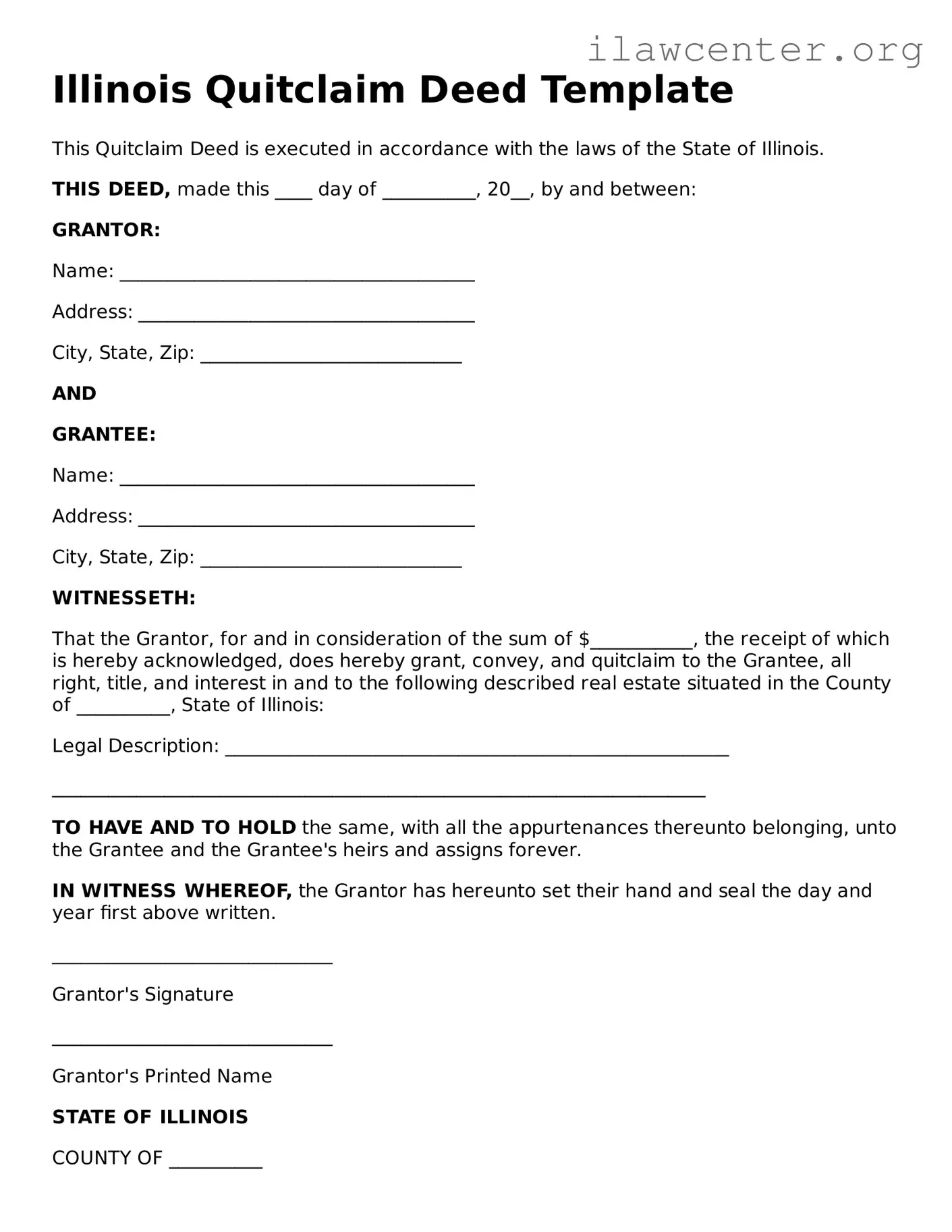
Illinois Quitclaim Deed Preview

Illinois Quitclaim Deed Template

This Quitclaim Deed is executed in accordance with the laws of the State of Illinois.

THIS DEED, made this ____ day of __________, 20__, by and between:

GRANTOR:

Name: ______________________________________

Address: ____________________________________

City, State, Zip: ____________________________

AND

GRANTEE:

Name: ______________________________________

Address: ____________________________________

City, State, Zip: ____________________________

WITNESSETH:

That the Grantor, for and in consideration of the sum of $___________, the receipt of which is hereby acknowledged, does hereby grant, convey, and quitclaim to the Grantee, all right, title, and interest in and to the following described real estate situated in the County of __________, State of Illinois:

Legal Description: ______________________________________________________

______________________________________________________________________

TO HAVE AND TO HOLD the same, with all the appurtenances thereunto belonging, unto the Grantee and the Grantee's heirs and assigns forever.

IN WITNESS WHEREOF, the Grantor has hereunto set their hand and seal the day and year first above written.

______________________________

Grantor's Signature

______________________________

Grantor's Printed Name

STATE OF ILLINOIS

COUNTY OF __________

Subscribed, sworn to, and acknowledged before me by ________________________, the Grantor, this ____ day of __________, 20__.

______________________________

Notary Public

My Commission Expires: ____________

INSTRUCTIONS:

  • Fill in all blanks with the appropriate information.
  • Ensure that the legal description of the property is accurate.
  • Have the document notarized to ensure its validity.

PDF Form Characteristics

Fact Name Description
Definition A quitclaim deed is a legal document used to transfer ownership of real estate from one party to another without any warranties regarding the title.
Purpose This form is often used to clear up title issues, transfer property between family members, or convey property in divorce settlements.
Governing Law In Illinois, the quitclaim deed is governed by the Illinois Compiled Statutes, specifically 765 ILCS 1005.
Requirements The form must include the names of the grantor and grantee, a legal description of the property, and the signature of the grantor.
Notarization Illinois law requires that the quitclaim deed be notarized to be valid and enforceable.
Recording To protect the interests of the grantee, it is advisable to record the quitclaim deed with the county recorder’s office where the property is located.
Tax Implications While a quitclaim deed itself does not trigger a tax, the transfer of property may have tax implications, such as property taxes and potential capital gains taxes.
Limitations Quitclaim deeds do not guarantee that the grantor has clear title to the property; they simply transfer whatever interest the grantor has.
Usage in Divorce Often, quitclaim deeds are utilized in divorce proceedings to transfer property rights between spouses as part of the settlement.

Instructions on Utilizing Illinois Quitclaim Deed

After obtaining the Illinois Quitclaim Deed form, it is essential to complete it accurately to ensure the transfer of property rights is valid. Following the steps outlined below will help in filling out the form correctly.

  1. Begin by entering the name of the grantor, the individual or entity transferring the property. Ensure the name is written clearly.
  2. Next, provide the address of the grantor. This should include the street address, city, state, and zip code.
  3. Then, identify the grantee, the individual or entity receiving the property. Write the name clearly, just as with the grantor.
  4. Include the address of the grantee, formatted similarly to the grantor's address.
  5. In the designated area, describe the property being transferred. Include the legal description, which may be found in previous deeds or property records.
  6. State the consideration, or the amount paid for the property, if applicable. If no money is exchanged, this can be indicated as “$0” or “love and affection.”
  7. Sign the document in the presence of a notary public. The notary will verify the identity of the grantor and witness the signing.
  8. Finally, ensure that the deed is filed with the appropriate county recorder’s office. This step is crucial for the transfer to be legally recognized.

Important Facts about Illinois Quitclaim Deed

What is a Quitclaim Deed in Illinois?

A Quitclaim Deed is a legal document used to transfer ownership of real estate from one person to another. In Illinois, this type of deed conveys whatever interest the grantor has in the property without making any guarantees about the title. This means that if there are any claims or liens against the property, the new owner assumes those risks. It’s often used between family members or in situations where the parties know each other well.

How do I fill out an Illinois Quitclaim Deed?

Filling out a Quitclaim Deed in Illinois requires specific information. You will need to include the names and addresses of both the grantor (the person transferring the property) and the grantee (the person receiving the property). Additionally, a legal description of the property must be provided. This description can usually be found on the property’s tax bill or in previous deeds. It’s essential to ensure that all details are accurate to avoid any issues later on.

Do I need to notarize the Quitclaim Deed?

Yes, in Illinois, a Quitclaim Deed must be notarized to be legally valid. This means that the grantor must sign the document in front of a notary public. The notary will then affix their seal, confirming that the signature is genuine. This step is crucial as it helps to prevent fraud and ensures that the deed can be recorded with the county.

How do I record a Quitclaim Deed in Illinois?

To record a Quitclaim Deed in Illinois, you must take the completed and notarized document to the appropriate county recorder’s office. There may be a small fee for recording the deed. Once recorded, the deed becomes part of the public record, which provides notice to the world about the change in ownership. It’s advisable to keep a copy of the recorded deed for your records.

Are there any tax implications when using a Quitclaim Deed?

Yes, transferring property via a Quitclaim Deed may have tax implications. In Illinois, the transfer of real estate is often subject to transfer taxes. However, certain exemptions may apply, especially for transfers between family members. It’s important to consult with a tax professional or attorney to understand any potential tax liabilities before proceeding with the transfer.

Can a Quitclaim Deed be contested?

While a Quitclaim Deed transfers ownership, it can still be contested under certain circumstances. If there are claims of fraud, duress, or if the grantor did not have the legal capacity to transfer the property, the deed may be challenged in court. Additionally, if the property has liens or other encumbrances that were not disclosed, the grantee may have grounds to contest the transfer. It’s wise to seek legal advice if you believe there may be issues with the deed.

Common mistakes

Filling out a Quitclaim Deed in Illinois can be a straightforward process, but several common mistakes can lead to complications. One frequent error is failing to include the correct names of the parties involved. It's essential to ensure that the names of both the grantor (the person transferring the property) and the grantee (the person receiving the property) are spelled accurately and match their legal documents. Any discrepancies can create confusion and may even invalidate the deed.

Another mistake is neglecting to provide a proper legal description of the property. This description should be detailed enough to identify the property clearly. Vague or incomplete descriptions can lead to disputes or challenges regarding ownership in the future. Always refer to the original property deed or consult a professional to ensure accuracy.

Some individuals overlook the necessity of having the Quitclaim Deed notarized. In Illinois, notarization is a crucial step that adds a layer of authenticity to the document. Without a notary's signature and seal, the deed may not be accepted by the county recorder’s office, which can delay or prevent the transfer of property.

Additionally, people often forget to check for any outstanding liens or encumbrances on the property before executing the deed. If there are existing claims against the property, the grantee may inherit these obligations, which can lead to financial and legal challenges down the line. Conducting a title search can help uncover any potential issues.

Another common oversight involves the failure to record the Quitclaim Deed with the appropriate county office. After the deed is signed and notarized, it must be filed to be legally effective. If this step is missed, the transfer may not be recognized, which can lead to disputes over ownership.

Some individuals also make the mistake of not consulting with a legal professional. While the Quitclaim Deed form may seem simple, the implications of transferring property rights can be significant. A lawyer can provide guidance to ensure that the deed is filled out correctly and that all legal requirements are met.

Lastly, failing to understand the implications of using a Quitclaim Deed can lead to issues. This type of deed offers no warranties about the property’s title, meaning that the grantee may not have any legal recourse if problems arise. Understanding the limitations of a Quitclaim Deed is vital for both parties involved.

Documents used along the form

When transferring property in Illinois, the Quitclaim Deed is a common document used. However, it is often accompanied by other forms and documents to ensure a smooth transaction. Below is a list of six essential documents that frequently accompany the Illinois Quitclaim Deed.

  • Property Transfer Tax Declaration: This document is required to report the sale or transfer of real estate. It helps local governments assess property taxes accurately and ensures compliance with tax regulations.
  • Affidavit of Title: This affidavit confirms the seller's ownership of the property and asserts that there are no undisclosed liens or claims against it. It serves to protect the buyer by providing assurance of clear title.
  • Title Insurance Policy: Title insurance protects the buyer and lender from potential disputes over property ownership. This policy covers legal fees and losses arising from title defects that may emerge after the purchase.
  • Bill of Sale: In cases where personal property is included in the transaction, a Bill of Sale outlines the items being sold. It serves as proof of the transfer of ownership for personal property, such as appliances or furniture.
  • Real Estate Purchase Agreement: This contract details the terms of the sale, including the purchase price and contingencies. It is a binding agreement between the buyer and seller that outlines their obligations during the transaction.
  • Notice of Transfer: This document notifies local authorities of the change in property ownership. It may be required for updating public records and ensuring that property tax bills are sent to the correct owner.

Each of these documents plays a vital role in the property transfer process. By understanding their purpose, individuals can navigate the complexities of real estate transactions more confidently and effectively.

Similar forms

  • Warranty Deed: This document guarantees that the seller has clear title to the property and will defend against any claims. Unlike a quitclaim deed, it offers more protection to the buyer.
  • Grant Deed: Similar to a warranty deed, a grant deed conveys property and includes certain guarantees about the title. However, it may not provide as extensive protection as a warranty deed.
  • Special Warranty Deed: This type of deed guarantees that the seller has not done anything to affect the title during their ownership. It offers limited protection compared to a full warranty deed.
  • Deed of Trust: This document is used in real estate transactions to secure a loan. It involves three parties: the borrower, the lender, and a trustee, unlike a quitclaim deed, which involves only the seller and buyer.
  • Lease Agreement: A lease allows one party to use property owned by another for a specified period. While it does not transfer ownership, it does establish rights to use the property, similar to how a quitclaim deed transfers ownership.
  • Affidavit of Title: This sworn statement confirms the seller's ownership and the absence of liens or claims against the property. It complements a quitclaim deed by providing assurance to the buyer.
  • Transfer on Death Deed: This document allows a property owner to transfer their property upon death without going through probate. Like a quitclaim deed, it transfers ownership but does so with specific conditions regarding timing.
  • Power of Attorney: This legal document gives someone the authority to act on another's behalf in property transactions. It can facilitate the signing of a quitclaim deed if the owner cannot sign it themselves.
  • Bill of Sale: While typically used for personal property, a bill of sale transfers ownership from one party to another. It serves a similar purpose to a quitclaim deed but for movable assets rather than real estate.
  • Assignment of Contract: This document allows one party to transfer their rights and obligations under a contract to another party. It can be related to real estate transactions and works similarly to a quitclaim deed in transferring interests.

Dos and Don'ts

When filling out the Illinois Quitclaim Deed form, it is essential to follow specific guidelines to ensure accuracy and legality. Here is a list of things you should and shouldn't do:

  • Do ensure that all parties' names are spelled correctly.
  • Don't leave any sections blank; every part of the form must be completed.
  • Do provide a clear description of the property being transferred.
  • Don't use abbreviations or shorthand in the property description.
  • Do have the form notarized to validate the signatures.
  • Don't forget to include the date of the transfer.
  • Do check for any local requirements that may apply.
  • Don't submit the form without reviewing it for errors.
  • Do keep a copy of the completed form for your records.
  • Don't assume that the form is valid without proper filing with the local recorder's office.

Misconceptions

Understanding the Illinois Quitclaim Deed form is essential for anyone involved in property transactions. However, several misconceptions can lead to confusion. Here are seven common misunderstandings about this important document:

  1. Quitclaim Deeds Transfer Ownership Completely: Many people believe that a quitclaim deed transfers full ownership of a property. In reality, it only conveys whatever interest the grantor has in the property, which may be none at all.
  2. Quitclaim Deeds Are Only for Family Transfers: While these deeds are often used among family members, they can also be used in various situations, including sales between strangers or in divorce settlements.
  3. Quitclaim Deeds Are Always Risky: Some think that quitclaim deeds are inherently risky due to the lack of warranties. However, they can be a straightforward solution when both parties understand the implications and the grantor's interest.
  4. All States Use the Same Quitclaim Deed Format: People often assume that the quitclaim deed format is uniform across the country. Each state, including Illinois, has its own requirements and forms, which can differ significantly.
  5. Quitclaim Deeds Can’t Be Used for Mortgaged Properties: This is incorrect. A quitclaim deed can be used to transfer a mortgaged property, but the mortgage obligation remains with the original borrower unless otherwise modified.
  6. Using a Quitclaim Deed Means You Don’t Need an Attorney: While it is possible to complete a quitclaim deed without legal assistance, having an attorney can help ensure that the deed is executed properly and that all legal implications are understood.
  7. Quitclaim Deeds Are Not Public Records: Many believe that quitclaim deeds are private documents. In fact, once recorded, they become part of the public record, allowing anyone to view the property’s ownership history.

By clarifying these misconceptions, individuals can make more informed decisions regarding property transfers in Illinois.

Key takeaways

When filling out and using the Illinois Quitclaim Deed form, it is essential to keep several key points in mind to ensure the process goes smoothly. Here are some important takeaways:

  • Understand the Purpose: A Quitclaim Deed is used to transfer ownership of property from one party to another without guaranteeing that the title is clear. This means the seller does not assure the buyer of any claims against the property.
  • Complete All Necessary Information: Ensure that all required fields on the form are filled out accurately. This includes the names of the grantor (the person transferring the property) and the grantee (the person receiving the property), as well as a legal description of the property.
  • Signatures Required: The Quitclaim Deed must be signed by the grantor. In Illinois, signatures should be notarized to ensure the document is legally valid.
  • Filing the Deed: After completing the form, it is important to file the Quitclaim Deed with the appropriate county recorder’s office. This step officially records the change in ownership.
  • Consideration: While not always required, stating the consideration (the value exchanged for the property) on the Quitclaim Deed can provide clarity and is often recommended.
  • Seek Legal Advice: If there are any uncertainties regarding the property transfer or the Quitclaim Deed itself, consulting with a legal professional can help clarify any questions and ensure compliance with state laws.

By keeping these points in mind, individuals can navigate the process of using a Quitclaim Deed in Illinois more effectively.