Attorney-Verified  Residential Lease Agreement Document for Illinois

Attorney-Verified Residential Lease Agreement Document for Illinois

The Illinois Residential Lease Agreement is a legal document that outlines the terms and conditions between a landlord and a tenant for renting residential property. This form serves to protect the rights of both parties and ensures clarity in the rental arrangement. To get started on your lease, fill out the form by clicking the button below.

Article Guide

When renting a residential property in Illinois, a well-structured lease agreement serves as a crucial foundation for the landlord-tenant relationship. This document outlines essential terms and conditions that govern the rental arrangement, ensuring clarity and protection for both parties involved. Key aspects of the Illinois Residential Lease Agreement include the rental amount, payment due dates, and the duration of the lease, which specifies the start and end dates of the tenancy. Additionally, the agreement details responsibilities regarding maintenance and repairs, utilities, and any restrictions on property use. It also addresses security deposits, outlining how much can be collected and the conditions for its return. By clearly defining these elements, the lease helps to prevent misunderstandings and disputes, fostering a smoother living experience for tenants and a more secure investment for landlords.

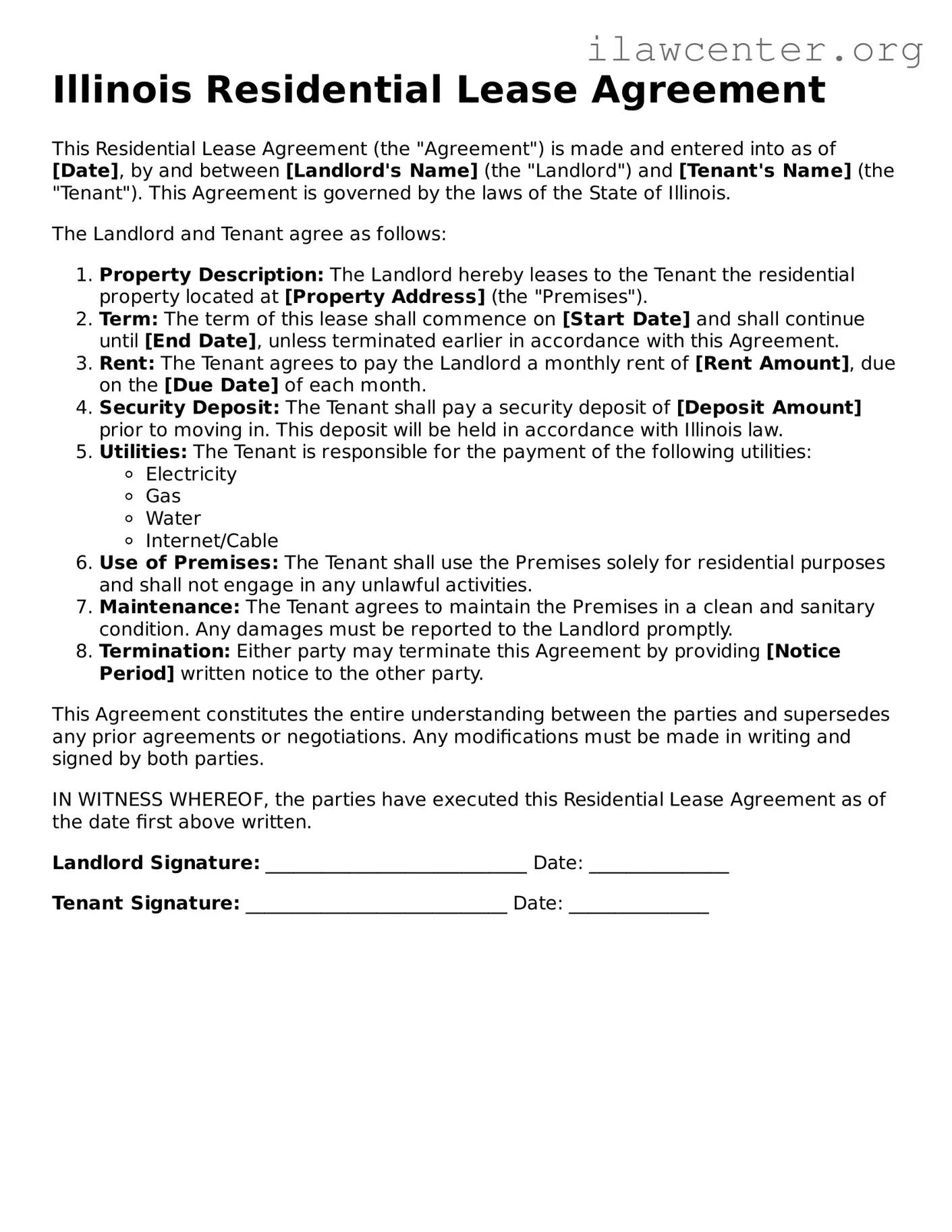
Illinois Residential Lease Agreement Preview

Illinois Residential Lease Agreement

This Residential Lease Agreement (the "Agreement") is made and entered into as of [Date], by and between [Landlord's Name] (the "Landlord") and [Tenant's Name] (the "Tenant"). This Agreement is governed by the laws of the State of Illinois.

The Landlord and Tenant agree as follows:

  1. Property Description: The Landlord hereby leases to the Tenant the residential property located at [Property Address] (the "Premises").
  2. Term: The term of this lease shall commence on [Start Date] and shall continue until [End Date], unless terminated earlier in accordance with this Agreement.
  3. Rent: The Tenant agrees to pay the Landlord a monthly rent of [Rent Amount], due on the [Due Date] of each month.
  4. Security Deposit: The Tenant shall pay a security deposit of [Deposit Amount] prior to moving in. This deposit will be held in accordance with Illinois law.
  5. Utilities: The Tenant is responsible for the payment of the following utilities:
    • Electricity
    • Gas
    • Water
    • Internet/Cable
  6. Use of Premises: The Tenant shall use the Premises solely for residential purposes and shall not engage in any unlawful activities.
  7. Maintenance: The Tenant agrees to maintain the Premises in a clean and sanitary condition. Any damages must be reported to the Landlord promptly.
  8. Termination: Either party may terminate this Agreement by providing [Notice Period] written notice to the other party.

This Agreement constitutes the entire understanding between the parties and supersedes any prior agreements or negotiations. Any modifications must be made in writing and signed by both parties.

IN WITNESS WHEREOF, the parties have executed this Residential Lease Agreement as of the date first above written.

Landlord Signature: ____________________________ Date: _______________

Tenant Signature: ____________________________ Date: _______________

PDF Form Characteristics

Fact Name Description
Governing Law The Illinois Residential Lease Agreement is governed by the Illinois Compiled Statutes, specifically 765 ILCS 705/1 et seq.
Written Requirement In Illinois, leases longer than one year must be in writing to be enforceable.
Security Deposit Regulations Landlords must return security deposits within 45 days after the tenant vacates the property, unless deductions are made.
Disclosure Obligations Landlords are required to disclose the presence of lead-based paint in properties built before 1978.
Termination Notice For month-to-month leases, either party must provide a written notice of at least 30 days to terminate the lease.

Instructions on Utilizing Illinois Residential Lease Agreement

Filling out the Illinois Residential Lease Agreement form is an important step in establishing a rental relationship. By completing this form accurately, both landlords and tenants can ensure that their rights and responsibilities are clearly defined. Follow these steps to fill out the form correctly.

  1. Start with the date at the top of the form. Write the date when the lease is being signed.
  2. Enter the names of the landlord and tenant(s). Make sure to include full legal names.
  3. Fill in the rental property's address. Include the complete street address, city, and zip code.
  4. Specify the lease term. Indicate whether it is a month-to-month lease or a fixed-term lease and provide the start and end dates if applicable.
  5. Detail the rental amount. Write the monthly rent amount and specify the due date each month.
  6. Include any security deposit information. State the amount of the security deposit and the conditions for its return.
  7. List any utilities included in the rent. Specify which utilities the landlord will cover, if any.
  8. Outline maintenance responsibilities. Clearly state who is responsible for repairs and maintenance of the property.
  9. Sign and date the form. Both the landlord and tenant must sign and date the lease agreement to make it legally binding.

After completing these steps, make sure both parties retain a copy of the signed lease for their records. This will help prevent misunderstandings and provide clarity throughout the rental period.

Important Facts about Illinois Residential Lease Agreement

What is an Illinois Residential Lease Agreement?

The Illinois Residential Lease Agreement is a legally binding contract between a landlord and a tenant. It outlines the terms and conditions of renting a residential property in Illinois. This agreement covers important details such as rent amount, payment due dates, lease duration, and responsibilities of both parties. Having a clear lease agreement helps prevent misunderstandings and provides legal protections for both landlords and tenants.

What should be included in the lease agreement?

A comprehensive Illinois Residential Lease Agreement should include several key components. These typically consist of the names of the landlord and tenant, the property address, the lease term, rent amount, security deposit details, maintenance responsibilities, and rules regarding pets or smoking. Additionally, it may include clauses about late fees, eviction procedures, and notice requirements for terminating the lease. Ensuring all these details are covered can help both parties understand their rights and obligations.

How long is a typical lease term?

In Illinois, lease terms can vary widely, but the most common duration is one year. However, leases can also be month-to-month or for shorter or longer periods, depending on the agreement between the landlord and tenant. It's essential for both parties to agree on the length of the lease and to specify this in the lease agreement to avoid any confusion later on.

Can a lease be terminated early?

Yes, a lease can be terminated early, but it usually requires mutual agreement between the landlord and tenant. Many leases include specific clauses that outline the conditions under which early termination is allowed. If a tenant needs to break the lease due to unforeseen circumstances, such as job relocation or health issues, they should communicate openly with the landlord. It's important to review the lease terms to understand any penalties or fees associated with early termination.

What is a security deposit, and how is it handled?

A security deposit is a sum of money collected by the landlord at the beginning of the lease to cover potential damages or unpaid rent. In Illinois, landlords can charge up to one and a half times the monthly rent for the security deposit. The law requires landlords to return the deposit within 45 days after the lease ends, minus any deductions for damages beyond normal wear and tear. Tenants should always document the condition of the property upon moving in and out to ensure fair handling of the security deposit.

Are there specific laws that govern residential leases in Illinois?

Yes, Illinois has specific laws that govern residential leases, including the Illinois Residential Tenants' Right to Privacy Act and the Illinois Security Deposit Return Act. These laws protect tenants' rights and outline the responsibilities of landlords. For instance, landlords must provide reasonable notice before entering a tenant's unit, and they must follow specific procedures when handling security deposits. Familiarizing oneself with these laws can help both landlords and tenants navigate their rights and responsibilities effectively.

What should I do if there is a dispute regarding the lease?

If a dispute arises regarding the lease, it is advisable to first attempt to resolve the issue through open communication. Both parties should review the lease terms to clarify any misunderstandings. If direct communication does not lead to a resolution, mediation or arbitration may be considered as alternatives to litigation. In some cases, it may be necessary to seek legal advice to understand one's rights and options. Keeping a record of all communications and relevant documents can be beneficial in resolving disputes.
Common mistakes

When completing the Illinois Residential Lease Agreement form, individuals often overlook critical details that can lead to misunderstandings or disputes later on. One common mistake is failing to provide accurate information about the parties involved. This includes not only the names of the landlord and tenant but also their correct contact information. Inaccuracies can complicate communication and legal processes.

Another frequent error is neglecting to specify the lease term clearly. Some individuals may leave the lease duration open-ended or fail to indicate the start and end dates. This ambiguity can create confusion regarding the length of the tenancy and the obligations of both parties.

Many people also forget to include essential terms regarding rent payment. This includes the amount of rent, the due date, and the method of payment. Without this information, tenants may not know when or how to pay, and landlords may face challenges in enforcing payment terms.

Some individuals mistakenly assume that all lease provisions are standard and do not customize the agreement to fit their specific situation. This can lead to gaps in coverage for important issues such as maintenance responsibilities or rules regarding pets. Each rental situation is unique, and the lease should reflect that.

Another common mistake is overlooking the security deposit details. The lease should clearly outline the amount of the security deposit, the conditions for its return, and any deductions that may be made. Failing to address these points can lead to disputes when the lease ends.

People sometimes forget to specify the consequences of late rent payments. The lease should include any late fees or penalties that may apply. Without this information, tenants may not understand the repercussions of late payments, and landlords may find it difficult to enforce their policies.

Many individuals do not take the time to review the lease for completeness before signing. This can result in signing an incomplete document, which may not be enforceable. It is crucial to ensure that all sections are filled out accurately and that all necessary signatures are obtained.

Another mistake involves neglecting to include provisions for lease termination. The lease should specify the conditions under which either party can terminate the agreement. Without clear termination clauses, both landlords and tenants may face challenges if they wish to end the lease early.

Finally, some people fail to keep a copy of the signed lease agreement. After signing, it is essential for both parties to retain a copy for their records. This ensures that both the landlord and tenant have access to the same information and can refer back to the agreement if questions arise.

Documents used along the form

When entering into a rental agreement in Illinois, several additional forms and documents can help clarify the responsibilities and rights of both landlords and tenants. These documents provide essential details that complement the Illinois Residential Lease Agreement. Below is a list of commonly used forms that often accompany the lease agreement.

  • Rental Application: This form collects information about potential tenants, including their employment history, rental history, and credit information. It helps landlords screen applicants to find suitable tenants.
  • Move-In/Move-Out Inspection Checklist: This document outlines the condition of the rental unit at the time of move-in and move-out. It serves as a record to avoid disputes regarding security deposit deductions for damages.
  • Security Deposit Receipt: Landlords provide this receipt to tenants when they pay their security deposit. It confirms the amount received and the conditions under which it may be returned.
  • Pet Agreement: If pets are allowed, this document specifies the terms regarding pet ownership, including any additional fees, deposits, or rules related to pet behavior.
  • Lease Renewal Agreement: When a lease term ends, this document outlines the terms for renewing the lease. It can include any changes to rent or conditions of the lease.
  • Notice of Entry: This form is used by landlords to notify tenants of their intention to enter the rental unit, typically for repairs or inspections. It ensures tenants are aware and can prepare accordingly.
  • Tenant's Rights and Responsibilities: This document outlines the legal rights and obligations of tenants under Illinois law. It serves as a helpful resource to ensure tenants understand their protections and duties.

These forms and documents play a crucial role in establishing clear communication and understanding between landlords and tenants. By utilizing them, both parties can minimize misunderstandings and protect their interests throughout the rental process.

Similar forms

The Residential Lease Agreement is a crucial document for landlords and tenants, outlining the terms of renting a property. Several other documents serve similar purposes, helping to clarify responsibilities and expectations in rental situations. Here are four documents that share similarities with the Residential Lease Agreement:

  • Rental Application: This document is typically completed by prospective tenants. It gathers essential information such as employment history, rental history, and personal references. Like a lease agreement, it helps landlords assess the suitability of applicants.
  • Move-In Checklist: This checklist is used when a tenant first occupies a rental unit. It details the condition of the property and any existing damages. Similar to a lease agreement, it protects both parties by documenting the state of the property at the start of the tenancy.
  • Lease Addendum: An addendum is a document that modifies or adds to the original lease agreement. It can cover various topics, such as pet policies or maintenance responsibilities. Like the lease, it is legally binding and ensures that all parties are aware of any changes to the terms.
  • Notice to Terminate Lease: This document is used by either party to formally communicate the intention to end the lease. It outlines the required notice period and any specific conditions. Similar to a lease agreement, it serves to clarify the rights and obligations of both the landlord and tenant at the end of the rental period.

Dos and Don'ts

When filling out the Illinois Residential Lease Agreement form, it is crucial to follow certain guidelines to ensure clarity and legality. Here are five things to do and five things to avoid:

Things You Should Do:

  • Read the entire agreement thoroughly before signing.
  • Provide accurate information about all parties involved.
  • Clearly specify the rental amount and payment due dates.
  • Include any additional terms or conditions that were agreed upon.
  • Keep a signed copy for your records after completion.

Things You Shouldn't Do:

  • Do not leave any blank spaces on the form; fill in all required fields.
  • Avoid using vague language that could lead to misunderstandings.
  • Do not sign the lease without reviewing it with all parties.
  • Refrain from making verbal agreements that are not documented.
  • Do not ignore local laws or regulations that may affect the lease.

Misconceptions

Understanding the Illinois Residential Lease Agreement form is crucial for both landlords and tenants. However, several misconceptions often arise regarding this document. Here are six common misunderstandings:

  • It is a one-size-fits-all document. Many believe that the Illinois Residential Lease Agreement can be used universally for all rental situations. In reality, leases should be tailored to fit the specific needs of the landlord and tenant, including unique terms and conditions relevant to the property.
  • Verbal agreements are sufficient. Some individuals think that a verbal agreement is enough to establish a lease. However, without a written lease, it can be challenging to enforce terms or resolve disputes. A written agreement provides clarity and legal protection for both parties.
  • Security deposits are not regulated. There is a misconception that landlords can charge any amount for security deposits. In Illinois, there are specific regulations governing security deposits, including limits on the amount and requirements for returning the deposit after the lease ends.
  • Landlords can enter the property at any time. Many tenants believe that landlords have unrestricted access to their rental units. In Illinois, landlords must provide reasonable notice before entering the property, typically 24 hours, except in emergencies.
  • Lease terms are set in stone. Some assume that once a lease is signed, the terms cannot be changed. While it is true that a signed lease is binding, both parties can agree to modify the terms at any time, provided that changes are documented in writing.
  • All leases must be for one year. There is a common belief that residential leases must last for a full year. In fact, leases can be for any duration, whether it’s a month-to-month agreement or a multi-year contract, depending on the needs of the landlord and tenant.

Recognizing these misconceptions can lead to a better understanding of the Illinois Residential Lease Agreement and foster healthier landlord-tenant relationships.

Key takeaways

When filling out and using the Illinois Residential Lease Agreement form, there are several important points to keep in mind. These will help ensure that both landlords and tenants understand their rights and responsibilities.

  • Understand the key terms: Familiarize yourself with terms such as rent, lease duration, and security deposit. Clear definitions can prevent misunderstandings.
  • Complete all sections: Ensure that every part of the form is filled out accurately. Missing information can lead to disputes later on.
  • Review local laws: Illinois has specific laws regarding residential leases. It’s essential to be aware of these regulations to ensure compliance.
  • Sign and date: Both parties must sign and date the lease. This step is crucial for the agreement to be legally binding.
  • Keep copies: Each party should retain a signed copy of the lease. This documentation is important for reference throughout the lease term.