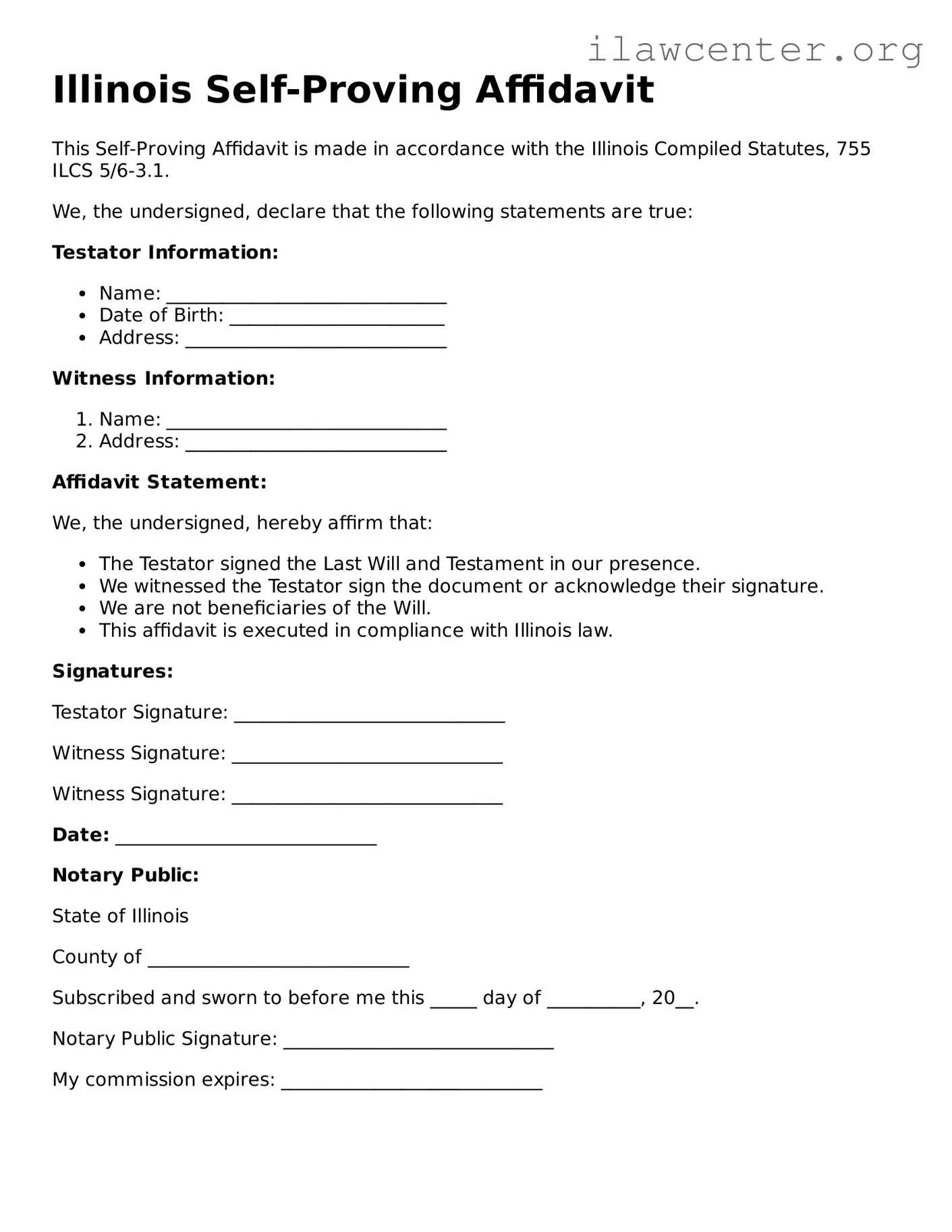
When completing the Illinois Self-Proving Affidavit form, individuals often encounter various challenges that can lead to mistakes. One common error is failing to include all required signatures. The form requires the signatures of the testator and witnesses. Omitting one of these can render the affidavit invalid.
Another frequent mistake is not having the witnesses sign the affidavit in the presence of the testator. This is essential for ensuring the authenticity of the document. If witnesses sign the affidavit without being present during the signing of the will, it may not meet legal standards.
People sometimes neglect to date the affidavit. A missing date can create confusion regarding when the affidavit was executed. This information is crucial for establishing the timeline of the will and its validity.
Inaccurate personal information is another issue that arises. Individuals filling out the form may incorrectly spell names or provide wrong addresses. Such inaccuracies can complicate matters during probate and lead to disputes.
Another common error involves misunderstanding the purpose of the affidavit. Some individuals may think it is only necessary for certain types of wills, but it is advisable for all wills to include a self-proving affidavit to simplify the probate process.
Failing to follow the specific instructions outlined on the form can lead to mistakes. Each section of the affidavit has specific requirements, and overlooking these can result in an incomplete or incorrect submission.
People often forget to have the affidavit notarized. Notarization is a critical step that adds a layer of authenticity to the document. Without it, the affidavit may not hold up in court.
Another mistake is using outdated versions of the form. Legal documents can change over time, and using an old version may lead to non-compliance with current laws.
Some individuals may also misinterpret the role of the witnesses. Witnesses should not be beneficiaries of the will, as this can lead to conflicts of interest and potential challenges to the will's validity.
Lastly, individuals sometimes fail to keep copies of the completed affidavit. Retaining a copy is important for personal records and can be essential during the probate process to ensure that all parties have access to the necessary documents.