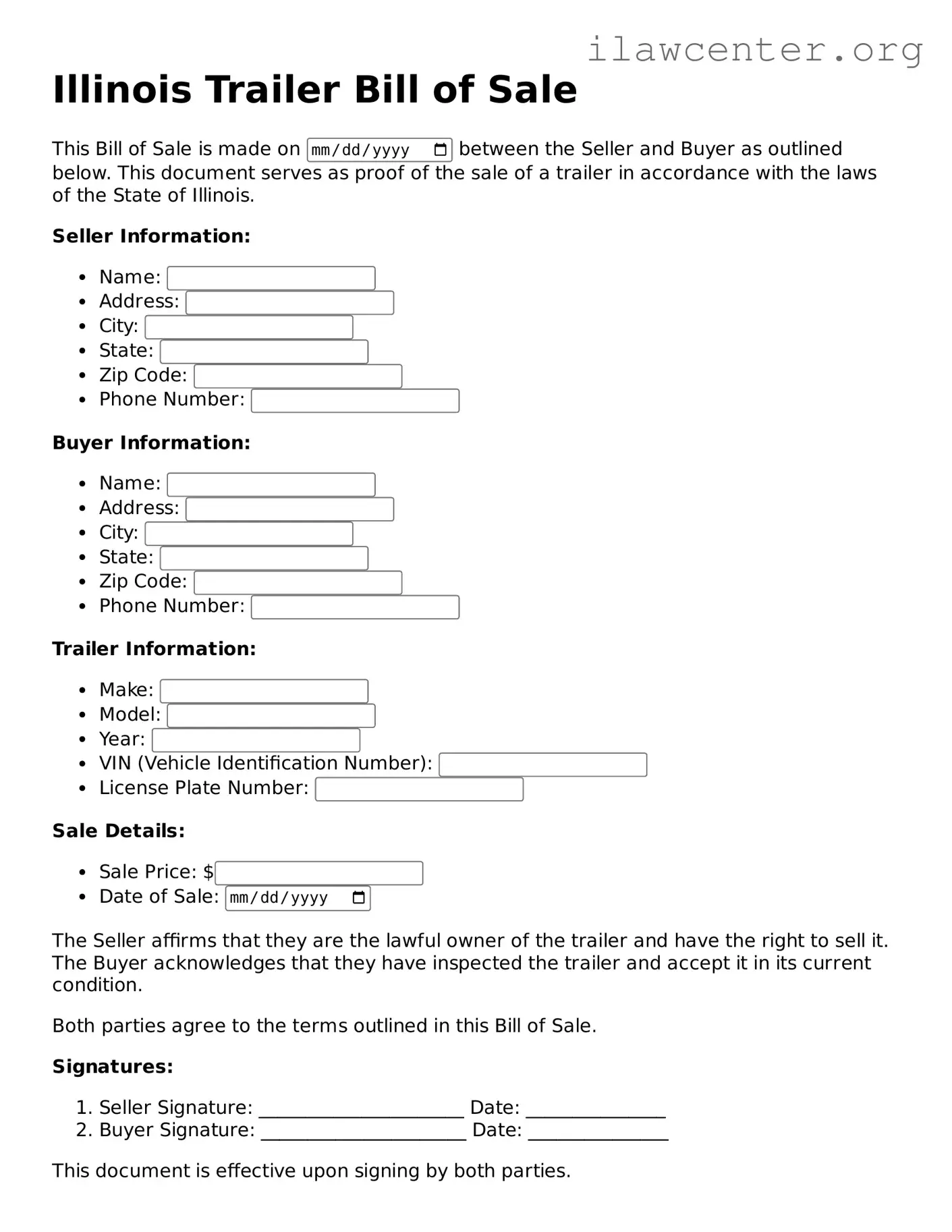
Filling out the Illinois Trailer Bill of Sale form can be straightforward, but many people make common mistakes that can lead to issues down the line. One frequent error is failing to provide complete and accurate information about the trailer. Essential details such as the Vehicle Identification Number (VIN), make, model, and year must be included. Omitting any of these can create confusion and may hinder the registration process.
Another mistake is not including the correct purchase price. The form requires the sale price to be clearly stated. If the price is left blank or inaccurately reported, it could lead to complications with taxes and registration. Always double-check that the amount reflects the actual sale.
People often overlook the importance of signatures. Both the seller and buyer must sign the form. Without these signatures, the bill of sale is incomplete and may not be legally binding. Ensure that both parties sign and date the document before finalizing the transaction.
Many individuals also forget to include the date of the sale. This date is crucial for record-keeping and may be necessary for tax purposes. Leaving it out can cause confusion about when the transaction took place.
Another common error is not providing accurate contact information for both the buyer and seller. Full names, addresses, and phone numbers should be included. This information is vital for any future correspondence or if issues arise after the sale.
Some people may mistakenly use the wrong form. It’s important to ensure that you are using the correct Illinois Trailer Bill of Sale form. Using an outdated or incorrect version can lead to problems with the registration process.
Additionally, failing to keep a copy of the completed bill of sale is a mistake that can be easily avoided. Both parties should retain a copy for their records. This document serves as proof of the transaction and may be needed for future reference.
Another oversight is neglecting to verify that the trailer is free of liens or encumbrances. The seller should confirm that the trailer is owned outright and that there are no outstanding debts associated with it. This protects the buyer from potential legal issues.
Lastly, many people do not understand the importance of local regulations. Each county or municipality may have specific requirements for trailer sales. It’s essential to check with local authorities to ensure compliance with any additional regulations that may apply.