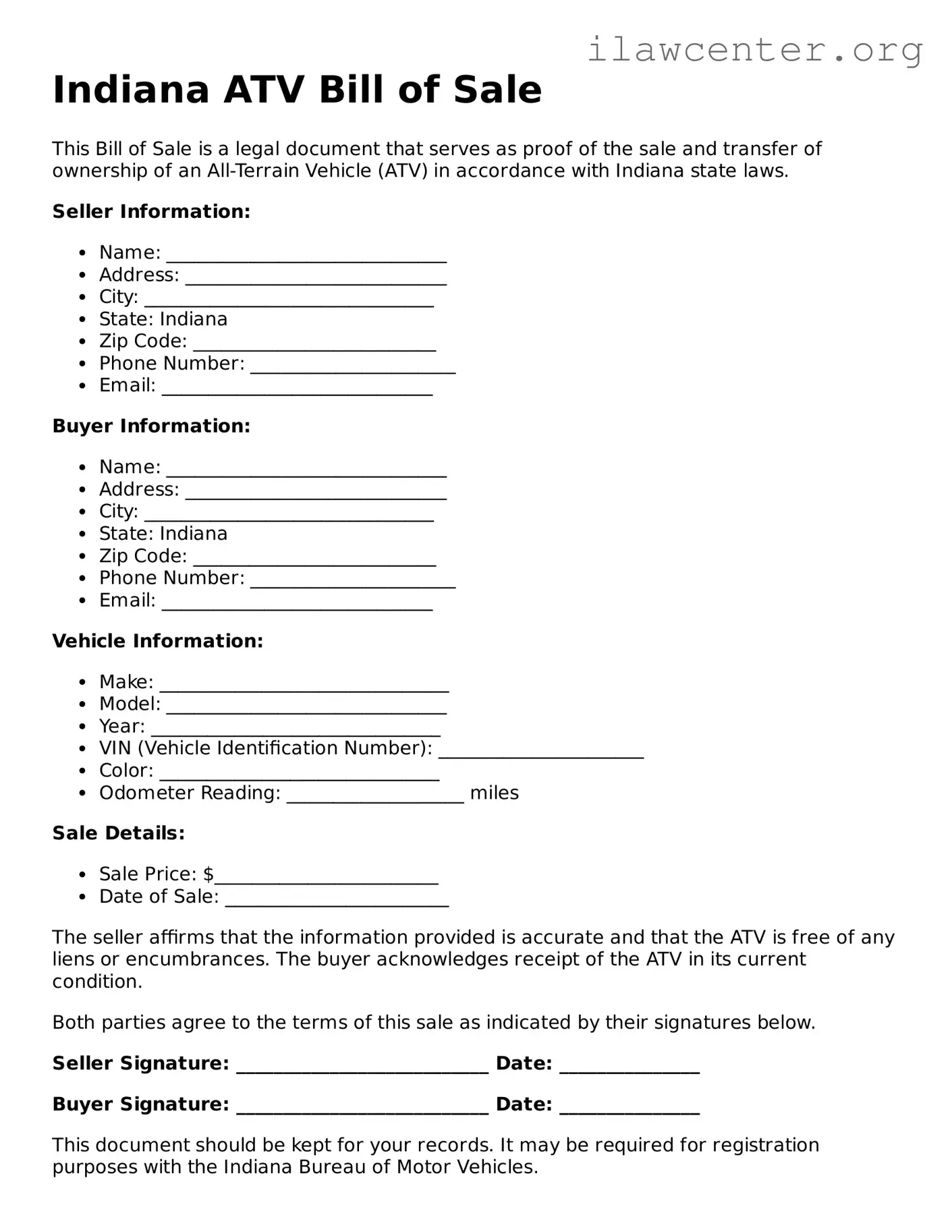
When filling out the Indiana ATV Bill of Sale form, individuals often encounter several common pitfalls that can complicate the transaction process. One frequent mistake is failing to provide accurate information about the ATV itself. This includes not specifying the Vehicle Identification Number (VIN), make, model, and year of the ATV. Such omissions can lead to confusion or disputes down the line.
Another error arises from neglecting to include the names and addresses of both the buyer and the seller. This information is crucial for establishing a clear record of the transaction. Without it, the document may lack the necessary legal validity, making it difficult to prove ownership in the future.
Additionally, many people overlook the importance of including the sale price. Leaving this field blank or entering an incorrect amount can create complications, especially when it comes to tax assessments or potential disputes regarding the value of the ATV.
In some cases, individuals forget to sign the document. A signature is essential, as it signifies agreement and acceptance of the terms outlined in the bill of sale. Without it, the form lacks authenticity and may not hold up in legal situations.
Another mistake involves not dating the document. Failing to include the date of the sale can lead to confusion about when the transaction occurred, which is vital for both parties. A date provides a timeline that can be referenced in case of future issues.
Moreover, people sometimes use outdated or incorrect forms. The Indiana ATV Bill of Sale may have specific requirements that change over time. Using the wrong version can result in the form being rejected by authorities.
It is also common for individuals to skip the section regarding any warranties or disclaimers. Clearly stating whether the ATV is sold "as-is" or with any guarantees protects both the buyer and seller. This clarity can prevent misunderstandings and potential legal disputes later on.
Lastly, some overlook the need for witnesses or notarization. While not always required, having a witness or a notary public can add an extra layer of legitimacy to the transaction. This step can be especially beneficial if either party decides to contest the sale in the future.