Attorney-Verified  Firearm Bill of Sale Document for Indiana

Attorney-Verified Firearm Bill of Sale Document for Indiana

The Indiana Firearm Bill of Sale form is a legal document that records the transfer of ownership of a firearm between a seller and a buyer in Indiana. This form serves as proof of the transaction and can be crucial for both parties involved. To ensure a smooth transfer, it is important to fill out the form accurately; click the button below to get started.

Article Guide

The Indiana Firearm Bill of Sale form serves as an essential document in the private sale or transfer of firearms within the state. This form is designed to ensure that both the buyer and seller have a clear record of the transaction, which can be crucial for legal and personal accountability. It typically includes vital information such as the names and addresses of both parties, details about the firearm being sold—like the make, model, and serial number—and the date of the transaction. Additionally, it often requires both parties to acknowledge that they are legally allowed to engage in this sale, thus reinforcing compliance with state and federal laws. By providing a structured format for these transactions, the form not only protects the interests of both parties but also helps promote responsible firearm ownership in Indiana.

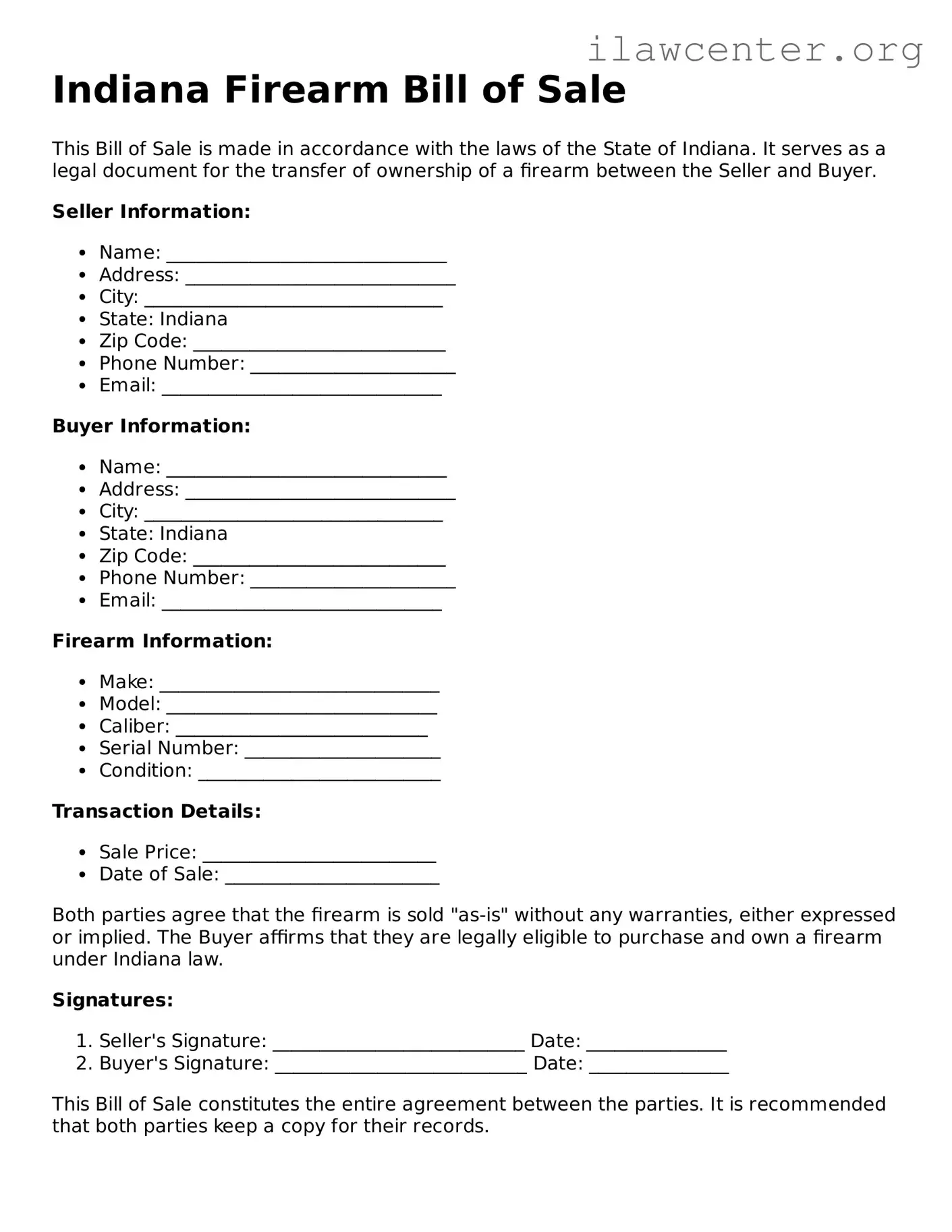
Indiana Firearm Bill of Sale Preview

Indiana Firearm Bill of Sale

This Bill of Sale is made in accordance with the laws of the State of Indiana. It serves as a legal document for the transfer of ownership of a firearm between the Seller and Buyer.

Seller Information:

  • Name: ______________________________
  • Address: _____________________________
  • City: ________________________________
  • State: Indiana
  • Zip Code: ___________________________
  • Phone Number: ______________________
  • Email: ______________________________

Buyer Information:

  • Name: ______________________________
  • Address: _____________________________
  • City: ________________________________
  • State: Indiana
  • Zip Code: ___________________________
  • Phone Number: ______________________
  • Email: ______________________________

Firearm Information:

  • Make: ______________________________
  • Model: _____________________________
  • Caliber: ___________________________
  • Serial Number: _____________________
  • Condition: __________________________

Transaction Details:

  • Sale Price: _________________________
  • Date of Sale: _______________________

Both parties agree that the firearm is sold "as-is" without any warranties, either expressed or implied. The Buyer affirms that they are legally eligible to purchase and own a firearm under Indiana law.

Signatures:

  1. Seller's Signature: ___________________________ Date: _______________
  2. Buyer's Signature: ___________________________ Date: _______________

This Bill of Sale constitutes the entire agreement between the parties. It is recommended that both parties keep a copy for their records.

PDF Form Characteristics

Fact Name Description
Purpose The Indiana Firearm Bill of Sale form serves as a legal document to record the sale of a firearm between two parties.
Governing Law The sale of firearms in Indiana is governed by Indiana Code Title 35, Article 47.
Seller Information The form requires the seller's name, address, and contact information to ensure proper identification.
Buyer Information The buyer's name, address, and contact details must also be included for accountability and traceability.
Firearm Details Specific details about the firearm, including make, model, and serial number, are essential for clarity.
Signatures Both the seller and buyer must sign the form to validate the transaction and acknowledge the terms.
Record Keeping It is advisable for both parties to retain a copy of the bill of sale for their records and future reference.

Instructions on Utilizing Indiana Firearm Bill of Sale

Completing the Indiana Firearm Bill of Sale form is an important step in ensuring a legal and transparent transaction between the buyer and seller of a firearm. Once the form is filled out accurately, both parties should keep a copy for their records, as it serves as proof of the sale.

  1. Begin by entering the date of the transaction at the top of the form.
  2. Provide the full name of the seller. This includes the first name, middle initial (if applicable), and last name.
  3. Next, enter the seller's address. Include the street address, city, state, and ZIP code.
  4. Now, fill in the buyer's full name in the same manner as the seller's name.
  5. Enter the buyer's address, ensuring to include the street address, city, state, and ZIP code.
  6. Describe the firearm being sold. This should include the make, model, caliber, and serial number.
  7. Indicate the purchase price of the firearm. Make sure to specify the currency.
  8. Both the seller and buyer must sign and date the form to confirm the transaction.
  9. Make copies of the completed form for both parties to keep for their records.

Important Facts about Indiana Firearm Bill of Sale

What is an Indiana Firearm Bill of Sale form?

The Indiana Firearm Bill of Sale form is a document used to record the sale or transfer of a firearm between parties in Indiana. This form serves as proof of the transaction, detailing the buyer and seller's information, the firearm's description, and the terms of the sale. It helps protect both parties by providing a clear record of the exchange.

Is the Firearm Bill of Sale form required in Indiana?

While it is not legally required to have a Bill of Sale when buying or selling a firearm in Indiana, it is highly recommended. Having a Bill of Sale can help clarify ownership and serve as evidence of the transaction if any legal issues arise in the future. It is a good practice for both buyers and sellers to have this document for their records.

What information should be included in the form?

The Indiana Firearm Bill of Sale should include specific details to be complete and effective. This includes the names and addresses of both the buyer and seller, the date of the transaction, a description of the firearm (including make, model, caliber, and serial number), and the sale price. Both parties should sign the document to confirm the transaction.

Can I use a generic Bill of Sale for firearms in Indiana?

While you can use a generic Bill of Sale, it is best to use a form specifically designed for firearms. A specialized form will typically include all necessary details and language pertinent to firearm transactions. This ensures that both parties are protected and that all relevant information is captured accurately.

Do I need to have the Bill of Sale notarized?

No, Indiana does not require the Bill of Sale to be notarized for it to be valid. However, having it notarized can add an extra layer of security and authenticity to the document. It may also help in case of disputes or legal issues in the future, as a notary verifies the identities of the parties involved.

What should I do with the completed Bill of Sale?

Once the Bill of Sale is completed and signed by both parties, each should keep a copy for their records. The seller should retain their copy as proof of the sale, while the buyer should keep theirs as proof of ownership. In the event of any future questions or disputes, having this document on hand can be very helpful.
Common mistakes

When purchasing or selling a firearm in Indiana, completing the Firearm Bill of Sale form correctly is crucial. However, many people make common mistakes that can lead to complications down the line. One of the most frequent errors is failing to provide accurate information about the firearm itself. This includes details such as the make, model, and serial number. Without these specifics, the document may not serve its intended purpose, which is to create a clear record of the transaction.

Another common mistake is neglecting to include the full names and addresses of both the buyer and the seller. This information is essential for establishing the identities of the parties involved. If the form lacks these details, it could lead to disputes about ownership or even legal issues in the future. Always double-check that the names are spelled correctly and that addresses are complete.

People often overlook the importance of signatures on the Firearm Bill of Sale form. Both parties must sign the document to validate the transaction. In some cases, individuals might assume that a verbal agreement is sufficient. However, without signatures, the document may not hold up in court if any disagreements arise later.

Another mistake occurs when individuals fail to date the form. The date of the transaction is a critical piece of information that can affect the legality of the sale. Without a date, it may be challenging to establish when the transfer of ownership took place, which could lead to confusion or legal complications.

Finally, many people forget to make copies of the completed Bill of Sale. Keeping a copy for your records is essential. This ensures that both the buyer and seller have proof of the transaction should any questions or issues come up later. It's a simple step that can save a lot of hassle in the future.

Documents used along the form

When transferring ownership of a firearm in Indiana, it's important to have the right documentation in place. The Indiana Firearm Bill of Sale form is a crucial part of this process. However, there are several other forms and documents that may be needed to ensure a smooth transaction. Below is a list of these documents, each serving a specific purpose.

  • Background Check Consent Form: This form is often required to authorize a background check on the buyer. It helps ensure that the buyer is legally eligible to purchase a firearm.
  • Firearm Transfer Record: This document records the details of the firearm being transferred, including its make, model, and serial number. It serves as a formal record of the transaction.
  • Affidavit of Eligibility: Buyers may need to complete this affidavit to affirm that they meet all legal requirements to own a firearm. It typically includes questions about criminal history and mental health.
  • Identification Documents: A valid photo ID, such as a driver's license or passport, is often required to verify the identity of both the buyer and seller during the transaction.
  • Firearm Safety Course Certificate: Some sellers may request proof that the buyer has completed a firearm safety course, especially if the buyer is a first-time owner.
  • Seller's Disclosure Statement: This document outlines any known defects or issues with the firearm being sold. It protects both parties by ensuring transparency about the condition of the firearm.
  • Purchase Agreement: This is a contract between the buyer and seller detailing the terms of the sale, including price and any conditions. It can help prevent disputes later on.
  • Receipt of Sale: After the transaction, a receipt serves as proof of purchase. It should include the date, amount paid, and details about the firearm.
  • Local Regulations Compliance Form: Some areas may require additional documentation to comply with local laws regarding firearm sales. This form ensures that all local regulations are met.

Having these documents ready can help facilitate a lawful and efficient firearm transfer. Each form plays a role in protecting both the buyer and seller, ensuring that the transaction adheres to Indiana laws. It’s always wise to be prepared and informed about the necessary paperwork involved in such transactions.

Similar forms

  • Vehicle Bill of Sale: This document records the transfer of ownership for a vehicle. Like the Firearm Bill of Sale, it includes details about the buyer, seller, and the item being sold, ensuring both parties have a clear understanding of the transaction.
  • Boat Bill of Sale: Similar to the Firearm Bill of Sale, this document facilitates the transfer of ownership for a boat. It includes information about the vessel, the seller, and the buyer, providing proof of the transaction.
  • Personal Property Bill of Sale: This document is used for the sale of personal items, such as furniture or electronics. It serves a similar purpose as the Firearm Bill of Sale by documenting the details of the transaction and protecting both parties.
  • Real Estate Purchase Agreement: While more complex, this agreement outlines the terms of a property sale. Like the Firearm Bill of Sale, it provides essential details about the buyer, seller, and the property being exchanged.
  • Lease Agreement: This document outlines the terms under which one party rents property from another. It shares similarities with the Firearm Bill of Sale in that it details the rights and responsibilities of both parties during the transaction.
  • Equipment Bill of Sale: Used for the sale of equipment, this document captures the specifics of the transaction, much like the Firearm Bill of Sale. It ensures both the buyer and seller are protected and informed.
  • Business Asset Purchase Agreement: This document details the sale of a business's assets. It includes terms similar to those found in a Firearm Bill of Sale, such as the identification of the assets and the parties involved.
  • Art Sales Agreement: When art is sold, this document outlines the terms of the sale. It functions similarly to the Firearm Bill of Sale by providing clarity and legal protection for both the buyer and seller.
  • Gift Receipt: While not a sale, a gift receipt documents the transfer of ownership of an item without payment. It serves a similar purpose in recording the change of ownership, akin to the Firearm Bill of Sale.
  • Pawn Ticket: This document is issued when an item is pawned. It records the details of the transaction and the item, similar to the Firearm Bill of Sale, ensuring both parties have a record of the agreement.

Dos and Don'ts

When filling out the Indiana Firearm Bill of Sale form, it is important to follow certain guidelines to ensure everything is completed correctly. Here are seven things you should and shouldn't do:

  • Do double-check all personal information for accuracy.
  • Don't leave any sections blank; fill out every required field.
  • Do include the serial number of the firearm.
  • Don't use any nicknames or aliases; stick to your legal name.
  • Do sign and date the form in the designated areas.
  • Don't rush through the process; take your time to ensure clarity.
  • Do keep a copy of the completed form for your records.

Following these tips can help make the transaction smoother and ensure compliance with state regulations.

Misconceptions

Understanding the Indiana Firearm Bill of Sale form is crucial for both buyers and sellers. However, several misconceptions exist that can lead to confusion. Below are eight common misconceptions explained.

  1. All firearm transactions require a Bill of Sale.

    While a Bill of Sale is a good practice, it is not legally required for all private firearm sales in Indiana. However, having one can provide proof of ownership and help protect both parties.

  2. A Bill of Sale guarantees the legality of the firearm.

    The presence of a Bill of Sale does not ensure that the firearm is legally owned or that it is not stolen. Buyers should always verify the firearm's history before purchase.

  3. Only licensed dealers can issue a Bill of Sale.

    Any individual can create a Bill of Sale for a firearm. It is not limited to licensed dealers, but the document should still include necessary details to be effective.

  4. The Bill of Sale must be notarized.

    Notarization is not a requirement for a Bill of Sale in Indiana. However, having it notarized can add an extra layer of authenticity.

  5. A Bill of Sale is sufficient for all types of firearms.

    Different types of firearms may have specific regulations. While a Bill of Sale is useful, it does not replace the need for compliance with federal and state laws regarding certain firearms.

  6. The Bill of Sale protects the seller from liability.

    While a Bill of Sale can provide some protection, it does not completely absolve the seller of liability if the firearm is used in a crime after the sale.

  7. Buyers do not need to provide identification.

    It is advisable for buyers to present identification during the transaction. This helps to confirm the buyer's identity and age, which is essential for compliance with state laws.

  8. Firearm sales are not subject to taxes.

    Sales tax may apply to firearm transactions in Indiana. Both parties should be aware of their tax obligations to avoid potential penalties.

Awareness of these misconceptions can lead to a smoother and more informed transaction process. Always consider consulting with legal professionals for specific advice regarding firearm sales.

Key takeaways

Filling out and using the Indiana Firearm Bill of Sale form is an important process for both buyers and sellers of firearms. Here are key takeaways to consider:

  1. Legal Requirement: While a bill of sale is not legally required for private firearm sales in Indiana, it is highly recommended for documentation purposes.
  2. Identification: Both the buyer and seller should provide valid identification to ensure that all parties are legally eligible to engage in the transaction.
  3. Detailed Description: The form should include a detailed description of the firearm, including make, model, caliber, and serial number, to avoid any confusion.
  4. Transaction Date: Clearly indicate the date of the transaction on the bill of sale. This helps establish a timeline for ownership.
  5. Purchase Price: Document the purchase price of the firearm. This information may be useful for tax purposes or in the event of a dispute.
  6. Signatures Required: Both the buyer and seller must sign the bill of sale to validate the transaction. This creates a legal record of the sale.
  7. Record Keeping: Each party should retain a copy of the completed bill of sale for their records. This can be important for future reference.
  8. Transfer of Ownership: The bill of sale serves as proof of the transfer of ownership, which can be beneficial in case of any legal inquiries.
  9. Consult Legal Advice: If there are any uncertainties about the process, consulting with a legal professional can provide clarity and ensure compliance with state laws.