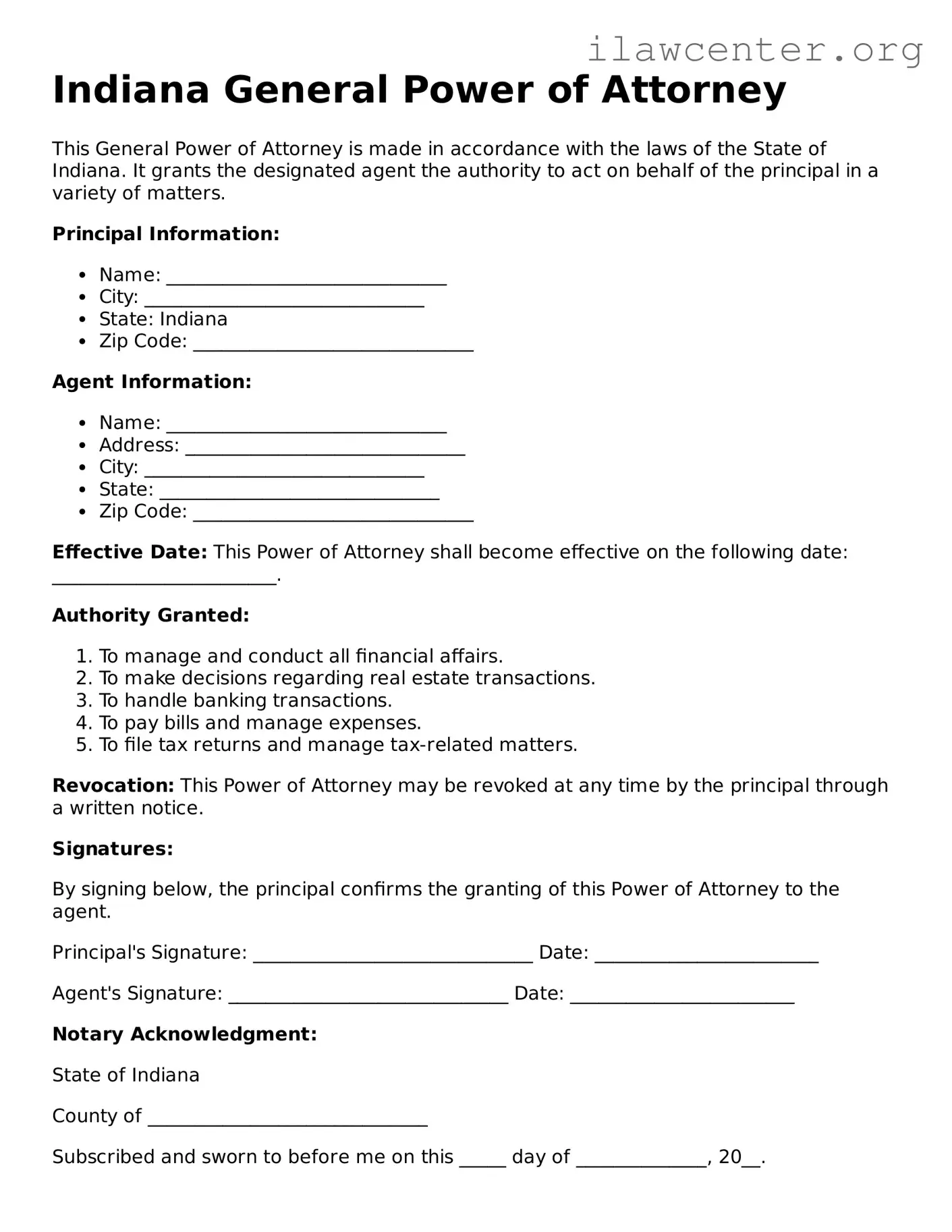
What is a General Power of Attorney in Indiana?
A General Power of Attorney in Indiana is a legal document that allows one person, known as the principal, to designate another individual, referred to as the agent or attorney-in-fact, to act on their behalf. This authority can encompass a wide range of decisions, including financial matters, property transactions, and other legal affairs. The principal can specify the scope of the agent's powers, which can be broad or limited based on individual needs and preferences.
Who can serve as an agent in a General Power of Attorney?
In Indiana, any competent adult can serve as an agent under a General Power of Attorney. This can include family members, friends, or professional advisors. However, it is crucial to choose someone trustworthy, as the agent will have significant authority over the principal's financial and legal matters. It is advisable to discuss the responsibilities and expectations with the chosen agent before formalizing the document.
How does one create a General Power of Attorney in Indiana?
To create a General Power of Attorney in Indiana, the principal must draft the document, clearly outlining the powers granted to the agent. While there is no specific state form required, the document must be signed by the principal in the presence of a notary public. It is recommended to include specific language that indicates the principal's intent and the extent of the authority granted. Consulting with an attorney can help ensure that the document meets all legal requirements and adequately reflects the principal's wishes.
Can a General Power of Attorney be revoked?
Yes, a General Power of Attorney can be revoked at any time by the principal, as long as they are mentally competent. The revocation must be communicated to the agent, and it is advisable to do so in writing. Additionally, if the principal wishes to ensure that the revocation is effective, they should consider notifying any third parties who may have relied on the original document, such as banks or financial institutions.
What happens if the principal becomes incapacitated?
If the principal becomes incapacitated, the General Power of Attorney remains in effect unless it is specifically stated to be a durable power of attorney. A durable power of attorney continues to be valid even if the principal loses the capacity to make decisions. If the principal did not designate the power as durable, the authority granted to the agent would terminate upon the principal's incapacitation, potentially leading to complications in managing their affairs.
Are there any limitations to the powers granted under a General Power of Attorney?
Yes, the powers granted under a General Power of Attorney can be limited based on the principal's preferences. The principal can specify particular actions that the agent is allowed or not allowed to undertake. For instance, the principal may grant authority for financial transactions but exclude the ability to make healthcare decisions. It is essential to clearly outline these limitations in the document to avoid misunderstandings and ensure the agent acts within the designated scope.
What should be done with the General Power of Attorney document after it is created?
Once the General Power of Attorney document is created and signed, it should be kept in a safe yet accessible location. The principal should provide copies to the agent and any relevant institutions, such as banks or healthcare providers, where the agent may need to act on the principal's behalf. Additionally, it is wise to review the document periodically to ensure it continues to reflect the principal's wishes and to make any necessary updates as circumstances change.