Attorney-Verified  Land Purchase Agreement Document for Indiana

Attorney-Verified Land Purchase Agreement Document for Indiana

The Indiana Land Purchase Agreement form is a legal document that outlines the terms and conditions for buying and selling real estate in Indiana. This agreement serves to protect both the buyer and seller by clearly defining their rights and obligations throughout the transaction process. To ensure a smooth and secure transfer of property, consider filling out the form by clicking the button below.

Article Guide

The Indiana Land Purchase Agreement form serves as a crucial document in real estate transactions within the state, facilitating the transfer of property ownership between buyers and sellers. This agreement outlines essential terms such as the purchase price, payment methods, and contingencies that may affect the sale. It typically includes details about the property being sold, including its legal description and any existing liens or encumbrances. Additionally, the form addresses the responsibilities of both parties, ensuring that obligations such as inspections, repairs, and closing costs are clearly defined. By establishing a mutual understanding of the transaction, this agreement helps to mitigate potential disputes and provides a framework for a smooth transfer of ownership. Understanding the components of this form is vital for anyone involved in real estate transactions in Indiana, as it lays the groundwork for a successful sale and protects the interests of both buyers and sellers.

Indiana Land Purchase Agreement Preview

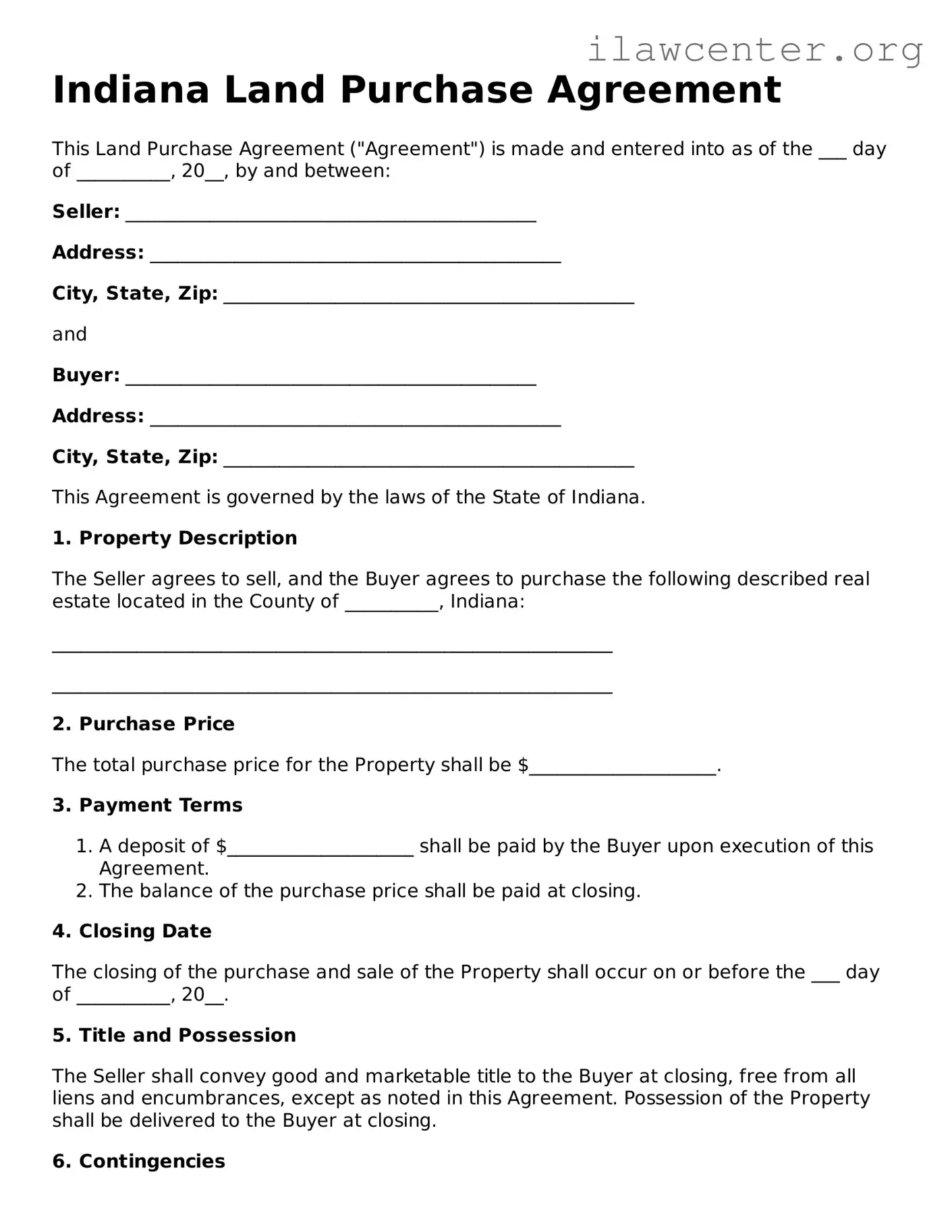
Indiana Land Purchase Agreement

This Land Purchase Agreement ("Agreement") is made and entered into as of the ___ day of __________, 20__, by and between:

Seller: ____________________________________________

Address: ____________________________________________

City, State, Zip: ____________________________________________

and

Buyer: ____________________________________________

Address: ____________________________________________

City, State, Zip: ____________________________________________

This Agreement is governed by the laws of the State of Indiana.

1. Property Description

The Seller agrees to sell, and the Buyer agrees to purchase the following described real estate located in the County of __________, Indiana:

____________________________________________________________

____________________________________________________________

2. Purchase Price

The total purchase price for the Property shall be $____________________.

3. Payment Terms

  1. A deposit of $____________________ shall be paid by the Buyer upon execution of this Agreement.
  2. The balance of the purchase price shall be paid at closing.

4. Closing Date

The closing of the purchase and sale of the Property shall occur on or before the ___ day of __________, 20__.

5. Title and Possession

The Seller shall convey good and marketable title to the Buyer at closing, free from all liens and encumbrances, except as noted in this Agreement. Possession of the Property shall be delivered to the Buyer at closing.

6. Contingencies

  • This Agreement is contingent upon the Buyer obtaining financing.
  • This Agreement is contingent upon a satisfactory inspection of the Property.

7. Governing Law

This Agreement shall be governed by and construed in accordance with the laws of the State of Indiana.

8. Signatures

IN WITNESS WHEREOF, the parties have executed this Agreement as of the day and year first above written.

______________________________

Seller Signature

______________________________

Buyer Signature

PDF Form Characteristics

Fact Name Details
Purpose The Indiana Land Purchase Agreement form outlines the terms and conditions for buying and selling real estate in Indiana.
Governing Law This agreement is governed by Indiana state law, specifically the Indiana Code Title 32.
Parties Involved The form typically includes the buyer and seller, along with their respective legal representatives if applicable.
Property Description A clear and accurate description of the property being sold is required to avoid disputes.
Purchase Price The form must specify the agreed-upon purchase price and payment terms.
Contingencies Buyers can include contingencies, such as financing or inspection, to protect their interests.
Signatures Both parties must sign the agreement for it to be legally binding, along with the date of signing.

Instructions on Utilizing Indiana Land Purchase Agreement

Once you have the Indiana Land Purchase Agreement form in front of you, it’s time to complete it accurately. This document is essential for formalizing the sale of real estate in Indiana. Follow these steps to ensure that you fill it out correctly.

  1. Begin by entering the date at the top of the form.
  2. Provide the names and addresses of both the buyer and the seller. Ensure that all information is accurate and complete.
  3. Clearly describe the property being sold. Include the address, parcel number, and any other identifying details.
  4. Specify the purchase price. Make sure this amount is agreed upon by both parties.
  5. Outline the terms of payment. Include details about any deposits, financing, or payment schedules.
  6. Include any contingencies that may apply, such as inspections or financing conditions.
  7. Indicate the closing date. This is when the transaction will be finalized.
  8. Both parties should sign and date the form at the end. Ensure that all signatures are legible.

After completing the form, review it for accuracy. Both parties should retain copies for their records. It’s advisable to consult with a legal professional to ensure compliance with local laws and regulations.

Important Facts about Indiana Land Purchase Agreement

What is an Indiana Land Purchase Agreement?

An Indiana Land Purchase Agreement is a legal document that outlines the terms and conditions for the sale of real estate in Indiana. This agreement serves as a binding contract between the buyer and seller, detailing important information such as the purchase price, property description, and any contingencies. It ensures that both parties understand their rights and responsibilities throughout the transaction process.

What key components should be included in the agreement?

Several essential elements should be present in an Indiana Land Purchase Agreement. These include the names and addresses of both the buyer and seller, a clear description of the property being sold, the agreed-upon purchase price, and the payment method. Additionally, it’s important to include any contingencies, such as financing or inspection requirements, as well as the closing date and any disclosures related to the property. Including these details helps prevent misunderstandings later on.

How does the process of completing the agreement work?

Completing the Indiana Land Purchase Agreement typically involves several steps. First, both parties should discuss and agree on the terms of the sale. Once those terms are established, the agreement can be drafted, either using a template or with the help of a professional. After both parties review the document and ensure all details are correct, they can sign it. It’s advisable for both parties to keep a copy for their records. Depending on the situation, the agreement may also need to be notarized.

What happens if one party fails to fulfill their obligations?

If one party does not meet their obligations as outlined in the Indiana Land Purchase Agreement, it can lead to a breach of contract. The non-breaching party may have several options, including seeking damages or specific performance, which means asking the court to enforce the terms of the agreement. It’s important to understand that the specific remedies available will depend on the circumstances and the language of the agreement itself. Consulting a legal professional can provide guidance tailored to the situation.

Common mistakes

When completing the Indiana Land Purchase Agreement form, individuals often overlook critical details that can lead to complications later. One common mistake is failing to provide accurate property descriptions. It is essential to include the correct address and legal description of the property. Inaccuracies can create confusion and may lead to disputes over ownership.

Another frequent error involves neglecting to specify the purchase price clearly. The agreement must state the total amount being paid for the property. Omitting this information can result in misunderstandings between the buyer and seller regarding the financial terms of the sale.

Buyers sometimes forget to include contingencies in the agreement. Contingencies are conditions that must be met for the sale to proceed. For instance, a buyer might want to include a contingency for obtaining financing or for the successful completion of a home inspection. Without these stipulations, buyers may find themselves committed to a purchase that does not meet their expectations.

Additionally, individuals may not sign the document properly. All parties involved in the transaction must sign the agreement for it to be legally binding. Failing to obtain the necessary signatures can invalidate the agreement, leading to potential legal issues.

People also often neglect to date the agreement. The date is crucial for establishing the timeline of the transaction. Without a date, it can be challenging to determine when the agreement was executed, which can affect deadlines for contingencies or other contractual obligations.

Lastly, some individuals do not seek legal advice before signing the agreement. Consulting with a real estate attorney can provide valuable insights and help identify any potential issues. Skipping this step may result in overlooking important legal considerations that could impact the transaction.

Documents used along the form

When entering into a land purchase agreement in Indiana, several additional forms and documents may be necessary to ensure a smooth transaction. Each document serves a specific purpose and helps protect the interests of both the buyer and seller. Below is a list of commonly used forms associated with the Indiana Land Purchase Agreement.

  • Purchase Offer Form: This document outlines the buyer's proposal to purchase the property, including the offered price and any contingencies. It initiates negotiations between the buyer and seller.
  • Counteroffer Form: If the seller does not accept the initial purchase offer, they may present a counteroffer. This form allows them to propose different terms, such as a higher price or altered contingencies.
  • Property Disclosure Statement: Sellers are required to disclose known issues or defects with the property. This form helps buyers make informed decisions by providing crucial information about the property's condition.
  • Title Search Report: Conducting a title search ensures that the property is free from liens or other encumbrances. This report verifies the seller's ownership and the legal status of the property.
  • Closing Statement: Also known as a settlement statement, this document outlines all financial aspects of the transaction, including the purchase price, closing costs, and any adjustments. It is reviewed and signed at closing.
  • Deed: The deed is the legal document that transfers ownership of the property from the seller to the buyer. It must be signed, notarized, and recorded with the county to be legally binding.
  • Escrow Agreement: This agreement outlines the terms under which a neutral third party holds funds and documents until the transaction is complete. It ensures that both parties fulfill their obligations before the transfer occurs.
  • Loan Agreement: If the buyer is financing the purchase, a loan agreement will detail the terms of the mortgage, including the interest rate, repayment schedule, and any conditions set by the lender.
  • Homeowners Association (HOA) Documents: If the property is part of an HOA, these documents provide rules, regulations, and financial information about the association. Buyers should review these to understand their responsibilities and any fees.

Understanding these documents can significantly enhance the buying experience. Each form plays a vital role in ensuring that all parties are aware of their rights and obligations, ultimately leading to a successful property transaction.

Similar forms

  • Real Estate Purchase Agreement: This document outlines the terms and conditions for the sale of a property, similar to a Land Purchase Agreement, but it typically includes residential properties and may cover additional contingencies.

  • Option to Purchase Agreement: This agreement gives a buyer the right to purchase property at a later date, often with a set price. Like the Land Purchase Agreement, it establishes the intent to buy, but it allows for flexibility in timing.

  • Lease Purchase Agreement: This combines a lease with an option to purchase. While the Land Purchase Agreement focuses solely on the sale, this document allows tenants to rent with the possibility of buying the property later.

  • Joint Venture Agreement: In real estate, this document outlines the partnership between two or more parties to develop or purchase property. Similar to a Land Purchase Agreement, it details the roles and responsibilities of each party involved.

  • Deed of Trust: This document secures a loan with real property as collateral. While it differs in purpose, it is related to the transfer of property rights and is often used alongside a Land Purchase Agreement during financing.

  • Purchase and Sale Agreement: This document serves a similar function as the Land Purchase Agreement by detailing the sale of property, including price and terms, but may also encompass commercial properties and various types of transactions.

  • Quitclaim Deed: This legal instrument transfers interest in a property without warranties. While it does not function as a purchase agreement, it is often used to finalize ownership after a purchase is agreed upon.

  • Real Estate Assignment Agreement: This document allows a buyer to transfer their rights in a purchase agreement to another party. It shares similarities with the Land Purchase Agreement by dealing with property transfer but focuses on the assignment of contractual rights.

Dos and Don'ts

When filling out the Indiana Land Purchase Agreement form, it's essential to be thorough and accurate. Here’s a list of what to do and what to avoid:

  • Do read the entire form carefully before starting.
  • Do provide accurate information about the property and parties involved.
  • Do ensure all signatures are included where required.
  • Do keep a copy of the completed agreement for your records.
  • Do consult a real estate professional if you have questions.
  • Don't leave any sections blank unless instructed.
  • Don't use vague language; be specific about terms and conditions.
  • Don't rush through the process; take your time to review.
  • Don't ignore local laws and regulations that may apply.
  • Don't forget to date the agreement before submitting it.

Misconceptions

Understanding the Indiana Land Purchase Agreement form is essential for anyone looking to buy or sell property in Indiana. However, there are several misconceptions that can lead to confusion. Here are nine common misunderstandings:

  1. The form is only for residential properties. Many believe that the Indiana Land Purchase Agreement is exclusive to residential transactions. In reality, it can be used for various types of real estate, including commercial and agricultural properties.
  2. It is a legally binding contract without signatures. Some people think that merely filling out the form makes it legally binding. However, both parties must sign the agreement for it to be enforceable.
  3. All terms are negotiable. While many terms can be negotiated, certain aspects, such as state laws and regulations, are fixed and must be adhered to.
  4. The form is the same for every transaction. Each Indiana Land Purchase Agreement can be tailored to the specific deal, reflecting the unique terms agreed upon by the buyer and seller.
  5. You don’t need legal advice. Some individuals believe they can handle the agreement without professional help. Consulting with a real estate attorney can provide valuable insights and prevent potential issues.
  6. It doesn’t require a deposit. A common misconception is that no deposit is necessary. In many cases, a good faith deposit is expected to show the buyer's commitment.
  7. The form protects both parties equally. The agreement may favor one party over the other, depending on how it is drafted. Understanding the terms is crucial for ensuring fairness.
  8. Once signed, the agreement cannot be changed. While it is advisable to finalize terms before signing, amendments can be made later with mutual consent from both parties.
  9. It is a simple form that requires no additional documentation. Buyers and sellers often overlook the need for additional documents, such as title reports and disclosures, which are essential for a complete transaction.

Being informed about these misconceptions can help facilitate a smoother property transaction process in Indiana. Always take the time to understand the terms and consult with professionals when needed.

Key takeaways

When filling out and using the Indiana Land Purchase Agreement form, there are several important points to keep in mind. Here are five key takeaways:

  1. Accuracy is Crucial: Ensure that all information provided in the form is accurate. Double-check names, addresses, and property details to avoid any future disputes.
  2. Understand the Terms: Familiarize yourself with the terms of the agreement. Knowing the obligations and rights of both the buyer and seller can prevent misunderstandings.
  3. Consult Professionals: Consider seeking advice from a real estate agent or attorney. Their expertise can help navigate complex issues and ensure compliance with local laws.
  4. Document Everything: Keep copies of all signed documents. This practice provides a reference point and can be valuable in case of any legal questions or disputes later on.
  5. Review Before Signing: Take the time to review the entire agreement before signing. Look for any unclear language or terms that may need clarification.

By following these takeaways, you can approach the Indiana Land Purchase Agreement with confidence and clarity.