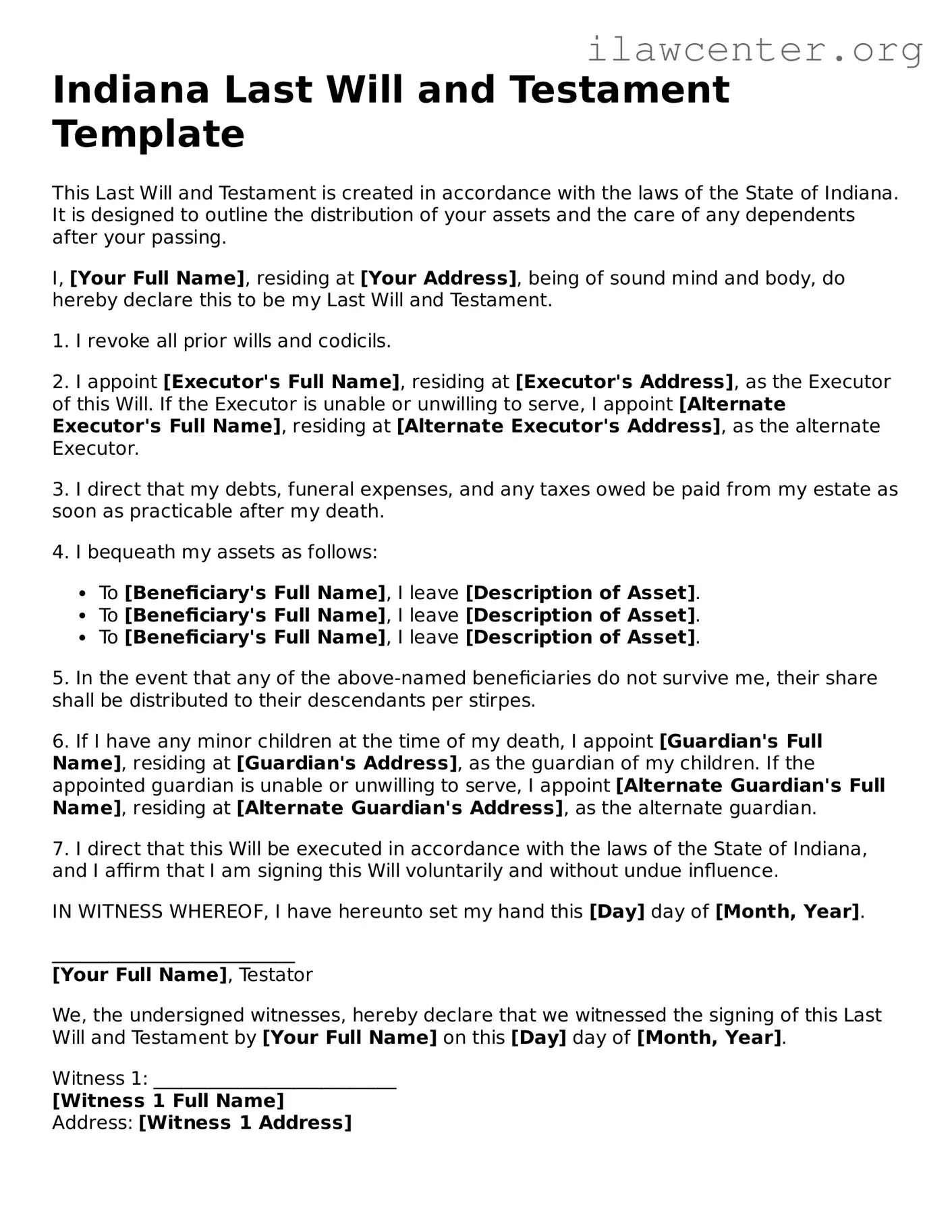
What is a Last Will and Testament in Indiana?
A Last Will and Testament is a legal document that outlines how a person's assets and affairs should be managed after their death. In Indiana, this document allows individuals to specify who will inherit their property, appoint guardians for minor children, and name an executor to carry out their wishes. It ensures that your desires are honored and provides clarity for your loved ones during a difficult time.
Who can create a Last Will and Testament in Indiana?
In Indiana, any person who is at least 18 years old and of sound mind can create a Last Will and Testament. Being of sound mind means that you understand the nature of the document you are creating and the consequences of your decisions. If you meet these criteria, you can draft a will to express your wishes regarding your estate.
Do I need a lawyer to create a Last Will and Testament in Indiana?
While it is not legally required to have a lawyer to create a Last Will and Testament in Indiana, consulting with one can be beneficial. A lawyer can help ensure that your will complies with state laws, is properly executed, and accurately reflects your wishes. If your estate is complex or if you have specific concerns, legal assistance can provide peace of mind.
What are the requirements for a valid Last Will and Testament in Indiana?
To be valid in Indiana, a Last Will and Testament must be in writing and signed by the testator (the person making the will). Additionally, it must be witnessed by at least two individuals who are not beneficiaries of the will. These witnesses must also sign the document in the presence of the testator. Following these steps helps to ensure that the will is legally enforceable.
Can I change my Last Will and Testament after it is created?
Yes, you can change your Last Will and Testament at any time while you are still alive and of sound mind. This is typically done through a codicil, which is an amendment to the original will, or by creating an entirely new will that revokes the previous one. It’s important to ensure that any changes are properly executed to avoid confusion or disputes later on.
What happens if I die without a Last Will and Testament in Indiana?
If you die without a will, you are considered to have died "intestate." In this case, Indiana's intestacy laws will determine how your assets are distributed. Generally, your property will go to your closest relatives, such as a spouse, children, or parents. However, this may not align with your wishes, which is why creating a will is advisable.
Can I include specific bequests in my Last Will and Testament?
Absolutely! You can include specific bequests in your will, which are instructions for distributing particular items or amounts of money to specific individuals or organizations. This allows you to express your intentions clearly and ensure that cherished possessions are passed on to the people you choose.
How is my Last Will and Testament executed after my death?
After your death, the executor named in your will is responsible for carrying out your wishes. The executor will file the will with the probate court, which oversees the distribution of your assets. The court will verify the will's validity, and the executor will then manage the estate according to your instructions, including paying debts and distributing assets to beneficiaries.
Can I revoke my Last Will and Testament?
Yes, you can revoke your Last Will and Testament at any time. This can be done by creating a new will that explicitly states that the previous will is revoked, or by physically destroying the old will. It’s important to communicate any changes to your family and ensure that the most current version of your will is easily accessible.