Attorney-Verified  Lease Agreement Document for Indiana

Attorney-Verified Lease Agreement Document for Indiana

An Indiana Lease Agreement form is a legal document that outlines the terms and conditions between a landlord and a tenant for renting residential or commercial property in Indiana. This form serves to protect the rights of both parties while providing clarity on responsibilities such as rent payment, maintenance, and lease duration. To get started with your lease agreement, fill out the form by clicking the button below.

Article Guide

In Indiana, a lease agreement serves as a crucial document that outlines the terms and conditions between a landlord and a tenant. This form typically includes essential elements such as the duration of the lease, rental payment details, security deposit requirements, and maintenance responsibilities. It is important for both parties to clearly understand their rights and obligations, as this agreement helps prevent misunderstandings and disputes. Additionally, the lease may specify rules regarding pets, alterations to the property, and the process for terminating the lease. By ensuring that all necessary information is included, the Indiana Lease Agreement form provides a solid foundation for a successful rental relationship.

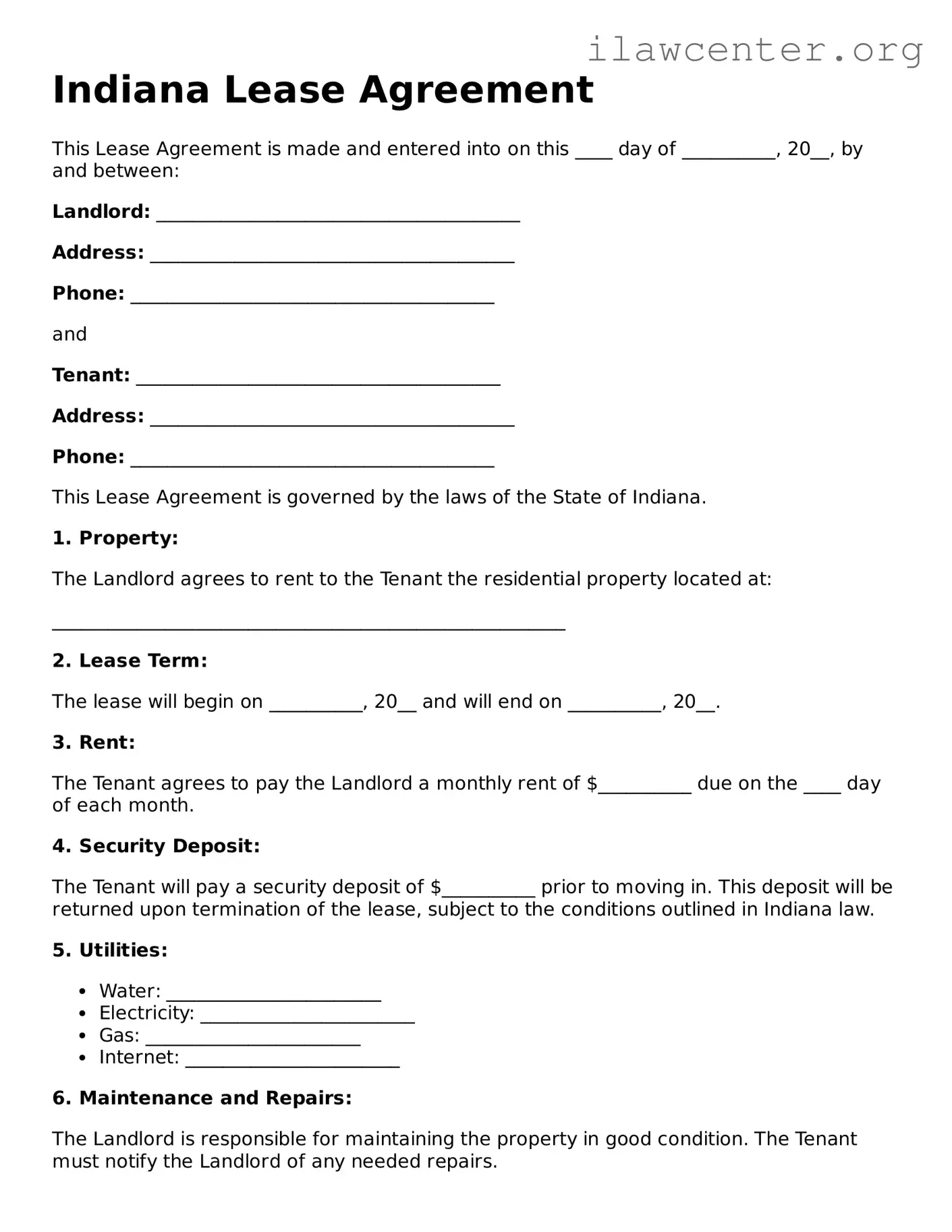
Indiana Lease Agreement Preview

Indiana Lease Agreement

This Lease Agreement is made and entered into on this ____ day of __________, 20__, by and between:

Landlord: _______________________________________

Address: _______________________________________

Phone: _______________________________________

and

Tenant: _______________________________________

Address: _______________________________________

Phone: _______________________________________

This Lease Agreement is governed by the laws of the State of Indiana.

1. Property:

The Landlord agrees to rent to the Tenant the residential property located at:

_______________________________________________________

2. Lease Term:

The lease will begin on __________, 20__ and will end on __________, 20__.

3. Rent:

The Tenant agrees to pay the Landlord a monthly rent of $__________ due on the ____ day of each month.

4. Security Deposit:

The Tenant will pay a security deposit of $__________ prior to moving in. This deposit will be returned upon termination of the lease, subject to the conditions outlined in Indiana law.

5. Utilities:

  • Water: _______________________
  • Electricity: _______________________
  • Gas: _______________________
  • Internet: _______________________

6. Maintenance and Repairs:

The Landlord is responsible for maintaining the property in good condition. The Tenant must notify the Landlord of any needed repairs.

7. Termination:

Either party may terminate this lease with a written notice of ____ days prior to the desired termination date.

8. Governing Law:

This agreement shall be governed by the laws of the State of Indiana.

IN WITNESS WHEREOF, the parties hereto have executed this Lease Agreement as of the day and year first above written.

Landlord Signature: ___________________________ Date: __________

Tenant Signature: ___________________________ Date: __________

PDF Form Characteristics

Fact Name Description
Governing Law The Indiana Lease Agreement is governed by Indiana state law.
Parties Involved The agreement typically involves a landlord and a tenant.
Duration Lease terms can vary, often ranging from one year to month-to-month.
Security Deposit Indiana law allows landlords to collect a security deposit, which must be returned under specific conditions.
Rent Payment The lease should specify the amount of rent and the due date each month.
Maintenance Responsibilities Both parties have defined responsibilities regarding property maintenance and repairs.
Termination Notice Notice requirements for terminating a lease vary based on the lease term.
Dispute Resolution Many leases include clauses outlining how disputes will be resolved, often through mediation or arbitration.

Instructions on Utilizing Indiana Lease Agreement

Completing the Indiana Lease Agreement form is a straightforward process. By following the steps outlined below, you can ensure that all necessary information is accurately provided. Once filled out, the form will need to be signed by both the landlord and tenant to finalize the agreement.

  1. Start by entering the date at the top of the form.
  2. Fill in the names of the landlord and tenant. Make sure to include full legal names.
  3. Provide the address of the rental property. This should include the street address, city, state, and ZIP code.
  4. Specify the lease term. Indicate whether it is a month-to-month lease or a fixed-term lease, and include the start and end dates if applicable.
  5. Detail the rental amount. Clearly state the monthly rent and any additional fees or deposits required.
  6. Outline the payment terms. Include when rent is due and acceptable payment methods.
  7. List any utilities that are included in the rent and specify which are the tenant's responsibility.
  8. Include any rules or regulations specific to the property. This can cover pet policies, maintenance responsibilities, and noise restrictions.
  9. Provide space for signatures. Both the landlord and tenant must sign and date the agreement to make it legally binding.

Important Facts about Indiana Lease Agreement

What is an Indiana Lease Agreement form?

An Indiana Lease Agreement form is a legal document that outlines the terms and conditions under which a landlord allows a tenant to rent a property. It specifies the rights and responsibilities of both parties, including rent amount, duration of the lease, and maintenance obligations.

Who needs an Indiana Lease Agreement?

Both landlords and tenants should use an Indiana Lease Agreement. For landlords, it provides legal protection and clarity regarding rental terms. Tenants benefit from knowing their rights and obligations, ensuring a smooth rental experience.

What should be included in the Indiana Lease Agreement?

The agreement should include essential details such as the names of the landlord and tenant, property address, lease duration, rent amount, payment due dates, security deposit information, and maintenance responsibilities. It may also cover rules regarding pets, smoking, and property alterations.

How long is a typical lease term in Indiana?

Lease terms in Indiana can vary widely, but they typically range from six months to one year. Some landlords may offer month-to-month leases, which provide more flexibility for tenants who may not want to commit long-term.

Can a lease be terminated early in Indiana?

Yes, a lease can be terminated early in Indiana, but it usually requires mutual agreement between the landlord and tenant. The lease may also specify conditions under which early termination is allowed, such as job relocation or health issues.

What happens if a tenant fails to pay rent?

If a tenant fails to pay rent, the landlord has the right to issue a notice to pay or quit. This notice typically gives the tenant a specific timeframe to pay overdue rent or vacate the property. If the tenant does not comply, the landlord may initiate eviction proceedings.

Is a security deposit required in Indiana?

Yes, landlords in Indiana can require a security deposit. The amount is usually equivalent to one month’s rent but cannot exceed two months’ rent. The deposit serves as protection for the landlord against damages or unpaid rent.

Are there any specific tenant rights in Indiana?

Yes, tenants in Indiana have several rights, including the right to a habitable living environment, privacy, and protection against retaliatory eviction. They also have the right to receive their security deposit back within 45 days after moving out, minus any lawful deductions.

Can a landlord enter the rental property without notice?

Generally, a landlord must provide reasonable notice before entering a rental property, typically 24 hours. Exceptions exist for emergencies, where immediate entry may be necessary without prior notice.

How can disputes be resolved between landlords and tenants?

Disputes can often be resolved through open communication between landlords and tenants. If that fails, mediation may be an option. Legal action can be pursued as a last resort, but it is advisable to consult legal counsel before proceeding.
Common mistakes

Filling out the Indiana Lease Agreement form can be a straightforward process, but many people make common mistakes that can lead to confusion or legal issues later on. One frequent error is not including all required information. Landlords and tenants must provide accurate details about their names, addresses, and the rental property. Omitting even a small piece of information can create problems down the line.

Another mistake is failing to read the entire agreement before signing. Many individuals rush through the process, assuming they understand the terms. However, overlooking important clauses can result in misunderstandings about rent, maintenance responsibilities, or security deposits. Taking the time to read the document thoroughly is crucial.

People often neglect to specify the lease duration. Whether it’s a month-to-month arrangement or a fixed-term lease, clarity is essential. If the duration is not clearly stated, it can lead to disputes about when the lease ends or whether it automatically renews.

Additionally, some individuals forget to document any existing damages in the property before moving in. This can lead to disagreements when the lease ends. By taking photos or writing down the condition of the property, both parties can avoid potential conflicts over security deposits.

Finally, many tenants and landlords fail to keep a copy of the signed lease. Once the agreement is signed, it’s important for both parties to retain a copy for their records. This ensures that everyone has access to the same information and can refer back to it if questions arise in the future.

Documents used along the form

When entering into a lease agreement in Indiana, several other forms and documents may accompany the primary lease agreement. These documents help clarify responsibilities, outline terms, and protect both landlords and tenants. Below is a list of commonly used forms that can enhance the leasing process.

  • Rental Application: This form is typically completed by prospective tenants. It gathers essential information such as employment history, rental history, and personal references, helping landlords assess the suitability of applicants.
  • Move-In Checklist: This document is used to record the condition of the rental unit before the tenant moves in. It helps prevent disputes over security deposits by providing a clear account of any existing damages or issues.
  • Security Deposit Receipt: This receipt acknowledges the amount of the security deposit collected from the tenant. It serves as proof of the transaction and outlines the conditions under which the deposit may be withheld at the end of the lease.
  • Lease Addendum: An addendum is a document that modifies or adds terms to the original lease agreement. It may address specific rules, such as pet policies or maintenance responsibilities, ensuring that all parties are aware of additional obligations.
  • Notice to Quit: This form is used when a landlord needs to inform a tenant of a lease violation or the intent to terminate the lease. It outlines the reasons for termination and provides a timeline for the tenant to vacate the property.
  • Rental Receipt: This document serves as proof of rent payment. It includes details such as the amount paid, the date of payment, and the period covered, helping both parties keep accurate records of transactions.

Utilizing these forms and documents in conjunction with the Indiana Lease Agreement can lead to a smoother rental experience. They clarify expectations and provide legal protections for both landlords and tenants, fostering a better landlord-tenant relationship.

Similar forms

A Lease Agreement is a key document in rental arrangements, but there are several other documents that share similarities with it. Here’s a list of nine documents that are often compared to a Lease Agreement:

  • Rental Agreement: Similar to a Lease Agreement, this document outlines the terms of renting property but usually covers shorter time frames, often month-to-month.
  • Sublease Agreement: This agreement allows a tenant to rent out their leased space to another party, maintaining the original lease terms.
  • Commercial Lease: Used for business properties, it details the rental terms for commercial spaces, similar in structure to residential leases.
  • Property Management Agreement: This document outlines the relationship between a property owner and a management company, detailing responsibilities similar to those found in lease agreements.
  • Tenancy Agreement: Common in certain regions, this term is often used interchangeably with a lease but may have different legal implications.
  • License Agreement: While not a lease, it permits someone to use property without granting exclusive possession, similar in intent to a lease.
  • Option to Purchase Agreement: This document gives a tenant the right to purchase the property at a later date, often included in lease agreements.
  • Lease Purchase Agreement: This combines elements of a lease and a purchase agreement, allowing tenants to rent with the option to buy.
  • Rental Application: Although not a lease, this document is often the first step in the rental process and collects similar information about potential tenants.

Understanding these documents can help clarify the rental process and the rights and responsibilities involved.

Dos and Don'ts

When filling out the Indiana Lease Agreement form, it’s essential to approach the task with care. Here’s a helpful list of dos and don’ts to guide you through the process:

  • Do read the entire lease agreement carefully before filling it out.
  • Do ensure all parties involved are clearly identified with their full names.
  • Do double-check the rental amount and payment terms for accuracy.
  • Do specify the lease duration and any renewal terms clearly.
  • Don't leave any sections blank; fill in all required information.
  • Don't use vague language; be specific about rules and responsibilities.
  • Don't sign the agreement without understanding all its terms.
  • Don't forget to keep a copy of the signed lease for your records.

Misconceptions

Understanding lease agreements is crucial for both landlords and tenants. However, several misconceptions can lead to confusion and potential disputes. Here are eight common misconceptions about the Indiana Lease Agreement form:

  1. All lease agreements are the same.

    This is incorrect. Each lease agreement can vary significantly based on the specific terms negotiated between the landlord and tenant. It is essential to review each agreement carefully.

  2. Verbal agreements are sufficient.

    Many believe that a verbal agreement is enough to bind both parties. In reality, written agreements provide clear documentation of terms and conditions, which can prevent misunderstandings.

  3. Security deposits are non-refundable.

    Some tenants think that security deposits cannot be refunded. In Indiana, landlords must return the deposit, minus any allowable deductions, within a specific timeframe after the lease ends.

  4. Landlords can enter the property anytime.

    This misconception overlooks tenant rights. Landlords must provide reasonable notice before entering a rental unit, typically 24 hours, except in emergencies.

  5. Lease agreements are permanent.

    Many assume that once signed, a lease is set in stone. However, leases can often be terminated or modified if both parties agree to the changes.

  6. Rent can be raised at any time.

    This is misleading. In Indiana, landlords can only increase rent at the end of a lease term unless otherwise stated in the lease agreement.

  7. All utilities are included in the rent.

    This is not always true. Lease agreements should specify which utilities are included and which are the tenant's responsibility.

  8. Tenants can make changes to the property without permission.

    Tenants often believe they can alter the property freely. Most lease agreements require tenants to seek approval from the landlord before making any significant changes.

Being aware of these misconceptions can help both landlords and tenants navigate their agreements more effectively, fostering better communication and understanding.

Key takeaways

Filling out and using the Indiana Lease Agreement form requires attention to detail and understanding of the terms involved. Here are five key takeaways to keep in mind:

  • Understand the Parties Involved: Clearly identify the landlord and tenant in the agreement. This helps avoid confusion regarding who is responsible for what.
  • Specify the Lease Term: Indicate the duration of the lease. This includes the start and end dates, which are crucial for both parties to know their obligations.
  • Outline Rent Details: Clearly state the amount of rent, payment due dates, and acceptable payment methods. This ensures both parties are on the same page regarding financial responsibilities.
  • Include Security Deposit Information: Detail the amount of the security deposit, conditions for its return, and any deductions that may apply. This protects both the landlord and tenant.
  • Address Maintenance Responsibilities: Specify who is responsible for repairs and maintenance. Clear guidelines help prevent disputes over property upkeep.

By following these key points, both landlords and tenants can create a comprehensive and clear lease agreement that protects their interests.