Attorney-Verified  Mobile Home Bill of Sale Document for Indiana

Attorney-Verified Mobile Home Bill of Sale Document for Indiana

The Indiana Mobile Home Bill of Sale form is a legal document that facilitates the transfer of ownership of a mobile home from one party to another. This form ensures that both the buyer and seller are protected during the transaction, providing essential details such as the sale price and the mobile home's identification information. To get started on your mobile home sale, fill out the form by clicking the button below.

Article Guide

The Indiana Mobile Home Bill of Sale form serves as an essential document for individuals involved in the buying or selling of mobile homes within the state. This form provides a clear record of the transaction, ensuring that both parties have a mutual understanding of the terms involved. It typically includes vital information such as the names and addresses of the buyer and seller, a detailed description of the mobile home being sold, including its make, model, and year, as well as the vehicle identification number (VIN). Additionally, the form outlines the purchase price and any conditions of the sale, such as whether the mobile home is being sold "as is" or if any warranties are included. Completing this form not only protects the interests of both parties but also facilitates a smooth transfer of ownership, making it a crucial step in the process of mobile home transactions in Indiana.

Indiana Mobile Home Bill of Sale Preview

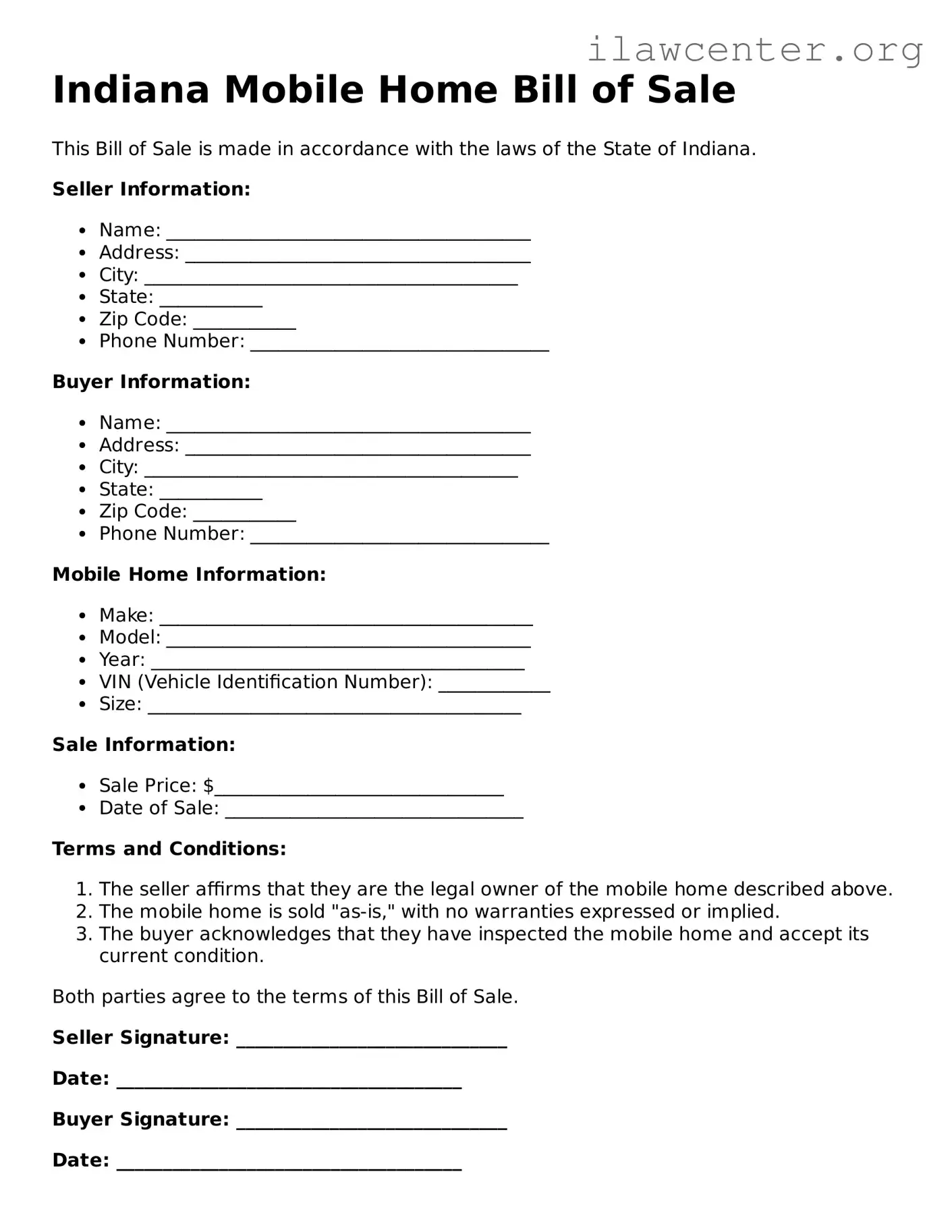
Indiana Mobile Home Bill of Sale

This Bill of Sale is made in accordance with the laws of the State of Indiana.

Seller Information:

  • Name: _______________________________________
  • Address: _____________________________________
  • City: ________________________________________
  • State: ___________
  • Zip Code: ___________
  • Phone Number: ________________________________

Buyer Information:

  • Name: _______________________________________
  • Address: _____________________________________
  • City: ________________________________________
  • State: ___________
  • Zip Code: ___________
  • Phone Number: ________________________________

Mobile Home Information:

  • Make: ________________________________________
  • Model: _______________________________________
  • Year: ________________________________________
  • VIN (Vehicle Identification Number): ____________
  • Size: ________________________________________

Sale Information:

  • Sale Price: $_______________________________
  • Date of Sale: ________________________________

Terms and Conditions:

  1. The seller affirms that they are the legal owner of the mobile home described above.
  2. The mobile home is sold "as-is," with no warranties expressed or implied.
  3. The buyer acknowledges that they have inspected the mobile home and accept its current condition.

Both parties agree to the terms of this Bill of Sale.

Seller Signature: _____________________________

Date: _____________________________________

Buyer Signature: _____________________________

Date: _____________________________________

PDF Form Characteristics

Fact Name Description
Purpose The Indiana Mobile Home Bill of Sale form is used to legally document the sale of a mobile home, ensuring that ownership is transferred from the seller to the buyer.
Governing Law This form is governed by Indiana Code § 32-21-1, which outlines the regulations regarding the sale and transfer of mobile homes in the state.
Required Information The form typically requires details such as the names of the buyer and seller, the mobile home’s identification number, and the sale price.
Signatures Both the buyer and seller must sign the form to validate the transaction, often in the presence of a witness or notary public.

Instructions on Utilizing Indiana Mobile Home Bill of Sale

Once you have the Indiana Mobile Home Bill of Sale form in hand, it’s time to fill it out accurately. This document is essential for transferring ownership of a mobile home. Ensure you have all necessary information ready before starting the process.

  1. Begin by entering the date of the sale at the top of the form.
  2. Fill in the seller's name and address in the designated fields.
  3. Provide the buyer's name and address in the appropriate sections.
  4. Clearly describe the mobile home being sold. Include details such as the make, model, year, and Vehicle Identification Number (VIN).
  5. Indicate the sale price of the mobile home in the specified area.
  6. Both the seller and buyer should sign and date the form at the bottom.
  7. If applicable, include any additional terms or conditions of the sale in the space provided.

After completing the form, ensure that both parties keep a copy for their records. This document will serve as proof of the transaction and is crucial for future reference.

Important Facts about Indiana Mobile Home Bill of Sale

What is the Indiana Mobile Home Bill of Sale form?

The Indiana Mobile Home Bill of Sale form is a legal document used to transfer ownership of a mobile home from one party to another. This form includes essential details about the mobile home, such as its make, model, year, and vehicle identification number (VIN). It serves as proof of the sale and is important for both the seller and buyer to ensure that the transaction is documented properly.

Who needs to use the Mobile Home Bill of Sale form?

Anyone involved in the sale or purchase of a mobile home in Indiana should use this form. This includes private sellers, dealers, and buyers. Using the form helps protect both parties by clearly outlining the terms of the sale and providing a record of the transaction. It is especially useful for buyers to have this document for future reference, such as registering the mobile home or applying for financing.

What information is required on the form?

The form typically requires several key pieces of information. This includes the names and addresses of both the seller and buyer, the mobile home’s details (make, model, year, VIN), the sale price, and the date of the transaction. Additionally, both parties may need to sign the document to validate the sale. Accurate and complete information is crucial to avoid any potential disputes later on.

Is the Mobile Home Bill of Sale form legally binding?

Yes, once both parties sign the Indiana Mobile Home Bill of Sale form, it becomes a legally binding agreement. This means that both the seller and buyer are obligated to adhere to the terms outlined in the document. If either party fails to comply, the other party may have legal recourse to enforce the agreement. It’s important for both parties to fully understand the terms before signing.

Do I need to have the form notarized?

In Indiana, notarization is not typically required for the Mobile Home Bill of Sale form to be valid. However, having the document notarized can provide an extra layer of security and authenticity. It may also be beneficial if you plan to register the mobile home or if there are any disputes in the future. Always check local regulations or consult with a legal expert to ensure compliance with any specific requirements.

Common mistakes

Filling out the Indiana Mobile Home Bill of Sale form can be a straightforward process, but many people make common mistakes that can lead to complications down the road. Understanding these pitfalls is essential to ensure a smooth transaction. Here are ten mistakes to avoid when completing this important document.

One frequent error is failing to include accurate information about the mobile home. Buyers and sellers should ensure that the make, model, and year of the mobile home are correctly stated. Any discrepancies can lead to disputes later, making it crucial to double-check these details.

Another common mistake involves neglecting to sign the document. Both the seller and buyer must sign the Bill of Sale for it to be legally binding. Without signatures, the document holds no weight, and the transaction may be considered invalid.

People often forget to include the purchase price of the mobile home. This figure is essential for both parties and should be clearly stated. Leaving it out can create confusion and may lead to misunderstandings about the terms of the sale.

Additionally, some individuals make the mistake of not providing a clear description of the transaction. It’s important to specify whether the sale includes any additional items, such as appliances or furniture. A vague description can lead to disputes over what was included in the sale.

Another oversight is failing to provide the correct date of the transaction. The date is crucial for record-keeping and can impact the timing of ownership transfer. Ensure that the date is accurate and clearly written on the form.

Many people also overlook the need for notarization. While notarization may not always be required, having the document notarized adds an extra layer of legitimacy and can help prevent future disputes. It’s wise to check local requirements before finalizing the sale.

In some cases, sellers might forget to disclose any liens or outstanding debts on the mobile home. Transparency is key in any sale. Not disclosing this information can result in legal issues for the buyer later on.

Another mistake is using incorrect or outdated forms. Always ensure that you are using the latest version of the Indiana Mobile Home Bill of Sale. Using an outdated form may lead to complications or rejections by the state.

People often underestimate the importance of keeping copies of the completed form. Both parties should retain a signed copy for their records. This ensures that everyone has proof of the transaction should any issues arise in the future.

Finally, not seeking professional advice can be a significant oversight. If there are any uncertainties about the process, consulting with a legal expert can provide clarity and help avoid costly mistakes. Taking the time to get it right from the beginning can save you headaches later.
Documents used along the form

When buying or selling a mobile home in Indiana, several important documents accompany the Mobile Home Bill of Sale. These documents help ensure that the transaction is legal and that both parties are protected. Below is a list of other forms and documents often used in conjunction with the Mobile Home Bill of Sale.

  • Title Transfer Form: This document officially transfers ownership of the mobile home from the seller to the buyer. It is essential for registering the mobile home in the new owner's name.
  • Affidavit of Ownership: If the seller cannot provide a title, this affidavit serves as a sworn statement confirming ownership of the mobile home. It may be required to prove that the seller has the right to sell the property.
  • Purchase Agreement: This contract outlines the terms of the sale, including the price, payment method, and any contingencies. It protects both parties by clearly stating their obligations.
  • Inspection Report: An inspection report details the condition of the mobile home. Buyers often request this document to ensure they are aware of any issues before completing the purchase.
  • Bill of Sale for Personal Property: If the sale includes personal property within the mobile home, such as appliances or furniture, this document lists those items and confirms their transfer to the buyer.
  • Tax Clearance Certificate: This certificate verifies that all property taxes on the mobile home have been paid. It helps ensure that the buyer will not inherit any tax liabilities from the seller.
  • Insurance Documentation: Proof of insurance is often required before finalizing the sale. This documentation shows that the buyer has secured insurance coverage for the mobile home.

Having these documents prepared and organized can streamline the sale process and protect the interests of both the buyer and the seller. Each document plays a crucial role in ensuring a smooth transaction and compliance with state regulations.

Similar forms

  • Vehicle Bill of Sale: Similar to the Mobile Home Bill of Sale, this document transfers ownership of a vehicle. It includes details about the buyer, seller, and the vehicle itself, ensuring a clear record of the transaction.
  • Boat Bill of Sale: This document serves a similar purpose for boats. It outlines the sale details and confirms the transfer of ownership from the seller to the buyer.
  • Real Estate Purchase Agreement: Like the Mobile Home Bill of Sale, this agreement formalizes the sale of property. It includes terms of sale, property details, and obligations of both parties.
  • Motorcycle Bill of Sale: This document is specifically for motorcycles. It details the transaction and serves as proof of ownership transfer, similar to the mobile home transaction.
  • Trailer Bill of Sale: Used for trailers, this document outlines the sale and provides a record of ownership transfer, much like the Mobile Home Bill of Sale.
  • Business Bill of Sale: This document transfers ownership of a business. It includes details about the business assets, liabilities, and the terms of the sale, paralleling the mobile home sale process.
  • Personal Property Bill of Sale: This document covers various personal items. It serves to confirm the transfer of ownership and includes specific details about the items sold.
  • Equipment Bill of Sale: Similar to the Mobile Home Bill of Sale, this document transfers ownership of equipment. It includes details about the equipment and the terms of the sale, ensuring clarity in the transaction.

Dos and Don'ts

When filling out the Indiana Mobile Home Bill of Sale form, attention to detail is crucial. Here are some important dos and don'ts to ensure a smooth process.

  • Do provide accurate information about the mobile home, including the make, model, and year.
  • Do include the Vehicle Identification Number (VIN) to avoid any confusion.
  • Do ensure both the buyer and seller sign the document to validate the transaction.
  • Do keep a copy of the completed bill of sale for your records.
  • Do check for any outstanding liens on the mobile home before finalizing the sale.
  • Don't leave any sections blank; fill in all required fields.
  • Don't use whiteout or make alterations that could raise questions about the document's authenticity.
  • Don't forget to date the bill of sale to establish the timeline of the transaction.
  • Don't rush through the process; take your time to review all information before submission.
  • Don't ignore state regulations regarding mobile home sales; familiarize yourself with local laws.

By following these guidelines, you can help ensure that your transaction is legitimate and legally binding. Taking these steps will provide peace of mind for both the buyer and seller.

Misconceptions

When dealing with the Indiana Mobile Home Bill of Sale form, many people hold misconceptions that can lead to confusion or mistakes. Here are ten common misunderstandings:

  1. It’s not necessary to have a Bill of Sale for a mobile home. Many believe that a Bill of Sale is optional, but it is essential for legal ownership transfer.
  2. Only the seller needs to sign the Bill of Sale. In reality, both the seller and buyer must sign the document to validate the transaction.
  3. A Bill of Sale does not need to be notarized. While notarization is not always required, having a notary can add an extra layer of authenticity.
  4. Any generic Bill of Sale form will suffice. The Indiana Mobile Home Bill of Sale form is specifically designed for mobile homes and includes necessary details unique to these transactions.
  5. There are no specific requirements for the information included. The form must include details like the mobile home’s VIN, make, model, and year, as well as the sale price.
  6. Once the Bill of Sale is signed, the transaction is complete. Buyers must also ensure that the title is transferred to finalize ownership.
  7. The form is only needed for new mobile homes. This form is essential for both new and used mobile home sales.
  8. It can be filled out after the sale is completed. It’s best to complete the Bill of Sale during the transaction to ensure all details are accurate and agreed upon.
  9. There are no legal consequences for not using a Bill of Sale. Failing to use this document can lead to disputes over ownership and other legal issues.
  10. Buyers can ignore the Bill of Sale if they trust the seller. Trust is important, but a Bill of Sale protects both parties and serves as proof of the transaction.

Understanding these misconceptions can help ensure a smoother transaction when buying or selling a mobile home in Indiana.

Key takeaways

When dealing with the Indiana Mobile Home Bill of Sale form, it’s essential to understand its purpose and how to fill it out correctly. Here are some key takeaways to keep in mind:

  1. Purpose of the Form: The Indiana Mobile Home Bill of Sale serves as a legal document that records the transfer of ownership of a mobile home from one party to another.
  2. Accurate Information: Ensure that all information, including the names of both the seller and buyer, is accurate. This includes addresses and contact details.
  3. Mobile Home Details: Provide specific details about the mobile home, such as its make, model, year, and Vehicle Identification Number (VIN). This helps in identifying the mobile home precisely.
  4. Sale Price: Clearly state the sale price of the mobile home. This amount is crucial for both parties and may also be important for tax purposes.
  5. Signatures Required: Both the seller and buyer must sign the form. This signature confirms the agreement and the transfer of ownership.
  6. Notarization: While notarization is not always required, having the document notarized can add an extra layer of legitimacy and protection for both parties.
  7. Keep Copies: After completing the form, both the seller and buyer should keep copies for their records. This ensures that both parties have proof of the transaction.

Filling out the Indiana Mobile Home Bill of Sale form correctly can help prevent disputes and ensure a smooth transfer of ownership. Always double-check your information before finalizing the document!